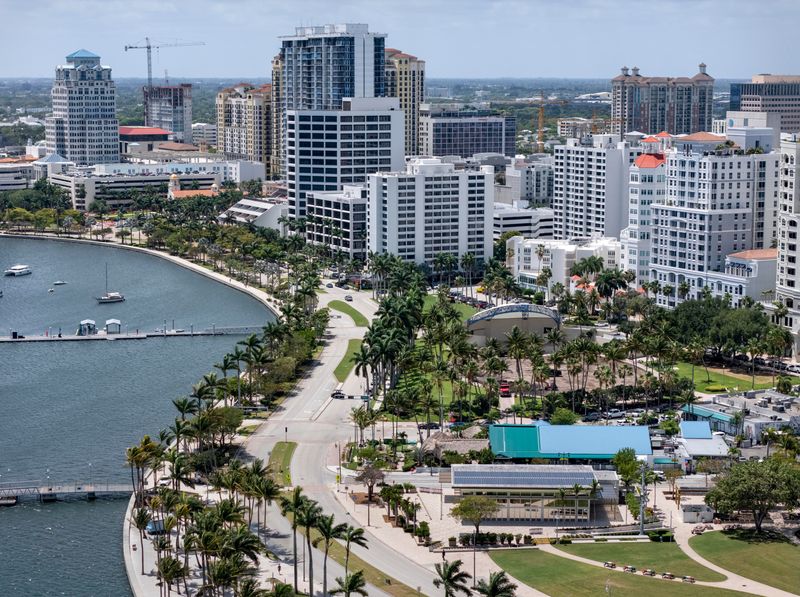
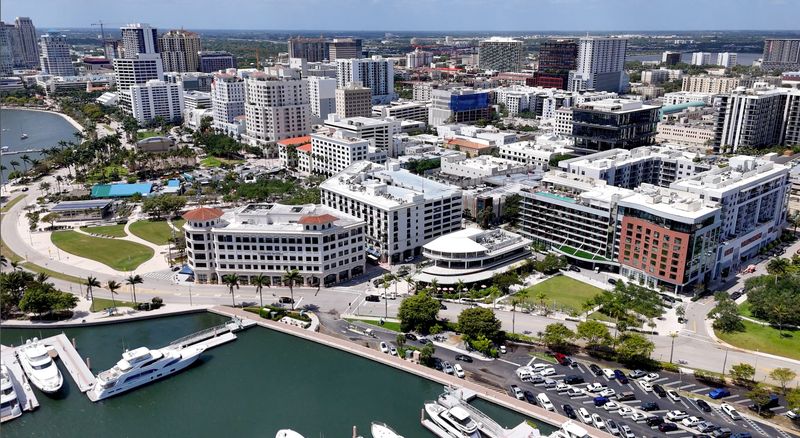
West Palm Beach leaders are drafting plans to remake the city’s downtown to allow denser neighborhoods, less parking and 25-story towers along Flagler Drive.
The sweeping overhaul of downtown zoning rules would make way for buildings to rise significantly higher along the waterfront and in much of the fast-growing city center, gradually transforming the city’s face and skyline.

Planners say the new growth regulations, called the “downtown master plan,” are a much-needed reform as demand for downtown offices and residences pushes developers to snap up properties with plans for new high-rises.
“The code we had before is not really adequate to manage the flow that is coming,” said the plan’s main designer, Miami architect and urban planner Bernard Zyscovich.
But the proposed changes are raising concerns about the impact that enhanced growth could have on traffic and livability in the city center, where an estimated 12,000 people now reside.
The plan, in the works for more than a year, was presented to two key city committees April 23 and is tentatively slated to be voted on by city commissioners in July.
It envisions a future where people downtown are less car-dependent, proposing to reduce the number of parking spaces that new buildings are required to construct.
Planners are banking on commuters and residents relying more on mass transit and alternative transportation, including new options that the city is expected to roll out later this year.
The city also is exploring moves to create large parking complexes outside the city center where commuters can park before using other transit options to get into downtown or onto the island of Palm Beach.
More controversially, the plan suggests moving a stretch of Flagler Drive west onto Narcissus Avenue to make way for an expanded waterfront park, a move that would create additional green space along the Intracoastal Waterway but raises new traffic concerns.
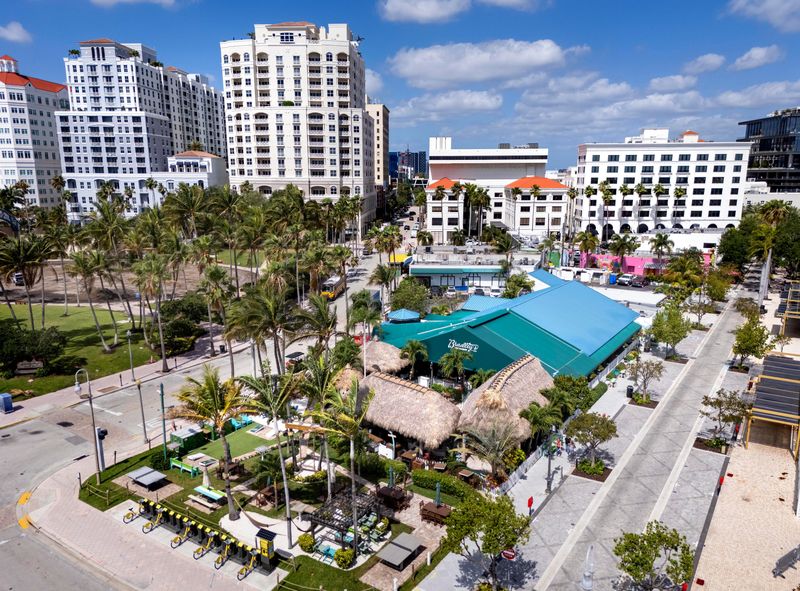
The plan, however, does not include the controversial proposal revealed last month to remove a row of businesses south of Clematis Street to make way for the park, including the landmark restaurant E.R. Bradley’s Saloon.
Planner: ‘It’s better to go taller’
While permitting more growth downtown, the city’s plan would attach more conditions to growth, requiring developers to make more concessions to benefit the public.
New towers along the Flagler waterfront, for example, would be required to leave 100-foot deep green spaces along the front of their properties, expanding the amount of waterfront space available for public use.
The rules would require developers to break up long blocks in the city’s Clear Lake district to make them more pedestrian friendly. Major streets would have wider sidewalks.
Taller buildings also would have to be skinnier, which planners say would allow more light to filter through city streets than in a downtown filled with shorter, blockier buildings.
“We want the image of the city to be lighter, have more light, allow for the views to penetrate through into the city and out of the city,” said Zyscovich. “So what that means is we have decided that it’s better to go taller than allow everything to be wide.”
And developers would have to pay the city for the right to build to such high altitudes, with the money used to pay for transit programs, affordable housing and to maintain the city’s downtown waterfront.
Zyscovich said the plan envisions the downtown as a “garden city,” likening it to cities like Vancouver with tall buildings but lots of natural light.
“I’m sure you’ve all been in cities where there’s not enough landscape, not enough parks, and really big buildings,” Zyscovich said. “That is not what we see for West Palm. We see this garden-city feel continuing on the street. Even though there’s more people here and there’s more height to the buildings, we believe it’s just going to get better and better.”
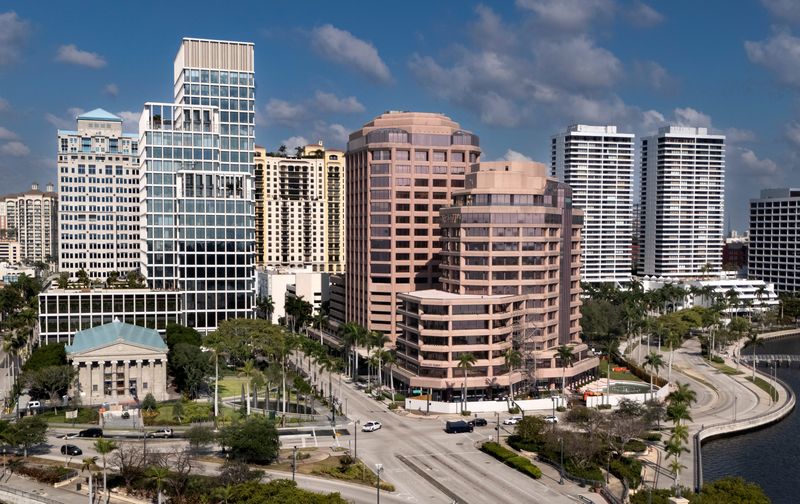
Allowing higher buildings along Flagler would be a dramatic shift from current zoning rules. Though many taller buildings line the waterfront, existing rules allow buildings no higher than eight stories.
While developers have been able to ask the commission for exceptions, the new rules would allow developers to go far higher by right.
The master plan would allow an initial five-story baseline height, but then allow developers to increase heights to up to 25 stories by paying extra into city coffers.
Planners say taller buildings would be better buildings under their plan. Thinner and with large setbacks, the bottoms of the buildings would be lined with “active uses,” such as shops and restaurants, and bordered by public green space.
Building widths and the height of their “podiums,” where parking garages are situated, would be limited to provide more open space and light.
“We’re saying if you’re going to build more, you’re going to occupy less of the site with the building because you have to give more open space,” Zyscovich said.
Zyscovich said taller buildings and a larger park along the waterfront were the best way for the city to “make a beautiful jewel out of it.”
“You’re like on Fifth Avenue in front of Central Park,” he said. “I mean, what better place would we put the height than there? Because that’s going to be the iconic image of the city 20 years from now.”
Residents fret about taller towers
Some downtown residents worried, though, that the plan would prompt a new land rush that would see older buildings along Flagler replaced by shiny, significantly taller towers.
Gigi Tylander, who lives at the Two City Plaza condominium building downtown, said at a city meeting that residents in her building were alarmed to learn that under the plan a much taller building now could be built across the street at the Holy Trinity Episcopal Church.
“The people who bought at (Two City Plaza) believed, and the management understood it to be, limited to a four- to five-story building on the site,” she said.
Worries also abounded among residents of two senior-living communities along Flagler, St. James Residence and St. Andrew’s Residence, that the zoning changes could hasten the razing of their buildings. Both are owned by Related Ross, the city’s largest developer.
Nancy Gregory, an 85-year-old resident of one of the residences, said she worried that Related eventually will “knock them down” and she will be required to move.
“The place is going to shut down,” she said.
The city’s development services director said the city had not received applications for new projects on either of those properties.
Is city’s traffic vision just wishful thinking?
The master plan also faced skepticism from members of the city’s planning board and downtown action committee, including over its projections that technological innovations and new city transit services would reduce traffic and the need for parking.
Michael Bakst, an attorney and member of the Downtown Action Committee, said that “traffic has gotten really bad downtown” and questioned the decision to reduce the amount of parking developers are required to build.
“You’re talking about a 25% reduction in parking,” he said. “And this is because you’re thinking, with all the mobility, people are going to be on scooters and bikes. What if that doesn’t happen?
Zyscovich responded that if congestion worsens the city would have to find new tools, citing New York City’s recent use of “congestion pricing” to reduce the number of vehicles that enter Manhattan.
Planners did not say whether they have completed traffic studies regarding their zoning changes. A city spokesperson said in a statement that the plan is “a long-range framework” that “does not approve or implement specific projects.”
One of the plan’s chief aims, the spokesperson said, is “to support a more walkable, connected downtown where residents can live closer to where they work.”
City Commissioner Christy Fox, whose district includes the downtown, said the concern she’s heard most from residents is “traffic and how any additional density and height will impact the traffic.”
“If it’s going to take an hour to get to your downtown office, how do we know people aren’t going to stop coming?” she asked.
Fox said it might make more sense for the city to bide its time in finalizing its plan so officials can better study traffic impacts and roll out a plan to provide new transit options downtown.
“I am in no rush,” she said. “I want to get this done right. We have to do it right.”
Andrew Marra is a reporter at The Palm Beach Post. Reach him at amarra@pbpost.com.
This article originally appeared on Palm Beach Post: West Palm plan would allow 25-story buildings along Flagler Drive
Reporting by Andrew Marra, Palm Beach Post / Palm Beach Post
USA TODAY Network via Reuters Connect