Here’s some unwelcome news for you (sorry): Florida made a list of seven tick-infested areas in the United States.
What’s that mean? It means that while there are ticks almost everywhere in the U.S., some areas have “unusually high concentrations” of certain species.

In Central Florida, the Gulf Coast tick enjoys the cattle ranches surrounding Lake Okeechobee and the green spaces extending south toward the Big Cypress area, according to worldatlas.com.
The 2026 tick season is shaping up to be one of the worst in decades, according to the Centers for Disease Control.
Here’s what you should know before — and after — you or your pet head outdoors.
Shop tick prevention products on Amazon
Are there ticks in Florida?
Ticks are seen throughout the year in Florida, and both nymphs and adults can transmit diseases, according to the University of Florida’s Institute for Food and Agricultural Services.
➤ Why this tick season could be the worst in a decade
“There are seasonal differences in the abundance of nymphs and adults. Ticks in either stage can transmit any diseases they carry.”
Central Florida ranks high in tick-infested areas
WorldAtlas.com ranked seven locations in the U.S. with “unusually high concentrations” of certain species of ticks. Central Florida was included on the list.
“One of the greatest concentrations of Gulf Coast ticks is found in Florida’s Gulf Coast prairie region, namely the cattle ranchlands surrounding Lake Okeechobee and the green spaces extending south toward the Big Cypress area.
“This southern-dwelling species thrives in this sub-tropical state’s warm, moist grassland habitats that come with plenty of ground cover and large populations of feral hogs, deer, wading birds, and roaming cattle.
“They especially prefer very open terrain and are commonly collected from tall roadside grass, pastures, and marsh transition zones.
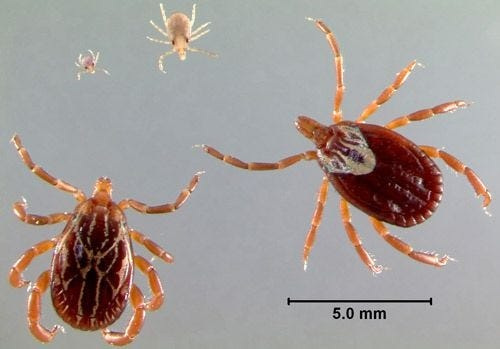
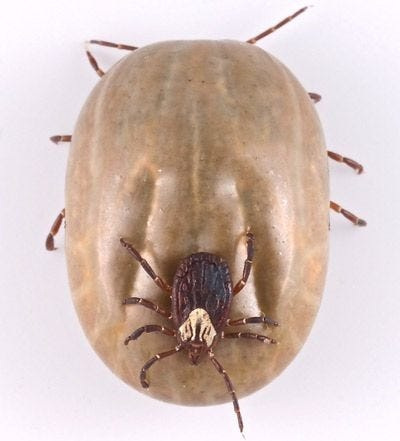
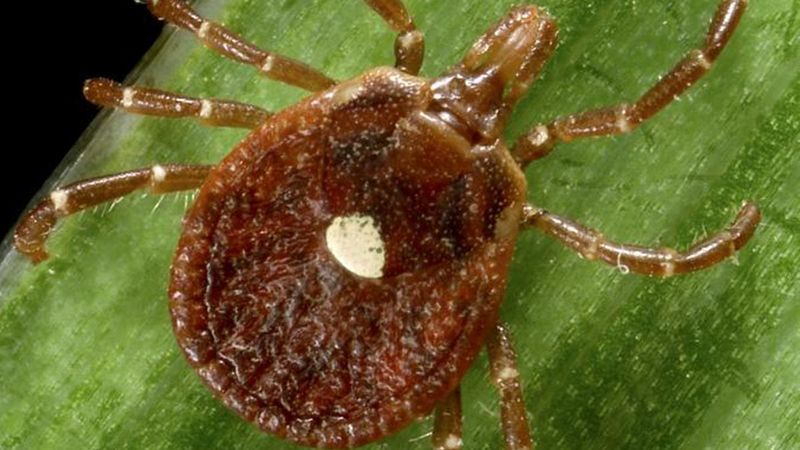
“Adults are markedly aggressive feeders with long mouthparts that allow them to stay attached for extended periods. Gulf Coast ticks are also recognizable by the pale silver markings on their back and their relatively large size compared with several other southeastern ticks.”
What you should know about Gulf Coast ticks
What other types of ticks are found in Florida?
Ticks found in Florida, besides the Gulf Coast ticks, include:
Where are ticks the worst in Florida?
An estimated 476,000 people receive treatment for Lyme disease each year, making it the most prevalent tick-borne illness in the U.S., according to the CDC.
It’s also the most prevalent tick-borne disease seen in Florida.
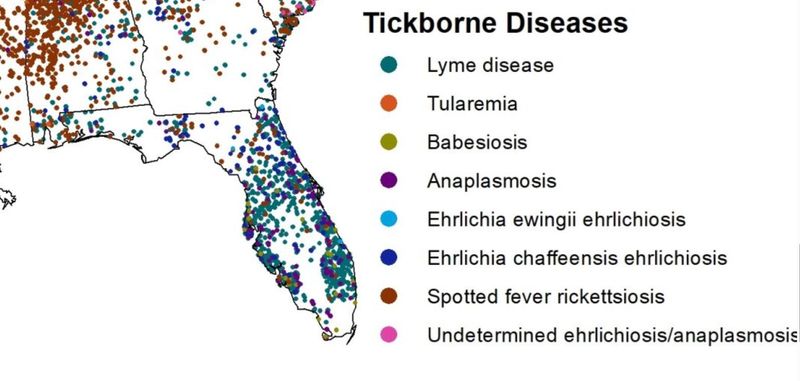
According to data from the CDC, between 2019 and 2022, the breakdown of tick-borne diseases reported in Florida is:
What types of diseases are transmitted by ticks?
“Ticks must feed for several hours to transmit disease organisms, so quick identification and removal help reduce tick-borne disease,” IFAS said.
Ticks can transmit several types of serious diseases, including:
Is Lyme disease a problem in Florida?
Fewer cases of Lyme disease occur in Florida than elsewhere in the United States, especially in the Northeast.
The CDC reported 271 cases of Lyme disease in Florida in 2023. Total cases in the U.S. for the year were 89,468. The state with the highest number of cases in 2023 was New York, with 22,173.
➤ Cases of Lyme disease in Florida
Black-legged ticks, which transmit Lyme disease, feed on reptiles and lizards in Florida, which are not reservoirs for the disease, UF said.
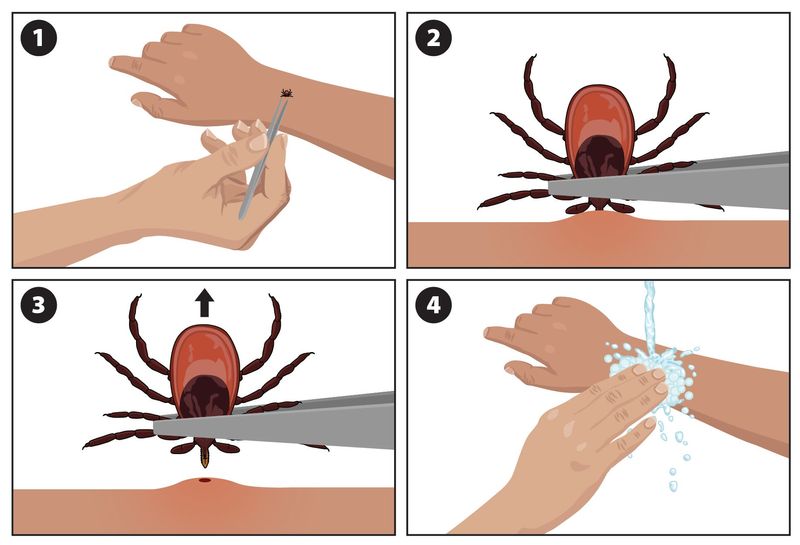
How do you safely remove a tick?
If you spot a tick, remove it as soon as possible; do not wait to get to the emergency room, the CDC said.
“Removing attached ticks within 24 hours can help prevent Lyme disease.”
The CDC offered these tips to safely remove a tick:
Don’t use petroleum jelly to remove a tick
If you’ve heard that you should use petroleum jelly to remove a tick, don’t do it, the CDC said.
“Do not use petroleum jelly, heat, nail polish, or other substances to try and make the tick detach from the skin.
“This may agitate the tick and force infected fluid from the tick into the skin.”
How can I prevent tick bites?
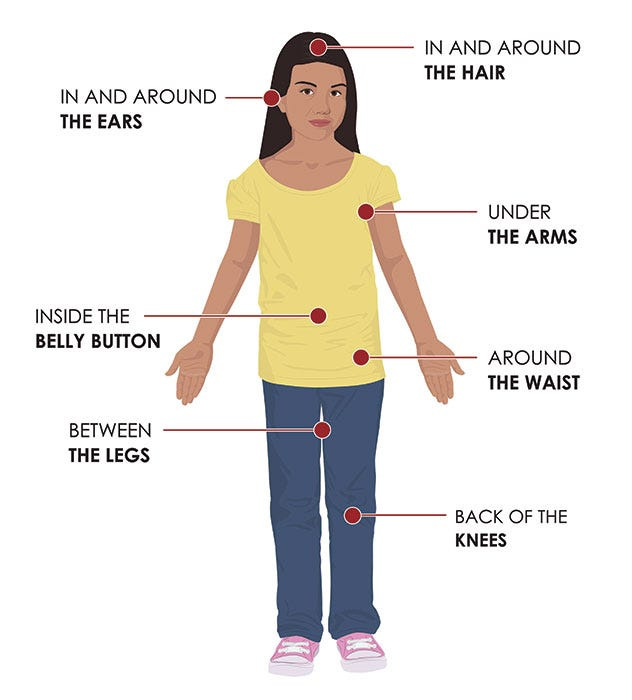
Prevention is the key to avoiding tick-borne diseases, including in your yard, the CDC said. Here’s how to avoid ticks:
After being outside:
CDC reports tick bites ER visits highest since 2017
Unable to see the graphic? Click here.
“Visits to emergency rooms for tick bites are higher than normal in many parts of the country right now,” the CDC said in April 2026.
“In all regions except the South Central United States, weekly rates of ER visits for tick bites are the highest for this time of year since 2017.”
➤ See CDC’s Tick Bite Tracker
Cheryl McCloud is a journalist for the USA TODAY Network-Florida’s service journalism Connect team. You can get all of Florida’s best content directly in your inbox each weekday day by signing up for the free newsletter, Florida TODAY, at https://news-journalonline.com/newsletters.
This article originally appeared on The Daytona Beach News-Journal: Ticks everywhere in Florida, especially in this area. How to stay safe
Reporting by Cheryl McCloud, USA TODAY NETWORK – Florida / The Daytona Beach News-Journal
USA TODAY Network via Reuters Connect
By Cheryl McCloud, USA TODAY NETWORK – Florida | USA TODAY Network