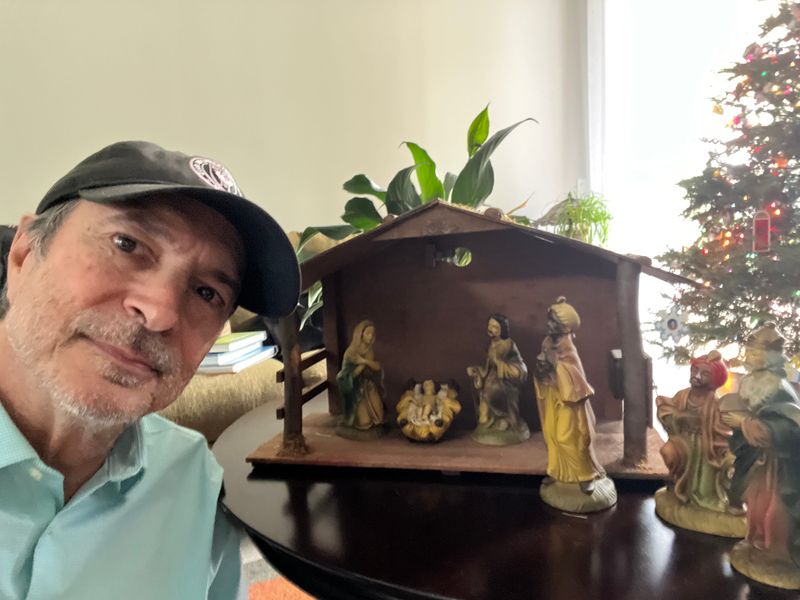
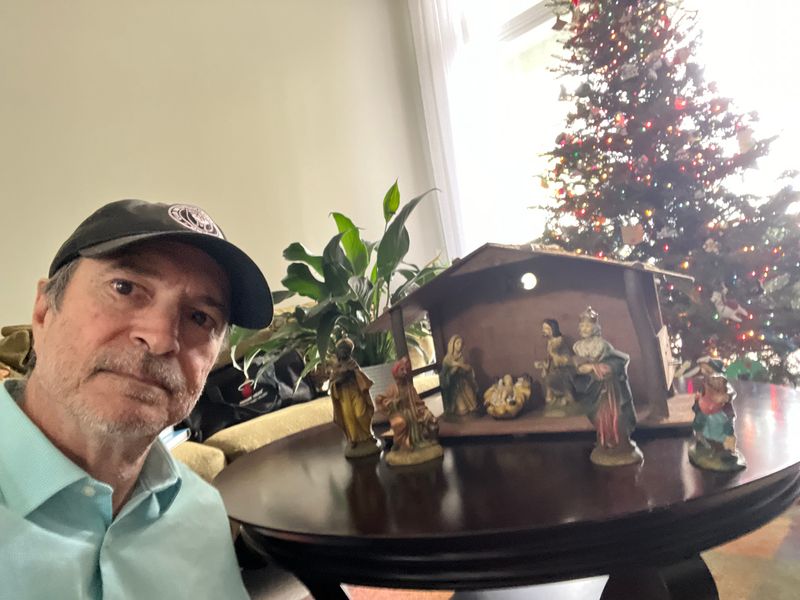
The traveling Three Kings of the New Testament brought the Christ child gold, frankincense, and myrrh. Over my lifetime, they have gifted me identity, legacy and gratitude.
The Christmas season is soon to officially conclude with the Jan. 6 feast of the Epiphany. As revealed in the gospel of Matthew, three gentile magi traveling from the east pursued a celestial star, arrived at the manger where the holy family was sheltered and presented the newborn Jesus with their offerings.

In the United States and Anglo-Saxon Europe, the Christmas celebration of gift-giving is on Dec. 25, observed as the day of Christ’s birth. But for hundreds of millions of people from the Iberian peninsula, parts of France and across the Americas, the 12 days of Christmas are closed out by the Epiphany’s tradition of gift-giving.
As a multicultural American who was exiled to the United States with his family as a small child 60 years ago this month, I was privileged to give and receive gifts on both Dec. 25 and Jan. 6. Today, as I reflect ahead of the next Three Kings holiday, three particular gifts I received over the decades hold a more profound meaning than any toy Santa Claus ever left me under the tree.
Jan. 6, 1970: The gift of identity
What I really wanted to tell my schoolmates about that Jan. 6 were my Hot Wheels Beatnik Bandit, Cheetah and Ford Mustang. But the questions my fellow first graders were hurling at me were only about Melchior, Caspar and Balthazar.
Just minutes earlier, I had dashed into the classroom at Coral Park Elementary in Miami late on a chilly morning as the last chorus of “Winter Wonderland” played on the loudspeaker. I beamed as I opened the palms of my hands to show off the three race cars that were part of a set I had awoken to that Three Kings Day.
What started as a buzz at my desk spread to overall commotion. Who are these Three Kings? Why do they bring presents? And why did Antonio still have a Christmas tree up almost two weeks after Christmas ended?
There was a lot to unpack and our teacher, Mrs. Pollock, nominated me for show-and-tell. So there I stood wanting to talk about Hot Wheels but instead, once again, explaining.
I had done a lot of explaining in that first grade classroom, where I rated as a decided oddity. Just three months earlier I had arrived in the western Miami-Dade County school as the only child in the entire school that spoke no English and entirely in Spanish.
On discuss-your-favorite-picnic-lunch-day, my fellow classmates spoke about hotdogs and pies. I dropped the frita Cubana, a hamburger but with Spanish chorizo, paprika and other seasonings mixed into the beef patty, which is then topped with diced onions and crispy, shaved-thin julienne fries.
When telling about our family’s holiday traditions, I had revealed that on nochebuena we barbecued an entire lechón in a backyard pit fire grill made of concrete cinder blocks and wrought iron cables. Seeing befuddled looks on her students’ faces, Mrs. Pollock likened it to the roast beast in Dr. Seuss’s “How the Grinch Stole Christmas.”
Now, I was explaining the Three Kings tradition of gift-giving in other countries, the 12 days of Christmas festivities past Dec. 25. I talked about how my parents and grandparents, when they were kids, received their toys on Jan. 6, and they wanted us to keep part of that tradition even in a new homeland that did not observe the holiday.
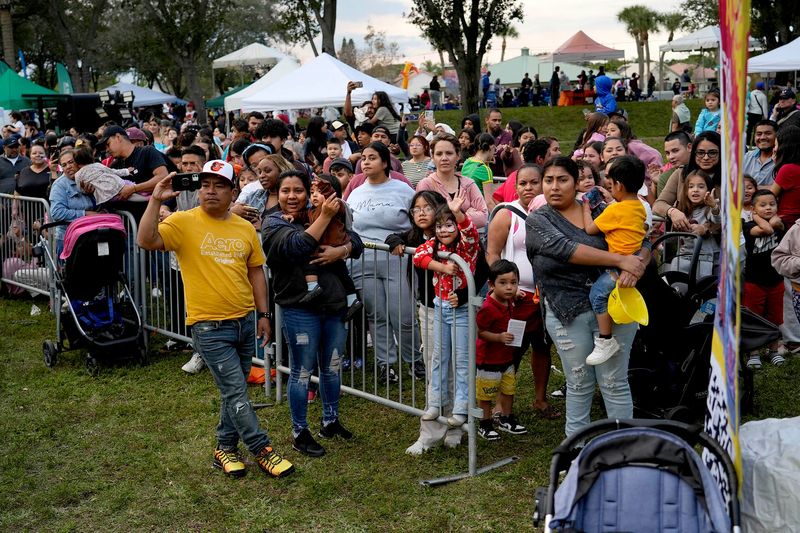
Through the years, from childhood to adolescence to adulthood, more immigrants and exiles from the Americas arrived and the Three Kings holiday would no longer need me to explain it. Parades and celebrations have followed.
For me, however, the Three Kings Day has long been a sort of celestial star pointing to my own profound discovery.
I am the beneficiary of a particular gift: a multicultural identity. I enjoy hamburgers and fritas, speak two languages, feel at home in the United States, Latin America and Spain. I have laughed at jokes by by Eddy Murphy and Guillermo Álvarez-Guedes. I cheer for the Miami Dolphins and Real Madrid. I have danced equally badly to disco and salsa.
I am not an oddity. I am the inheritor of a unique cultural identity, parts Cuban and Spanish, from parents, four grandparents and a platoon of great aunts and uncles. An identity I fused with my own life experiences, tastes, affiliations as an American.
Culture enriches, and I have been blessed with an abundance of customs, traditions, values and heritage I would not trade for the coolest Hot Wheels anywhere.
Jan. 6, 1995: The gift of legacy
My daughter had no clue. She was just two weeks past 6 months old when the Three Kings brought her a Beanie Baby. Ditto for my son four years later when the magi left him a Nerf football.
I’d say they were token gifts but they were too important for me — I was passing on a tradition. By the time my son was born in 1998, all four of my grandparents were gone and the Three Kings Day held even more meaning — and responsibility.
From then on, the gifts would not be toys or items. It was the culture, and it’s cherished.
Both my children are Spanish-conversant. In a bio he wrote, my son noted he was “raised with a strong work ethic and a can do attitude” by his Cuban-born parents, and his films also reflect his Hispanic heritage. My daughter is a dentist who cares for the nation’s military veterans, including those with combat injuries, and takes pride in stepping in to translate when needed.
Now, they don’t celebrate Three Kings Day like I did as a child or as I did during their pre-school childhoods. Truth is, I spent more time talking to them about what the day represents than giving material gifts.
What’s much more important is they have accepted and embraced the gift of culture — from the language to the food to the acknowledgement of their Caribbean and Old World ancestry.
Some will call this textured diversity, others polarizing wokeness. I think of it simply as legacy.
Their embrace of our family’s traditions and customs honors my late parents, grandparents and great-grandparents. But as I see it, their embrace of the richness of culture makes the lives they live far more interesting and engaging, from menus to travel to far-flung cousins.
I realize that I am out of step with the supra-nationalist mood in the country that puts American identity first, whereas clinging to traditions from afar seems unpatriotic, divisive and dismissible as “political correctness.”
Moreover, in today’s America, my fellow countrymen are being taught to fear people like me — the foreign-born. The broad-brush rhetoric is that all Venezuelans want to addict you to fentanyl and Haitians want to eat your pets.
The irony, of course, is that the same people who fear and loathe also extol other foreigners and newcomers from eras past.
For example, take Christopher Columbus. On Oct. 9, President Donald Trump issued a proclamation honoring the Genoa-born, 15th-century seaman and explorer as an “original American hero.” A purpose of the document, the proclamation specifically stated, was to slam “left-wing radicals” for their “vicious and merciless campaign to erase our history, slander our heroes, and attack our heritage” when they highlight the complicated history of European colonization in the hemisphere.
But Trump also wrote: “As we celebrate his legacy, we also acknowledge the contributions of the countless Italian-Americans who, like him, have endlessly contributed to our culture and our way of life.”
I will point out that my parents and grandparents were equally courageous in fleeing communism to bring us to this country, just like those fleeing today’s regimes in Cuba, Nicaragua, Venezuela and other places. Our communities here have equally contributed squares to the quilt of traditions that is American culture and life, from cuisine to music to sports. One of our own in December won college football’s Heisman trophy and even briefly spoke to his family in Spanish during the ceremony.
Don’t get me wrong. We don’t need a federal holiday like Italian-Americans have.
We already have carved our own onto the the landscape of the U.S. calendar: The Three Kings Day on Jan. 6.
Jan. 6, 2025: The gift of gratitude
On this Day of the Epiphany in 2025, there would be no celebration and no gifts.
It was 7 a.m. as I lay under warm blankets reminiscing about Three Kings Days as a kid and parent. But I wasn’t in my bed or my room.
I was parked in a hospital gurney near an operating room awaiting surgery. Just four months before, I had received cancerous biopsy results.
The irony of the scheduling of the surgery for Jan. 6 was not lost on me that morning 12 months ago. As I lay there, I wasn’t thinking of Hot Wheels or customs but, rather, what I imagine are the same anxieties every cancer patient lives through at the outset of treatment. Would the cancer be worse than believed? Would the surgeon successfully remove it all? Would the pathologist find it had spread? Would radiation or chemo or some other treatment follow?
But more so, I thought of all the things I had to lose. Would I be around for my daughter’s wedding? Would I be able to coach my grand nephew’s baseball team?
Then, I had an epiphany of the mind but really more of the heart and soul — you only fear losing what you have when you realize how much you have.
I have lived a privileged life — abundant family, successful children, well-traveled, an education and career I could not have imagined as I struggled to learn English in that elementary school. And, especially, good health to enjoy it all, cancer or not.
At that moment apprehension, the worry, the unease gave way to a profound, overwhelming sense of gratitude. I simply felt grateful.
In the year since the surgery, I have found there is no more liberating emotion than feeling thankful. Being appreciative frees you completely from regret and discontent, To embrace the conviction that you lack nothing is the exact opposite of bondage to the negative — grievance, entitlement, dissatisfaction and the unrelenting want for more.
Again, I understand I may be a unicorn of sorts on American main streets. And even so in the South Florida Cuban enclaves I grew up in where immigrant gratitude has been elbowed out by “Don’t tread on me” flags flying in front yards of ranch-style homes and on center-console Contender boats, and adorning license plates on Ford F-150s.
But as this upcoming feast of the Epiphany closes out another season of gift-giving here and elsewhere, I will count my blessings, including identity, legacy and gratitude, and know I could not ask for more — or want for more.
Antonio Fins is a politics and business editor at The Palm Beach Post, part of the USA TODAY Florida Network. You can reach him at afins@pbpost.com. Help support our journalism. Subscribe today.
This article originally appeared on Palm Beach Post: Three Kings Day and me: The gifts of identity, legacy and gratitude
Reporting by Antonio Fins, Palm Beach Post / Palm Beach Post
USA TODAY Network via Reuters Connect