Coconut Point’s owners said they explored the possibility of converting to data centers.
“We really scoured our portfolio (for) malls that might have had a lower-growth profile — or potentially excess land at some other malls — to see is there anywhere that makes sense for a data center,” CEO Eli Simon said during Simon Property Group’s most recent quarterly earnings call. “We talked to various data center operators. And we couldn’t find anything that made sense.”

And it wouldn’t largely make any sense in Southwest Florida either if the ongoing record back-to-school shopping at Estero’s Coconut and other centers across the region ahead of this week’s start of classes is any indicator.
The children hitting the stores with or without an accompanying adult or two as part of events like this past weekend’s “Power Up for School” simple soiree’ at Estero’s Gulf Coast Town Center or at other Lee and Collier county venues to draw buyers away from the digital world are a big reason for it now and in the future. That Generation Alpha, along with Generation Z leading the way, are helping power what many analysts are calling a renaissance.
And there’s expansion ahead. Who said malls are dead? Here’s what to know.
What is only retail segment showing growth while the rest lag big time?
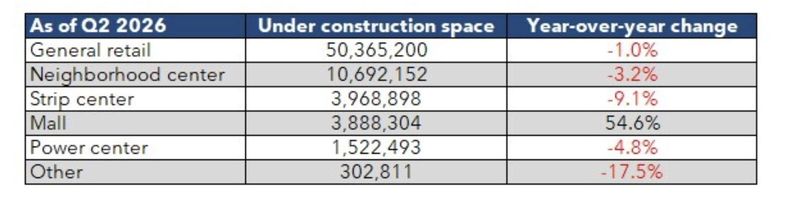
In data provided to In the Know, there was only one segment showing growth in new U.S. retail construction in the second quarter of 2026 as compared to a year ago: Malls. And it wasn’t by a little. It was by a lot, according to CoStar Group analytics, which specializes in industry statistics and has been tracking Simon’s data center talk.
Mall growth was way up in the blue column, nearly 55%. Everything else was sinking into a deep red state of affairs.
How much has percentage of online back to school shoppers dropped?
And the shopping surge is showing up right now. Last year, 55% of K-12 shoppers purchased online ahead of the first school bell, according to the National Retail Federation known as NRF. This year, only half had planned to do so as part of an unprecedented $43 billion in that kind of spending.
For college-related shopping, only 41% plan to shop online this year, marking the lowest level since 2016, NRF said, even as a record $104 billion will be spent, shattering the previous high by $10 billion. But then again, just about everything has become significantly more expensive in the past year and more.
What percentage of shoppers are making their purchases in stores now?
One reason for the resurgence is a generation that grew up online but increasingly wants in-person experiences.
Consumers ages 18 to 24 made 62% of their general merchandise purchases in stores last year, according to Circana market research. That’s 10 percentage points higher than shoppers 25 and older.
How much did mall traffic increase this year, and why is that happening?
And that shows up in the foot traffic measured by Placer.ai research. All three mall formats saw year-over-year visitation growth in the first half of 2026, with open air centers leading at nearly 5%, followed by indoor malls at about 2% and outlets at 1% in a difficult economic year for many balancing record household goods prices and soaring oil costs the past 18 months.
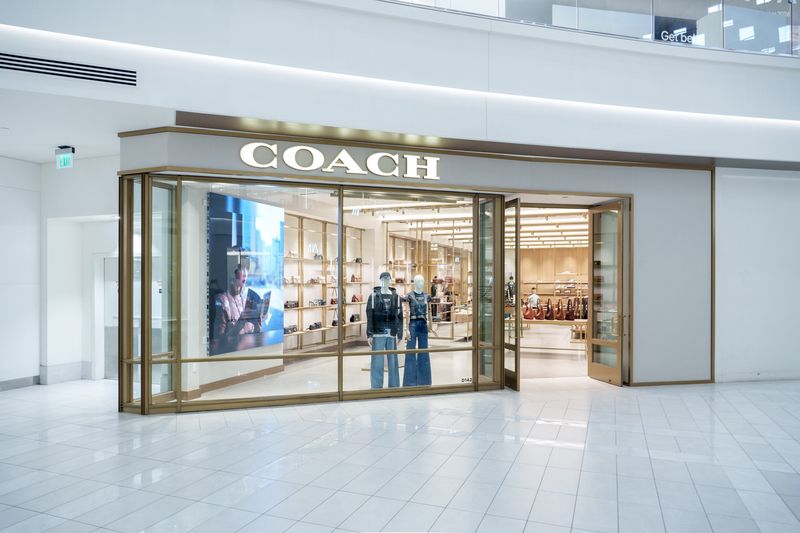
“For this younger generation, there’s a return to in real life shopping, and malls and outlets are part of that equation,” CEO Todd Kahn of Coach, which has a presence in Estero’s Miromar Outlets, told CNBC. “They see the TikTok image. They see what they want. They’re like, ‘I want to go get that.'”
‘Future of retail isn’t digital; it’s intentional, connected and human’
Pacsun, which has locations in Estero’s Coconut and in Naples Coastland Center and overcame a 2016 bankruptcy, spent years shrinking its footprint and is now expanding again. The company plans to open as many as 35 sites over the next three years.
“The future of retail isn’t digital or physical — it’s intentional, connected, and human,” said Pacsun CEO Brieane Olson, who is “building a brand that earns its way into real-world spaces. For the first time in years, Pacsun is opening more stores than we’re closing. Not because retail is ‘back,’ but because culture is local, community matters, and Gen Z still values spaces that inspire connection.”
What’s ‘playing key role in mall revival, challenging earlier assumptions?’
With the positioning as experiential hubs, customers are spending more time, with durations of 73 minutes at indoor malls and 67 minutes in open-air destinations, according to a May deep dive by retail analytics firm Coresight Research in its “The American Mall Renaissance” study.
“Gen Z’s strong preference for physical retail and social shopping experiences is playing a key role in the revival of malls, challenging earlier assumptions that this cohort would remain mostly digital,” said Coresight Primary Analyst Sujeet Naik. “The Gen Z influence is broadening the mall recovery story beyond luxury and trophy assets. While top-tier malls continue to lead in performance, this demographic is also reinforcing the relevance of healthy mid-tier properties, particularly those with the right mix of youth-oriented fashion tenants.”
Old school. “This mall resurgence partly rooted in broader nostalgia cycle’
And this may warm the cockles of your heart. There’s a little bit of old school in play.
“This resurgence is partly rooted in a broader nostalgia cycle: Gen Z’s embrace of 1990s and early-2000s aesthetics is benefiting legacy youth retailers such as Abercrombie & Fitch, Hollister, Aeropostale, Garage and Charlotte Russe,” Naik said. “At the same time, digitally native brands such as Edikted, emerging concepts such as Altar’d State and international brands including Olive Young, Princess Polly, Sukoshi and Subdued are bringing novelty and global appeal to the mall tenant mix.”
What about this movement from social media to social spaces?
“Gen Z has grown up with frictionless digital commerce as a baseline expectation, yet precisely because of this ubiquity, they increasingly seek the tangible, social and experiential dimensions of physical retail,” Naik said. “Malls function as social infrastructure for Gen Z: places to meet, be seen, discover brands through peer interaction and engage with the multisensory environment of curated retail. The ‘mall as third place’ — between home and school or work — has re-emerged as a culturally resonant concept for this demographic.
“This stems in part from a generational experience of isolation, as many in this cohort grew up during the pandemic lockdown and experienced a more digitally mediated reality than prior generations. The influence of social media, particularly TikTok and Instagram, has made the mall a content-creation destination, where aesthetically curated spaces serve as backdrops for organic and shareable moments. (Looking) ahead, as Gen Z’s spending power continues to grow, their influence will remain a key structural driver of malls’ long-term relevance.”
What is the occupancy for malls now compared to just a few years ago?
That relevance is already here.
The National Council of Real Estate Investment Fiduciaries and the International Council of Shopping Centers show that U.S. mall occupancy has been on an upward trajectory, with rates rebounding from a post pandemic low of 85% in early 2022 to a peak of 91% by mid-2025. Coconut’s parent, Simon Property Group, has been reporting occupancy in the 96% to 96.5% range across its portfolio in recent fiscal quarters, near company historical highs.
How many more billions are lenders pumping into mall properties?
So no wonder lenders are also returning to the sector. Commercial mortgage-backed securities financing for mall properties climbed to $7.8 billion in 2025, up from $4 billion during all of 2024, according to CoStar.
Major lenders including Bank of America, Goldman Sachs, JPMorgan Chase, Morgan Stanley and Wells Fargo have participated in large mall financings.
What are some of the additions at Waterside Shops in Naples, Florida?
Southwest Florida’s retail landscape offers examples across the spectrum of mall and shopping additions.
Naples Waterside Shops continues to strengthen its luxury lineup, especially RH’s planned arrival as one of the area’s most significant retail investments that we first reported a couple of years ago. Piranesi, the century-old luxury jewelry house, plans to open at Waterside on Oct. 1, adding another upscale retailer.
What are some changes in Southwest Florida malls and shopping?
Naples Mercato remains active with experiential concepts, dining and entertainment offerings we’ve been reporting on. Midtown Bonita continues to work on a mixed-use shopping component, and the Fort Myers Edison Mall has been working on a redevelopment concept.
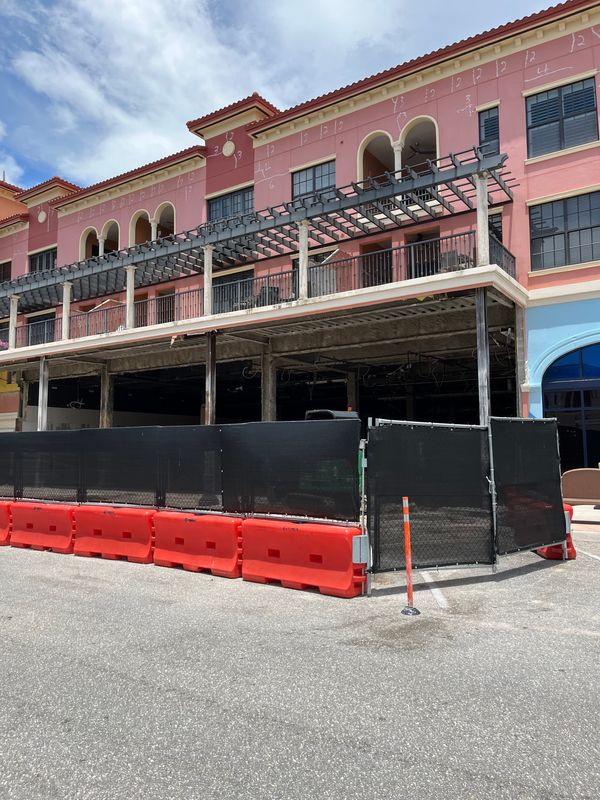
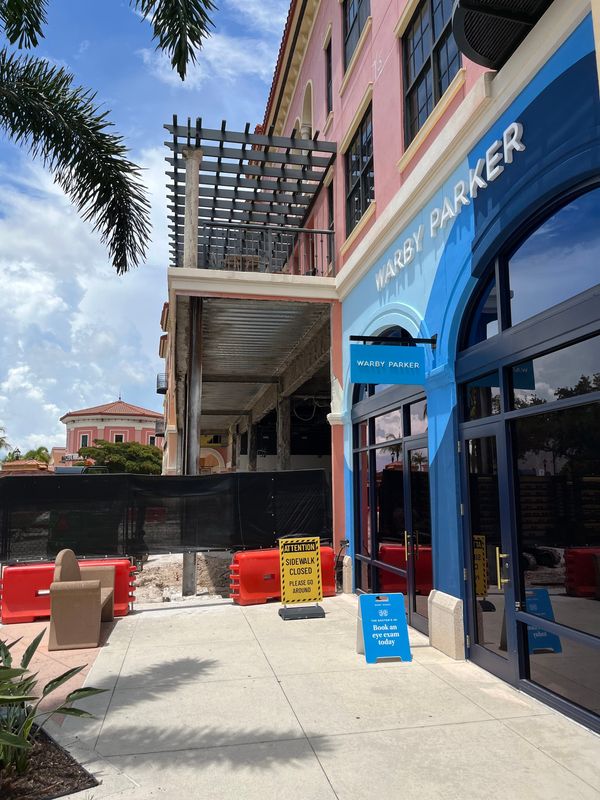
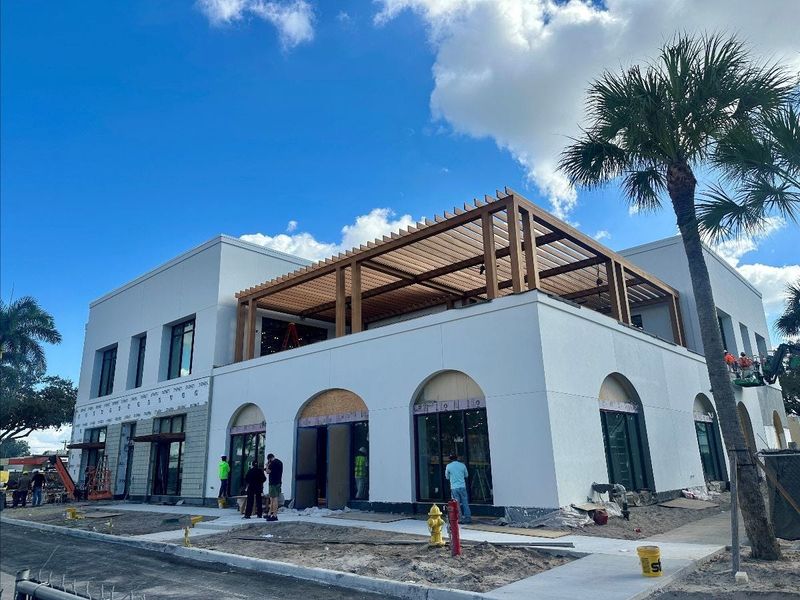
At Coconut, new tenants In the Know first reported on this year include Shake Shack, Brooks Brothers and Kendra Scott. Across from Coconut, additional projects from Woodland Development we shared earlier this decade are slated. In south Cape Coral, the developers of Bimini Square have talked with City Council members about an adjacent expansion of hundreds of millions of dollars featuring shopping, housing and hotel rooms by the time it would be done next decade. That would go with other concepts envisioned further north along the Pine Island Road corridor.
What kinds of investments are occurring in the SW Florida retail market?
The investment activity extends beyond new construction, big and small. Among the deals that were continuing to emerge last week, Kite Realty added Founders Square in North Naples as part of a $65 million acquisition after a selloff worth more than $400 million late last year. And Regency Centers has acquired Naples Berkshire Place along Radio Road for $9 million. The fully leased property includes tenants such as Starbucks, Five Guys, Verizon and Moe’s Southwest Grill.
“This was a highly sought-after retail asset, given its strong tenancy and location within a growing Naples submarket,” said LQ Commercial Principal Mike Concilla, a broker in the transacton. “Demand remains strong for stabilized retail centers that provide daily-needs services and consistent consumer traffic.”
Writing In the Know for the USA TODAY Network, Columnist Phil Fernandez (pfernandez@gannett.com) grew up in Southwest Florida and has led Pulitzer Prize-winning efforts. Sign up for our free Breaking Ground growth and development newsletter. Subscribe to our News-Press and Naples Daily News apps.
This article originally appeared on Naples Daily News: The mall comeback is real, and Florida is right in the middle of it
Reporting by Phil Fernandez, Fort Myers News-Press & Naples Daily News / Naples Daily News
USA TODAY Network via Reuters Connect

By Phil Fernandez, Fort Myers News-Press & Naples Daily News | USA TODAY Network