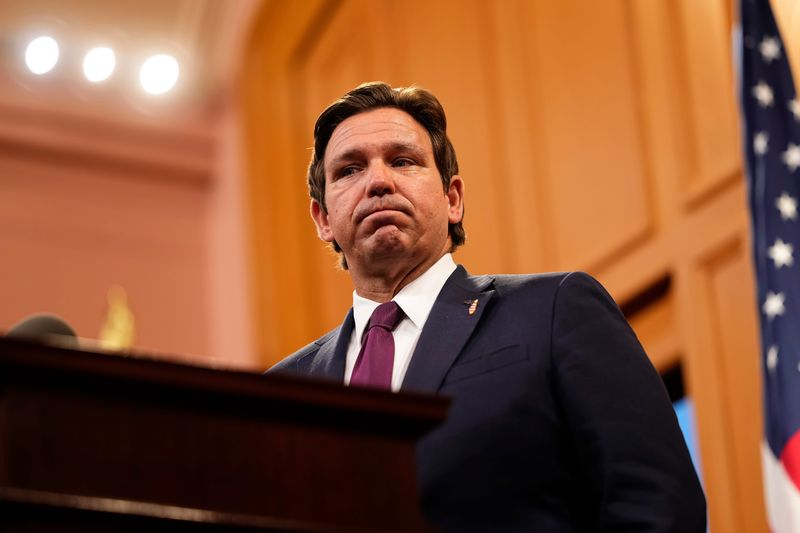
In 2023, the Florida Legislature approved Senate Bill 102, known as the Live Local Act, and Gov. Ron DeSantis signed it into law. The next year, lawmakers revised the legislation. Further updates to the act were approved by the legislature in the spring of 2025, and they will go into effect July 1.
The Live (pronounced “liv”) Local Act is intended to address the state’s growing housing-affordability crisis by encouraging development with significant land-use, zoning and tax benefits. It makes various changes and additions to affordable-housing-related programs and policies at both the state and local level. It also requires certain information be made available on local government websites.

However, things have not always run smoothly for the statewide housing strategy.
Among the key criticisms: The plan has not reached those most in need; that it has the potential for developers to prioritize tax incentives over affordability; and that it intrudes on local authority and planning efforts, infringing on the surrounding community.
Here are some key provisions and everything you need to know:
How does the tax incentive for developers work?
The Live Local Act has a provision that gives developers a 75% exemption on property taxes when they build rental housing targeted for middle-income families — those with incomes that fall in the range of what a family with 80% to 120% of the area median income of the community would be able to comfortably afford. This group is sometimes called “the missing middle.”
There must be more than 70 affordable units in a development to qualify for this tax break, and only the affordable units would qualify. So, for example, in a 200-unit project with 75 affordable units, only the portion of property taxes covered by the 75 affordable units would get the tax reduction.
Under a separate provision, developers can get a 100% property-tax exemption for qualifying developments with units targeted to families with incomes that are less than 80% of the area median income of the community.
In a training session on the act, Marisa Button, managing director of strategic initiatives for the Florida Housing Finance Corp., said this tax break provides “another tool in the tool belt of affordable-housing providers.”
There is a two-step application process to get approval for this tax break — going through the Florida Housing Finance Corp., then to the local county property appraiser.
Can a county, city or school district opt out of the Live Local Act?
A governing board of a county, city or school district can opt out of the missing-middle property-tax exemption through a “supermajority” vote of at least two-thirds of the board.
The board can opt out only if the geographic region it is in already has more affordable-housing units than the number of households at or below 120% of the area median income of the community — in other words, it has a “surplus” of affordable housing.
Among cities that now have a deficit of affordable housing — and are thus not eligible to opt out of offering the tax break — are the metropolitan areas that include Miami, Fort Lauderdale, West Palm Beach, Port St. Lucie, Fort Myers, Naples, Sarasota, Lakeland, and Ocala.
There is no opt-out provision for the tax break for developments targeted to families with incomes that are less than 80% of the area median income.
Can local governments offer more incentives?
Local governments also have the option to enact an ordinance providing property-tax exemptions to certain affordable-housing development of 50 or more units that set aside at least 20% of the units as affordable to household at or below 60% of a community’s median income. The exemptions apply only to the property taxes for the affordable units.
The tax break can be up to 75% if fewer than 100% of the units are considered affordable, and up to 100% of all the units are considered affordable.
Jacksonville and St. Petersburg were among the first cities to adopt such programs.
What if the Live Local Act project violates local zoning ordinances?
There are provisions for more flexible zoning for affordable housing in areas within a county or city that had been designated for commercial, industrial and mixed-use development.
For example, this includes easing of rules on building height, under which a residential building can be built to the highest currently allowed height for a residential or commercial building in that county or city that is within a mile of the proposed development site, or three stories, whichever is higher. There also is more flexibility related to site use (the category of development allowed on a parcel), as well as to density standards (the number of housing units allowed per acre). These provisions override the local government’s height, zoning and density regulations for a specific parcel of land.
To qualify for these zoning rule exemptions, a developer must set aside at least 40% of the project’s rental units for affordable rental housing geared to households earning no more than 120% of the area median income for at least 30 years.
Such projects would be administratively approved, with no action required by county or city governing bodies, such as a zoning board or a city council, as long as the development otherwise complies with the local government’s comprehensive plan.
How does the funding of state housing programs work?
The Live Local Act assures full funding of two long-established state housing programs through the Sadowski Trust Fund program, which gets revenue generated through a portion of documentary stamp taxes collected on real estate transactions.
These housing programs are the State Apartment Incentive Loan or SAIL program, which provides low-interest or no-interest loans for development of affordable housing; and the State Housing Incentive Partnership or SHIP program, which deploys funds to Florida’s 67 counties and 55 eligible municipalities for various housing programs.
The act also codifies the state’s Hometown Heroes Program into state statute. This program provides down-payment and closing-cost assistance to eligible first-time homebuyers who are Florida residents and work for a Florida-based company.
How is public land identified for affordable housing?
Counties and cities must compile an inventory of publicly owned land that could be appropriate for affordable-housing projects, if such land exists in the community. The resulting list of those properties must be posted on the local government’s website.
Are there special programs for nonprofits?
Property-tax exemptions on the value of the land are provided on land owned by a nonprofit organization and leased for a period of 99 years to predominantly provide affordable housing to households at or below 120% of a community’s median income.
What are the latest changes approved by the Florida Legislature?
The Florida House on April 30 and the Florida Senate on May 1 unanimously approved a series of changes to the Live Local Act, as part of Senate Bill 1730. They will take effect July 1, after the bill was signed on June 23 by DeSantis.
In analysing the legislation, Kody Glazer, chief legal and policy officer for the Florida Housing Coalition, believes the amendments are generally beneficial for spurring efforts to build more affordable-housing projects. Glazer said he believes the most significant change in the bill is that it clarifies that the act applies to properties within planned unit developments, which sometimes also are known as master planned communities.
Among other changes, the measure offers more flexibility for approval of affordable-housing projects on parcels owned by religious institutions. This type of provision is considered a “Yes In God’s Backyard,” or a “YIGBY,” reform. Such reforms are becoming more common across the country as a way to unlock land owned by religious institutions to address local housing shortages.
The bill also prevents local building moratoria that have the effect of delaying the permitting or construction of a Live Local Act land-use project unless:
The amendments also have some added restrictions. For example:
Dave Berman is business editor at FLORIDA TODAY. Contact Berman at dberman@floridatoday.com, on X at @bydaveberman and on Facebook at www.facebook.com/dave.berman.54
This article originally appeared on Florida Today: Q&A on Florida’s affordable-housing Live Local Act: What is it and why is it controversial?
Reporting by Dave Berman, Florida Today / Florida Today
USA TODAY Network via Reuters Connect