Polk County Detective Jason McPherson visited Florida’s death row on July 24 hoping to ask James Duckett before his execution if he also killed 14-year-old Jeanifer Weldon in 1987 ― to give him one last chance to confess.
But calling him a psychopathic child rapist and killer, Sheriff Grady Judd said Duckett refused the meeting and stayed in his cell on death row just days before his execution for the rape and murder in Lake County the same year of 11-year-old Teresa Mae McAbee.

Duckett was executed just after 1 p.m. on July 28 at Florida State Prison near Starke.
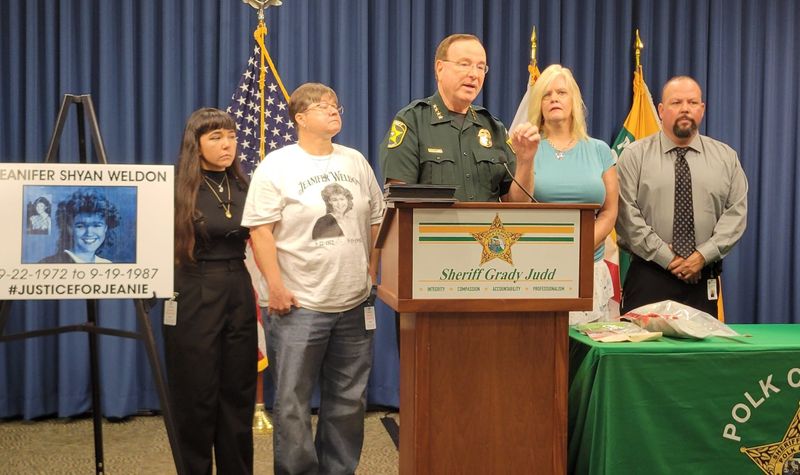
Two days after the execution, during a July 30 news conference at the Sheriff’s Office in Winter Haven, Judd was joined by Weldon’s surviving sisters and her best friend and McPherson. They had attended the execution alongside members of the McAbee family.
In 1987, another Polk County Detective, Bob Weeks, was the first to connect Duckett with the local case when he saw the newspaper reports about Duckett being suspected in McAbee’s murder. Judd said. He added, that Weeks had told Duckett nearly 40 years ago that his face would be the last thing he saw while awaiting a lethal injection in the death chamber.
The Weldon case has been assigned to several cold case detectives in Polk County in the 38 years since the murder, but at the news conference, Judd said the case is now considered cleared and has been sent to the State Attorney’s Office for a final review.
Weldon sisters and best friend gave emotional statements
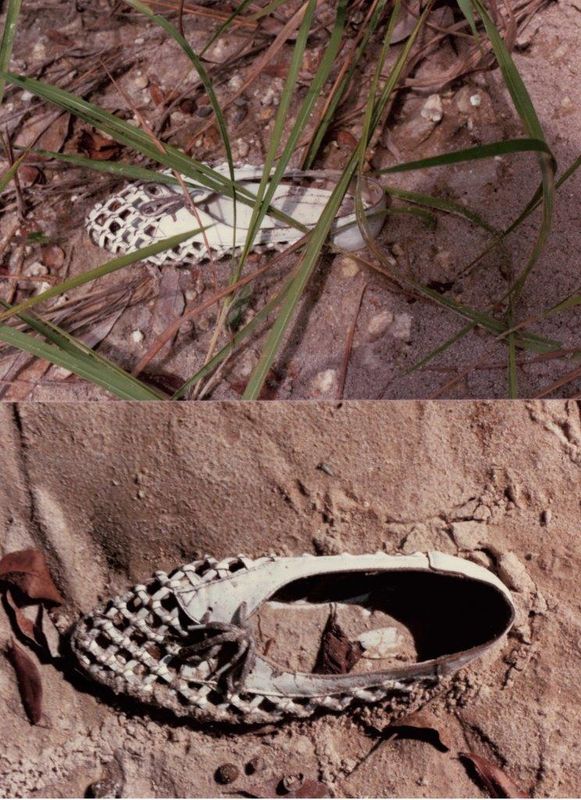
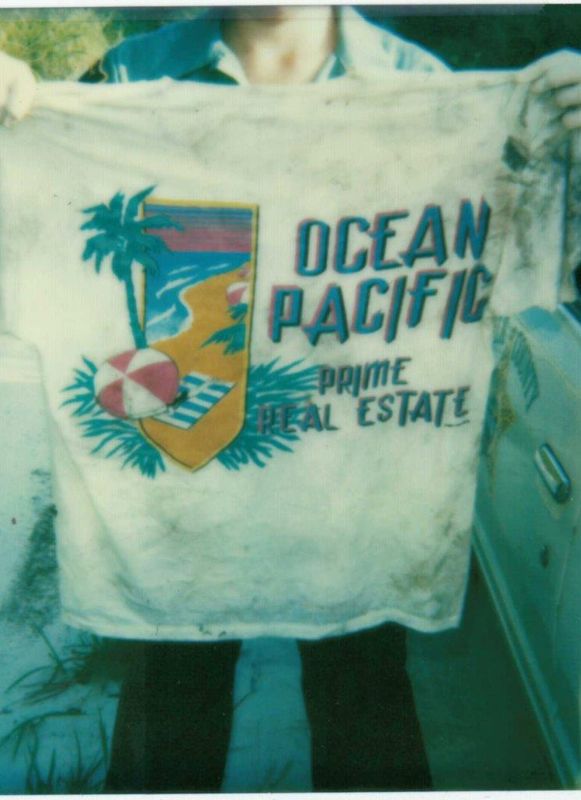
Friend Mindy Oakley recalled she and Weldon often shared clothes, like best friends often do, and the shoes and a T-shirt found with the victim’s skeletal remains at the crime scene belonged to Oakley, she said.
“We shared everything. That was my shirt, my shoes that she had on,” she said of crime scene photos Judd had shared with the media. She also thanked the McAbee family. The two families had bonded because of the two murders.
“They were gracious to us because even though we know that Duckett killed her, they didn’t have to let us be there,” Oakley said. “They didn’t have to let us attend the execution. They didn’t have to let us be a part of that, and we’re very grateful.”
Sister Hope Limansah, who was not yet born at the time of the murder, said growing up and even today she looks over her shoulder in fear as a result of growing up in a family in which a sister had been murdered.
“I never got to know her,” she added. “Those are big shoes to fill, to come into the world as the first child born after the last one was taken. So, I’ve always been acutely aware of the gravity of her absence, even though I never met her, because of efforts from my big sister Amy and many best friends.”
“I often wonder what could have been or what it could have been like to know her,” Limansah said. Her deceased sister “was gone before the birth of my nephew, my sister’s children. One day I’ll get married and she won’t be there.”
“So I’ve never stopped wondering, what it would have been like to have my sister in my life? What we might have in common, what we might fight about as sisters? All the things that I can never know.
“I have grown up fearful my entire life. I was raised looking over my shoulder all the time,” Limansah said. “It impacts people a lot. And unfortunately, my mother struggled her entire life with the death of our sister. She passed away before she could ever see any semblance of justice.”
Amy Weldon, another sister, said, “We have so many classmates that have reached out and have never let her memory die, which is the saving grace for me going through the murder at 14 years old.”
About the execution, she said, “I’m confident the right person was executed. I don’t like how long it took. But I am confident 100% the right person died.”
Of the McAbee family she added, “I am grateful for the other family. Our family had always prayed for them and they prayed for us.
“Hopefully her memory will stay and keep going for a very long time because I know we will never forget her,” Amy Weldon said. “And I always wonder what it would be like if she was still here. You just grow up differently when you go through something like that.”
For anyone who doesn’t believe in the death penalty or executions, “What I like to say back is that when you take a child, their life and you rape them and you strangle them and you dump them like they are nothing and that’s the last memory you have and you can’t even identify them because they’re out on the street just decomposing, what I like to tell people is, what if that was your family?” Amy Weldon said.
“They didn’t deserve it,” she added. “Teresa didn’t deserve it. My sister didn’t deserve to die.”
All three woman praised the Sheriff’s Office, State Attorney’s Office, prison staff and the Governor’s Office for their work on the case.
How the Sheriff’s Office identified Duckett as a suspect
While most of Judd’s revelations at the news conference have been previously been reported by The Ledger, he went over the circumstantial evidence that led the agency to believe Duckett was the prime suspect in the abduction, suspected sexual battery and strangulation of Weldon, revealing a few details never before released by the Sheriff’s Office, including decades-old photos.
Raising an age progression image of Weldon, Judd, said, “Jennifer’s not with us today. You know, she wasn’t able to graduate from high school. She couldn’t go to college. She never had the opportunity to marry the love of her life.”
He continued, “She never had the opportunity to have a child. She never had the opportunity to send her children away to elementary or kindergarten on their first day. Could not watch them graduate from high school.
“And who knows, maybe she or her children would have been the one that turned into the scientists that found the cure for cancer,” Judd added.
He showed an image of Weldon’s bedroom with multiple stuffed animals around the room.
“As you see, she liked to have stuffed animals,” Judd said. “And she planned to add a stuffed kitten … that never made it home. Just like Jeanifer never made it home.”
Her body was found on Oct. 2, 1987, in grass along a road near a Fort Meade phosphate mine.
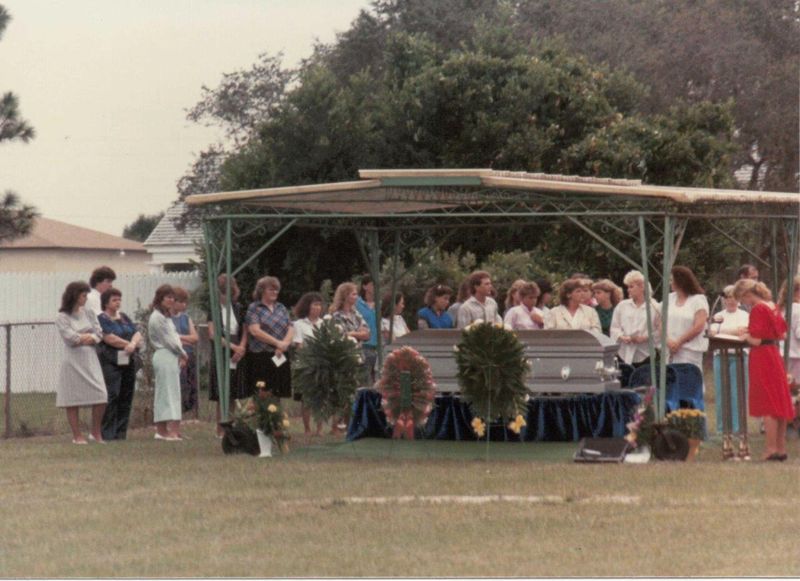
“You’re not supposed to see a casket of a 14-year-old beautiful little girl. But here it is,” Judd said holding up a picture taken at the girl’s funeral.
“And James Duckett viciously abducted, we suspect raped; and we know from circumstance murdered, violently murdered, this little girl,” the sheriff said.
After arrest, Polk County had built a case against Duckett
Because Duckett was already convicted of the Lake County murder and sentenced to death, the Polk County Sheriff’s Office did not pursue its case against their prime suspect.
Duckett was on duty as a Mascotte police officer at the time of the McAbee murder. During that investigation, he was fired by the department. Judd said he may have had an extra police uniform or badge he used to lure Weldon into his car as he drove between his home in Webster toward the phosphate mine down U.S. 98 where he worked.
Weldon, who lived on North Socrum Loop Road in Lakeland, disappeared on Sept. 19, 1987, Judd said, just three days before her 15th birthday. She had spent that Saturday in Tampa with friends, including a boyfriend, his mother and later with another friend.
In Tampa, Weldon got a stuffed animal, a kitten that she was going to take home and add to her collection in her bedroom. She also had a green bag that held the kitten.
The mother dropped Jeanifer at a friend’s house on U.S. 98 North where she hung out until about 9 p.m. She started to walk home, which was about 2 miles away. But she never made it.
“Jeanifer was reported missing,” Judd said. “And that began a frantic search by family, friends and law enforcement to find Jeanifer. That search did not end for 13 days.”
On the 13th day of the search, an employee of the phosphate mine drove down a small dirt road in one of the mines and noticed a pair of shoes on the side of the road. He stopped, got out of his car, and smelled and located the victim’s remains before he called police.
Shortly after, Duckett was arrested for the abduction, rape and murder of McAbee while he was on duty as a police officer.
“In that investigation, they had fingerprints. In that investigation they had some of Duckett’s pubic hair,” Judd said. “They had a very strong scientific case, they had witnesses, they had evidence and he was arrested.”
“He had been fired in June before he was arrested on Oct. 27,” Judd said. “Thank goodness there was a great investigation done, and there was evidence found. Obviously, there was no evidence that we had in this (Polk County) case at the time.”
Weeks, the Polk County detective, said at the time that there is too much opportunity for this to not be the same person.
“We learned that in fact, this suspect, James Duckett in the Lake County rape and murder of an 11-year-old, once lived in the McDuffy Mobile Home Park about one mile south of Fort Meade and only 1.8 miles from where Jeanifer Weldon’s body was found,” Judd said
“We know that on June 19th, when Duckett was fired from the Mascotte Police Department and was under investigation for the murder, he had been re-employed by the mines.” Judd said. “We know that he drove from the Webster area in Sumter County, where he was currently living, south on Highway 98 every day to go to work.
“We know on Sept. 19th, that fateful night, that Jeanifer disappeared, that he left for work five hours before he was to show up at work. He wasn’t to go to work until 11 p.m. that night.
During the Polk County investigation, detectives learned Duckett was always prompt to his workplaces, Judd said. But that night. he was two hours late. He arrived sweaty. He told his employer that he had had car trouble, but they noticed his hands weren’t greasy or dirty, and he seemed a little upset or agitated. But he went to work.
He then returned home after work to his wife and children and gave his wife a green bag and a gray kitten. But since they had two children the wife said the kids would argue over the stuffed animal and threw it away.
A detective was able to go back to the store where Weldon had shopped in Tampa to confirm the store was using green bags.
In the late-1980s, DNA evidence was not as advanced as it is today, Judd said. So there was no DNA evidence or surveillance video evidence such as license plate readers available for the Weldon case, nor could detectives locate an independent witness.
Still, despite the case being circumstantial, “We found nothing to the contrary to eliminate him as a suspect,” the sheriff said.
“So we got to a crossroads several years ago. It’s like. Do we try to push a circumstantial case to a jury. It’s a great circumstantial case. But we’ve got him really locked down tight on this Lake County case. He was convicted. And he was sentenced to death,” Judd said.
He said they decided not to try for another conviction and potentially jam up the existing conviction and death sentence “or create more for his defense or more arguments or more excuses why he shouldn’t be executed.”
Judd said they decided to hope he would confess at some point, but he never did.
“We know that he’s a psychopath. We know he’s a child rapist, murderer,” he said. “We know he’s pure evil in the flesh. We have worked this case for the last 38 years and 10 months, or 14,199 days.”
“And we saw justice executed this last Tuesday,” Judd said. “Our detectives went up on Friday to give him one last chance to clear his soul and confess to the murder. He wouldn’t see us.”
He added, “He was a psychopathic, murdering, vicious child pedophile up to the very end.”
The Lake County murder trial took eight months, Judd said. “Today. It will take us four or five years to get him tried. That’s a condemnation on this system. He had appeals, but it still took us 38 years for justice to occur.
“And our detective that worked his case (Weeks) told him, ‘I’d be the last face your eyes ever saw before you died from execution,’ and that detective was there.
“I can’t even think of the word. It’s heart wrenching for us that he wouldn’t even say he was sorry,” Judd said.
This article originally appeared on The Ledger: ‘Pure evil’ killer refused to confess before death, Polk sheriff says
Reporting by Paul Nutcher, Lakeland Ledger / The Ledger
USA TODAY Network via Reuters Connect

By Paul Nutcher, Lakeland Ledger | USA TODAY Network