By a nod of heads, Collier County commissioners agreed to continue an exploration into privatizing the county’s tourism marketing efforts.
The decision came after a workshop on June 30, where commissioners heard a detailed presentation from a steering committee that’s driving the initiative.

The committee is made up of tourism and other business leaders in the county who support the change, seeing it as a way to dramatically boost the destination’s competitiveness.
The county’s tourism bureau has seen a decline in staff and has one of the smallest budgets for promotion in the state.
At the workshop, the committee presented a proposed governance and operations framework for the destination marketing organization (DMO).
Among the recommendations: A board of directors that would include four to six tourism representatives, two to four community and business leaders, one to three government representatives, and a few strategic experts.
Four committees would report to the board: An executive committee, a finance and audit committee, a governance committee and a government affairs and advocacy committee.
The proposed staffing model shows 14 full-time employees. The hybrid model includes support from outside consultants.
The new organization would operate independently as a nonprofit 501(c)(6), tapping into government funds.
Most of the organization’s funds are expected to come from a share of the county’s 5% tourist tax charged on hotel and other overnight stays by visitors. However, it would have the flexibility to seek other public and private revenue sources to increase the marketing budget.
Supporters argue privatization could improve marketing efficiency, talent recruitment and responsiveness to crises, such as hurricanes. However, county commissioners have expressed concerns about ensuring transparency and accountability and preventing fraud and the misuse of government money.
At the workshop, members of the steering committee worked to address the county commission’s concerns by:
The committee has worked on the effort for more than a year. It formed in May 2025, a few months after Collier County Manager Amy Patterson commissioned an operational and governance study for tourism marketing.
Ultimately, the study, conducted by the county’s former tourism director Jack Wert and his firm, Wert Marketing Group, along with Civitas Advisors, recommended privatization to improve marketing and operational efficiency.
However, county commissioners have proceeded with caution, pushing for more thorough research and analysis to address legal, administrative and operational concerns.
In January, county commissioners accepted a report on the draft proposal for a private organization, but they weren’t ready to move forward, asking county staff and the steering committee to come back with more information to satisfy their concerns.
In his opening remarks at the workshop, Randy Smith, the CEO of Naples Transportation & Tours, who serves as the vice chairman of the steering committee, told county commissioners: “I want you to know that as a committee we worked hard and do not take this role lightly.”
He emphasized the caliber of the “incredible leader-led committee,” which includes tourism and business leaders with extensive experience.
At its core, the proposal is for a “modern nonprofit structure, a destination marketing organization designed to improved speed to market, while preserving public stewardship of tax revenue,” he said.
Speed to market means being able to react quickly to changing market conditions, such as when there is a hurricane, or another natural disaster, that necessitates a change in tourism messaging, or more tourism advertising.
The framework presented to county commissioners was divided into seven parts: Governance and board structure, organization and staffing, ethics and conflicts of interest, fraud prevention, best practices for procurement, operating reserves and sales and marketing scope.
“Each area is grounded in proposed policies designed to preserve public accountability, transparency and oversight,” Smith said.
After hearing the presentation, commissioners had the chance to comment and ask questions.
Commissioner Burt Saunders described the presentation as “extremely well done,” and one of the best he’d ever heard in content and delivery since being on the board. Still, he wanted to know more about the roles of the county commission and the county clerk in oversight.
The county commission’s role is still be determined, with the proposal still at the “30,000-foot level,” said John Mullins, the county’s division director for communications. Commissioners, he said, would likely retain some of their oversight, including over the approval of the annual marketing budget.
As for the other question, Mullins said: “All expenditures in all this would ultimately be audited by the clerk of courts.”
If the commission agreed to next steps, he said one of those steps would be to meet with the county clerk to “get to the bottom of everything that would need to be done.”
With the nod from commissioners to move forward, Mullins said county staff will get more involved in the transitional effort, eventually bringing back a proposal to vote on.
“A lot of those details you may be seeking will be determined — and with your input along the way — as we go through this process,” he said.
As the process proceeds, Saunders said he remains concerned about ensuring transparency with the shift to a private organization.
“I’m going to be very concerned about these public records and the availability for people to look at everything that is going on,” he said.
He continued: “I’m not sure if all the records of a not-for-profit are public. But we are dealing with the use of public funds.”
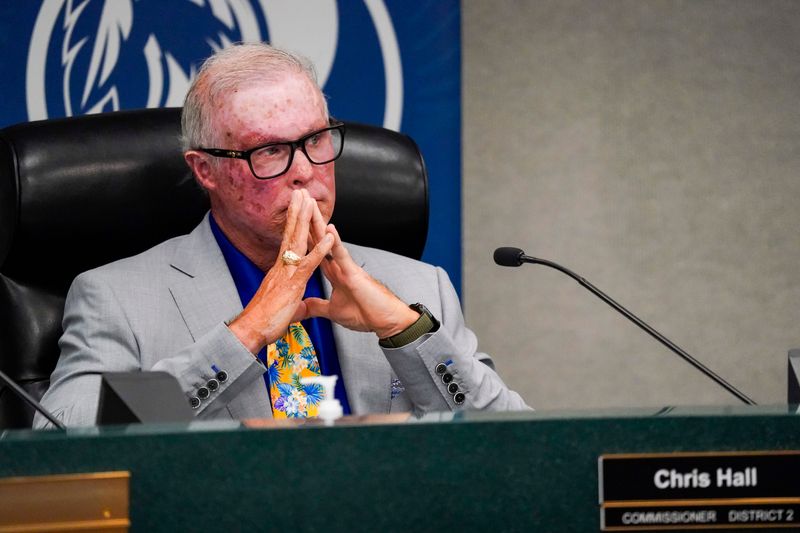
Commissioner Chris Hall also commented about the thoroughness of the presentation. However, he said he wanted to hear more about how the private organization will ensure transparency, accountability and proper oversight and promote sustainability and collaboration in the tourism industry.
“I am going to be a proponent of anything that gets government out of the way,” he said. “I like the idea of this public-private partnership.”
He said he’d like to know more about the duties the organization will assume from county staff, to know more about how the organization will deal with conflicts of interest, and to know more about how the organization will ensure it’s not “top heavy.”
“Let’s put it this way. I don’t want to see too many chiefs and not enough Indians,” he said.
Several commissioners, including Hall, wanted to know what other revenue sources the private organization would tap to increase its marketing budget, but that’s still to be determined.
While he was out of the country and couldn’t attend the workshop, Commissioner Rick LoCastro provided a written statement in support of moving forward, especially as the county continues to look for ways to cut costs and to become more efficient.
“I don’t believe it’s a major gamble or a giant task we are putting on the staff to merely direct exploration of possible privatization of our tourism operations, as so many other counties have done,” he said. “If in that analysis it is evident there are huge advantages then we have done our due diligence. However, if it proves we would only be doing something ‘different’ but not necessarily better, then we can best vote on that as well after considering all the analysis and data.”
Nine speakers shared their thoughts in person and via ZOOM, with most in support of the county continuing to explore privatization.
Dennis Bartolucci, who lives on Marco Island, said he viewed the privatization effort as “terrible public policy.”
“I believe my comment today will resonate with a majority of residents in Collier County. If you like complexity and layers of overhead, then this proposal is for you. A private marketing organization for the benefit of private for-profit businesses and paid for by those private businesses is no problem. The problem is the transfer of public tax money to a private organization,” he said.
He said he hadn’t heard anything to suggest that that privatization effort would help county residents at large.
“In some quarters, some would say, ‘This is welfare for private business.”
Other speakers disagreed, saying they only expected good things to come from the privatization effort.
Brandon Horwin, chief of staff at the Gulfshore Playhouse in Naples, said a non-profit organization could provide greater flexibility, responsiveness and collaboration among the organizations that help drive tourism.
“Visitors often become residents, donors, investors and community champions for us,” he said. “These experiences they have while visiting the county help shape their decision to return and thus to invest in our community.”
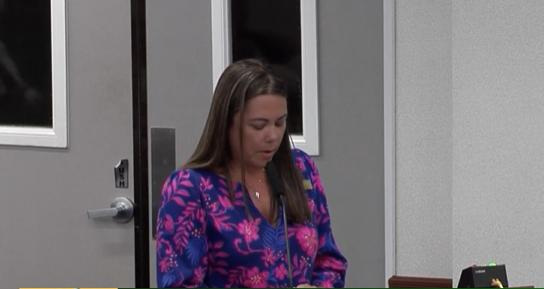
Laura Radler, a general manager at Ocean Properties, with several hotels in Collier County, argued in favor of the privatization effort, saying she couldn’t be a stronger advocate of it.
As a member of the county’s Tourist Development Council, she’s had an up-close view of how the county handles destination marketing and advertising. With the privatization, the council could still serve in the same advisory role, making recommendations on budgets, marketing strategy and spending.
“Government should focus on infrastructure, public safety and quality of life,” Radler said. “Marketing our destination is best led by professionals whose sole mission is growing visitation and strengthening our economy.”
In Florida, nearly half of the destination marketing organizations are nonprofits, with a trend toward favoring that model. The model has proved successful for other destinations, including Palm Beach and the Florida Keys, where Opal Properties owns hotels, which consistently perform better in the summer months, Radler said.
“A nonprofit DMO (destination marketing organization) brings three important advantages,” she said. “First, it provides industry expertise and the flexibility to adapt quickly as tourism and consumer behavior evolve. Second, it creates stronger accountability through measurable performance, including hotel occupancy, visitor spending and return on marketing investment. Third, it removes politics from marketing decisions by allowing long-term strategy to guide destination branding.”
She stressed that the tourist taxes come from the hotels that collect them, not from residents.
The real question, she said, is not whether tourism matters, but who is better equipped to promote it.
“We have tremendous opportunity to grow our shoulder and off-season business,” Radler said. “Growing off-season tourism means more than filling hotel rooms, it means more hours for housekeepers, restaurant employees, retail workers and thousands of local families who depend on tourism for their livelihoods.”
In conclusion, she said: “Government should build great communities and an independent nonprofit DMO should tell our story and sell it to the world.”
This article originally appeared on Marco Eagle: Privatizing Collier tourism bureau gets support; leaders explore options
Reporting by Laura Layden, USA TODAY NETWORK – Florida / Marco Eagle
USA TODAY Network via Reuters Connect
By Laura Layden, USA TODAY NETWORK – Florida | USA TODAY Network