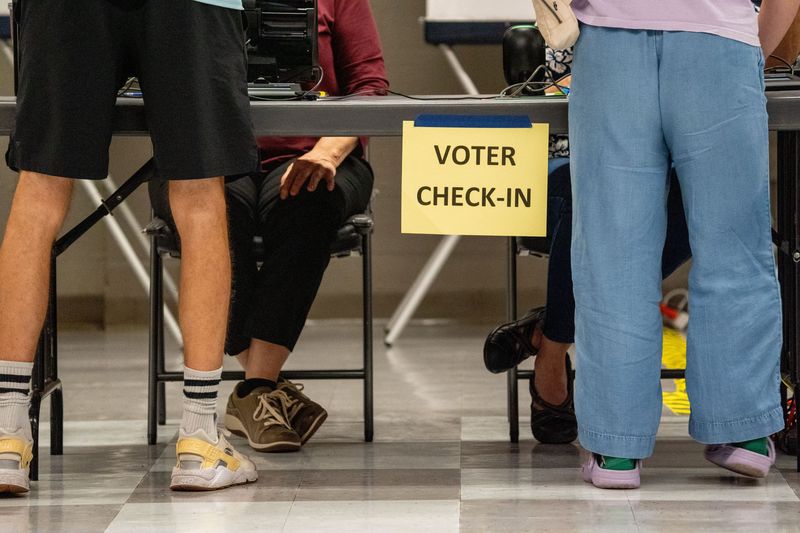
A new Florida law has significantly dropped volunteer numbers of petition groups to collect signatures for next year’s ballot, their lawyers told a federal judge June 30.
In Tallahassee’s federal courthouse, petition groups — including Florida Decides Healthcare (backing Medicaid expansion) and Smart and Safe Florida (adult-use marijuana) — asked U.S. District Judge Mark Walker to block parts of the law (HB 1205), which created tougher regulations for ballot initiatives.

The groups collect signatures to get their proposed state constitutional amendments on the 2026 ballot. Measures need no less than 60% statewide approval to be added to the Florida Constitution.
The law went into effect July 1, and it brings higher fines for late petitions, stricter deadlines and restrictive rules for volunteers. Under the new statute, volunteers must be Florida residents and sponsors could face $50,000 fines for each volunteer that violates any of its provisions.
Florida Decides Healthcare, the group campaigning for Medicaid expansion, originally filed the lawsuit. Additional groups joined the lawsuit to ask the judge to block parts of the new law, including the League of Women Voters of Florida and Florida Right to Clean Water.
Smart and Safe Florida, which also joined the lawsuit, is repeating its effort for a recreational marijuana ballot initiative; its previous attempt came short, getting 55.9% in 2024.
Ben Stafford, an attorney with for Florida Decides Healthcare, told the judge that the restrictions in this law demonstrate that its “purpose is to harm our campaign” and chill volunteers, which go against First Amendment rights to speech. Those restrictions include a freeze on petition verification from July 1 to Sept. 30.
Stafford also said the costs to verify petitions increased, saying one county that previously charged $1 to verify a single petition now charges $4 a petition. “Do the math,” he said. “This is like being forced to run around the state, talking to voters, but at the same time the state is depriving our oxygen to speak.”
Mohammad Jazil, who represents Florida Secretary of State Cord Byrd, said the law focused on tackling fraudulent petitions, and he said gathering information about the volunteers helps identify who turned in fraudulent petitions. Volunteers who register to collect petitions must provide their names, addresses, phone numbers and the last four digits of their Social Security number.
“They don’t want to share personal information, but they’re perfectly fine training volunteers to gather other people’s personal information,” said Jazil, with the Holtzman Vogel law firm. He continued, saying the government mostly already has all this information, but it just can’t link the petitions to unregistered volunteers.
The nearly eight-hour hearing included testimony from three petition gatherers, who described how fears of facing penalties from this law has led to decreased volunteers and stronger financial burdens for their grassroots campaigns.
Ana-Christina Acosta Gaspar De Alba with Florida Decides Healthcare said volunteers are worried about giving their personal information for public record out of fear of harassment: “Overwhelmingly, the majority of volunteers are not willing to do this.”
The hearing comes weeks after Walker mostly denied requests to temporarily block multiple portions of the law, except for one motion from the health care group that challenged a change in the racketeering statute to include violations of state election code and petition fraud.
In the order on the motion for preliminary injunction, Walker agreed with the plaintiffs over a “vagueness” claim for “racketeering activity.” Such court orders can be granted early in a lawsuit to temporarily stop something, like enforcement of a law, until the case is fully decided.
The judge did not issue a ruling, but said he would not submit an order until after reviewing the hundreds of case documents.
This reporting content is supported by a partnership with Freedom Forum and Journalism Funding Partners. USA Today Network-Florida First Amendment reporter Stephany Matat is based in Tallahassee, Fla. She can be reached at SMatat@gannett.com. On X: @stephanymatat.
This article originally appeared on Tallahassee Democrat: Petition groups argue new Florida law is ‘depriving our oxygen.’ Will it survive scrutiny?
Reporting by Stephany Matat, USA TODAY NETWORK – Florida / Tallahassee Democrat
USA TODAY Network via Reuters Connect