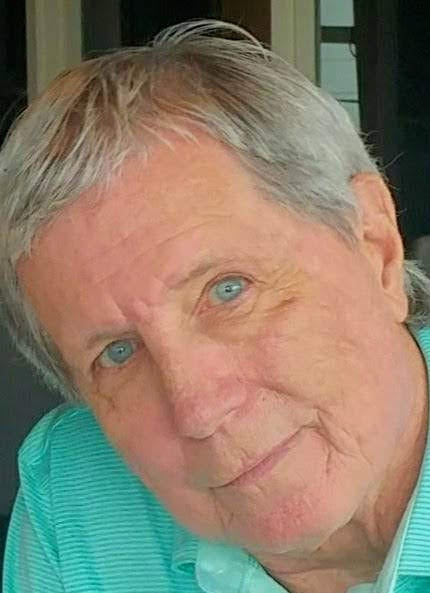
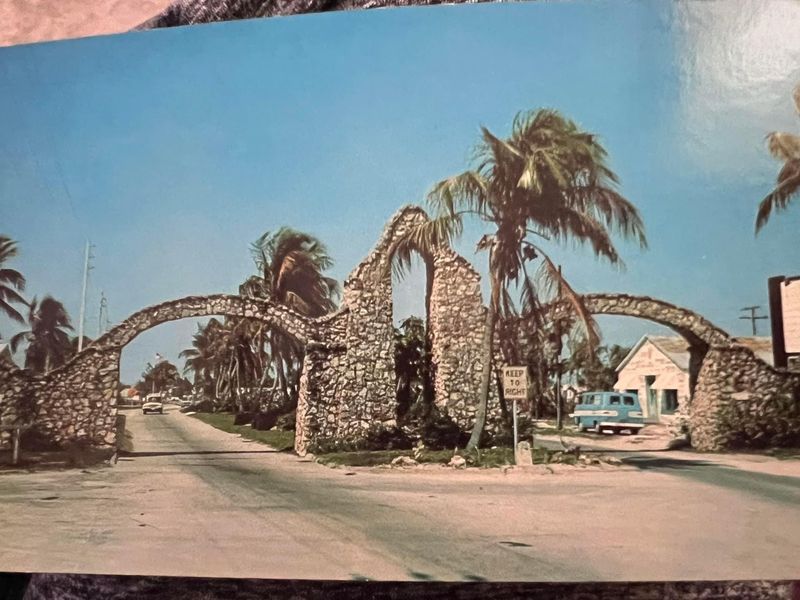
Lee Melsek remembers Fort Myers Beach the way it used to be: Forests full of palm and pine trees, no street lights, no stop signs, and seven glorious miles of empty beach ― without a single tourist in sight.
Melsek, 81, and his family moved to the island from Illinois in 1951, when there weren’t any high rises on the beach, the town had just one law-enforcement officer and only about 800 people lived there.

The retired News-Press investigative reporter still thinks about that time, seven decades later, and about the friends he made and the adventures they had together.
“The island was ours,” Melsek says. “We were free. I’ve never known freedom like we had on that island growing up. I’ve never known freedom like that again. That was the freest I’ve ever been.”
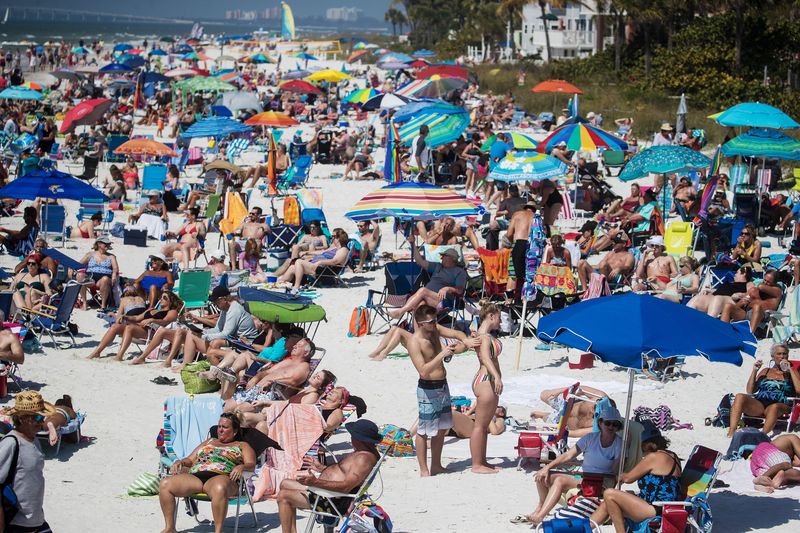
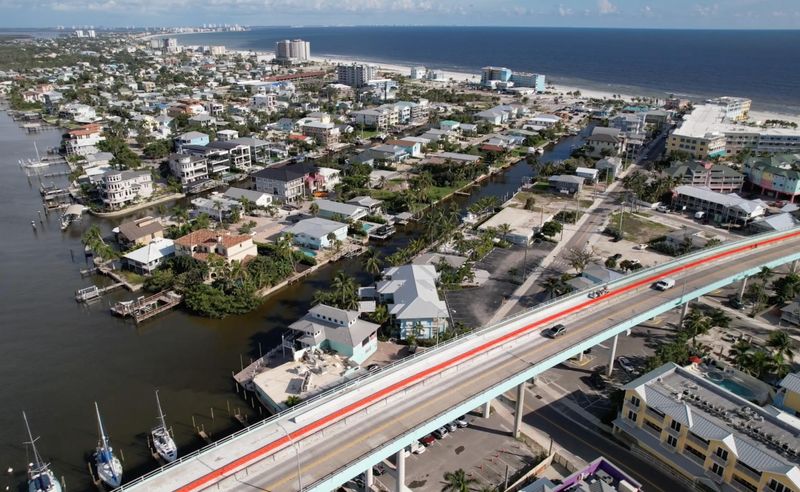
Now almost 6,000 people live permanently on the island, Melsek says, and that doesn’t include the tourists who flood into town every year. Hotels line the beach. And the Fort Myers Beach of Melsek’s youth has long ago vanished.
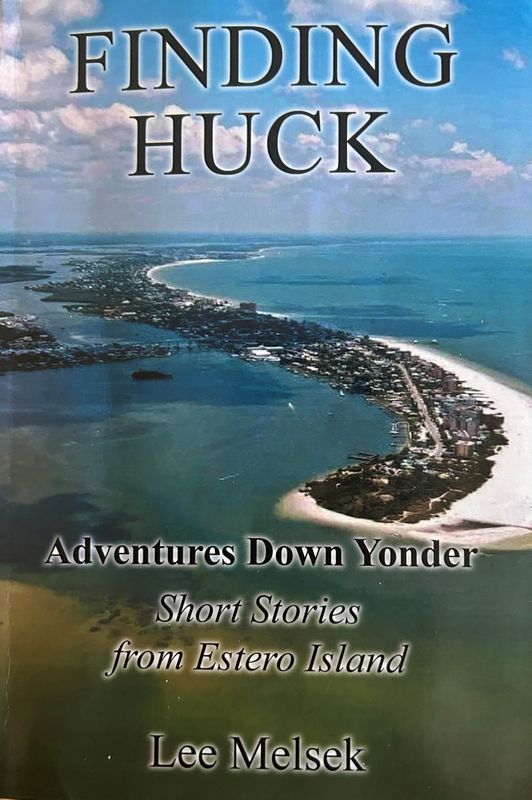
That idyllic island paradise of Melsek’s early years still exists, though — if only in his new book, “Finding Huck: Adventures Down Yonder.”
Subtitled “Short Stories from Estero Island,” the book is a memoir for both Melsek’s childhood and the early days of Fort Myers Beach and Southwest Florida.
Melsek tells stories about the island’s many colorful characters; the dark side of segregation and corrupt governments; how his mom Lorraine Melsek, slow to fall in love with the island, eventually helped form the annual Fort Myers Beach Shrimp Festival; and one particularly wild ride in 1960 with a drunken newspaper publisher on an Edison Festival of Light float.
The book − published by New Jersey’s Newman Springs Publishing − mostly focuses on Melsek’s childhood in the 1950s and 1960s and a way of life that disappeared after “The Great Northern Invasion” came to Fort Myers Beach.
Melsek ― who moved away from Fort Myers Beach about two decades ago and now lives in High Springs ― talked recently to The News-Press about his book, his memorable childhood and how Fort Myers Beach is unrecognizable from the place he knew growing up.
This interview has been edited for length and clarity.
‘The memories just came spilling back’
The News-Press: Is this your first published book, Lee?
Lee Melsek: Maybe my last. I’m old, so you never know.
Why did you write “Finding Huck?”
As far back as I remember, I wanted to write something about the island. I couldn’t get it done when I was at The News-Press. Just too much to do there.
A few years ago, I typed out a couple of chapters. I sat down, typed a couple of chapters, and then life again interrupted. And about last October, I think, I finally sat down and wrote the rest of the book.
I wanted people to know what life was like then on that island. It’s completely different than today.
Was it hard for you to recall all those details from your childhood?
Actually, it wasn’t. The memories just came spilling back. It was very enjoyable to write this book. I had a lot of fun. Some of the memories that came back were really good times.
Moving away from Fort Myers Beach
You left Fort Myers Beach about two decades ago (soon after retiring from The News-Press in 2004). Why did you move away?
Life on the island got a little overwhelming for us. Too many people, too much traffic. Just overwhelming. Too noisy. So we left the island.
Is it sad to see Fort Myers Beach today versus what it was in the ’50s?
Yeah, it is. I have to be honest, it is. As I say, it was just too overwhelming.
I think the older I got, the less I could put up with it. I’m not crazy about the governments in either place, the island or the county.
You’re going to allow huge towers right on the bay without doing an environmental impact study to determine what kind of impact that’s going to have on that bay that is already distressed. I just think it’s so wrong.
I mean, that’s just Florida, though. The entire state’s like that: Let’s just build and damn the consequences.
I know, but that island’s the place I care about, and I still do. I couldn’t understand how you can just do that and not think about that bay. I mean, that bay is just such a fantastic resource that’s now under a lot of distress.
The seagrass has died out. There’s not as much sea life in it as there used to be. The destruction of mangroves goes on.
It’s really sad. It just shouldn’t have happened, but it’s happening. And I don’t know who’s going to stop it.
The Great Northern Invasion
You talk a lot about the Great Northern Invasion. Do you consider yourself part of that? I mean, you moved here from Illinois, right?
Oh, yeah. My dad took to that island from the first day we arrived. I don’t think he ever put on a pair of long pants again.
My mom, not so much. It took her a couple of years to really decide that’s where she really wanted to be.
But do you consider yourself to be part of that invasion?
Yeah, absolutely. My family moved there in April of 1951. But at the time, there were only maybe 700, 800 residents on that island. The entire county was only 24,000 people.
The real invasion began when Lee County became the fastest-growing county in the country in the late ’70s. We were named as the fastest-growing county.
It’s still going at warp speed right now. I suppose we were part of the invasion of the early ‘50s, but at a much smaller rate.
Life on Fort Myers Beach in the ’50s and ’60s
Your book is titled “Finding Huck.” Where did that title come from?
I played around a lot with titles. I wanted to focus a little bit on the first kid I met there, and that was Paul Sander. We became lifelong friends until he passed away in 2009.
He was the first kid I met and probably my longest close personal friend. I thought I had met Huckleberry Finn. For me, he was Huck Finn, just barefoot and his drawl.
He was just irreverent. He was prone to getting in trouble, and I wanted to be like him. From the very first minutes I met him and his attitudes and his speech, I just thought of Huck Finn.
So I finally settled on “Finding Huck” (as the book’s title). He was the first kid I met, and he showed me so much about how to have fun on an island.
He showed me the right way to crack a coconut. At 11 or 12 years old, he was running a Century speedboat across Estero Bay — all over the bay. It was a wild time. It was a great time.
Why else was Fort Myers Beach such a great place to grow up in the 1950s?
Just about all the people there knew one another by face, by name — by first name. There was little to no crime. If there were drugs, we never saw them.
We didn’t go too far. We were 20 miles from real civilization. My crew pretty much stuck around the island. We had to make our own entertainment, and we did.
We were a dead-end island. There was no bridge at the south end. That old swing bridge sometimes would get stuck in the open position, and there we were. If you didn’t have a boat, you were stuck on the island.
The people who are still around (from that time) tell me that they couldn’t imagine a better place to grow up. You had the Gulf of Mexico out your front door, and you had that ancient bay full of fish out your back door. I mean, how great is that?
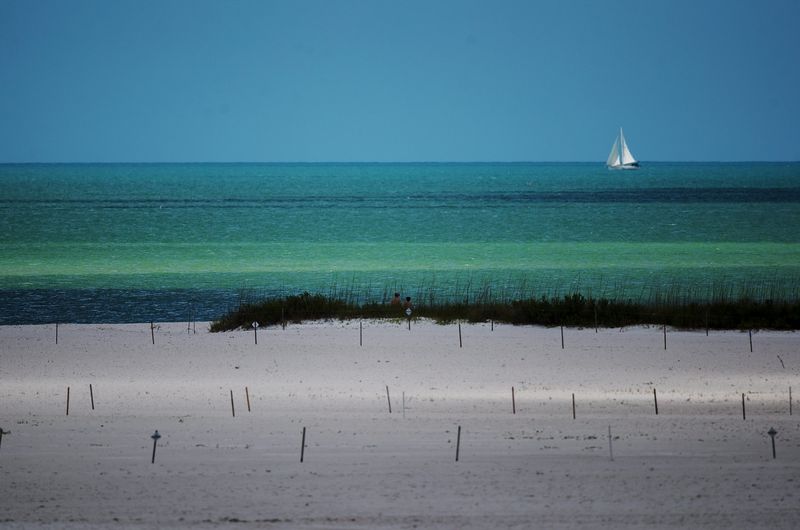
You had forests of palm and pine, a forest all over. And you had that great beach with nobody out there. That seven miles of shoreline was ours.
I had a great childhood. I think we all did.
Where to buy Lee Melsek’s new book, ‘Finding Huck’
You can buy “Finding Huck” online on Amazon (amazon.com), Books-A-Million (booksamillion.com) and Barnes & Noble (barnesandnoble.com).
It’s also available at Annette’s Book Nook in Santini Marina Plaza Shops, 7205 Estero Blvd., Fort Myers Beach.
Charles Runnells is an arts and entertainment reporter for The News-Press and the Naples Daily News. To reach him, call 239-335-0368 or email crunnells@gannett.com. Follow or message him on social media: Facebook(@charles.runnells.7), Instagram (@crunnells1) and X (@CharlesRunnells)
This article originally appeared on Fort Myers News-Press: No tourists and an empty beach: Remembering a Fort Myers Beach that no longer exists
Reporting by Charles Runnells, Fort Myers News-Press / Fort Myers News-Press
USA TODAY Network via Reuters Connect