In January 2025, an emailed letter arrived in the inboxes of the 52 members of the leadership board of the widely respected MorseLife Health System in West Palm Beach. To this date, it is not known who wrote the two-page missive.
But seldom has an anonymous writer, or writers, authored a document that launched as much upheaval and change in an institution — in this case one that has been a fixture in Palm Beach County’s senior care community for decades.

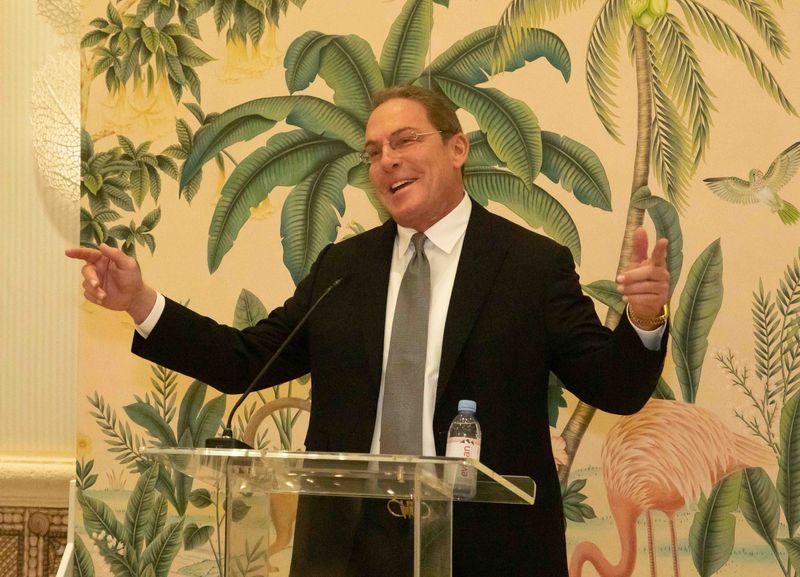
On Jan. 6, about a year after the letter’s circulation, MorseLife’s chief executive officer, Keith Myers, was ousted from his post by the charity’s board of directors.
The decision followed a string of controversies, some set off by the letter, others a result of scrutiny the note brought to MorseLife’s operations.
In mid-2025, the board of MorseLife moved to revamp the compensation arrangement for Myers and Chief Financial Officer Randy Wolan so the two executives would be paid directly from MorseLife. Up until then, the West Palm Beach-based health system paid a company, Amplifii Management LLC, owned by the two men, annual lump sums in the millions.
MorseLife also changed other policies unrelated to issues raised by the letter but that came to light as attention to the health network’s operations grew. This included a resumption of Kosher food preparation in some residential facilities, a service that had been discontinued. Other changes included a staggered rent hike at MorseLife’s independent living facility.
After Myers’ Jan. 6 ouster, Barry Berg, chairman of the Jewish Federation of Palm Beach County, underscored the importance of serving vulnerable seniors in the community. Berg noted that Palm Beach County is home to one of the country’s largest populations of Jewish seniors, including many Holocaust survivors.
“We appreciate MorseLife’s leadership in ensuring the highest caliber of services for our community’s older adults,” Berg’s statement said. “We look forward to exploring opportunities to collaborate with MorseLife in the future.”
What was in the anonymous January 2025 letter sent to MorseLife board?
The anonymous letter flagged MorseLife’s compensation arrangement with Myers and Wolan.
One concern it raised was that the structure for paying MorseLife’s top executives ran counter to practices and norms that create transparency for donors and the communities they serve so all know exactly how money is being spent.
The letter also listed fears about possible unpaid taxes and low staffing levels at MorseLife, according to a copy of the letter obtained by The Post. The issues were so grave that MorseLife could lose its tax-exempt status, according to the letter’s authors.
“We see it as a moral and legal imperative to protect our dedicated, hardworking colleagues, our donors, our patients, and MorseLife itself,” the letter stated.
After The PalmBeach Post first published its investigation into MorseLife’s executive pay and business practices, a series of stories also triggered by the letter and reactions to it, Palm Beach County’s generous philanthropic community was in an uproar.
Many longtime MorseLife individual donors, and even a family foundation, said they no longer would support the non-profit unless there was greater disclosure of the charity’s finances.
MorseLife’s residents, meanwhile, also were upset about the non-profit’s executive pay, which came at a time when residents were facing big rent hikes.
MorseLife’s board chairman, David Mack, alluded to the turmoil in his Jan. 6 email announcing Myers’ dismissal.
He wrote that he hoped Myers’ removal would end a period of “distractions” that have overshadowed MorseLife’s mission.
Mack then struck a conciliatory tone and added: “We understand that we must earn the support of our residents and donors every day through stewardship and actions that have made our organization the special place it is today.”
MorseLife is longtime leader in senior care community
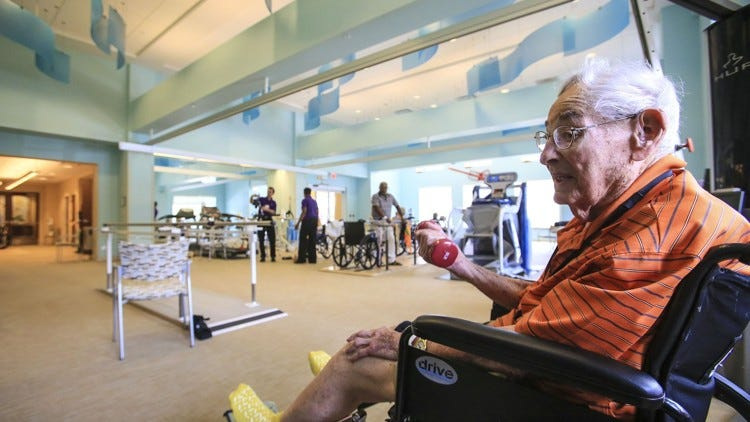
Founded in 1983 as the Jewish Home for the Aged, MorseLife provides health care, housing and supportive services for seniors living in its independent and assisted-living, rehabilitation and memory-care facilities, its website said.
The 52-acre campus is just south of the CACTI Park of The Palm Beaches, the spring training home of Major League Baseball’s Washington Nationals and Houston Astros.
MorseLife touts its “five-star senior lifestyle,” which can cost residents several thousand dollars per month, depending on the level of care required.
Through the years, the facility has earned many accolades, including five-star ratings from the federal Centers for Medicare and Medicaid Services and the Florida Agency for Health Care Administration.
Tax records show millions paid to private company owned by executives
The Post’s investigation showed MorseLife board members directed $36 million during a four-year period to Amplifii, the private, for-profit company owned by Myers and Wolan, according to state and federal records.
MorseLife tax filings did not disclose how much Myers and Wolan personally earned from the fees paid to Amplifii, or whether anyone else also received payment from Amplifii.
This opaque compensation arrangement was a major focus of the anonymous letter, which raised concerns about the non-profit’s lack of disclosure to donors and MorseLife patients and their families, as well as federal agencies such as the Internal Revenue Service.
After publication of The Post’s article, and in response to outrage by some donors and senior residents, MorseLife changed its compensation plan in June 2025 by halting a practice that tied executive pay to the charity’s overall revenue.
In emails to board members sent last summer, Mack said MorseLife’s executive compensation no longer would be “directly linked to the organization’s revenue growth — which increased by an extraordinary 165% over the past five years.”
This five-year period includes the millions of dollars raised by MorseLife during and after the COVID pandemic. Federal tax records show revenues for the MorseLife Foundation alone rose to $14.3 million for the 2022 fiscal year from $8 million two years prior.
Other controversies dogged MorseLife after revelation of letter
The pay controversy wasn’t the only MorseLife practice that outraged donors and families.
In June, residents decried a planned 15% increase in rent at the Levin Palace senior living facility at MorseLife.
Residents also complained about MorseLife’s 2024 move to eliminate rabbinical oversight of food preparation. The oversight process, known as kashering, makes food and utensils kosher.
“MorseLife is paying Keith more money and the services are being cut? That doesn’t seem right,” said one family member who requested anonymity because a parent lives at MorseLife.
MorseLife subsequently split the 15% rent hike into two, 7.5% annual increases. The facility also resumed kosher food preparation.
But controversies continued into the fall and winter of 2025.
In September, MorseLife confirmed it had cut ties with the Jewish Federation of Palm Beach County. The federation, which acts as the “town hall” of the Jewish community, was an early public voice expressing concern over MorseLife’s executive compensation practices.
In a Sept. 3 statement, MorseLife did not say why it severed the relationship with the federation. But MorseLife said it would continue to help needy seniors.
Local and even national Jewish leaders were surprised by MorseLife’s decision.
“It’s unusual. I have not heard of anything like this,” said Eric Fingerhut, president of the Jewish Federations of North America. Based in New York, JFNA represents 141 federations in the United States and Canada.
Meanwhile, in December, the Post reported that Myers had agreed to pay $250,000 to settle an investigation by the U.S. Department of Health and Human Services into the 2020 COVID-vaccine scandal at MorseLife.
Myers agreed to pay civil monetary penalties to resolve allegations of false claims, records and statements related to the federally funded vaccines, according to an agency statement issued Sept. 23, 2025.
The settlement pertained to the period in late 2020, when the first COVID-19 vaccines became available.
At that time, MorseLife allowed wealthy donors to receive some of the nation’s first vaccines ahead of the vulnerable patients and staff members for whom they were intended, government agencies said.
HHS said Myers directed MorseLife employees to arrange for people who were neither residents nor staff to obtain shots at MorseLife vaccine clinics. The MorseLife staff made false representations to the pharmacy that administered these vaccines, including claiming the people were staff members, HHS said.
It was the second time the federal government took action related to the vaccine scandal.
In 2022, the U.S. Justice Department announced that MorseLife would pay a $1.75 million settlement for its alleged actions surrounding the COVID vaccines.
In the 2022 Justice Department settlement, the agency alleged MorseLife engaged in a health-care fraud scheme by falsely characterizing donors and potential donors as staff and volunteers so they could obtain the vaccines in late 2020. The Justice Department said MorseLife pursued donors willing to give money to the nonprofit in exchange for a shot.
At the time of the 2022 Justice Department settlement, a MorseLife spokesperson said the nonprofit denied the allegations but chose to settle “to avoid the expense and distraction of protracted litigation.”
A source close to MorseLife said Myers’ recent HHS settlement was a continuation of the prior COVID-19 vaccine inquiry. A MorseLife spokesperson declined to comment.
Donors balk at link between pay, philanthropy
As controversial as the vaccine scandal was, it did not quell donor support for the MorseLife and its many services during the past several years.
But it was the 2025 revelations of the compensation arrangement with Myers and Wolan that stunned philanthropists, non-profit experts and the community at large. Charities typically do not tie compensation to revenue the way a for-profit company does, experts in non-profit operations said.
In two emails last summer, Mack tried to mollify the public about the non-profit’s management practices.
MorseLife would start using an expert to determine compensation for Myers and Wolan, he wrote in one email. Annual benchmarking of their compensation also would take place, Mack wrote. In addition, Mack wrote that an independent review “found no evidence of malfeasance.”
The email did not specify what potential wrongdoing was probed, and MorseLife did not respond to a question seeking details.
Mack’s email also said the review found “no donor contributions were used to fund executive compensation.” Instead, donor money went solely to benefit seniors for programs including meal delivery, palliative care and educational experiences, Mack wrote.
Some community members and donors privately said they found this statement not credible, especially since the email didn’t provide a copy of the report or any evidence to back the statement.
“This is a smart crowd,” one source said of MorseLife’s philanthropists. “They’re looking for documents, data and budgets.”
One donor who asked not to be named said Mack’s latest email raised more questions than it answered.
“Before I give another dollar to Morse, I want to see proof that donations weren’t co-mingled with other income from which a percentage was paid to Amplifii,” the donor said. “We need to know exactly how much Keith and other members of Amplifii received in one way or another from any source whatsoever related to Morse.”
The donor fallout continued through year-end.
In early December, one family foundation told MorseLife it would not pay the remaining $40,000 on a $100,000 gift unless the foundation received details about MorseLife’s pay practices and finances, according to correspondence obtained by The Post.
The foundation also said it would demand its $60,000 back if MorseLife did not comply with its requests.
In a Dec. 15 letter, a MorseLife attorney told the foundation that the nonprofit would not return the $60,000 because the money already was used as directed, according to a copy of the letter. The attorney also said MorseLife would not provide additional information to the foundation “beyond what is legally required” by state and federal law.
Three days later, the Post published details about Myers’ settlement with HHS.
On Jan. 6, MorseLife said it had removed Myers as chief executive, effective immediately.
MorseLife also said Louis J. Woolf, formerly president and CEO of Hebrew SeniorLife in the Boston area and a respected figure in the field, would run the non-profit temporarily until a permanent leader could be found.
The decisions gave the valued health network a fresh start in a new year after 12 months of scrutiny, controversy and tumult.
Alexandra Clough is a business writer at The Palm Beach Post. You can reach her at aclough@pbpost.com. X: @acloughpbp. Help support our journalism. Subscribe today.
This article originally appeared on Palm Beach Post: New year, new leadership gives MorseLife new start after anonymous letter
Reporting by Alexandra Clough, Palm Beach Post / Palm Beach Post
USA TODAY Network via Reuters Connect