May is a lovely month to be outside, whether it is working in the yard or going for a walk. We’ve had lovely weather for walks, and we have great places to hike in Jacksonville.
Sometimes, while walking in the woods, you may find yourself dealing with mosquitoes or gnats, but you are also at risk of dealing with ticks. When I was a kid, tick bites were no big deal. Today, they are definitely more dangerous as some ticks carry numerous diseases from bacteria, viruses, and parasites. Most tick bites are harmless. But because some tick bites can cause diseases, it is important to avoid ticks, remove them quickly, and watch for symptoms.

The diseases can result in a rash, headache, flu-like symptoms, or fever.
Ticks are not insects but small arachnids, related to spiders, with eight legs instead of six. Both male and female ticks bite, although males are usually not attached to you for long. The ticks put their heads under your skin to drink some blood to get a blood meal to feed the eggs they carry (like mosquitoes) or just to grow. In the case of ticks, they swell to an enormous size relative to their original small size before they detach from you, drop off and search for a place to lay their eggs. (Ticks swell 100-600 times their original size.) They will lay their eggs in carpeting or other places in the home, and the eggs can hatch there. The goal is not to ever get to the point where an engorged tick is on you.
We have four main kinds of ticks in Florida.
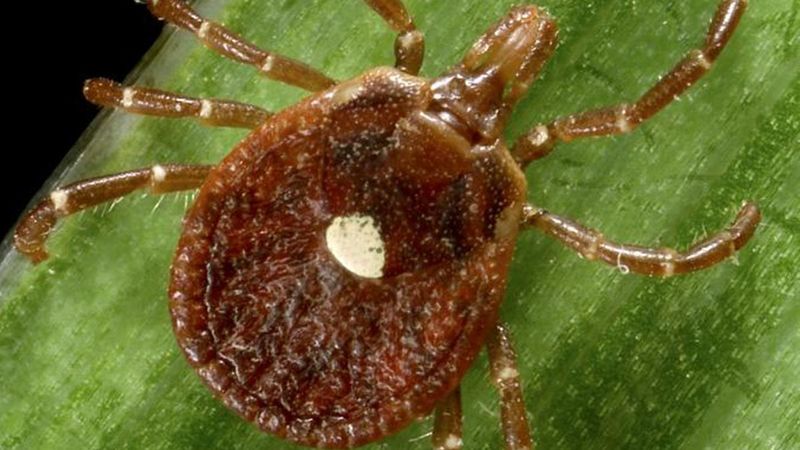
The Lone Star tick female has a white dot on her back. She can be responsible for the Alpha-gal infection, a deadly allergy to red meat. This is also the most commonly encountered tick in Florida. But we’re going to use repellent and other safety methods to keep ticks off.
The Black legged tick, also known as the deer tick, can cause Lyme disease. As the name describes, this tick has black legs. The body is orangy brown.
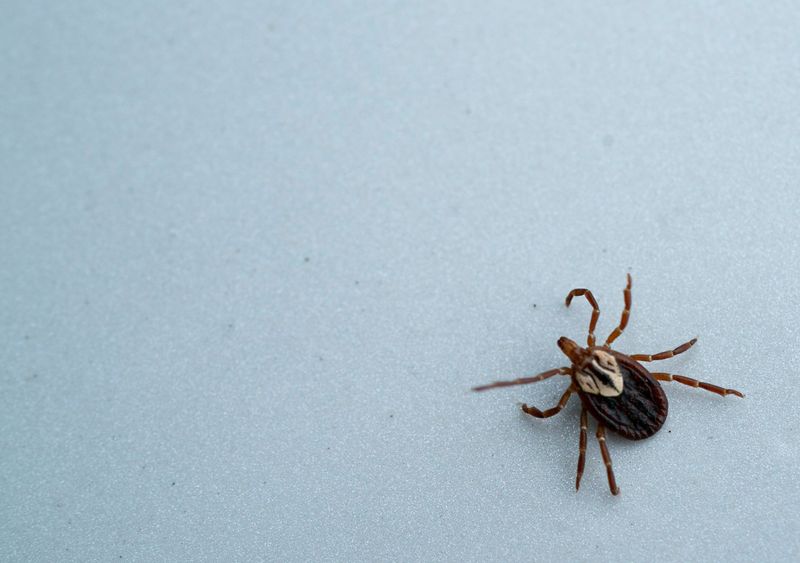
The American dog tick prefers grassy fields and trails. They usually have some cream coloring on their backs.
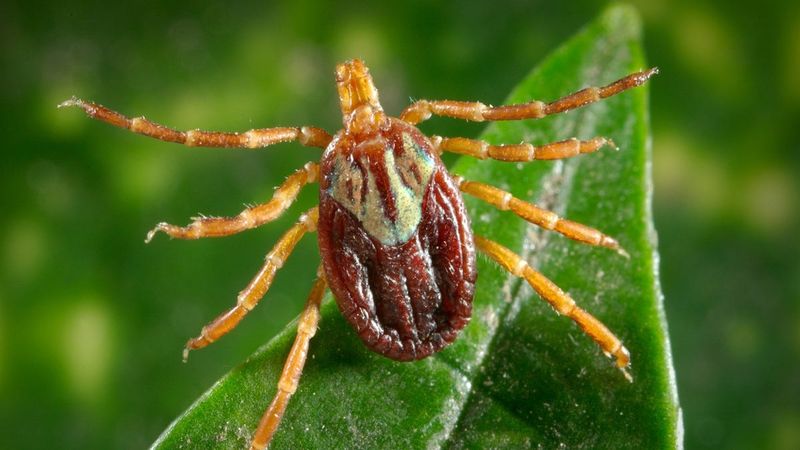
Our final tick, the Gulf Coast tick, carries Rickettsia, which is a spotted fever. The Gulf Coast Tick has lighter colored legs.
You can go to the woods and feel safe. You just have to be careful.
Prevention is best. When you go for a walk in the woods, dress in light-colored clothing and long sleeves to make it easier to spot any ticks that hop on. Tuck your pants into your boots.
Use DEET or Picaridin repellents. They work. After your trip, check carefully in all the hiding spots. They like the groin, armpits, and hairy areas. They can hide there.
If you find an embedded tick, remove it with a pair of tweezers. Pull straight out, without squeezing. Drop it in a small container with some rubbing alcohol in it. It’s a good idea to keep it in case you develop symptoms. It will help your doctor identify the disease. Wash the area where the tick was and wash your hands after removing a tick.
Usually, a tick will be on you for an hour or two before it finds a spot to embed. A tick must be attached to you for a day or two to transmit a disease. And most people who are bitten by a tick do not get a disease. So be careful, but don’t stress out.
All of this sounds horrid, but for the last couple of weeks, a group of students has been going into a marshy area north of the St. Johns every day. The site has all the good stuff: heat, dirt, yellow flies, sun, and ticks. They have been using DEET and picaridin. It’s an informal test, not at all scientific, but at this site, the picaridin has been more effective in keeping the ticks off. Nothing has been effective in keeping the yellow flies off. Luckily, they aren’t at the actual work site.
Ticks usually prefer deer and they are often plentiful in the woods. And the deer don’t have repellent, so you are one step ahead of them. So far. Enjoy the sunshine.
Becky Wern is a Master Gardener Volunteer with the Duval County Extension Service and the University of Florida/IFAS. For gardening questions, call the Duval County Extension Office at (904) 255-7450 from 9 a.m. to noon and 12:30 to 3:30 p.m. Monday-Friday and ask for a Master Gardener Volunteer.
This article originally appeared on Florida Times-Union: Keep ticks away this summer with these simple safety tips
Reporting by Becky Wern, For the Jacksonville Florida Times-Union USA TODAY NETWORK / Florida Times-Union
USA TODAY Network via Reuters Connect