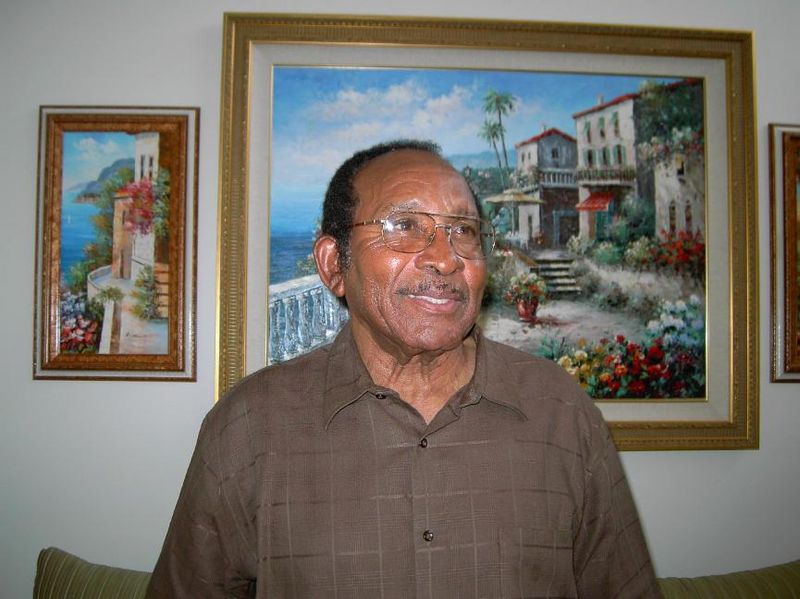
INDIAN RIVER COUNTY — Joe Idlette Jr., who sued to end segregation in public schools here and was later elected its first Black School Board member, died Oct. 21 from natural causes, his family said. He was 92.
In 1964, Idlette filed a lawsuit against the School Board, demanding integration for his children, who were barred from attending schools in Vero Beach.

Despite the Supreme Court ruling in 1954 that the “separate but equal” doctrine was unconstitutional, the school district remained segregated. White children went to school in Vero Beach; Black children were confined to schools in Gifford.
“If progress was going to be made, somebody had to push the issue,” Idlette told the Indian River Press Journal in 2004. “So I decided to try to enroll my children in the — at the time — all-white schools. And of course, I was rejected. So I went to court.”
Idlette committed his life pursuing equal educational opportunities for all students. He was a revered member of the Gifford community, known for his leadership and courage against adversity, shrugging off death threats while challenging segregation.
“He was a beacon of light,” said local NAACP President Tony Brown. “He was a beacon of hope.”
“He fought hard for integration. He fought hard for equality,” said School Board Member Peggy Jones, who became a teacher in the district in 1980, when Idlette still served on the School Board. “He was such a soft-spoken and sincere man.”
Those are the memories his family is cherishing.
“We are comforted by the fact that the suffering is over,” Jacqueline Idlette-Reason, his daughter, said. “We are devastated that, when we have our Sunday dinners, he will no longer be at the head of the table.”
When Superintendent David Moore announced Idlette’s death during a School Board meeting Oct. 27, gasps swept through the room — the Joe N. Idlette Jr. Teacher Education Center — which, since 2018, has been named in his honor.
Growing up in Gifford
Idlette, the great-grandson of slaves and son of a Georgia sharecropper, was born in Gifford in 1933. He experienced racism from a young age.
A bell would infamously ring in Vero Beach at dusk, Idelette recalled: “It meant, ‘All Black folks, get out of town.'”
Idlette graduated from Gifford High School in 1953. He married his high school sweetheart Bernice before being drafted into the Korean War. He returned from overseas — where he served as a motion picture camera operator — with a renewed perspective.
“I fought for my country and then come home to being ‘less than,'” Idlette said in 2018. “We still couldn’t go to many restaurants and other places in town.”
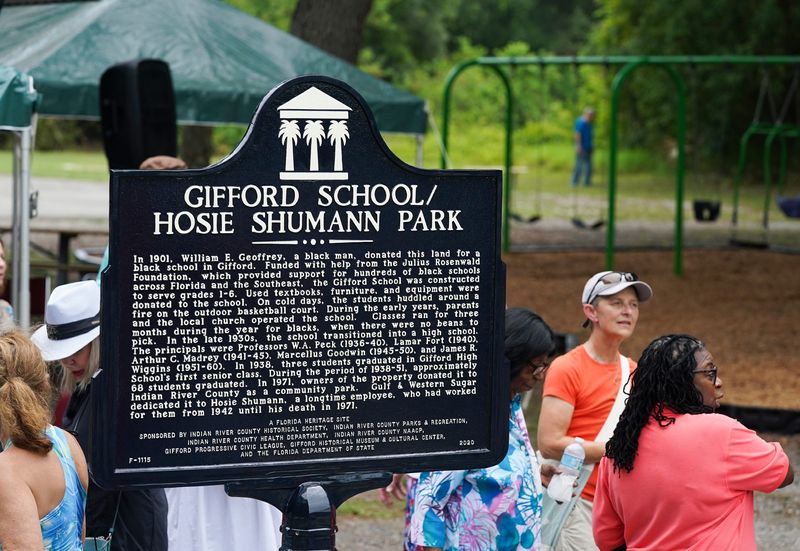
The school system was a visible sign of “less than.” Gifford High School was separate — and by accounts, unequal — to its Vero Beach counterpart.
Students at Gifford High School read from discarded, hand-me-down textbooks with missing pages, alumni said. Students drank from an unfiltered drinking fountain that had a “rotten egg odor.”
“They said kids had to be educated at schools near them, all the while they were transporting white kids past the Black schools,” Idlette said of the school district. “Finally, I decided someone had to take a stand.”
Challenging segregation in schools
With the backing of the NAACP, Idlette and Raymond Sharpton, his neighbor, filed a federal lawsuit against the School Board, which sent shockwaves through the county. For the Black community, the direct challenge to the Jim Crow system elicited mixed emotions.
“There was adulation. There was concern. There was fear. There was denial. There was opposition,” recalled Brown, who was a student at the time.
Then, there were death threats.
“One day, two guys showed me their FBI badges. They told me they had infiltrated the White Citizens Council and Ku Klux Klan, and they thought there would be threats on my life,” Idlette said in an interview with the Press Journal 2008.
“I would answer the phone and people would threaten our lives,” he recounted in another interview.
U.S. District Court ruled in the plaintiffs’ favor. In 1967, Judge C. Clyde Atkins issued a order that compelled the school district to integrate.
“No student shall be segregated or discriminated against on account of race or color in any service, facility, activity or program,” the court order read, along with laying out other guidelines to achieve integration.
Court order remains
The desegregation order, considered among many to be a vestige of the county’s racist past, persists today. Indian River County is among some 11 school districts in Florida still under court desegregation orders, according to a ProPublica analysis.
“There was a lot of foot dragging,” Idlette once said about the school district, a criticism still lobbed at the district today.
“To put it bluntly, there has been an orchestrated desire not to fulfil the covenant of the (desegregation) order,” Brown said. “We’re still dealing with foolishness.”
In 2014, the school district announced it had no plans to apply for “unitary status,” which would lift the desegregation order.
In 2016, Brown petitioned the court to reopen the case, which had been at a standstill and unassigned since Judge Atkins died in 1999, he said.
In 2018, the School Board was granted partial unitary status and school officials expected to be in full compliance with the desegregation order within three years.
“The district remains committed to this collaborative process and continues to work with the NAACP to identify barriers, define performance indicators and report measurable progress biannually,” district spokesperson Kyra Shafte said in a statement.
Elected to School Board
Jacqueline Idlette-Reason remembers her father as hardworking, courageous and sometimes stern, especially when it came to school.
As children, when she and her siblings returned from school, the first thing he’d ask was, “Is the homework done?”
She remembers helping her father in his first campaign for School Board in 1974, a role he would serve for 20 years, 12 as chairman.
“We went out and campaigned with him,” she said. “We would go out by the busy streets and give out campaign cards and wave signs.”
It was exciting for her and her siblings, she said, who were unaware of the threats made against their father until they were adults.
“He was not afraid to stand up for what he believed in,” Idlette-Reason said. “He was willing to die for what he believed in.”
Idlette is survived by his wife, Bernice, and his six children: Anthony, Joe III, Keith, Jacqueline, Jennifer and Jody. A celebration of life will be 11 a.m. Nov. 1 at Pathway Church, 1105 58th Ave., Vero Beach.
Jack Randall is TCPalm’s economy and real estate reporter. You can reach him at jack.randall@tcpalm.com.
This article originally appeared on Treasure Coast Newspapers: Joe Idlette, who fought school segregation, later was elected to School Board, dies at 92
Reporting by Jack Randall, Treasure Coast Newspapers / Treasure Coast Newspapers
USA TODAY Network via Reuters Connect