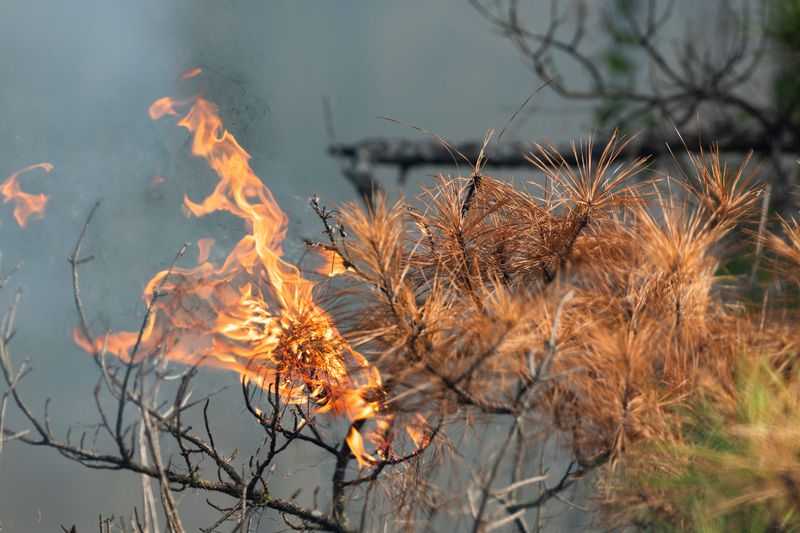
In a time when we are usually bracing for hot weather after a good spring in the garden, the largest challenge and point of anxiety for most gardeners is the lack of rain. We are way below normal rainfall levels for the last few months, with widespread burn bans and threats of wildfires, leading to less than ideal conditions to get new plants growing or your yard recovering from a rough winter. Here are some tips for May to get your garden back going while dealing with a difficult year.
Be Firewise in your yard

While we may not think about it often, fire is a natural part of living in Florida. Our ecosystems function through seasonal fire, but once we start to have property and human lives at risk with wildfires, managing our lands properly is key to living with this threat. You can even lower your risk in your own yard through Firewise Landscaping.
Some key points of making your landscape Firewise include:
Reducing landscape water needs
Whenever we enter a period of drought, the messaging for most homeowners is to cut back on irrigation. This reactive measure does help us save on water because over half of water usage goes to landscapes in Florida. However, being proactive can help you use very little water while also maintaining a beautiful landscape. While lawns may be dormant, annuals may be wilting, and you are tempted to turn on the sprinklers, many plants can thrive on little to no rainfall.
The key to success is to use the Florida-Friendly Landscaping principle of Right Plant/Right Place to match the needs of plants to your site conditions. For example, I live on a wetter piece of property and have St. Augustinegrass that actually looks decent even though I don’t irrigate, while drier sites will either need to irrigate or watch your grass go dormant. This concept rings true for both native and non-native plants.
Other tips include reducing the amount of turfgrass and replacing it with drought-tolerant plants, using organic mulch in beds, and converting any irrigation over to drip or micro-irrigation. A little extra planning in your garden can save you money in the long-run and give you a low-maintenance landscape even during drought.
Things to plant in your garden in May
Vegetables: Southern Peas, Swiss Chard, Okra, Ginger, Roselle, Amaranth, Boniato, Calabaza, Long Squashes, Luffa, Pigeon Pea, Seminole Pumpkin, and Sweet Potatoes.
Annuals: Calliopsis, Celosia, Coleus, Crossandra, Exacum, Gaillardia, Gazania, Hollyhock, Impatiens, Kalanchoe, Marigold, Nicotiana, Ornamental Pepper, Pentas, Periwinkle, Portulaca, Salvia, Thunbergia, Torenia, Verbena, and Zinnia.
Bulbs, tubers or rhizomes: Alstroemeria, Aztec lily, Begonia, Blood lily, Caladium, Kaffir lily, Walking Iris, African lily, Spider lily, and Tiger Flower.
Wayne Hobbs is an extension agent in environmental horticulture for Clay County.
This article originally appeared on Florida Times-Union: Gardening in Florida’s drought and wildfire season. Here are some tips
Reporting by Wayne Hobbs, For the Jacksonville Florida Times-Union USA TODAY NETWORK / Florida Times-Union
USA TODAY Network via Reuters Connect