The attempted recall process will move forward for two of three Fort Meade city commissioners targeted for removal.
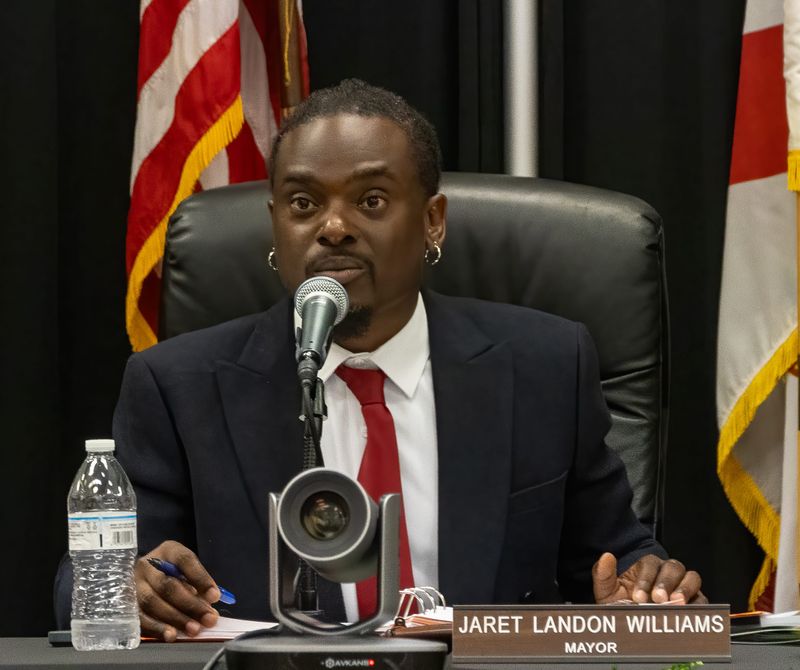
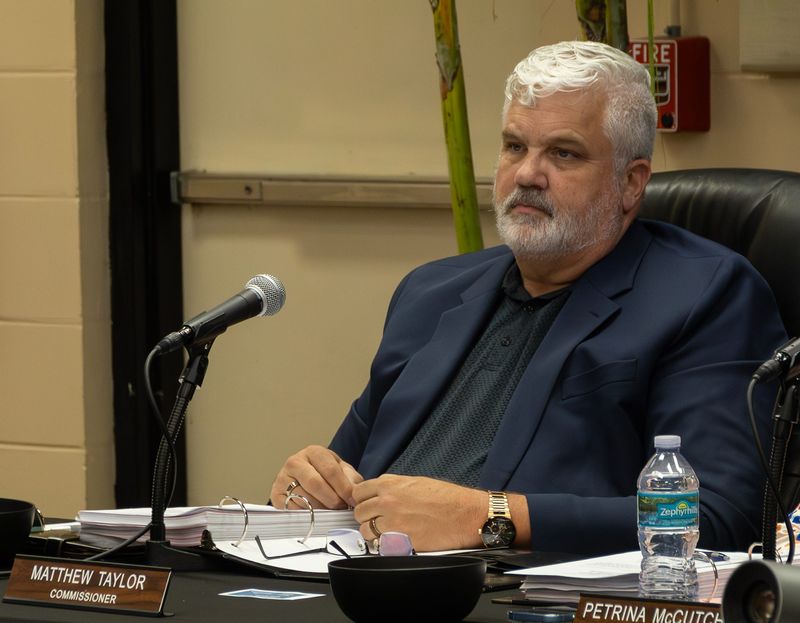
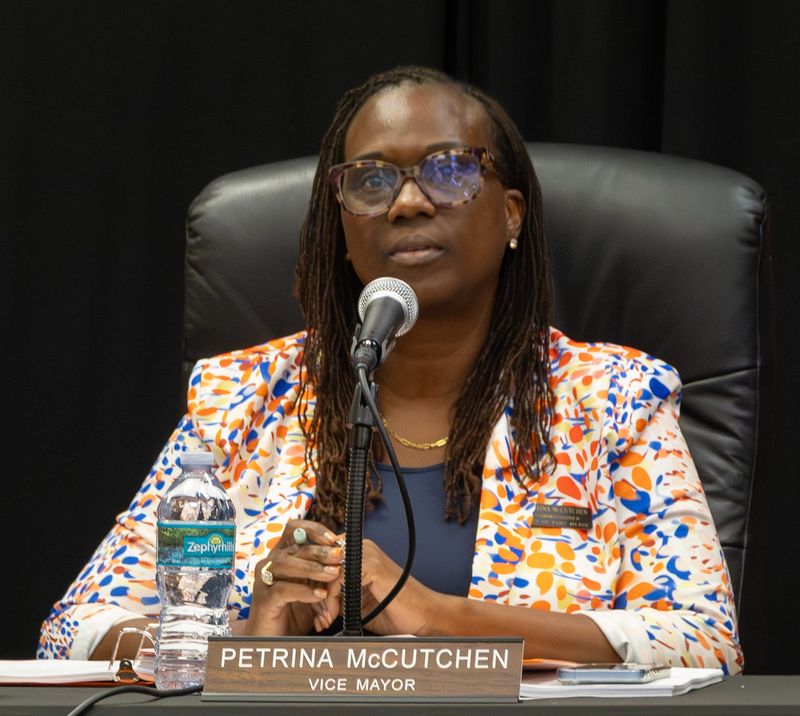
The Polk County Supervisor of Elections Office released its review of petitions the afternoon of Aug. 14. The assessment verified enough signatures from voters to continue the recall process for Mayor Jaret Landon Williams and Commissioner Matthew Taylor but not enough for Vice Mayor Petrina McCutchen.

Residents submitted petitions to Fort Meade on July 15 seeking to recall the three commissioners. Those were passed along to the Supervisor of Elections Office the next day.
Under state law, the Supervisor’s Office has 30 days to verify that the petitions have valid signatures from registered voters in each city district.
The first stage of the recall process required signatures from 10% of the district’s voters or 100 voters, whichever is greater. The Supervisor’s Office determined that Seat 1, Taylor’s district, had 878 registered voters. Because 10% would be 87.8, the 100-voter threshold applied.
The office certified 147 valid signatures on petitions to recall Taylor.
Seat 2, held by McCutchen, had 860 voters. The office certified only 40 valid signatures on petitions targeted McCutchen, below the threshold of 100 needed.
Seat 4, Williams’ district, had 2,734 registered voters, the Supervisor’s Office determined. The recall effort would therefore need 270 certified petitions. The office verified 391 signatures, more than the total needed.
Clouded by uncertainty about district boundaries
The petition process was complicated by uncertainty over Fort Meade’s electoral boundaries. After the November 2025 election, a candidate for the City Commission, Fred Hilliard, filed a complaint, alleging that the city used incorrect district maps in the election.
Nathan Register, chief deputy supervisor of elections, said that the Supervisor’s Office used maps provided by the city. In an email, Register attached a letter from City Attorney Zackery Good confirming that the maps the office has on file are correct.
The uncertainty seemed to result in the collection of signatures from voters living outside district boundaries. The Supervisor’s Office disqualified 374 petitions for McCutchen under the heading “invalid district.” The Supervisor’s Office also rejected 12 as inactive voters, three for signature differences and nine as unknown voters.
In all, the office invalidated 398 of the 438 signatures on petitions submitted to recall McCutchen.
The review rejected 266 petitions for Taylor’s recall for the same reason. Only 14 petitions to recall Williams were disqualified on those grounds.
What happens next in the recall effort?
Florida Law now directs the Supervisor of Elections Office to send certified copies of the petitions to the commissioners. Williams and Taylor will each have five days to file a “defensive statement” of up to 200 words.
After that, the Supervisor’s Office will prepare a “recall petition and defense” document for the chair of the recall committee. The group will then need to collect signatures from 15% of registered voters within 60 days.
With the submission of a second group of petitions, the Supervisor’s Office would conduct another review. If the threshold for valid petitions is met, the chief judge of the 10th Judicial Circuit will set a date for a recall election within 30 to 60 days.
On Aug. 11, commissioners voted 4-1 to hire outside counsel to defend any of the commissioners targeted in the recall effort. Commissioner James Watts, who made the motion, said that because the hiring of TG Law, the city’s contracted law firm, was among the issues cited in one of the petitions, it raised a conflict of interest.
What are the reasons behind the recall effort?
Citizens in Florida may initiate the removal of elected officials for several specific reasons, including malfeasance, misfeasance, neglect of duty and incompetence. Citizens must create a petition of 200 words or fewer describing the grounds for the recall, and separate petitions are required for each official.
Though the petitions describe specific alleged violations of duty by the three commissioners, the effort arose from anger over the City Commission’s 5-0 vote in April to approve a development agreement with Stonebridge, a Maryland company seeking to build a 4.4-million-square-foot data center in Fort Meade.
The City Commission, with a different composition had already approved land-use and zoning changes in 2025 to accommodate the developer.
The petition against Williams accuses him of “self-dealing and misuse of CRA funds.” It says that he diverted Community Redevelopment Agency funds to Dorothy Jean’s Dream Initiative, a nonprofit honoring his late mother that he oversees.
The document also claims that Williams manipulated a lien amnesty program that he helped approve for personal gain by purchasing rundown properties and gaining lien forgiveness before reselling them at a profit.
The petition against McCutchen focuses on her push to change city attorneys in January 2024, saying she exceeded her authority by personally selecting a firm “without legal protocols.” It also accuses McCutchen of refusing to allow public comments on agenda items involving city expenditures.
Taylor, appointed last December to fill a vacancy, is the target of the third petition. It claims that he “overstepped his authority by personally selecting a law firm in March 2026 without legal authority.”
The petition says that Taylor’s “unilateral selection and subsequent vote” to hire the new legal firm had “caused an unnecessary, substantial financial burden on the city.”
This is believed to be the first recall campaign ever undertaken in Fort Meade.
Gary White can be reached at gary.white@theledger.com or 863-802-7518. Follow on X @garywhite13.
This article originally appeared on The Ledger: Fort Meade recall advances for 2 of 3 commissioners | Exclusive
Reporting by Gary White, Lakeland Ledger / The Ledger
USA TODAY Network via Reuters Connect
By Gary White, Lakeland Ledger | USA TODAY Network