(This article was revised with more information.)
FORT MEADE — A proposed 4.4 million-square-foot data center in Fort Meade is only one vote away from the start of construction.

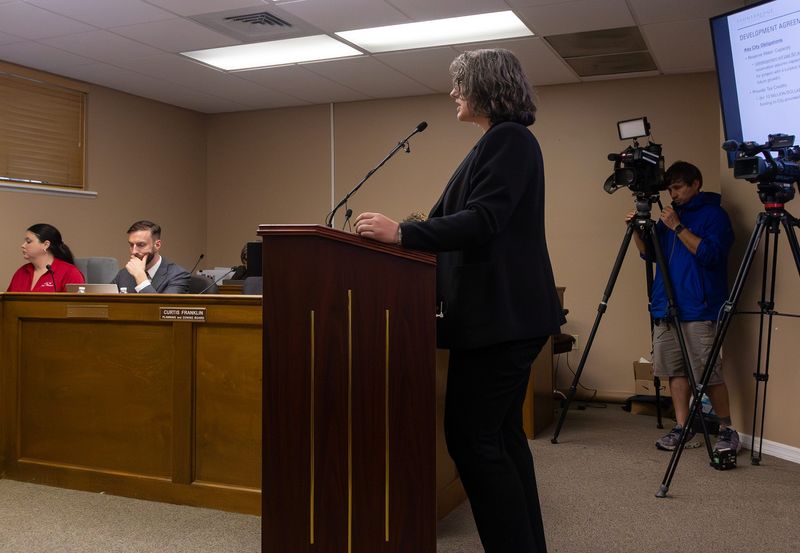
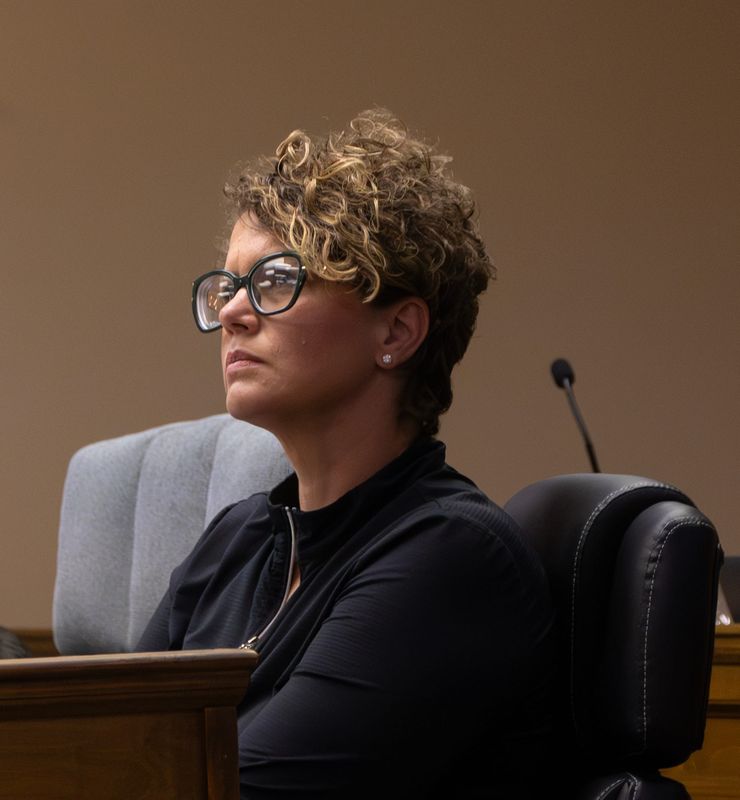
The city’s Planning and Zoning Board voted 6-0 at its April 7 meeting to recommend approval of a development agreement with Stonebridge, the company seeking to build the “hyperscale” facility.
The Fort Meade City Commission will hold a final vote on the development agreement at its April 14 meeting.
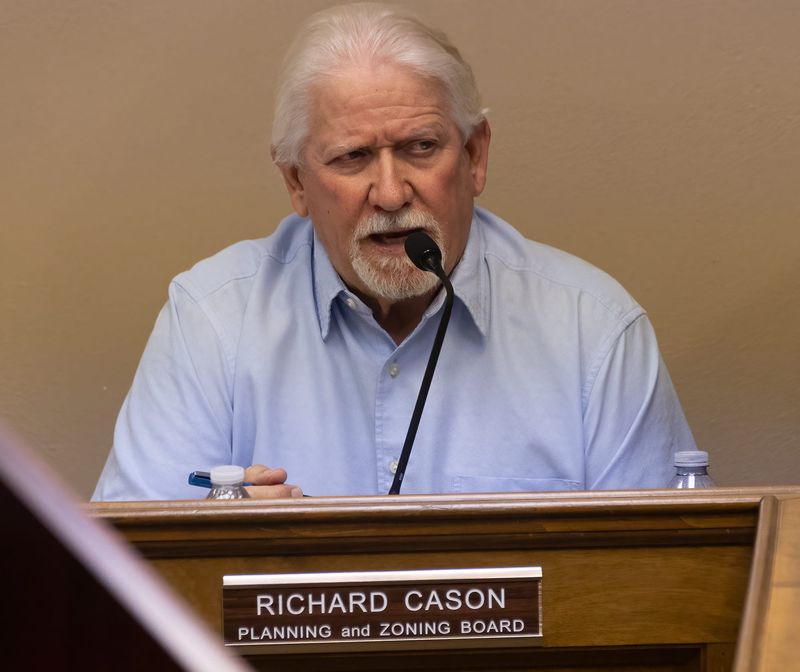
“I wasn’t sure,” Planning and Zoning Board Chair Richard Cason said before the vote. “I had questions, but I believe after listening to everything tonight, during the presentations from both parties. I believe that this agreement has been well negotiated by both parties. The objective of a contract is to try to protect each other, and both parties seem to try to do that, based on what’s been presented tonight.”
The facility would be the first hyperscale data center built in Florida, according to Christina Reichert, a senior attorney with Earthjustice, a conservation group opposing the project.
Stonebridge, a real estate development and investment firm based in greater Washington, D.C., has offered to pay Fort Meade $10 million in advance, to be used for infrastructure improvements. The city would then deduct that amount from property tax payments.
The developer would also give Fort Meade $300,000 to be used for securing future water supplies, City Manager Troy Bell said. That could either be through participating membership in the Polk Regional Water Cooperative, yielding access to water through the Southeast Wellfield project, or another avenue.
Bell said the inducements resulted from “a hard negotiation” with Stonebridge leaders.
Before voting for the recommendation, board members suggested two revisions to the development agreement. They asked for a written guarantee that water and wastewater easements granted to Stonebridge for construction are only temporary and for a provision stating that the data center would be treated like any other customer if water restrictions arise.
At the request of member Megan Zahara, the board also inserted a suggestion that city commissioners tour an existing data center before their April 14 meeting.
The meeting agenda included a staff memo stating that the project meets state statutes and city rules.
The memo noted that the Fort Meade City Commission adopted an ordinance in 2025 amending the future land-use map to designate the site as industrial. Commissioners also approved a rezoning to industrial planned unit development and approved a master development plan for a development of up to 4.4 million square feet.
As a result, the proposed development agreement is not a request for new development entitlements, the memo said.
In an analysis, the staff found the agreement consistent with the comprehensive plan and city code. The memo did not offer a recommendation for either approval or denial.
Fort Meade does not have its own planning staff and contracts with the Central Florida Regional Planning Council for reviews. A CFRP staffer said the agency did not write the memo. The Ledger emailed Bell the morning of April 8 asking who prepared the staff memo.
During the meeting, Fort Meade City Attorney Zackery Good emphasized that the data center is already an “allowable use” for the property.
Developer recognizes residents’ ‘passion’
Board members Ramel Ford, James Myers, Debbie Rowell and Rupert Russell voted to recommend approval, along with Cason and Zahara. Curtis Franklin was absent.
Stonebridge plans to build the facility on 1,300 acres in northern Fort Meade, on a former phosphate mine just west of U.S. 17-98. The data center would contain eight large buildings arrayed around a central hub.
Stonebridge has not yet revealed who the ultimate owner and operator of the data center will be. Tech giants such as Amazon, Google and Meta use hyperscale facilities.
Stonebridge wants to begin construction this year and expects to have the first building operating by 2028 or 2029. The developers say the data center would create 456 jobs when fully operational, with an average salary of more than $100,000.
The proposal has generated months of opposition from some Fort Meade residents. Citizens have raised objections at City Commission meetings and during a public forum that Stonebridge held Jan. 29 and a town hall hosted by Mayor Jaret Landon Williams on Feb. 9.
Residents have raised concerns over increased electricity and water demands, air and water pollution, noise intrusion and a loss of the rural feel in Fort Meade, a city of about 5,300 residents.
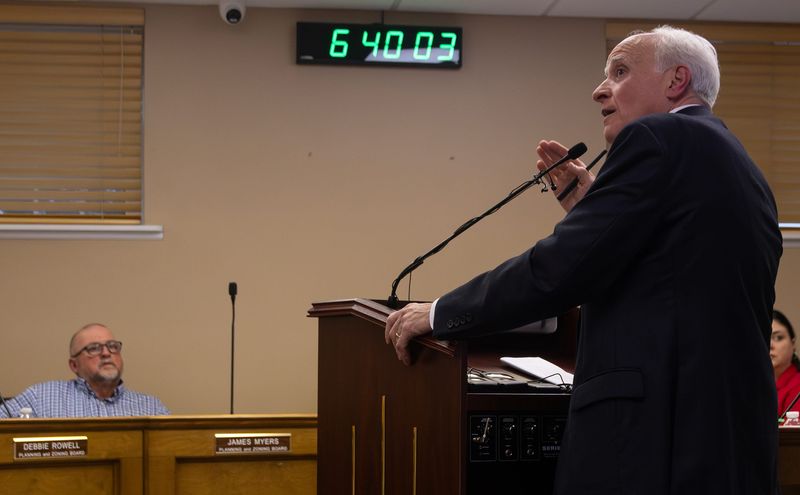
Doug Firstenberg, a founding principal of Stonebridge, made a presentation at the meeting and addressed some of the objections raised by residents. Elise Batsel, a lawyer with the Tampa firm Stearns Weaver Miller, buttressed his testimony.
Firstenberg, using a slide presentation, covered concerns about electricity consumption, water use, noise and traffic. He said he understood the “passion” of Fort Meade residents and wanted to reassure them that the data center will not create negative effects.
Reiterating information he had shared at the Jan. 29 public forum, Firstenberg said the data center would employ a “closed-loop” water system to cool equipment, requiring only 50,000 gallons of water a day, as specified in the development agreement.
Half a mile from the facility, noise would only be 50 to 52 decibels, he said, less than the level at a Wawa station. While construction will continue for up to six years, trucks will be directed away from central Fort Meade, he said.
The data center will receive power from Duke Energy and not Fort Meade’s electrical utility. Stonebridge chose the site largely because of its proximity to Duke’s Hines Energy Complex, a natural gas power plant.
Bell said that SB 484, a bill that passed through the Florida Legislature and awaits the signature of Gov. Ron DeSantis, would ensure that the costs of infrastructure required for data centers would be borne by developers and not by the public.
‘Don’t want to be guinea pig’
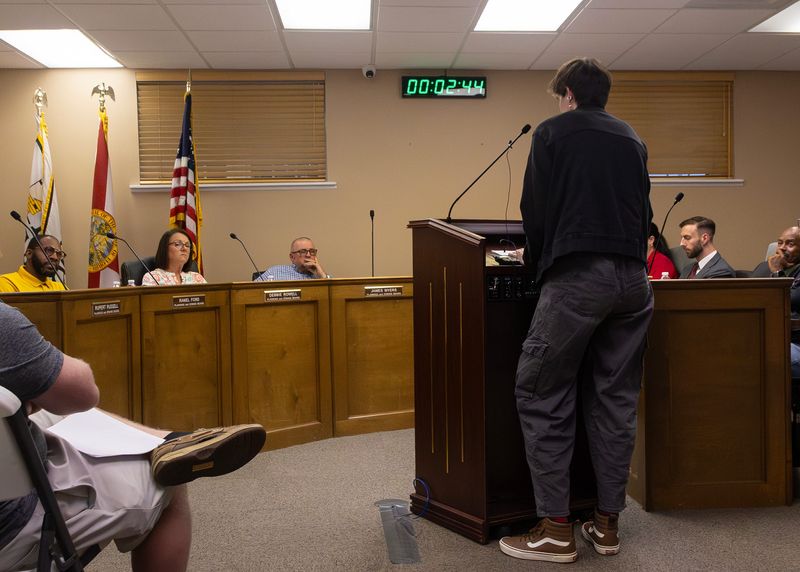
About 15 people, most of them Fort Meade residents, spoke against the project during public comments before the vote.
“So, the proposed data center, if approved, would ruin the retirement that I dreamed of,” Fort Meade resident Lisa Rice said. “Since I have asthma, the additional emissions — which you (Firstenberg) presented, but I don’t buy it — the emissions is going to be detrimental to my asthma. And I love working in the yard, and that’s just going to ruin my older years.”
She added: “I don’t want to be a guinea pig through this, and I don’t want to be a statistic.”
Tyler Hancock warned that the data center could create a damaging, low-frequency hum and that the water in its cooling system could contain so-called forever chemicals. Hancock suggested five conditions for approval, including testing of wastewater from the facility for contaminants and a promise not to inject wastewater underground for storage.
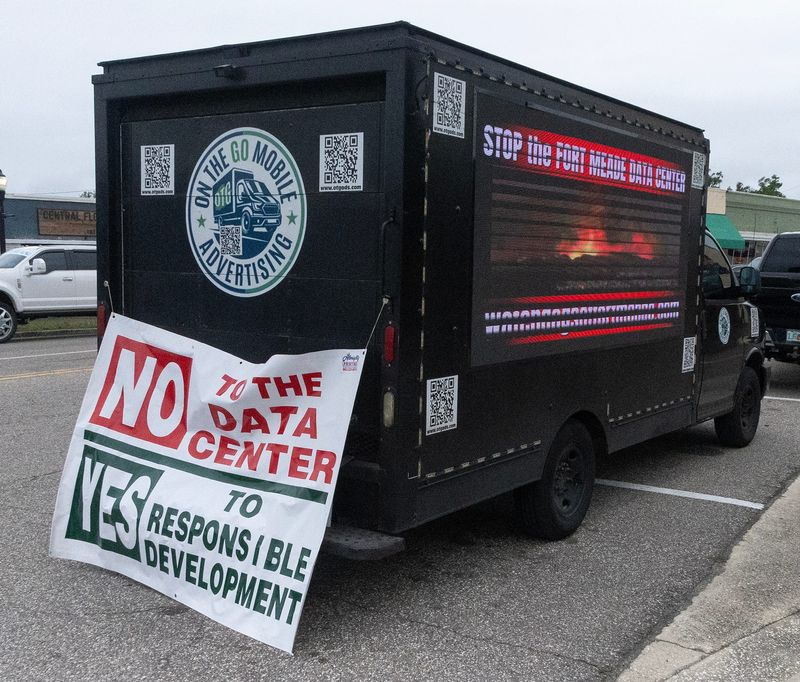
In the week before the meeting, a group called Watchdogs of Fort Meade formed to unite opponents of the data center. The group rented an advertising truck and parked it in front of City Hall before the meeting, broadcasting the message, “No to the Data Center, Yes to Responsible Development.”
Two of the group’s leaders, George McNerney and Raul Alfonso, spoke during public comments. McNerney said that research shows data centers can create “heat islands,” raising temperatures by 16 degrees in a 6-mile radius. McNerney also warned about fire dangers from batteries used in data centers.
“The agreement contains too many open-ended provisions that leave critical protections vague or discretionary,” Alfonso said. “You have the reserve of only 50,000 gallons of water a day in sewer capacity, yet it relies heavily on future good-faith efforts, addendums and to the developer’s own plans for infrastructure. There’s no strong, enforceable caps on actual water use, no binding noise limits for cooling systems or backup generators, no detailed requirements for air quality monitoring or emergency power emissions.”
Tina Barnett, a Fort Meade resident of 55 years, said she requested locations of the 30 data centers Firstenberg said Stonebridge has previously built in other states. She said she wanted to visit some of the sites, but the company said the locations of the facilities was confidential.
“My concern is that I feel that this has been presented hastily,” Barnett said.
Rebecca Sorrells said the data center would be “devastating” for Fort Meade.
“If I had $10 million right now, I’d give it to you just to get you to stop,” Sorrells told board members.
“Right now, we look like little cats or mice running after money because we need it,” resident Amanda Sparks said. “And that’s the way I see it. I’m for Fort Meade growing, and I want people to know that I think we should grow, but this is not the way to grow. It is ultimately going to cost us, in the long run.”
Bobby Williams, a Republican candidate for Florida governor from Winter Haven, tried to speak but was denied because he failed to sign a speaking list before the deadline.
Lawyer: More information needed
Reichert, who represents the Environmental Confederation of Southwest Florida, told board members that the 1.2 gigawatts of electricity the data center would require is twice the power used by the city of Tallahassee.
After the meeting, Reichert said that data centers typically use far more water than Stonebridge says the Fort Meade site would require.
“I’m very concerned with some of the misinformation that was provided tonight by the developer about AI data centers and the impacts that they have, what they can do with the technology that exists,” Reichert said. “And there’s plenty of evidence that I’ve provided to the city and to the board that disputes that, and they’ve provided no evidence to the contrary.”
Reichert sent a 27-page letter to members of the Planning and Zoning Board on April 3. Board members made no mention of the letter during their discussion.
“There are significant gaps in information regarding the design of this hyperscale AI data center, and these design elements are the driving force of the impacts this facility will have on the residents of Fort Meade and the surrounding environment,” Reichert wrote.
The facility as proposed would “plainly conflict” with Fort Meade’s local land use regulations, Reichert wrote. The project requires “significant protective conditions” to ensure that residents and the local environment, including the Peace River, suffer no harm from the data center, she added.
Reichert argued that the project does not meet the definition of a planned unit development.
“A hyperscale AI data center is not a permitted use for an industrial PUD,” Reichert wrote. “The City cannot apply the PUD definition to an AI Data Center so as to approve an entirely new type of development not contemplated by the Fort Meade land use laws.
Among the concerns, Reichert noted that Fort Meade’s comprehensive plan allows a PUD to produce noise increases of no more than five decibels. The city may require a developer to conduct specific studies on environmental impacts, she wrote.
Hyperscale data centers, used to support AI functions, consume much more power and water than traditional data centers, Reichert wrote. The Planning and Zoning Board lacks the information needed to have assurances about the impacts of the facility, she wrote.
“Although the developer has made statements about what it hopes to do, crucial information is missing,” Reichert wrote. “The developer has not submitted a final site plan.”
Reichert wrote that Stonebridge leaders at different points during the Jan. 29 forum said the facility would rely on air-cooled designs, closed-loop systems or evaporative cooling with treated wastewater.
Reichert questioned how Duke Energy would provide 1.2 gigawatts of power to the site, given its current reserve margins. If the utility proposed building a new power plant for the site, Reichert asked whether the cost would be borne by all Duke customers.
Owners of data centers elsewhere have illegally constructed natural gas turbines on site, Reichert said, noting that the turbines can generate dangerous chemicals, fine particulate matter and “smog-forming nitrogen oxides.” The board should look critically at any plans for the Stonebridge to build an on-site power plant, the letter said.
Among about 30 “key questions,” Reichert asked what chemicals would be added to the water in a closed-loop cooling system and if they are regulated by the federal and state agencies.
In her conclusion, Reichert wrote that the board should at least require conditions for data center before recommending approval of the development agreement. Those conditions should include requiring Stonebridge to conduct studies on water evaporation and noise impacts and prohibiting the developer from building on-site natural gas turbines or using deep-well injection to store water discharged from the cooling system.
During the meeting, Batsel, the lawyer for Stonebridge, said that the development agreement covers only contractual obligations and the concerns raised during public comments would be addressed during the permitting process. The developer would need approvals or face regulation from state and federal agencies, including the Southwest Florida Water Management District and the U.S. Environmental Protection Agency.
Gary White can be reached at gary.white@theledger.com or 863-802-7518. Follow on X @garywhite13.
This article originally appeared on The Ledger: In 6-0 vote, Fort Meade planning board endorses data center agreement
Reporting by Gary White, Lakeland Ledger / The Ledger
USA TODAY Network via Reuters Connect