Lynn Blanford still walks in the evening in her Ormond Beach neighborhood near Sanchez Park. But now she always carries a whistle and a pocket knife.
And she’s always on the lookout for coyotes.

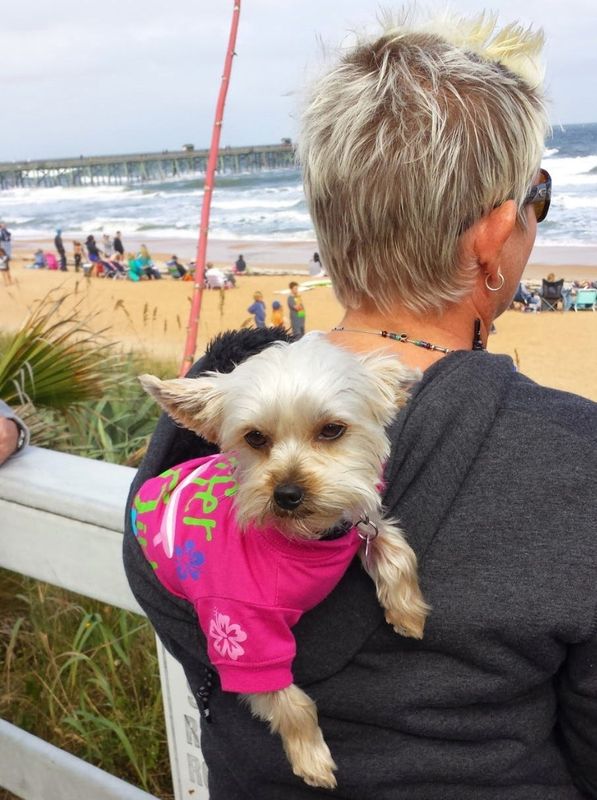
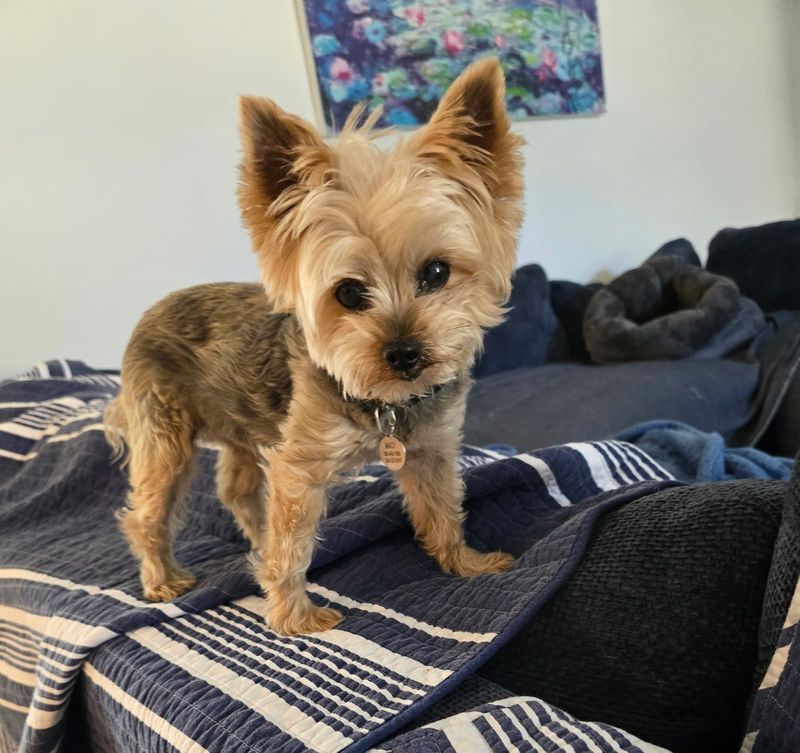
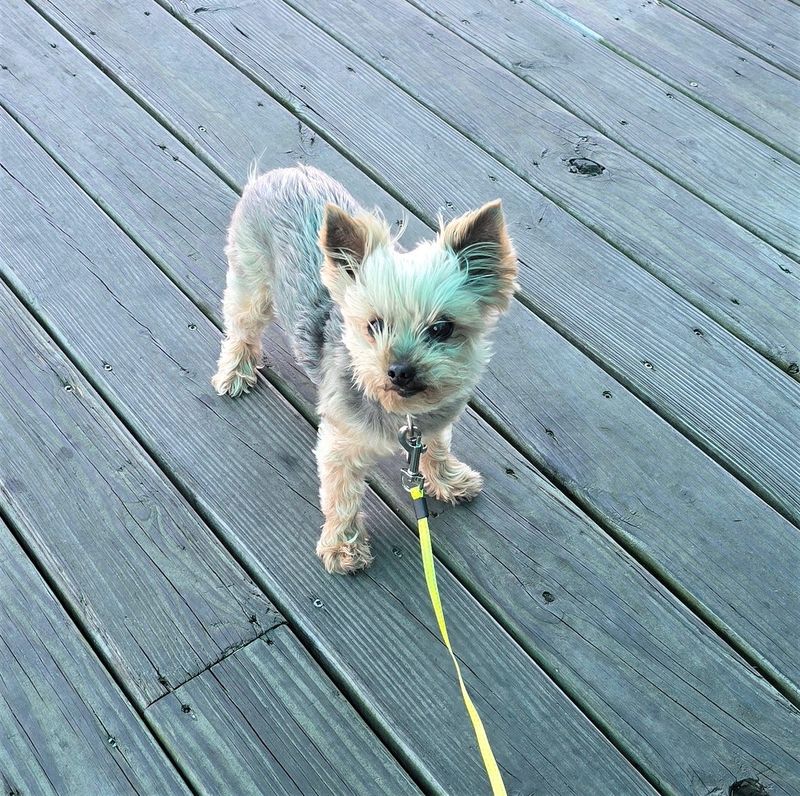
It was about a week before Thanksgiving when Blanford took her little Yorkie out in the morning before she drove to work. She walked Macy to the end of the driveway about 5:10 a.m. on Nov. 20. She was holding the dog’s leash.
Then she heard the dog cry out.
“I heard her scream, and I turned around, and there was a coyote right behind me, like two to three feet from me,” Blanford said. “And it happened so fast. It took her leash and took her into the woods.”
Blanford was unable to do anything.
“As soon as I turned around: bam! It took off,” Blanford said.
Blanford called the Florida Fish and Wildlife Conservation Commission, which sent a handler with a dog that recovered Macy’s body in the woods around nearby Sanchez Park. The coyote had snapped the little dog’s neck. Her leash was no longer attached.
Blanford was glad the FWC found Macy and returned her body, saying the agency did a “really good job” on that. But she said people need to be aware that the animals have become a real problem in the community.
“I would think if they eat your dog, it’s a nuisance,” Blanford said.
Coyotes are a continuing threat in Ormond Beach neighborhood
Blanford said there are a few cats missing in the neighborhood, although it’s unclear whether the cats simply ran off on their own or were taken by coyotes.
She also said she has seen young children, 8- or 10-year-olds, playing unsupervised in the playground at nearby Sanchez Park. Coyotes have been known to attack children, like a girl who was bitten in California last year.
She said the FWC personnel who responded told her the coyotes had probably been stalking her for a week or two. She said people in the area need to report coyote issues to the FWC, so that the agency knows the scope of the problem.
“I’m not pro-killing all the coyotes,” Blanford said.
But she wants everyone to be more aware of the problem. She said she sees coyotes nearly every day.
“I’ve told FWC and everyone else they need to do a lot more education in our community since we are having a lot more sightings. I pretty much see them every morning,” Blanford said.
No new coyote incidents reported in Ormond Beach area
FWC employee Lisa Thompson told The News-Journal in an email that there haven’t been any “recent additional reports” of injury to animals by coyotes from the area where Macy was attacked.
Since 2021, the FWC has received reports of coyotes injuring eight and killing 41 animals in Volusia County, according to the statistics provided by the FWC.
That number includes nine animals killed by coyotes so far this year in Volusia County. Coyotes killed 11 animals in 2021 and seven each in 2022, 2023, and 2024. One animal has been injured so far this year in Volusia County by coyotes.
The FWC notes that it was unable to verify all reports, and in some cases, a coyote may only be a suspect.
In Flagler County, the number of reported animals killed by coyotes since 2021 is two, with the last report being in 2023. There have been no reports of humans injured by coyotes during that time in Volusia or Flagler counties, the FWC stated.
Coyotes have attacked cats, dogs, chickens and rabbits, according to the FWC.
Blanford: Leashes won’t protect dogs from coyotes
Blanford said that she wants people to know that keeping their dogs on a leash won’t protect them from coyotes, as some believe.
She misses Macy, who was turning 17. Blanford had had her for about 15 of those years.
“She was a rescue, best dog in the world. She was a swimmer. She was in my neighbor’s pool, out in the boat. For six pounds. She was a beast.”
More information about coyotes from the FWC
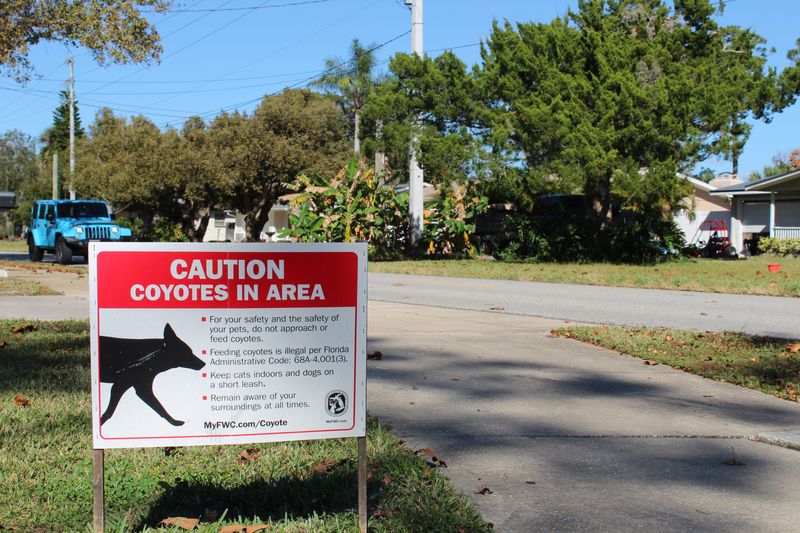
The FWC states that coyotes typically avoid people and their “mere presence is not an imminent risk to public safety.”
FWC stated that people can “haze” a coyote by making noise, waving their arms or spraying a strong stream of water to “encourage” a coyote to go away.
If a coyote approaches and doesn’t leave when hazed or is acting aggressively, the FWC asks people to call its 24-hour Wildlife Alert Hotline at (888) 404 3922.
Residents seeking more information can contact the FWC Northeast Regional Office at 352-732-1225.
The FWC welcomes the public to join monthly online presentations about coyotes and avoiding conflicts with them. More information is available at MyFWC.com/Coyote; the next virtual program is available on December 9.
This article originally appeared on The Daytona Beach News-Journal: Florida woman whose leashed Yorkie was snatched by a coyote speaks out
Reporting by Frank Fernandez, Daytona Beach News-Journal / The Daytona Beach News-Journal
USA TODAY Network via Reuters Connect