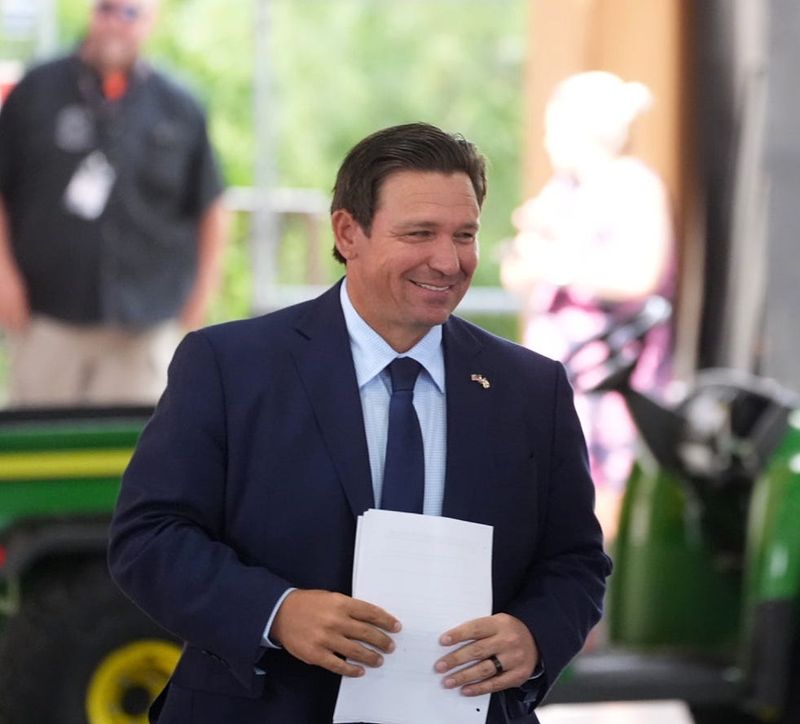
Florida did not need to redraw its congressional map this year. There was no new census, no population imbalance and no court order requiring it. The current map, drawn by Gov. Ron DeSantis in 2022, is still in use. It was enacted over the protest of Black lawmakers who objected to the dismantling of a North Florida district that had allowed Black voters to elect a candidate of their choice, and it has been the subject of ongoing legal challenges ever since.
Now, with no new data or justification, DeSantis wants to change it again. That creates a fundamental problem. If the 2022 map was lawful and appropriate, there is no reason to replace it. If it was flawed, then we should be asking why we are relying on the same process and the same author to draw a new one.

Either way, this mid-decade redraw is difficult to justify. The only real change is political: President Trump has called on GOP-led states to redraw maps ahead of the midterms to benefit their party, and Florida has answered that call.
The goal is explicit: Shift the state’s congressional delegation from 20–8 Republican to 24–4, erasing what little remains of competitive representation. To do that, lawmakers were called back to Tallahassee last week for a special session at taxpayer expense, before the state budget has even been finalized.
This redistricting nothing more than a partisan power play
The map was developed outside the legislature, shielding it from scrutiny under Florida’s constitutional ban on partisan gerrymandering and leaving lawmakers in the position of ratifying it. Members were given just 24 hours to review a map that will shape representation for a generation. In committee, the map’s architect acknowledged using partisan data to draw the lines, despite the Constitution explicitly prohibiting it. Members of the public who traveled to testify were given only thirty seconds each, and a request to extend public comment was denied.
Then, in the middle of debate, the legal landscape shifted. When the U.S. Supreme Court issued its ruling in Callais v. Landry, weakening a key provision of the Voting Rights Act that has long protected minority representation, we were already on the floor questioning the bill’s sponsor. Democrats immediately requested a two-hour recess to assess the decision’s implications for the map we were about to vote on. That request failed. There was no pause and no reconsideration. The message was clear: this map would move forward regardless.
I was on the floor when the House voted 83–28 to pass it. Aside from the bill’s sponsor, not a single Republican member spoke in its favor, while nearly every Democrat spoke against it.
Here in Palm Beach County, the consequences are real. Delray Beach has been split, with part of the city now placed in a district that stretches across Palm Beach, Broward, and Miami-Dade counties. Any representative serving that district must balance the competing needs of three of the largest counties in Florida. Inevitably, attention and resources are spread thinner, and smaller portions of the district risk being overlooked.
We have seen what unified representation can accomplish. Federal support from U.S. Rep. Lois Frankel has helped Delray advance critical water infrastructure tied to its treatment systems. That kind of work depends on coordination and a clear line of accountability between local officials and their representatives in Washington.
When a city is split, that clarity disappears. Instead of one office working with city leadership, there are multiple offices, multiple priorities and no single point of responsibility.
Court challenges, the remedy for hollowed-out representation
Florida’s Fair Districts amendments were adopted to prevent exactly this kind of map-drawing, and courts have struck down maps that failed those standards before. But litigation takes time, and elections do not wait.
I spent years on the Delray Commission fighting to ensure my city’s voice was heard, and I ran for the Legislature to continue that work in Tallahassee. What I witnessed there was a deliberate unraveling of the principle that maps should reflect communities, not political outcomes.
The deeper problem with gerrymandering is not just that it divides cities like Delray. It hollows out representation itself. When districts are drawn to be safe, deep red or deep blue, representatives answer only to their base, the incentive to listen broadly and govern responsibly disappears.
Artificially sorted districts produce gridlock and extremism. When this map takes effect, Floridians will not just see fewer competitive districts. They will see fewer representatives with any reason to listen to those who disagree with them. Florida deserves better, and the people who voted for this map know it.
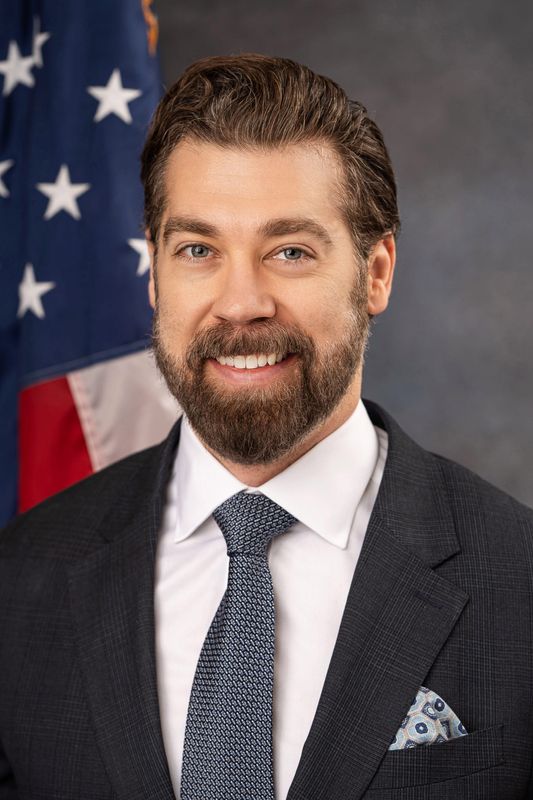
Rob Long is a Democrat, representing the 90th District in the Florida House, which includes Boynton Beach, Briny Breezes, Delray Beach, Golf and Gulf Stream.
This article originally appeared on Palm Beach Post: Florida hurt Palm Beach County’s voice in Washington | Opinion
Reporting by Rob Long, Opinion Contributor / Palm Beach Post
USA TODAY Network via Reuters Connect