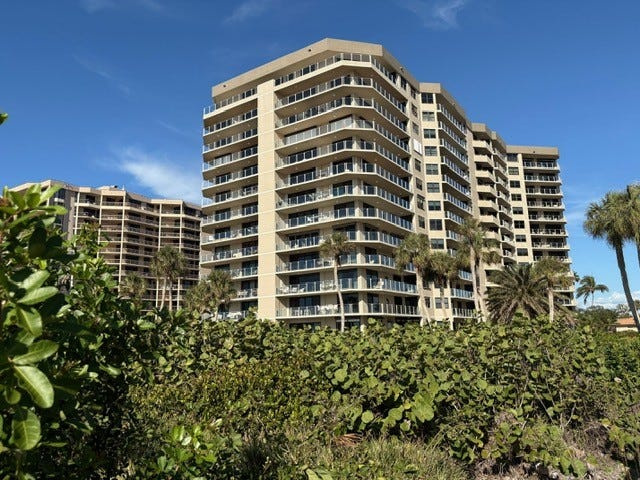
Q: I understand House Bill 913 Condominium and Cooperative Associations has passed the Florida legislature and is pending the Governor’s signature. Will you highlight some of the changes? J.M., Marco Island
A: You are correct. HB 913 was the main community association bill affecting managers (Florida Statute 468.432), condominiums (Chapter 718) and cooperatives (Chapter 719) in this year’s legislative session. Presently the bill has been passed by both the House and Senate and is listed as being enrolled, which means it is awaiting signature by the Governor once presented to him. All indications are that the Governor will sign the bill but that is subject to change so the bill highlights below are not law yet and if signed by the Governor will become law on July 1, 2025. Therefore, be careful when discussing these changes to confirm whether or not the Governor has signed the bill.

Regarding community association managers (CAMs), the bill provides the following:
Each community association manager must identify on his or her online licensure account the community association management firm for which he or she provides management services and identify each community association for which he or she is the designated onsite community association manager. A licensee must update his or her online licensure account with this information within 30 days after any change to the required information. A community association management firm must identify on its online licensure account the community association managers that it employs to provide community association management services. If a community association manager has his or her license suspended or revoked, the department must give written notice of such suspension or revocation to the community association management firm and the community association for which the manager performs community management services.
For condominiums only, a notice for any meeting that will be conducted by video conference must have a hyperlink and call-in conference telephone number for unit owners to attend the meeting and must have a physical location where unit owners can also attend the meeting in person. All meetings conducted by video conference must be recorded, and such recording must be maintained as an official record of the association.
For condominiums only, the Structural Integrity Reserves Study (SIRS) required for condominiums existing on or before July 1, 2022 must now be completed by December 31, 2025. Formerly it had to be completed by December 31, 2024.
For condominiums only, the requirement that the adoption of the resolution for electronic voting must be done at a special board meeting with 14 days mailed and posted notice may now be done at a regular board meeting with 48-hour posted notice.
For condominiums only that have not adopted electronic voting they must now allow owners that choose to do so to vote via email even in the secret ballot election if the owner voluntarily gives up their right to anonymity.
For condominiums and cooperatives, SIRS may now be funded by regular assessments, special assessments, lines of credit, or loans. A special assessment, a line of credit, or a loan under this sub-subparagraph requires the approval of a majority vote of the total voting interests of the association.
For condominiums and cooperatives, the obligation to maintain a reserve for any capital that has a deferred maintenance or replacement cost of more than $10,000 has been increased to more than $25,000 or the inflation adjusted amount as determined by the Division of Condominiums, Timeshares, and Mobile Homes.
The foregoing reflects some of the changes. There are many more. Unfortunately, it also appears that while many aspects of operating condominium, cooperative or homeowner associations are similar or the same the legislature continues to make changes to only one of the applicable Statutes when logically they should apply to all associations such as holding meetings via video conferencing, adopting electronic voting and email voting. This problem only makes the job for managers and attorneys that represent all three types of associations harder and subject to error.
As of this writing HB 913 is not yet the law but may well become the law on July 1, 2025.
Q: I am a member of a condominium association. I have begun recording all the board meetings and the board has just passed rules that they will not record the board meetings, but we are still allowed to do so. I have to notify them one day in advance of the meeting of my intention to record them, but I do not want to. I just want to record it. The meetings are on Zoom, and I record the session on my own from my home. I recorded a meeting, and a board member motioned to the management company to cut me off while I was speaking on the topic. I simply want to know why I have to notify them if we are allowed under Florida Law to record it. They indicate that Florida is a two-party consent state and we have to notify them. What do you think? D.R., Naples
A: The condominium act (Chapter 718), the cooperative act (Chapter 719) and the homeowners association (HOA) act (Chapter 720) all provide that an owner can video and tape record board meetings and members meetings. But the board can also adopt reasonable rules regarding recording. Requiring prior notice of the intent to record the meetings is a reasonable rule in my opinion and you must comply with it. The purpose of requiring advance notice is so the attendees are aware the meeting is being recorded.
Q: I live in an HOA governed by Chapter 720, Florida Statutes. I want to install a flagpole on my property. I have several questions. Can the board determine the location of the installation for the flagpole, e.g. front yard or back yard? Am I allowed only one pole? J.V., Naples
A: No, the board may not determine the location of the installation for the flagpole, unless the flagpole obstructs sightlines at intersections and violates setbacks, county code, noise or lighting codes. Yes, you can be limited to one flagpole.
Richard DeBoest, Esq., is partner/shareholder of the law firm Goede, DeBoest & Cross, PLLC.
Attorneys at Goede, DeBoest & Cross respond to questions about Florida community association law. With offices in Naples, Fort Myers, Coral Gables, Boca Raton and Pensacola, the firm represents community associations throughout Florida and focuses on condominium and homeowner association law, real estate law, litigation, estate planning and business law.
Visit www.gadclaw.com or to ask questions about your issues for future columns, send your inquiry to: question@gadclaw.com.
The information provided herein is for informational purposes only and should not be construed as legal advice. The publication of this article does not create an attorney-client relationship between the reader and Goede, DeBoest & Cross, or any of our attorneys. Readers should not act or refrain from acting based upon the information contained in this article without first contacting an attorney, if you have questions about any of the issues raised herein. The hiring of an attorney is a decision that should not be based solely on advertisements or this column.
This article originally appeared on Fort Myers News-Press: Florida condo, HOA law update: What’s new in the Legislature’s 2025 House Bill 913?
Reporting by Richard DeBoest, partner/shareholder / Fort Myers News-Press
USA TODAY Network via Reuters Connect