Florida has added 97 cases of cyclosporiasis, the most in one week since the national outbreak of the parasitic illness began in the spring.
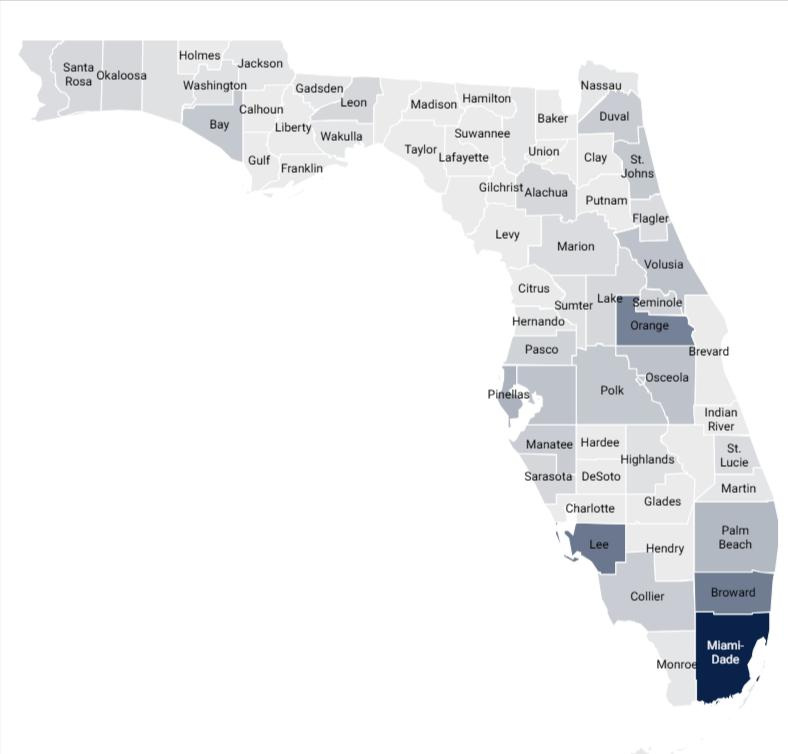
Collier County saw 4 cases and Lee County saw 7 cases in the latest state Department of Health weekly updates.

Since May 1 when the outbreak gained national attention with a symptom of “explosive diarrhea,” Florida has reached 254 cases. The figures include confirmed and probable cases.
The most recent reporting period from the state with the 97 new cases is for July 19 through July 25; a week prior the state added 61 so the illness is on the rise. Federal public health authorities acknowledge lags in cases getting reported.
The bottom line is Florida has not been spared from the illness associated with a symptom of “explosive diarrhea.”
The U.S. Centers for Disease Control and Prevention is investigating multi-state clusters. One outbreak affecting nine states is linked to iceberg lettuce.
The federal agency reports more than 18,000 cases since May 1 but there are 6,707 laboratory-confirmed domestic cases and more than 11,500 that are not laboratory confirmed. The illness is in 45 states.
Many of the additional cases have been reported by Michigan and Ohio.
Nobody has died while 423 people have been hospitalized across the U.S., according to the CDC.
In Southwest Florida, Lee accounts for 23 of the total statewide since May 1 and Collier is six, according to the state DOH.
The CDC’s surveillance does not include probable cases while state-by-state data may include probable and confirmed cases, resulting in higher case counts than what CDC reports.
The federal agency also expects case counts to continue to rise because there’s typically a six-week reporting lag between an illness and the case being reported to the CDC.
Nobody has died while 423 people have been hospitalized, according to the CDC.
In Southwest Florida, Lee accounts for 23 of the total statewide since May 1 and Collier is six, according to the state Department of Health.
The public health agency’s latest number of 97 new cases statewide in one week is for July 19 through July 25. The data lags one week.
The CDC’s surveillance does not include probable cases while state-by-state data may include probable and confirmed cases, resulting in higher case counts than what CDC reports.
The federal agency also expects case counts to continue to rise because there’s typically a six-week reporting lag between an illness and the case being reported to the CDC.
Cyclosporiasis infections can occur year round and generally will increase during the spring and summer months, according to the CDC. The cyclosporiasis season in the U.S. is considered May 1 through Aug. 31.
What is cyclosporiasis and its symptoms?
Cyclosporiasis is an illness from a parasite that causes watery, and sometimes explosive diarrhea and other stomach problems.
It usually spreads from contaminated water or food. Treatment typically includes antibiotics, according to the Cleveland Clinic.
The current outbreak in the U.S. began in May and the numbers began climbing in mid-June.
When it comes to symptoms, what most people notice in the first few days is feeling generally unwell with fatigue, and low appetite, according to Dr. Tyler Evans, founder and chief executive officer of Wellness Equity Alliance based in California. He previously was chief medical officer for New York City.
“It reads like the beginning of a stomach bug,” Evans said. “That is exactly why it gets missed. The diarrhea follows, and by then people have often written off the illness as something that will resolve on its own.”
Other symptoms are nausea, sometimes a low-grade fever and mild abdominal cramping, Evans said.
The most dangerous feature is the duration, he said.
Untreated, cyclosporiasis can persist for weeks, and the diarrhea is often watery and relapsing. The danger is cumulative with dehydration, electrolyte loss, and weight loss over time, he said.
“In an otherwise healthy adult, that is miserable but survivable,” Evans said. “In an infant, an older adult, someone immunocompromised, or someone without reliable access to fluids and care, prolonged watery diarrhea is genuinely dangerous.”
What about the lettuce recall?
On July 17 Salinas, Calif.-based Taylor Farms recalled iceberg lettuce sourced from central Mexico as a culprit.
The recall includes iceberg lettuce sold at retail stores and served in restaurants. It also includes other recalled products distributed to food service customers.
A day later the FDA said a lettuce sample from Taylor Farms that was not part of the recall had tested positive, prompting the FDA on July 19 to issue a new advisory that the test was a false positive.
On July 21, the CDC, the FDA and state health agencies said they are investigating multiple clusters of cases, including one multistate outbreak linked to iceberg lettuce in five states.
The advice remains not to eat any of the recalled lettuce, wash surfaces that may have been in contact with the recalled lettuce with hot soapy water or in the dishwasher
More on symptoms
Not all people infected with cyclosporiasis show symptoms, but in addition to diarrhea, it commonly causes:
Less common symptoms include vomiting, body aches, headache, low-grade fever and other flu-like symptoms.
The time between infection and becoming sick is typically about a week but can be as short as two days or as long as two weeks. If left untreated, the illness can last over a month, and symptoms can clear before returning one or more times.
What’s the treatment for cyclosporiasis?
Cyclosporiasis is treated with trimethoprim-sulfamethoxazole, which is sold as Bactrim, Septra or Cotrim, according to the CDC.
“If you are allergic to sulfa drugs, talk to your health care provider about other potential options,” the agency said. “Resting and drinking plenty of fluids is also important for those experiencing diarrhea.”
Do you have an opinion about this topic? Write a letter to the editor and send it to letters@naplesnews.com and/or mailbag@news-press.com. Keep it to 250 words or fewer and include your contact info. Have more to say: Send a guest column of no more than 600 words.
Liz Freeman is a health care reporter. Reach her by emailing lfreeman@naplesnews.com
Please support local community journalism and stay informed about Southwest Florida news by subscribing to The News-Press and Naples Daily News; download the free News-Press or Naples Daily News app, and sign up for daily briefing email newsletter, food & dining and growth & development newsletters here and here.
This article originally appeared on Naples Daily News: Cyclosporiasis cases rise in Florida and the Fort Myers, Naples areas
Reporting by Liz Freeman, Fort Myers News-Press & Naples Daily News / Naples Daily News
USA TODAY Network via Reuters Connect

By Liz Freeman, Fort Myers News-Press & Naples Daily News | USA TODAY Network