

Florida’s brutal heat is no joke. All of Florida’s 67 counties are under a heat advisory as of Aug. 13.
And don’t expect the heat to ease anytime soon, according to forecasters at National Weather Service offices around the state, who advise there will be multiple days with heat indexes of 105-110 degrees.

You’ll most likely find Floridians enjoying a significant portion of the summer inside with the A/C on full blast. But what about those who do not have A/C? The answer is more than just discomfort. These individuals face a greater risk of certain health impacts from heat exposure than people with access to air conditioning.
How dangerous is the heat in Florida? Why A/C is important in a hot state
Air conditioning can be a health necessity for people who are especially vulnerable to heat conditions, according to emergency room doctor Timur Kouliev, who works for Naples Comprehensive Health.
“What we frequently see in the emergency department isn’t just heat exhaustion and heat stroke, which of course we do see, but it’s conditions that would otherwise be preventable,” he said to Naples Daily News, part of the USA TODAY NETWORK. “People who are vulnerable and after being exposed to prolonged heat may have worsening of their chronic medical conditions.”
Heat in Florida can be brutal and cause severe, or even deadly, reactions. When your body gets hot, it cools itself off by sweating. If you get too hot, you can’t cool off fast enough, and your brain, your heart, and other organs can be damaged.
If the relative humidity is high (that’s the moisture in the atmosphere), your sweat doesn’t evaporate as quickly — or at all — and you heat up even faster. That leads to dehydration, heat cramps, heat exhaustion, and potentially fatal heat stroke.
Who is most vulnerable to extreme heat?
Anyone can be at risk, but some are more vulnerable to the heat, including:
What are the symptoms of heat exhaustion?
Heat exhaustion occurs when the human body loses excessive water and salt.
If the person vomits or symptoms worsen or last longer than 1 hour, get immediate medical attention.
Heat cramps, painful muscle cramps and spasms, usually in the legs and abdomen, may also be a symptom of heat exhaustion. Apply firm pressure on cramping muscles or gently massage to relieve spasms. Give sips of water unless the person complains of nausea; then stop giving water.
If cramps last longer than an hour, get immediate medical attention.
What are the symptoms of heat stroke?
Heat stroke is the most serious heat-related illness.
What temperature should I set my A/C on in a Florida summer?
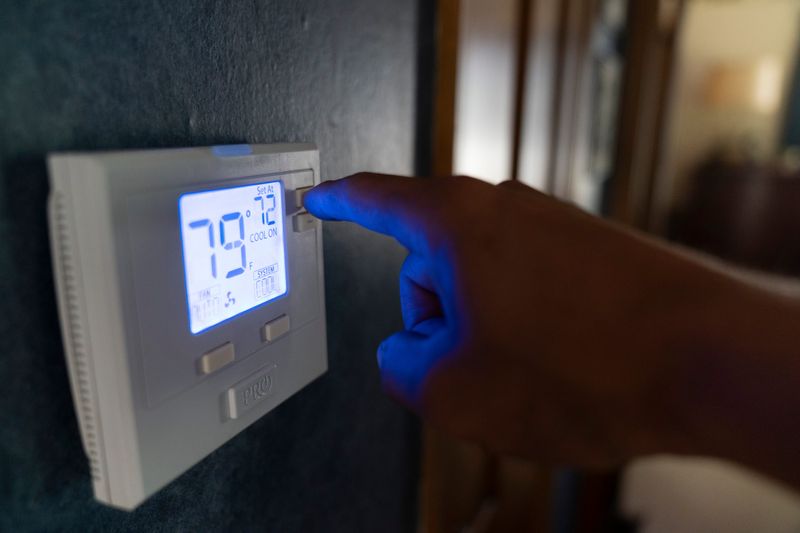
So what temperature should you set your air conditioner to? Short answer: it depends. It’s a decision you make based on:
The first and last ones are the most important. If you can afford it, run your A/C as low as you want. Be prepared for higher bills and likely more air conditioner maintenance and repairs.
But I always heard 78 degrees was best. Should I set my temperature to 78 degrees?
For a long time, 78 degrees has been the number everyone drops in their “stay cool” guides. Which is fine for some people, and for lizards.
When the media and electric utility companies promote 78 degrees, they often refer to ENERGY STAR, a program run by the Environmental Protection Agency and the U.S. Department of Energy that has become synonymous with energy-efficient appliances. But ENERGY STAR doesn’t recommend any specific temperature.
“ENERGY STAR does not assert that any particular temperature setting is good for households,” the EPA said in an email to The Palm Beach Post last year.
How can I keep the bills under control while running my A/C nonstop?
Even if you’re running your A/C nonstop, there are plenty of ways to give your air conditioner less to do.
Are landlords required to provide air conditioning?
In Florida, one of the warmest states in the country, landlords are required, by law, to provide tenants with heating, but not cooling.
However, if a unit has air conditioning when a tenant moves in, the landlord is required to maintain the air conditioning unit and repair it when needed, but there is no rule requiring them to provide air conditioning from the outset.
Florida is not alone in those ordinances, though; no states in the U.S. require landlords to provide air conditioning in all rentals. However, there are some local ordinances in other states requiring such things.
Samantha Neely is a trending reporter for the USA TODAY NETWORK-Florida, covering pop culture, theme parks, breaking news and more. You can get all of Florida’s best content directly in your inbox each weekday by signing up for the free newsletter, Florida TODAY, at https://floridatoday.com/newsletters.
This article originally appeared on Naples Daily News: Can you live safely in Florida without AC? See health impacts
Reporting by Samantha Neely, C. A. Bridges and Alexa Ryan, USA TODAY NETWORK – Florida / Naples Daily News
USA TODAY Network via Reuters Connect

By Samantha Neely, C. A. Bridges and Alexa Ryan, USA TODAY NETWORK – Florida | USA TODAY Network
