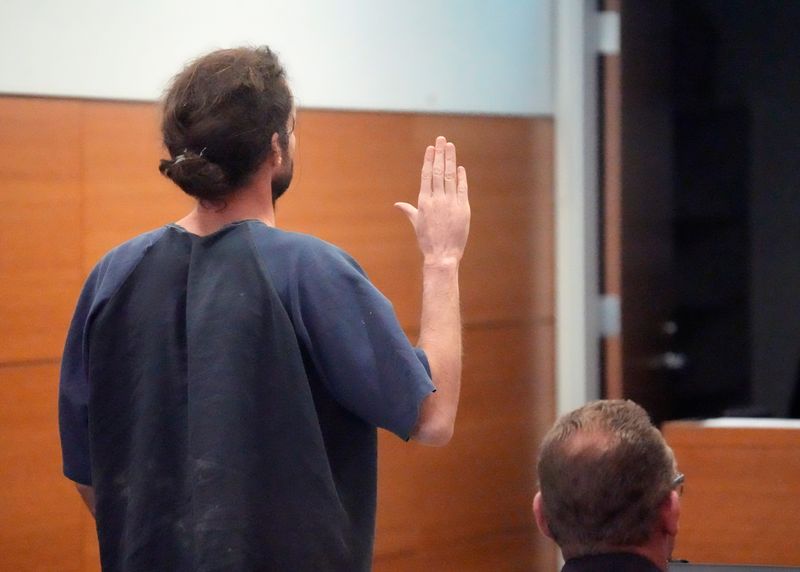
Thomas Matejcek lowered his head and muttered to himself upon seeing courtroom photos of the people he killed.
They were splayed across the bloody floor, like two marionettes after someone had cut the strings.

The evidence against Matejcek was so overwhelming, in fact, that his bench trial for double murder on April 6 took just eight hours to complete.
Upon conclusion of testimony, the only question remaining was whether the judge would announce a guilty verdict before the courthouse cafeteria closed for the day.
Matejcek, 38, was found guilty by a judge on two counts of first-degree murder in the deaths of his mother, Patricia Matejcek, and her boyfriend, Sean Harrison, Sr., on Nov. 10, 2023, in Bradenton.
He was sentenced to consecutive life terms in prison without the possibility of parole.
Autopsies confirmed the victim’s throats were slit.
Their blood, however, was on more than just Matejcek’s hands.
An examination of the case by the Herald-Tribune shows that systemic failure within the legal, judicial and mental health systems also played a major role in murders so callous the state originally sought the death penalty.
Court orders, along with state statutes and guidelines, were not followed.
Hearings were not held, background checks not conducted and foretelling emails from family members fearing for their lives were ignored.
In the end, the issue wasn’t whether a man killed two people.
The issue was how a man with a history of mental illness, substance abuse and violent crime was let out of jail, placed unsupervised into the community, and allowed to kill two people.
“What a mess,” said Steve Leifman, a retired Dade County judge and internationally known expert on criminal mental health who received an award from Pope Francis for his work.
“It sounds like everything fell through the cracks,” Leifman said.
“There wasn’t just one bad actor. That’s the problem with the whole system. It’s a disaster. And then we wait until something terrible like this happens to address it.”
Krista Kale, the sister of Patricia Matejcek, who went to every court hearing since the murders took place, was not being sympathetic towards the actions of her nephew when she said:
“I blame everyone.”
The criminal history of Taylor Swift’s ‘billionaire boyfriend’
In 2020, Thomas Matejcek broke into his mother’s home, threw her on the couch, placed a pillow over her face and said, “I hope you die.”
He received probation.
In May 2023, Matejcek drove his truck to California, where, according to Kale, he sat on the beach for a week and waited for his imagined girlfriend to show up – pop star Katy Perry.
She never appeared.
Dejected, and even worse, without gas money, Matejcek sold his truck and bought a bus ticket back to Bradenton. Kale and Patricia Matejcek picked him up at the station.
The next day, Thomas Matejcek showed up at his mother’s mobile home and he was angry.
Apparently, according to Kale, his mother had been rude to another of his imagined girlfriends – Taylor Swift. His mother also stole some of the billions of dollars he thought he possessed.
Matejcek threw his mother on the ground, breaking her hip. Then he assaulted Harrison, leaving a two-inch gash above his left eye. Both were taken by ambulance to Manatee Memorial Hospital.
A detective from the Manatee County Sheriff’s Office wrote in a report that “Thomas J. Matejcek poses an obvious danger to these victims.”
As it turned out, not obvious enough.
“Is it going to take Tom killing someone to get him away from the public?”
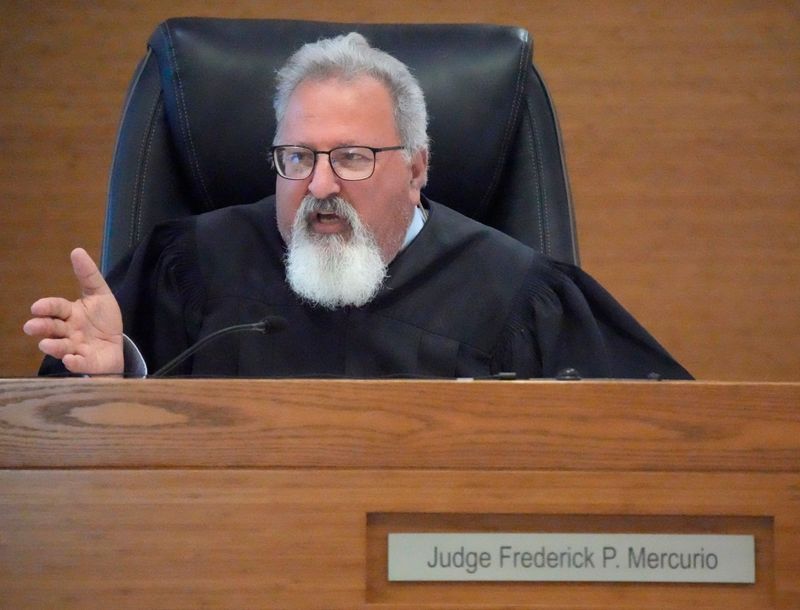
On Sept. 8, 2023 – four months after the assaults – 12th Judicial Circuit Court Judge Frederick Mercurio ruled that Matejcek was mentally incompetent to stand trial in the case.
As guaranteed by the Fourteenth Amendment of the United States Constitution, a person who is charged with a serious crime cannot stand trial if they are mentally incapable of participating in their own defense.
In Florida, judges use evaluation reports submitted by psychiatrists to determine a defendant’s competency status and how their case should proceed.
For a mentally incompetent defendant to receive outpatient treatment to restore competency, a judge will sign what is known as a Conditional Release Order, or CRO.
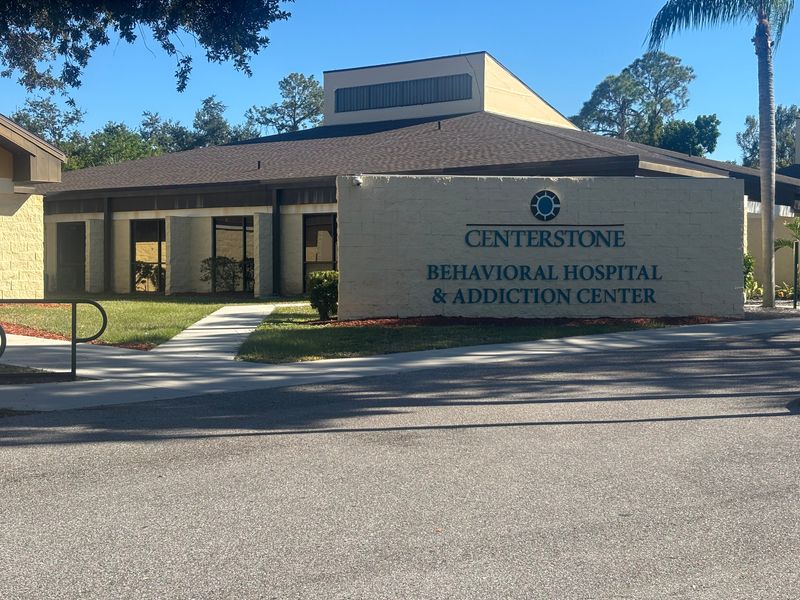
In Matejcek’s CRO – signed by Mercurio – it was ordered that his outpatient competency restoration process be handled by Centerstone of Florida, a behavioral health and substance abuse hospital based in Bradenton.
Centerstone of Florida, which employs 450 people and treats 17,000 patients annually, also has branches in Sarasota, Fort Myers, Arcadia and LaBelle.
The nonprofit receives tens of millions of dollars each year from the Florida Department of Children and Families (DCF), in addition to local government funding and nonprofit contributions.
Centerstone of Florida is owned by Centerstone of America, the largest mental health nonprofit company in the United States.
Matejcek’s conditional release order stipulated that he attend competency restoration classes, meet with case workers on a regular basis, and notify Centerstone of any address changes.
Centerstone, in turn, was ordered to immediately alert the court of any violations of the order, along with any residential changes made by Matejcek.
Mercurio also instructed Centerstone to find Matejcek – who was in Manatee County Jail at the time – a Residential Treatment Facility, or RTF, in which to reside.
RTFs are licensed and locked facilities that contain certified mental health workers and nurses.
However, the wait lists are long to secure a bed and payment is expensive.
Centerstone said in a deposition three RTFs were contacted, but could not immediately fit Matejcek in.
It was during the same hearing on Sept. 8, 2023, according to a deposition, that a Centerstone forensic manager named Alexandria Freeze said she was approached by assistant public defender Alexis Schad, who asked Freeze to find Matejcek somewhere to live.
Schad wanted Matejcek out of jail and in a community-based environment for treatment.
Schad, who declined comment for this story, no longer works in the public defender’s office and practices privately in Sarasota.
On Sept. 15, 2023 – a week after Thomas Matejcek’s conditional release order was signed by Mercurio – Kale sent an email to assistant state attorney Daniel Kwitko, who was prosecuting the case.
Kale was concerned Matejcek was capable of murder, should he be released.
The email, obtained by the Herald-Tribune, read: “Is it going to take Tom killing someone to get him away from the public? Sean and Patty are scared to death he will be back let out. They were promised the day they made their statements that Tom would NOT be released due to the severity of his crimes. If you would, please get ahold of them or myself.”
Kwitko – who now works in the Hillsborough County public defender’s office and did not answer requests for comment – responded to Kale with this email: “Hello, I will be out of the office until 9/18.”
He gave her the contact information of his assistant instead.
Matejcek goes missing from jail
On Sept. 15, 2023, the same day Kale sent her alarming email to Kwitko, a Centerstone forensic specialist went to the Manatee County Jail to see Matejcek.
Just one problem: He wasn’t there.
One day prior, and unbeknownst to Centerstone, Matejcek had been transferred to the Sarasota County Jail on a warrant in a prior misdemeanor case.
On Monday, Sept. 18, 2023, Centerstone forensic manager Tabitha Hammersmith learned Matejcek had been transferred, so she contacted the Sarasota County Jail.
Just one problem: He wasn’t there either.
A Sarasota County judge had released Matejcek for time served. He was gone.
On Sept. 27, 2023 – nearly two weeks after Manatee County transferred Matejcek to Sarasota County – Hammersmith emailed Mercurio and notified him that “Centerstone has been unable to locate Mr. Matejcek at this time.”
It took 22 days for the Bradenton Police Department to find Matejcek, take him into custody and return him to the Manatee County Jail.
“How can one person fall through so many cracks?” said Kale.
Why was a court hearing not held?
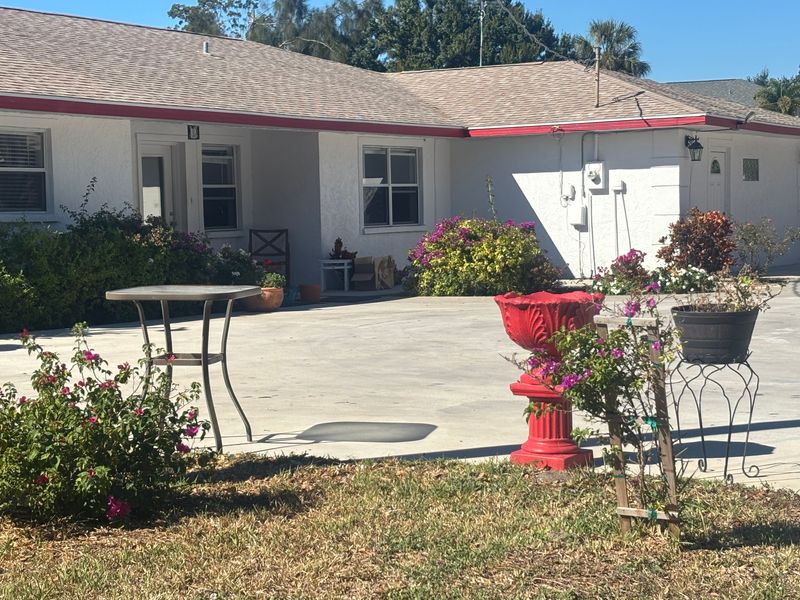
Now that Matejcek was back in custody, on Oct. 17, 2023, Freeze emailed Schad with some news. Centerstone had found a place for Matejcek to live as an outpatient client: The Mary Jennings Group Home, located in Bradenton.
Before Matejcek could be removed from jail and brought to Jennings’ home, however, a modification of his conditional release order signed by a judge was needed to reflect the change of residency.
Normally, a hearing would be held before the judge signed the modification. That didn’t happen.
Through a string of email exchanges between Kwitko, Schad, Freeze, Hammersmith, and Karen Yost, who is Judge Mercurio’s assistant, everyone agreed to bypass the hearing.
On Oct. 20, 2023, Schad emailed Kwitko: “Dan, we still have not received a response on whether you would prefer to have a hearing, or if you are fine with a modified order being put into place.”
Kwitko responded: “A modified order would be fine.”
Schad then emailed Yost – Mercurio’s assistant – with the modified order: “Please see attached for Judge Mercurio to sign.”
That a hearing was not held to discuss the modified order perplexed Hammersmith, even as Florida statute 916.304 states that “upon the filing of an affidavit or statement under oath by any person that the release conditions should be modified, the court shall hold a hearing within 7 days after receipt of the affidavit or statement under oath.’’
“Both parties (the defense and prosecution) stipulated via email to the release, which I found odd,” Hammersmith said in a deposition.
“Why did you find it odd?” she was asked by an attorney.
“It’s not typically how things are conducted,” Hammersmith responded. “Usually, I’d be pulled in for a hearing for that.”
Hammersmith said Yost “referenced some stressors about being inundated with violation letters and that Judge Mercurio was going to be out of office.”
“It was just a bit atypical,” she added.
Leifman, the retired judge from Dade County and expert on criminal mental health, said if it’s an agreed order, a hearing does not need to be held.
He also added: “It didn’t happen. I don’t know why it didn’t happen, and that’s a shame.”
Why was a hearing important?
Kwitko never argued against Schad’s request that Matejcek be released into the community to live at the Mary Jennings Group Home.
Had a hearing been held for the modified conditional release order, it would have been an opportunity to stand before the judge and present Matejcek’s extensive history of violence, substance abuse and mental health issues – all reasons why Matejcek should not have been released from jail.
Kale’s email to Kwitko – where she wrote “Sean and Patty are scared to death he will be let back out” – could also have been presented to a judge at that time.
Leifman, who is known internationally for his efforts to keep mentally ill defendants out of prisons and jails, said the state attorney’s office “didn’t do their homework.”
“The guy tried to kill his mother once, and he beat up her boyfriend too,” Leifman said.
“That should have been the biggest red flag of all. He never should have been released for competency restoration. Period. I don’t know why they would release someone with that kind of history.”
Leifman said Matejcek should have been kept in jail until a bed at a secured residential treatment facility became available – and therein lies the problem.
RTF beds are rarely available in a timely manner, and jails are not staffed to treat mentally incompetent defendants. That leaves unlicensed homes as the only option while defendants undergo outpatient treatment from facilities like Centerstone.
“I get it,” Leifman said. “There are no beds. But what’s the alternative? Look what happened.”
Up until that point, Mercurio had been handling the Matejcek assault case, but because he was off, Judge Matt Whyte signed the conditional release modification. At the time, Whyte was handling the highly publicized Ashley Benefield murder case and was not as familiar with Matejcek’s case.
Had a hearing been held, Whyte could have asked about the order he was signing.
In particular: Who is Mary Jennings?
No one ever told Mercurio or Whyte about Jennings because no one checked her background.
The judges, for their part, never asked who she was either.
Who is Mary Jennings?
Mary Jennings is an 80-year-old convicted drug and welfare fraud felon who was running an unlicensed group home in Bradenton, a felony in the state of Florida.
She has rented beds to Centerstone for years, receiving nearly $300,000 in 2023 and 2024 alone, according to tax records.
Though Jennings was dispensing medication to the Centerstone clients she housed, she has no background in nursing, nor training in the mental health field.
Between 2021-2025, according to a Herald-Tribune investigation, the Bradenton Police Department was at Jennings’ house 105 time for various incidents, including a drug overdose death.
Jennings presents herself as a god-fearing woman whose purpose in life is to house the afflicted.
In a deposition, however, Jennings’ son, Calvin Moore, indicated there was a different motive.
“When it come to cash money, all that mental health go out the door,” Moore said.
Moore lives with his mother and helped with residents. He has been arrested twice in the past on federal cocaine charges and has served 20 years in federal prison.
Moore even claimed in a deposition that judges in the court system were directly sending defendants to Jennings’ house, bypassing Centerstone’s recommendations.
“A lot of judges in the courts know Miss Mary is a good person, that she takes care of people, so they will order them to go there, not just through Centerstone,” Moore said.
On Oct. 25, 2023, Hammersmith went to Manatee County Jail, picked up Matejcek and brought him to Jennings. Matejcek smelled so foul that Moore covered up the food he was cooking.
No one told Patricia Matejcek that her son – who had already tried to kill her – was now living only four miles away from her home. It was Kale who informed her, as she had been monitoring the case online.
By this point, Matejcek elicited such fear that the two sisters had a special knock they used when they went to each other’s homes. That way, they would know it wasn’t Thomas who was standing at the door.
Thomas Matejcek, meanwhile, took a shower at Jennings and was given $15 to go to the store for cigarettes. He walked out the door after 15 minutes and never came back.
“When that man came to my house, he had a purpose,” Jennings said in a deposition.
“He had a plan to kill his mother. He could have killed me in the same way. Nothing but the grace of God saved me. What if he had come here and killed me? We were five feet apart. I’m not a fortune teller.”
Still, if Jennings felt Matejcek was dangerous enough to kill someone, she made no effort to report him missing.
She wasn’t the only one.
A killer on the loose in Bradenton
On Oct. 30, 2023, five days after leaving Jennings’ home, Matejcek failed to show up at Centerstone for a medication meeting as mandated in his conditional release order.
That’s when Hammersmith called Jennings and inquired as to his whereabouts.
“She was trying to find the person and I didn’t know what to tell her,” Jennings said.
Jennings told Hammersmith she hadn’t seen Matejcek in five days.
Upon possession of this information, Hammersmith was to report Matejcek’s elopement to DCF within one business day, according to DCF operating procedure. She did not.
Per the conditional release order, she was to immediately notify the court of any violations, such as Matejcek missing his medication meeting. She did not.
And per state statute 916.17, she was to file a sworn violation statement or affidavit with the court, where a hearing was mandated to occur within seven days. She did not.
A prominent local defense attorney told the Herald-Tribune that Mercurio would have held a hearing within 24 hours had a violation letter been received from Hammersmith.
Not only did none of this happen, but no one bothered to notify Patricia Matejcek that her son was on the loose, either. And she was the emergency contact listed on Centerstone’s forms.
Hammersmith said in a deposition that Centerstone usually does not notify the courts after clients miss their first meeting and violate their release orders. They usually receive a pass, she said, so Centerstone can build a better rapport with clients.
Furthermore, Hammersmith said, ”clients abscond frequently. It’s not uncommon for clients to abscond from their placements.”
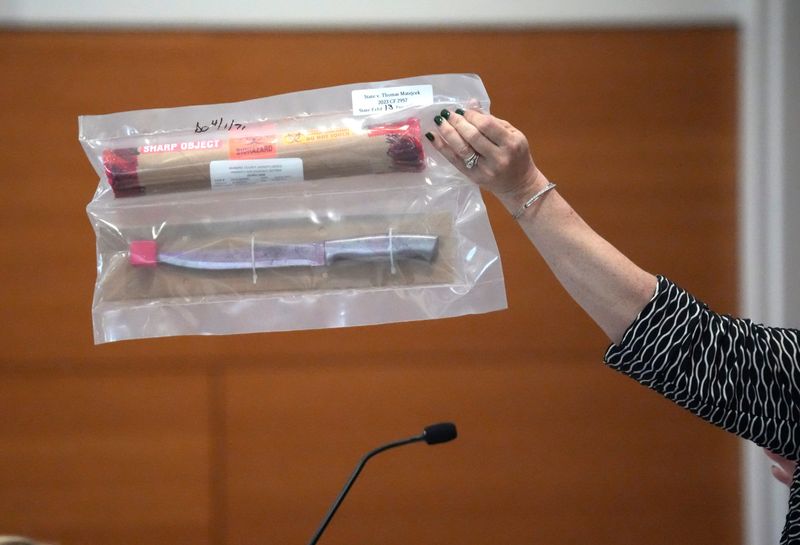
On Nov. 10, 2023 – 10 days after absconding – Thomas Matejcek slammed a can of Twisted Tea, entered his mother’s mobile home, took a large knife from a kitchen holder, slit her throat, slit her boyfriend’s throat, left their lifeless bodies face down in pools of blood on the cold floor, placed the knife in the sink, turned on the water, then slipped out of yet another place he never should have been in.
Only this time someone reported it. A neighbor called 911.
Matejcek was found a short time later, standing near a pond, holding a wet, black T-shirt. His khaki pants were soaked. Inside his pocket was a razor blade.
“The defendant exhibits signs of mental illness,” his arrest report noted.
Deaths that could have been avoided
On Nov. 19, 2023 – nine days after Patricia Matejcek and Sean Harrison Sr. were murdered – Kale sent an email to Kwitko in the state attorney’s office.
“I will make this statement again,” Kale’s email read.
“I am extremely afraid of Thomas. I have lost my sister due to the failure of the courts in finding Thomas incompetent to stand trial and releasing him not once, but twice. If Thomas is released (again), I do believe without a doubt I will be the next one Thomas will track down and hurt or kill.
“I don’t expect you to contact me because the first time I emailed you, you didn’t call back. I warned you then, that Thomas would hurt someone, but he took it one step further and killed his mother and her boyfriend.
“I have a question to ask you: Have you ever been to a funeral for two of your family members taken from you by a murder? See them lying there, knowing that their deaths could have and should have been avoided?”
Kwitko responded with the following email:
“I am so sorry for your loss,” he wrote. “I can certainly appreciate your concerns.
“Have a good day.”
Chris Anderson can be contacted at chris.anderson@heraldtribune.com. Please support local journalism by subscribing.
This article originally appeared on Sarasota Herald-Tribune: Bradenton double murder was result of shocking systemic failure
Reporting by Chris Anderson, Sarasota Herald-Tribune / Sarasota Herald-Tribune
USA TODAY Network via Reuters Connect