For more than six decades, a nuclear fallout shelter underneath the Florida governor’s mansion has been waiting. Thirteen governors have come and gone since its construction; none descending into it to escape a nuclear attack, a hurricane, or any other disaster.
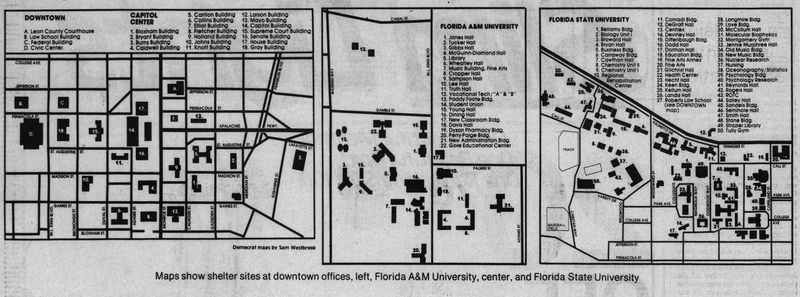
To be sure, in the early 1960s as tension between the U.S. and Soviet Union over Cuba hundreds of Tallahassee office buildings and public buildings were equipped with bomb shelters.

Civil Defense officials said Florida State University Strozier Library could provide shelter to more than 5,500 people. The fallout shelter at the Larson Building on Gaines Street has space for 2,835. Shelters were also installed at 15 other state office buildings, the Leon County Courthouse, and at Florida A&M University. Officials said in total, Tallahassee could offer shelter to 63,000 people from nuclear fallout – if they survived the blast.
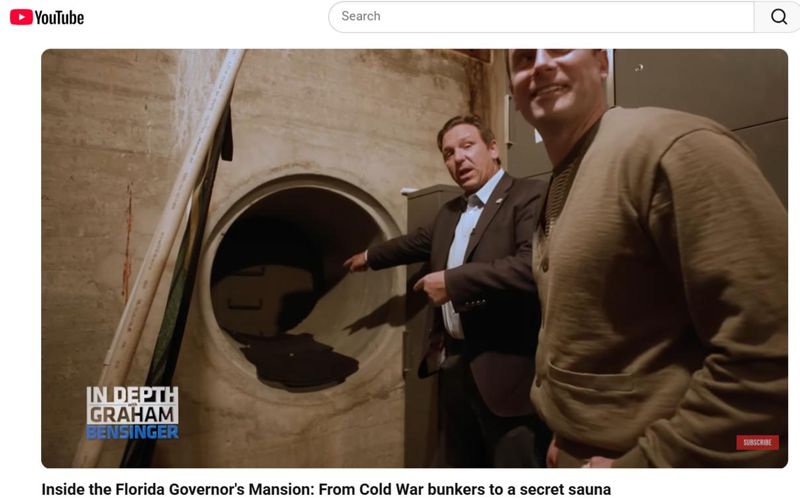
Former governors talk about the shelter built at the governor’s mansion as forgotten space — used for storage. It remained largely forgotten by the public until recently, when Gov. Ron DeSantis granted a video interview to sports journalist Graham Bensinger.
He provided a tour of the mansion that included the basement, drawing attention to the shelter and its escape hatch for the first time in years. DeSantis said the only time he ever seriously thought about using it had nothing to do with nuclear war.
As racial reckoning protests intensified, DeSantis thought of the shelter
In May 2020, DeSantis said he was with Elon Musk at a Cape Canaveral rocket launch as nationwide protests erupted following the killing of George Floyd.
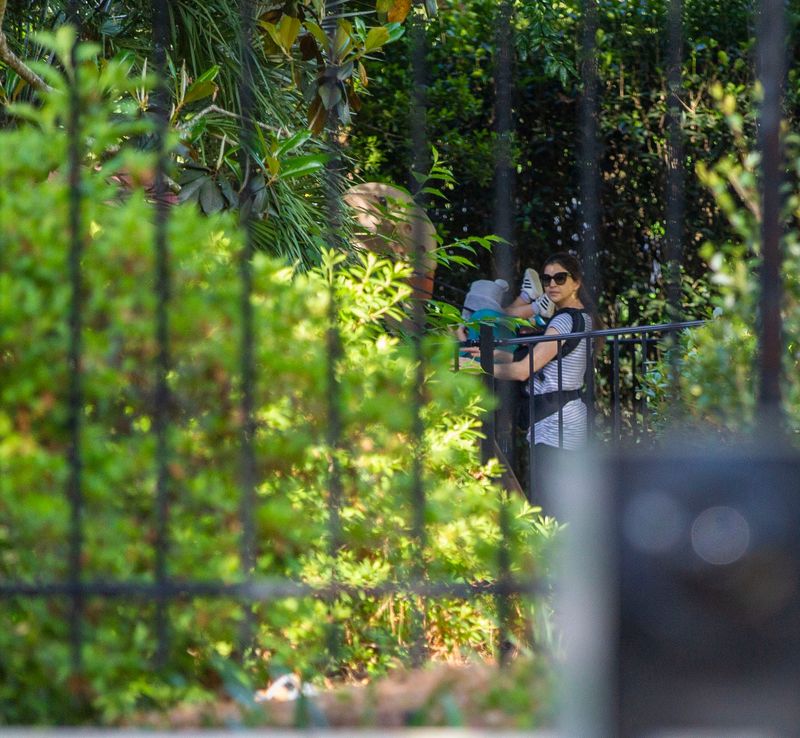
In Tallahassee, Casey DeSantis was at home, four months pregnant and with the couple’s two small children. While most demonstrations were confined to downtown and the Capitol area, a group marched to the governor’s mansion and gathered at the front gates.
“They were protesting out here,” DeSantis recalled in the YouTube interview with Bensinger, while giving a rare tour of the shelter. “They were getting violent. They were throwing things at the agents.”
The demonstrators filled a park across the street from the mansion. Local and state police formed a defensive line in front of the mansion while the demonstrators chanted “No justice, no peace,” and “Black Lives Matter.”
Three hundred miles away, DeSantis was told what was going on and became more concerned about the situation the more he heard.
He told Bensinger his thoughts turned to the underground shelter and the escape hatch. It turned out “they didn’t have to go down there,” DeSantis said about his wife and kids. “We had an Antifa (protester) jump the fence. He got arrested and he got prosecuted.” (Records couldn’t be found to independently verify some of DeSantis’ claims in the Bensinger interview.)
DeSantis added that the 2020 demonstrations were the only negative experience the family has had at the mansion.
A fallout shelter frozen in time
A viewing of the Bensinger video reveals the shelter remains largely as described by newspaper articles dating to the 1960s and 1970s.
No official floor plans, dimensions, or structural details are public for security reasons. What is known is largely due to governors providing access just as DeSantis did recently.
The shelter is roughly 10 feet wide and 45 feet long. Former Gov. Reubin Askew once vetoed $25,000 in improvements that would have added carpet, fresh paint and air conditioning, leaving the space frozen in its Cold War past.
The décor is pure basement – concrete walls, exposed wiring and plumbing systems. Sleeping and working areas are separated by a door.
The shelter can be reached from a stairway in the mansion’s living quarters, winding past a maze of heating and cooling pipes, or from the outside, via the manhole cover in the front veranda, the escape hatch if the First Family needs to evacuate.
Built for survival not comfort
According to newspapers accounts of days gone by, the shelter is stocked like a survivor catalog for a nuclear war. It includes:
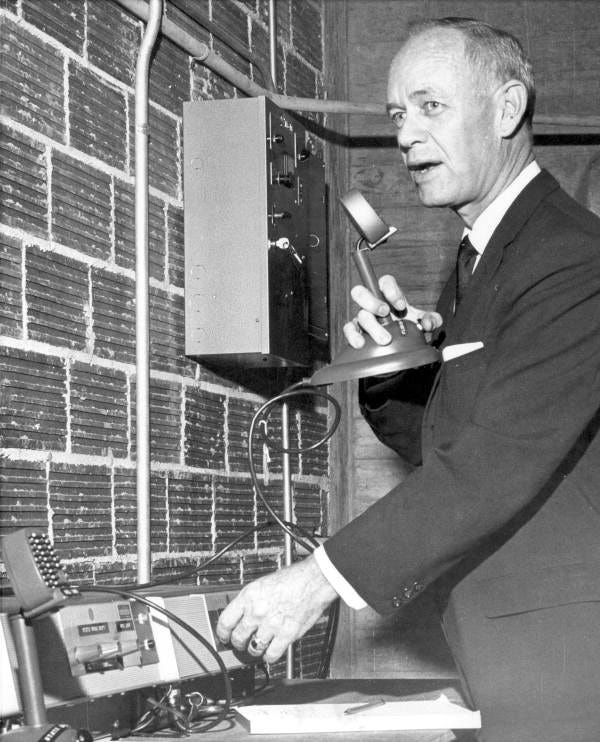
Radiation detection kits sit alongside two emergency medical kits. Everything about the space suggests short‑term survival: Enduring a bombing, not comfort or long habitation.
The shelter was built when anxiety over U.S. and Soviet Union relations appeared headed to a nuclear confrontation over Cuba.
Federal officials warned that Tallahassee would likely be a target in a nuclear exchange, with ground zero near the Capitol. Other potential targets dotted north Florida: Pensacola, Fort Walton, Panama City, Port St. Joe and Jacksonville.
Gov. Farris Bryant ordered the fallout shelter installed beneath the mansion. But that wasn’t all.
Tallahassee’s City Hall converted part of its basement into a civil‑defense shelter for 150 officials.
Leon County civil‑defense director Bunky Atkinson told the Tallahassee Democrat that interest in shelters surged so sharply her office ran out of federal pamphlets titled “Protection in the Nuclear Age.”
“I can’t keep those orange booklets,” she said. “I’ve gone through cases and cases. And have another 3,000 on order with the Defense Department.”
In a series of articles published in 1982 titled “The Doomsday Plan,” the Democrat noted that the Pentagon and National Security Council drew up a map of likely nuclear targets, and Tallahassee was on the list along with 17 other potential targets, the most of any state in the nation.
“If we get a direct hit, we’ll all be just so much dust floating in the breeze,” Atkinson said at the time, adding “why anybody’d bomb Tallahassee is beyond me.”
Of course, assumptions that a couple of weeks underground would be enough proved overly optimistic, as long-lived radioactive isotopes, crippled food systems and fragile supply chains could have left survivors facing prolonged exposure and scarcity long after they emerged.
Many underground shelters were also far from self-sufficient, with limited water, minimal food, poor sanitation and rudimentary ventilation systems that offered only partial protection.
Expensive to build but never used
Specifications of the governor’s mansion’s shelter are unknown but building a home shelter at the time was expensive. Roughly about $20,000, or $220,000 today when accounting for inflation.
One Tallahassee homeowner profiled in 1961 built a bunker with 21 tons of reinforced steel in foot‑thick concrete walls and lined with polyethylene to block moisture. The furnishings are stark. There is no attempt at comfort – not that it has been needed.
In the 65 years since its construction, no governor is known to have used it during a nuclear threat, military attack or natural disaster. Hurricanes have lashed Tallahassee. The Cold War has ended. Other wars have come and gone. And through it all, the shelter has stayed closed.
Former Gov. Haydon Burns once recalled going down only to look around. “We used it for storage,” he said after leaving office.
The most significant use of the shelter came in 1972 when legendary Tallahassee Democrat editor Malcolm Johnson cited it to quiet talk of building a new governor’s mansion at a more secluded area away from downtown and the Capitol.
“Security! That seems to be the keynote of the current agitation for a new mansion,” Johnson wrote, mocking the idea one was needed.
“Security and space – not inside space but space outside for landscaping and keeping the public out of gun range,” Johnson wrote, putting an end to the discussion.
An expanding security zone
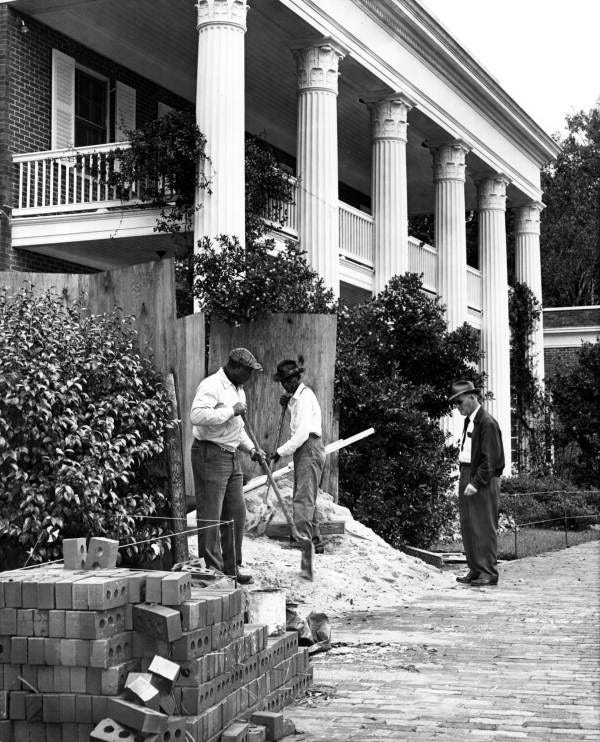
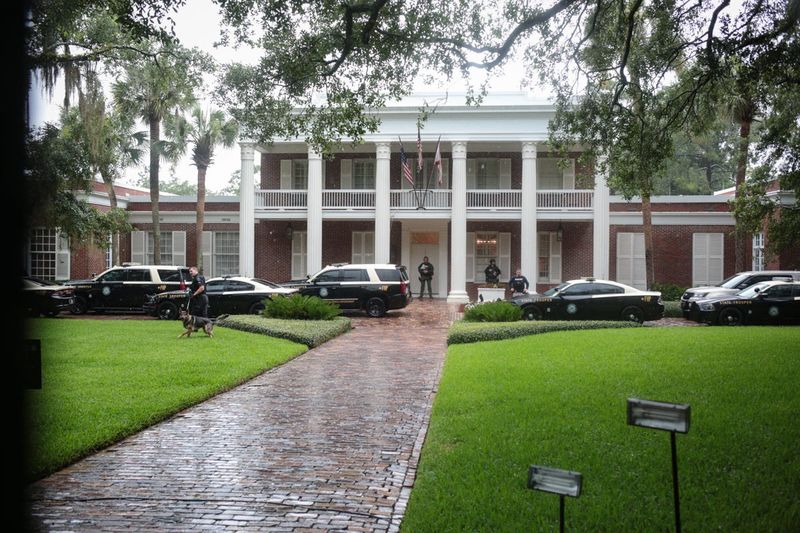
Nonetheless, security measures have increasingly restricted access to the 1956 Colonial Revival style mansion designed by architect Marion Sims Wyeth and added to the National Register of Historic Places in 2006.
Those efforts began after the attacks of Sept. 11, 2001, and accelerated dramatically during the DeSantis administration – the governor is a navy veteran who was deployed to Iraq in 2007–08 as a legal adviser to Navy SEAL Team One.
Since 2020 – after the George Floyd and coronavirus demonstrations with one protester even encasing his hands in concrete near the mansion’s fence – the state has spent millions acquiring and demolishing nearby homes and commercial buildings to widen the security buffer around the mansion.
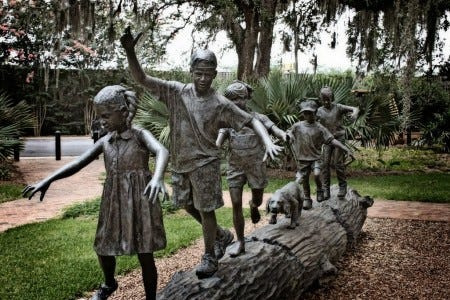
Across Adams Street from the mansion is a small green space featuring a sculpture of children and a dog playing on a log that former Gov. Lawton Chiles dedicated to Florida’s children. It has been fenced off and closed.
State officials say the measures reflect heightened threats and the governor’s national profile. Critics argue they erode public space, undermine transparency, and override historic‑preservation concerns.
Against that backdrop, the bomb shelter beneath the mansion endures.
The hatch is closed.
The radio is on.
The air circulator hums.
And the room built for doomsday waits, unused – except for storage.
Florida Governor’s Mansion
James Call is a member of the USA TODAY Network’s Florida Capital Bureau. He can be reached at jcall@tallahassee.com and is on X as @CallTallahassee.
This article originally appeared on Tallahassee Democrat: Bomb shelter beneath governor’s mansion in Tallahassee frozen in time
Reporting by James Call, USA TODAY NETWORK – Florida / Tallahassee Democrat
USA TODAY Network via Reuters Connect