With a shallow breath and his arms wrapped across a hole in his abdomen, a 19-year-old struggled to speak inside Tallahassee Memorial HealthCare’s emergency room.
“I’m bleeding out,” Jeremiah Case said with a gravelly whisper.

Dr. Megan Morrow, a trauma surgeon who has seen countless gunshot victims over the years, tried to reassure him. “You’re not bleeding out,” she said. “But you have been shot. We’re going to take care of you.”
Jeremiah was the victim of what the Tallahassee Police Department described as an accidental shooting in Cascades Park around 4 a.m. on Memorial Day, May 26.
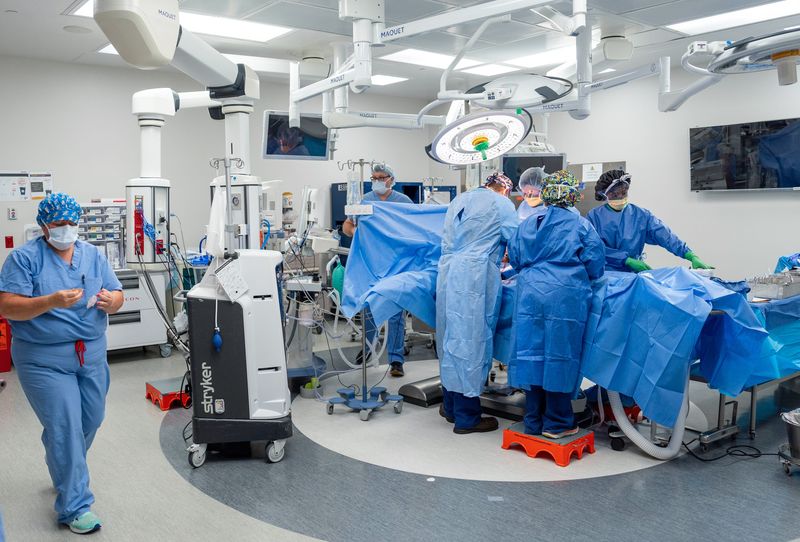
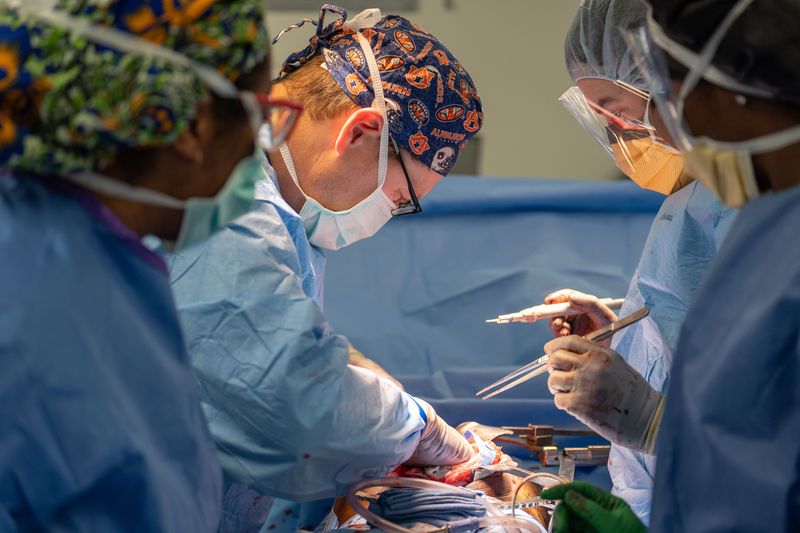
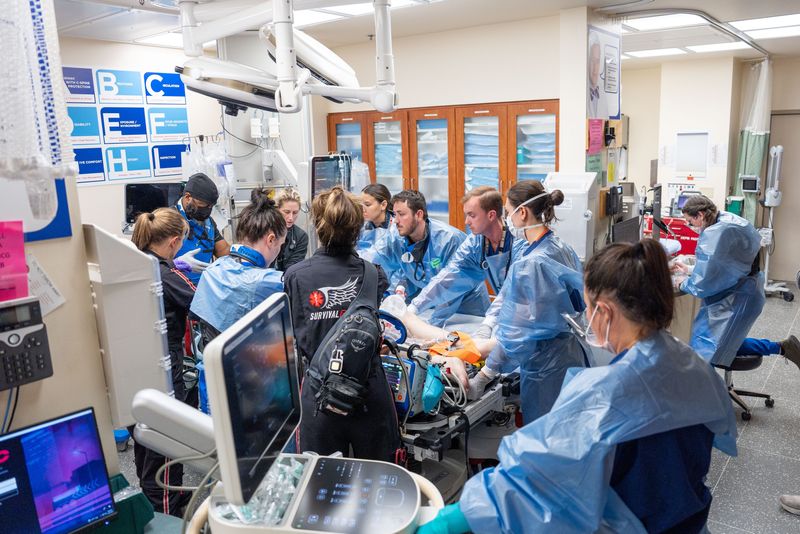
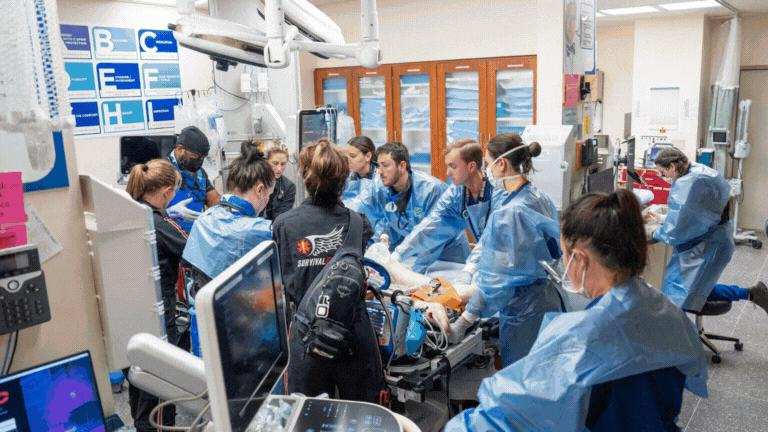
After he arrived in the ER, the trauma team assembled into place for surgery. A surgeon, two surgery residents, an anesthesiologist, a scrub tech, and nurses all scrambled into action.
They opened his abdominal cavity, stuffed dozens of pads into his gut and sutured his internal organs to stop the bleeding. But they left his body open in preparation for a second surgery.
Kelly Sheppard-Hearn, an assistant nurse manager at TMH, said the doctors are focused only on making sure the patient survives.
“It doesn’t matter why the person was shot, how the person was shot,” she said. “We’re here for the patient. We’re here to protect the patient, to save the patient.”
This summer, the Tallahassee Democrat was granted unprecedented access to the tense, sometimes chaotic tug-of-war between life and death inside the city’s community hospital.
Embedded alongside emergency room physicians, trauma surgeons, nurses, and support staff, this photojournalist captured in real time the emotional weight and split-second decisions that occur inside the ER, offering a raw, unfiltered portrait of what it means to fight for survival.
The holiday shooting came weeks after the hospital faced its toughest test: a mass shooting at Florida State University that brought six students to the hospital at one time suffering from gunshot wounds. Three were rushed to the operating room. All survived and are expected to make a full recovery.
It also comes as the hospital’s future is in flux. Conversations continue on whether the city of Tallahassee will transfer control or sell the hospital to FSU, which wants to transform it into an academic medical center.
But for the doctors, nurses and others on the ground, those headlines are background noise. Their mission remains unchanged: Save lives, no matter the circumstances.
Gun violence in the Big Bend: ‘They’re just truly children’
After a shooting happens in the Tallahassee area, the first news updates usually have few details about the victim and their condition – and a ubiquitous line noting the victim was “transported to the hospital.”
But that’s where front-line responders perform hidden heroics in the capital city’s decades-long battle with gun violence.
The trauma team at TMH consists of more than 100 people specifically trained to handle the most critical of emergencies, including victims of gunshot wounds.
The hospital serves 21 counties from the Florida Panhandle and Big Bend to South Georgia and southeast Alabama.
Over the last five years, TMH treated 682 shooting victims, which accounts for only a fraction ― less than 7% ― of the trauma patients it saw over the same time frame.
This year, Tallahassee has seen 16 deaths and more than two dozen injuries from gun violence with nearly 40 serious shooting incidents.
Sheppard-Hearn, who has been with TMH since 2018, sees everything from stroke and heart attack patients to victims of car crashes and gunshots come through the double doors of the ER during a typical night shift.
Some 504 patients came into the ER with “penetrating injuries” during a two-year span between late 2022 and 2024, according to hospital stats. About 49% of those were gunshots. The rest were from stabbings, animal attacks, assaults with sharp objects and more.
When it comes to shootings, Sheppard-Hearn said the victims seem to be “getting younger and younger.”
“They’re just truly children, not adults, getting tied up in this gun violence, and they don’t know who to trust,” she said. “I keep seeing the victims, and they’re mid-teens, low-teens.”
‘The goal … was damage control’ not bullet chasing
The shooting incident on Memorial Day in Cascades Park first was reported as a possible drive-by. Police quickly learned it was an accident ― the result of three teen-agers, ages 17, 18, and 19, handling a gun without proper care in the middle of the night.
The 18-year-old was grazed in the shooting. Jeremiah ended up with a slug in his belly. Shannon Cook, a nurse at TMH for three years, was on duty when the call from EMS came through.
Cook prepped the trauma bay, ensuring all of the machines and monitors were on and the bed was ready. Even a cup of ice was set on the scribe nurse’s desk to add to the Ziploc bag that would hold tubes of blood drawn shortly after the patient’s arrival.
It took a team of trauma surgeons to save Jeremiah’s life. Dr. Morrow assessed the patient; Dr. Patton Pennington started the surgery; and Dr. John Dortch, TMH’s trauma medical director, assisted and performed the patient’s vital second operation.
“The goal of that first operation was damage control — understanding that you’re going to have a second operation to go back and either put things back together or remove hemostatic agents that you’ve placed in the abdomen,” said Dortch.
The doctors left the bullet inside him ― a common practice to avoid unnecessary surgery and risk. They focused instead on repairing damage to his organs caused by its trajectory.
“A common misconception of gunshot wounds is that we’re always in there chasing the bullet, and we’re gonna see like on the TV show the bullet go into a metal container,” Dortch said. “We rarely, rarely, if ever, chase the actual bullet.”
Dortch followed up with the young man, checking the incision and his vitals. He also gave updates to Jeremiah’s waiting family.
“I try to provide the most realistic and honest assessment to that question ― ‘Is my loved one OK?’ ― that I can,” Dortch said. “A lot of times that conversation is hard. A lot of times that’s telling them that their loved one is not going to make it, or that they’re in critical condition and it’s day-to-day. But I think the families deserve blatant honesty in those situations.”
‘Enormous network of people’ activates as trauma patients arrive at TMH ER
The Tallahassee Memorial Bixler Trauma & Emergency Center operates around the clock, 365 days a year with 48 beds and three trauma bays. An operating room is always available, and an emergency blood supply is kept on hand at all times.
It’s the Big Bend’s only option for traumatic injuries, as TMH is the only Level II trauma hospital within 190 miles east and west of the capital city.
When patients are life-flighted to the hospital, the whirring of the helicopter propellers can be heard from the trauma bay.
“It’s an enormous network of people that are involved in caring for these patients when they get into the hospital,” Dortch said. “We as trauma surgeons are often directly involved in taking the patient to the operating room, stopping the bleeding, repairing the organs, whatever we can.”
But the work doesn’t stop there.
“The nurses on our floor, the nurses in our ICU, the social workers that we have here, who work so hard to help get these patients … back to some semblance of normalcy in their life after recovering from surgery. Those ancillary staff that are involved in taking care of these patients should be recognized as well,” Dortch said.
Across the 72-hour Memorial Day weekend, patients came into TMH’s emergency room from Leon, Gadsden and Jackson counties.
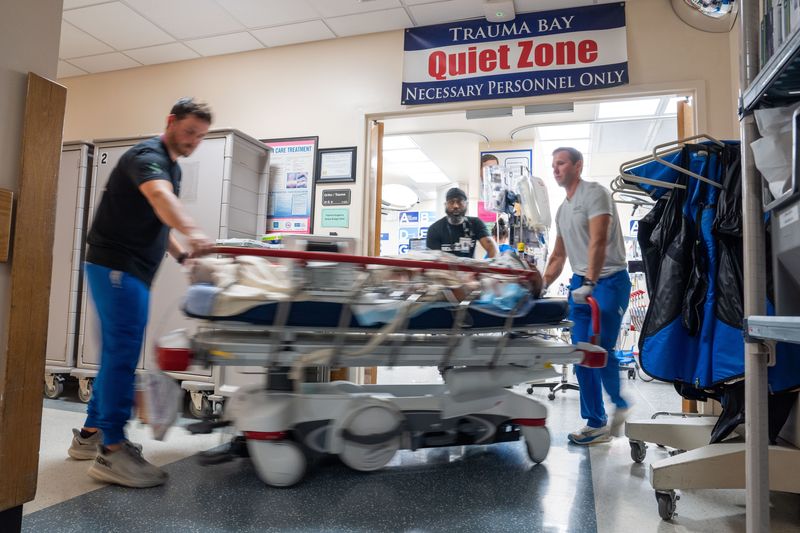
Patients who had suffered possible strokes were wheeled into the ER continuously and parked beside the nurses station.
Other patients walked in through the front doors and waited in chairs to be seen. One had cuts and bruises from a car crash. Another was injured in an apparent case of domestic violence. Still another was bleeding badly from a home DIY project that went wrong.
“Taking care of patients when they’re having their worst day, going through the worst part of their life. These are all devastating experiences that our patients are going through,” said Dortch.
ER nurses ‘switch on, switch off’ emotions as patients roll in
Sometimes the ER fell quiet, save for the soft, steady beeping of monitors in the background. As the night dragged on, one family member asked a charge nurse for a pillow.
In those moments, the nurses opened up about their nights treating trauma patients and their conversations with families whose loved ones’ fates were left in the hands of the trauma staff.
“I think that special kinds of people are ER nurses,” Sheppard-Hearn said. “If we weren’t able to switch on and switch off, then we wouldn’t be able to do our jobs.”
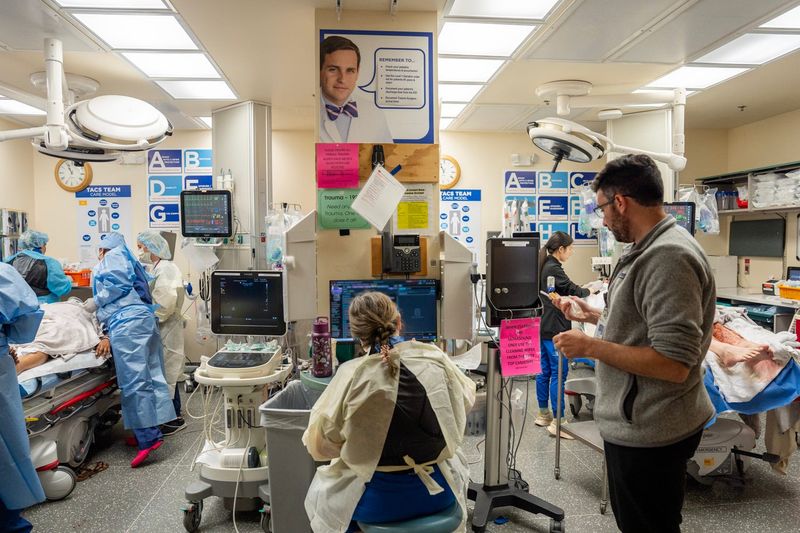
While the Democrat was in the ER, two patients were treated simultaneously in the trauma bay by dozens of staff members.
Meanwhile, the more than 12 ER rooms in Pod 1 were occupied by lower-level emergencies.
“For those intense moments when we’re actually saving the patient, we have to be really dialed in and just focusing on the patient and what needs to be done,” Sheppard-Hearn said. “I think that can come across as a little cold sometimes.”
But Sheppard-Hearn has cried with families. She carries the obituary of a former patient in her badge. She said she wishes people saw nurses and medical staff “more like humans.”
“People don’t understand that we could have just walked out of like, a child’s cardiac arrest, and we’re sorry that we didn’t respond quicker with your lesser need, like a sock or juice,” she said. “At the end of the day, we are just humans trying to help you, and we’re doing our best.”
Mass shooting at FSU hit home for TMH trauma team
On April 17, the trauma team’s expertise was put to the test after a gunman opened fire at the Student Union at Florida State University.
The shooting, which was carried out by a 20-year-old student, left two people dead and several others injured. The gunman, who was shot minutes after he opened fire by an FSU police officer, was also treated at the hospital.
The entire trauma staff had trained for such mass casualty events. Dr. Matthew Ramseyer, a trauma and care surgeon, was working in the trauma department on the day that became “our community’s worst nightmare.”
When the call came in, TMH staff didn’t know how many victims there were but prepared for the worst and waited for EMS to arrive.
“As an FSU graduate, it was saddening to know that had happened on campus,” Ramseyer said. “I took reassurance … knowing that we had several trauma surgeons available as well as other staff surgeons available in the event that there were a lot of casualties.”
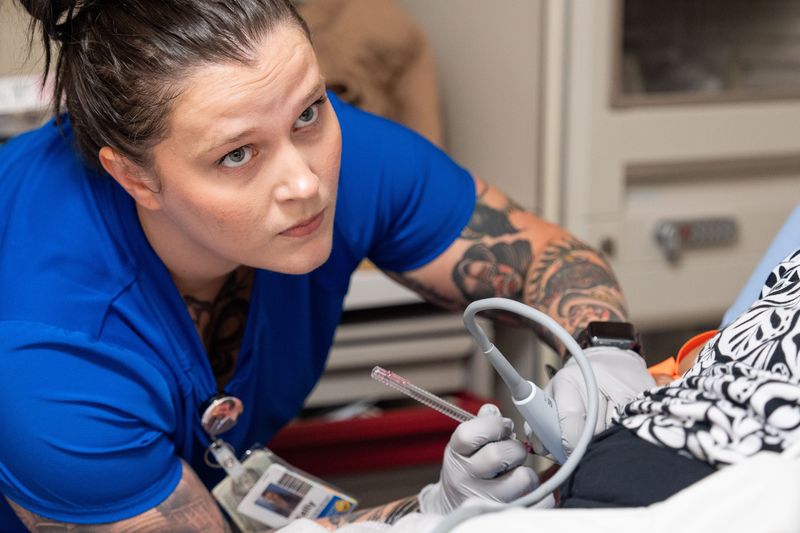
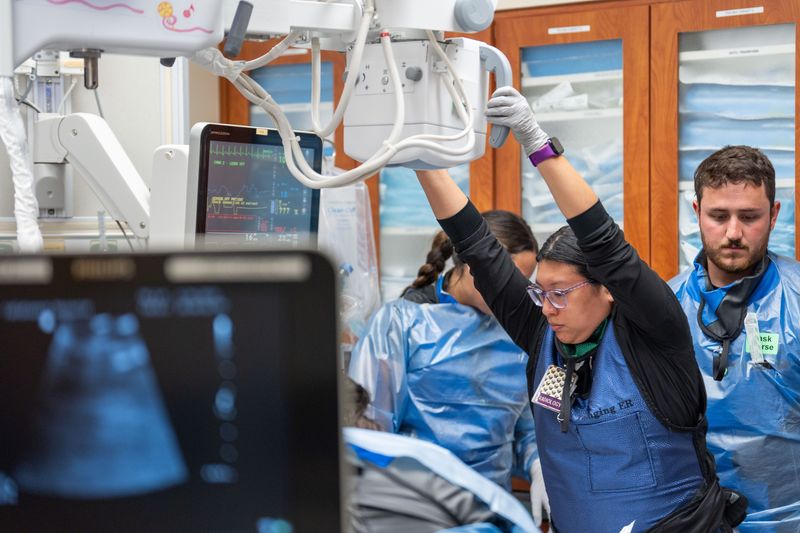
That afternoon, the gurneys began to roll in. One after another, five patients in total, had gunshot wounds. The staff ordered X-rays and ultrasounds as monitors beeped and heart rates were checked.
Each patient had their own team. All three trauma bays were occupied by the patients who needed the most emergent care while the two most stable were placed in available rooms.
“Having a large team is really nice because that allows for delegation of tasks to some degree,” Ramseyer said. “Everyone knows their role and we can effectively perform these roles and treat patients quickly.”
The active shooter rampage, the second such incident in FSU’s history, left Tallahassee in grief. Even seasoned ER staff felt the pain.
“It’s hard not to take some things home with you,” Ramseyer said. “I’ve been taking care of trauma patients long enough that I’m able to compartmentalize for the most part, and separate things that are clinical or work related from my home life. However, there are certain circumstances or certain patients that you care for that you can’t help but be affected.”
A final question to the ER team before declaring a death: ‘You should value every moment’
Cook, the TMH nurse, will never forget her first trauma patient. She was working early the morning of June 8, 2022, when a shooting suspect crashed into TPD Officer Christopher Fariello’s patrol car during a high-speed chase.
Fariello was killed in the crash. The man responsible for his death was sentenced last year to life in prison.
Before the doctor pronounced the officer dead, he asked whether anyone had any last-second ideas to try to save his life.
“He still does this with most codes and it makes us all feel included in the care and ensures we feel like we really did everything to try to save someone no matter the situation,” she said.
After Fariello’s death, Cook, whose husband is a TPD officer, wasn’t sure whether the ER was the place for her. But she ultimately came to enjoy helping those who come in. She also tries to hold onto the good more than the bad.
“I live with a bit more anxiety now than I did before,” she said. “And I check in on my husband more often throughout his shift.”
Morrow said her career as a trauma surgeon has taught her to “value life and take advantage of every opportunity I’m given.”
“You learn when you’re taking care of trauma patients that life doesn’t always go as planned,” Morrow said. “So you should value every moment that you get.”
Reach photojournalist Alicia Devine at adevine@tallahassee.com or on X @alicia_c_devine. Check out her photos on Instagram @adevinephotography. A special thanks to Mark Wallheiser, who consulted as a photo editor on this project.
This article originally appeared on Tallahassee Democrat: Blood, bullets and heartbreak: TMH battles Tallahassee gun violence with speed, scalpels
Reporting by Alicia Devine, Tallahassee Democrat / Tallahassee Democrat
USA TODAY Network via Reuters Connect