DELAND − Max Schachter was in the middle of one of the worst days in Florida history, and he was powerless. Ever since, he’s devoted his professional life to keeping others from having that same experience.
Schachter’s son Alex was among 17 people killed in the 2018 mass shooting at Marjory Stoneman Douglas High School in Parkland. It was every parent’s nightmare, and the impetus for a sea change of school-safety measures, some of which Schachter helped enact.

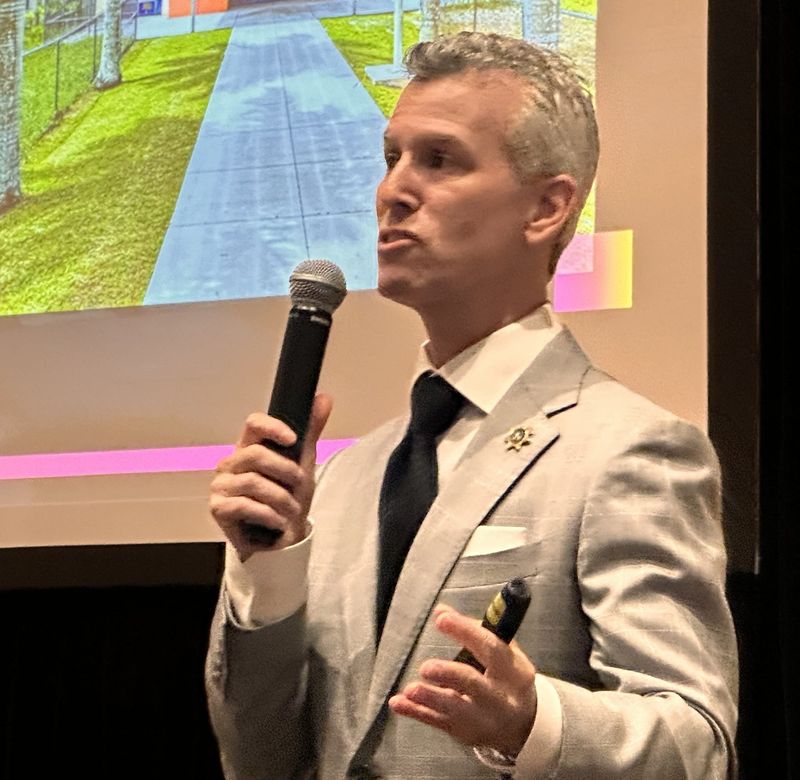
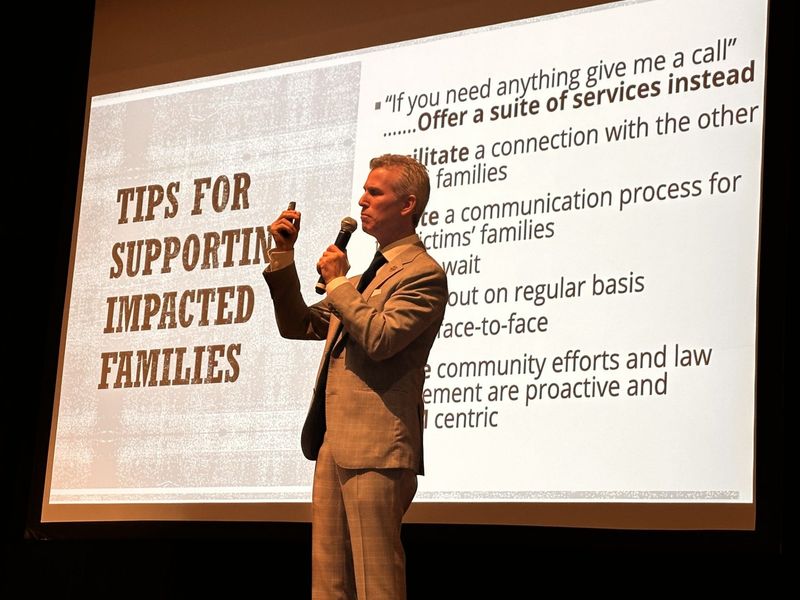
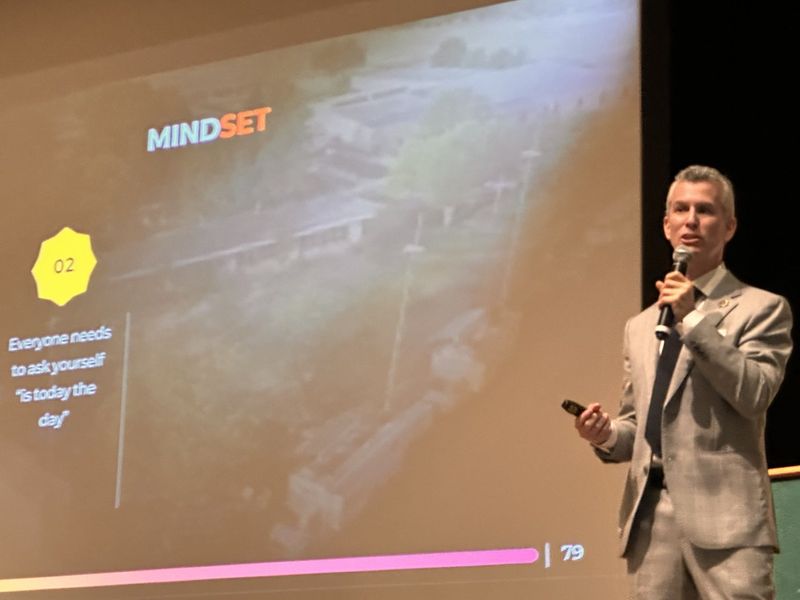
A school-safety advocate, Schachter was the keynote speaker June 15 at a training for Volusia County Schools officials and law enforcement officers.
His story − laid out in great detail before hundreds, including officials from as far away as Hamilton County, in the DeLand High School auditorium − exposed the vulnerabilities in Broward County that day and underlined why Florida has become the state that spends the most, more than $500 million in 2025-26, on security measures − including placing armed school guardians, experienced people with military or law enforcement backgrounds, in each school.
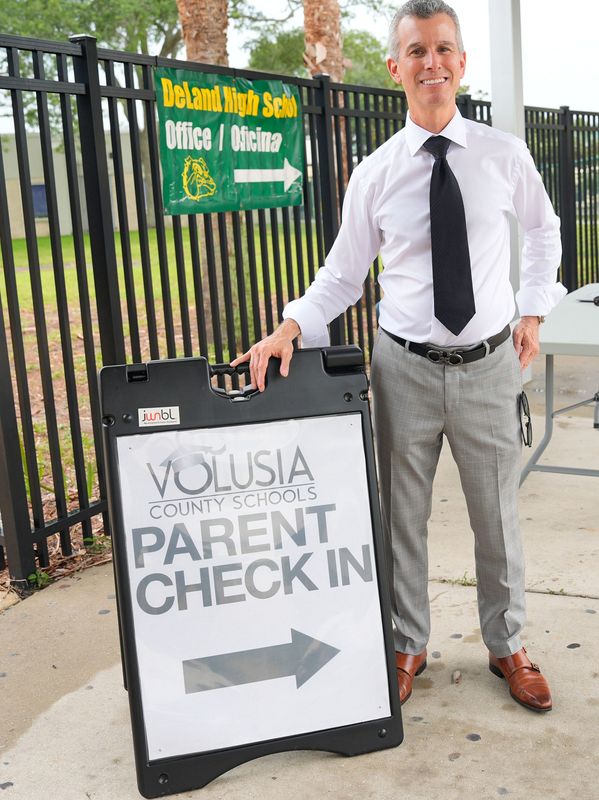
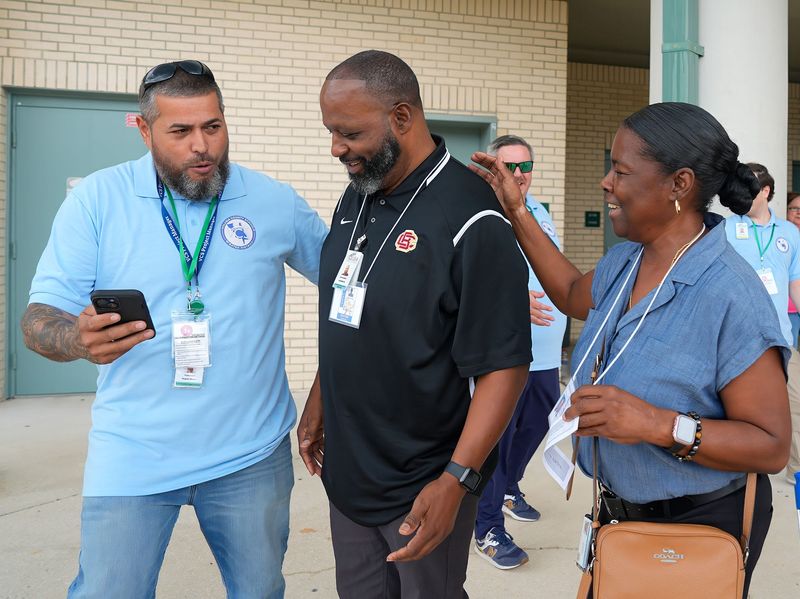
After Schachter’s presentation, Volusia officials trained for reunifications − bringing students to their parents after a school evacuation − outside the DeLand auditorium.
Volusia Schools Superintendent Carmen Balgobin called Schachter’s message “powerful.”
Balgobin, who worked for a year at Broward County Public Schools, said the district was still feeling the effects of Parkland in 2021-22.
“That is why we have taken safety and security and made it our No. 1 priority here in Volusia County,” she said. “When we say that every student and every staff member deserves and has the right to feel safe in their work environment and in their learning environment, we mean that.”
Twice touched by tragedy
Once the owner of a small insurance company, Schachter confronted tragedy when his first wife Debbie died in her sleep in 2008 due to a heart malformation. That left him a single dad of two sons, Alex, 4, and Ryan, 7. Ten years later, Schachter had remarried, blending a family with a widowed woman with two daughters.
It was a “beautiful life for a while,” Schachter said.
Then came Valentine’s Day, 2018. Alex Schachter was in class when a shooter − Max Schachter prefers the term murderer and doesn’t use his name − walked through an open gate, entered a building and fired a semi-automatic rifle at people he encountered in hallways and through locked classroom doors.
Alex was sitting in a quad with three other students because it was Valentine’s Day; if he had been working in his usual seat, he would have been out of the line of fire, Schachter said.
“Alex was shot in the chest twice,” he said. “And he didn’t have time to hide. He didn’t have a chance.”
The other three kids in the quad were also shot, but survived.
Who was the 14-year-old ‘sweet boy’ killed in English class?
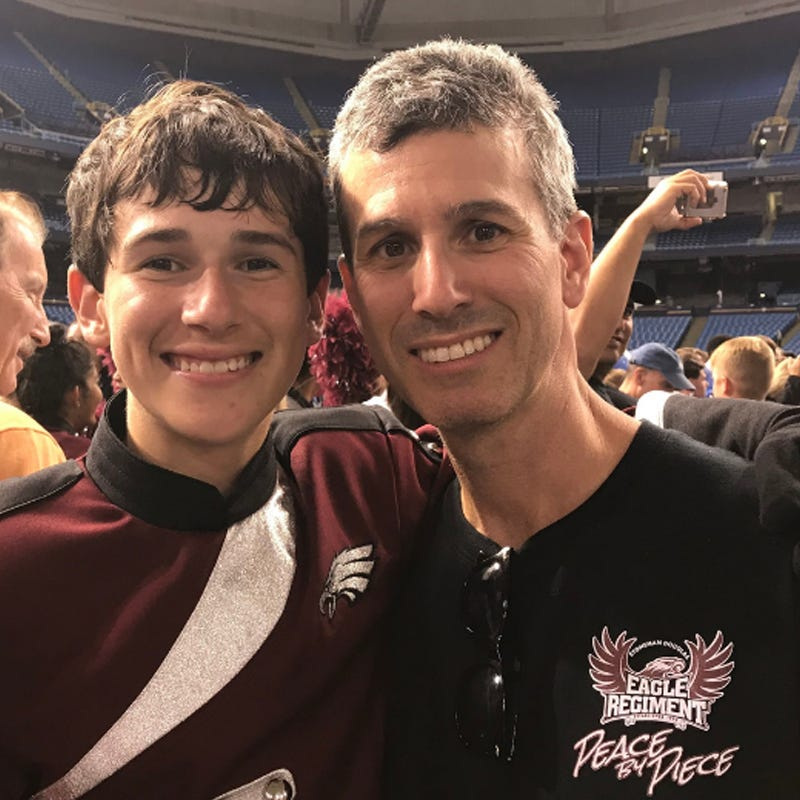
Alex was small, but a “great” basketball player, a relentless defender, Schachter said. And he played the trombone and baritone sax in the Eagle Regiment Marching Band, which won state two months before the shooting.
“That was one of my happiest memories. I was there on the field in Tampa,” Schachter said. “Alex loved music. His favorite band was the band Chicago … Alex’s favorite song was ’25 or 6 to 4,’ and he was a great little boy that, one of the kids you’d want your son to be best friends with.
“I thought that he would come home to me, like he had every other day,” Schachter said. “I never thought he would be murdered in his English class.”
Failures in Parkland, push for change across Florida
A couple of events in recent American history rallied people of all political persuasions to make dramatic changes, Schachter noted. The 1995 domestic terror attack on the Murrah Federal Building in Oklahoma City, led to the securing of federal buildings, and following the Sept. 11, 2001, hijackings and attacks, airports were made safer by creating the Transportation Security Administration.
But the 1999 mass shooting at Columbine High School in Littleton, Colorado, hasn’t led to a similar response, Schachter said. Columbine, incidentally, had the highest casualty number, 16, including the two shooters, at a high school mass shooting until Parkland.
“After the shooting, I was so angry,” Schachter said. “I didn’t understand why, how this happened, how they could have let this happen.”
Within days, Schachter was among the Parkland parents lobbying Tallahassee to make changes, and a sweeping bill created the school guardian program, raised the age for purchase of all firearms from 18 to 21, and created other changes. Also in 2018, Schachter was appointed to the Marjory Stoneman Douglas High School Public Safety Commission, which reviewed the failures in Parkland and made recommendations for more changes.
Districts hired threat management coordinators and created a portal of threats. More money was poured into mental health awareness training.
Schachter said he’s worked with both Presidents Trump and Biden, and testified before the U.S. House and Senate on the federal level, helping create both SchoolSafety.gov and the School Safety Dashboard, a transparency tool.
‘Evil’ convicted murderer eludes death penalty
Despite these achievements, Schachter remains outraged. The man convicted of murdering Alex and the 13 other students and three staff members − a 19-year-old former Marjory Stoneman Douglas student at the time − was sentenced to life in prison rather than the death penalty.
Schachter argued the murderer’s defense, that his mother’s alcohol abuse led brain damage, was a lie. He noted the killer’s violent behavior started at age 3 and despite receiving counseling, medications and psychiatric care throughout his childhood, he obsessed over killing and committed “an act of pure evil.”
Schachter’s presentation noted the murderer posted repeated comments on YouTube indicating his desire to shoot and kill others, including: “I hide it deep with in and think about killing people,” and “I love to see the familys suffer.”
Despite these and many more warnings, the man convicted of Alex Schachter’s murder was never arrested, was able to convince his mother to buy him a gun at 18, and despite numerous tips to the Broward County Sheriff’s Office and the FBI, was able to carry out the Feb. 14, 2018, murders.
Reunification training a regular occurrence in Volusia
After Schachter’s morning-long presentation, Volusia County Schools officials role-played a crisis situation, setting up tables where staff portraying parents were guided. There, they filled out a form to be reconnected with their student, as district officials wearing “Reunification Team” shirts used an app developed by Raptor Technologies, a Volusia vendor, to locate students and note when parents and children had been brought together.
At Parkland, the process was chaotic. The shooter was even able to blend into the crowd and walk off campus, stopping at Walmart and McDonalds before his arrest in a Coral Springs neighborhood about 80 minutes after the shootings.
Meanwhile, Schachter was frantically trying to find Alex.
The shootings occurred between 2:21 and 2:25 p.m. Dismissal was at 2:40 p.m., but students − hearing the shooting − began leaving campus.
Schachter and other parents had pieced together that their children had been shot, but couldn’t be found at hospitals in the area. He didn’t know what to do.
Parkland’s reunification center offers ‘no information’ for 9 hours
He then heard about a reunification center being set up at a hotel. Schachter got there at 5 p.m., he said.
“There was a lot of screaming and crying,” he recalled.
He met with an FBI agent who “could give me no information,” he said.
“Then 6 o’clock came; 7 o’clock came, and then law enforcement came out in front of us, and they said, can we have your attention, please? We’d like you to email us a picture of your loved one,” Schachter said. “I said OK.”
Two more hours went by. Again, law enforcement officials asked the families to email them a picture of their loved ones. He found out later that servers treated the parents’ emails like a cyberattack, and the emails weren’t getting through the security wall.
“It was just a massive cluster,” Schachter said. “I mean, it was no information at all.”
It wasn’t until 2 a.m. that officials called each family into a private room, individually, to give death notifications.
“They made us sit there for nine hours with zero information. They didn’t come to us and say, ‘This is what we know,'” Schachter said. “They didn’t say we are 60, 70, 80% sure on x, y and z. Nothing. And they waited to give the death notification to everyone all at once. I know they knew some of the victims before 2 in the morning.”
After Schachter was told his son had died of his wounds, he said he was asked to sign more paperwork and then sent home − with no police escort or offer of a ride while he left “after I just learned the most devastating news that I would never see my little boy again.”
Schachter says training saves lives
Before Feb. 14, 2018, Marjory Stoneman Douglas students and teachers had not been trained in active-shooter drills. Broward school administrators had not been trained on reunification, or even had a reunification plan, Schachter said.
By contrast, Schachter said Volusia among the leading districts in Florida and nationwide in its efforts to keep schools safe.
“Volusia County School District is definitely one of the leaders in Florida and across the country, No. 1, because of the culture and the fact that they are prioritizing school safety above all else,” Schachter said. “And they understand that if the students and the staff don’t make it home to their families every day, nothing else matters.”
Second, he said Volusia’s training, including the reunification drill which is repeated monthly, and the barriers to keeping weapons off campus demonstrate that commitment to safety above all else.
“If you fail to train, you’re trained to fail,” he said.
“When Broward County Schools came and testified in front of the MSD Commission, they talked to the local media about how great their threat assessment process was, but basically they were just a paper tiger, because the assistant principal that did the threat assessment on the Parkland murderer in 2016 had never done one before. This was his first one,” Schachter said.
“It was completely botched. And I think had it been done properly,” he said, “Alex and the 16 others would have still been here today.”
This article originally appeared on The Daytona Beach News-Journal: A school shooter murdered his son. Now he advocates for safety
Reporting by Mark Harper, Daytona Beach News-Journal / The Daytona Beach News-Journal
USA TODAY Network via Reuters Connect
By Mark Harper, Daytona Beach News-Journal | USA TODAY Network