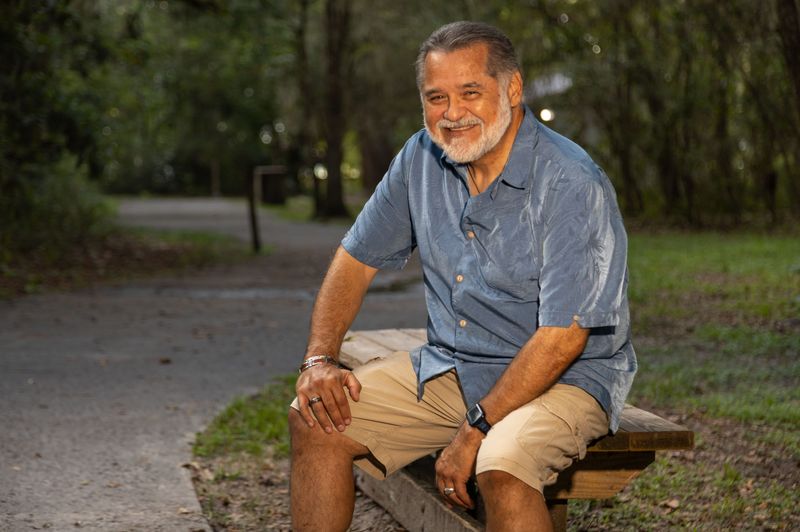
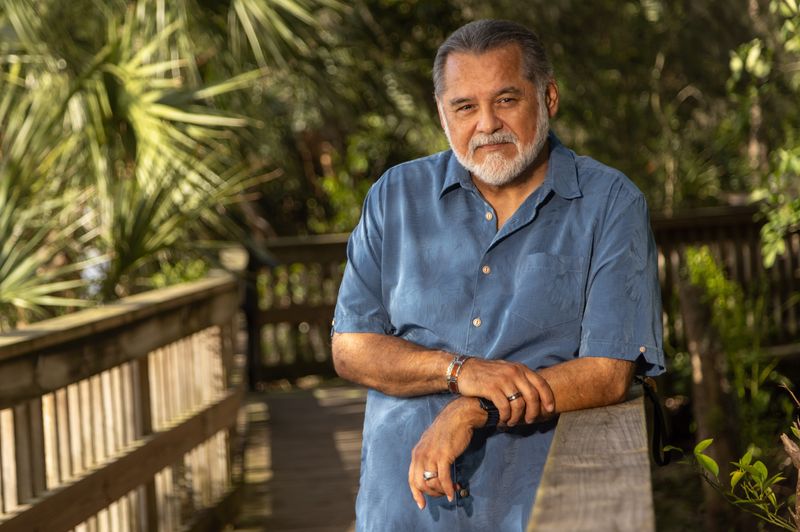
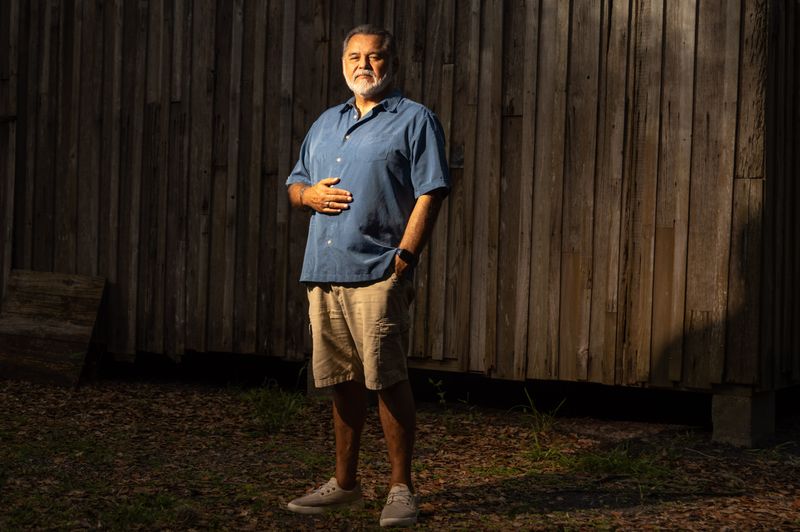
When Baptist Health doctors told Phil Ramirez that he required major emergency abdominal surgery, the Apple online trainer and sometime actor and musician insisted a special requirement be met.
No blood tranfusions.

Ramirez, 63, is among the growing number of patients who demand bloodless medicine, which uses nonblood alternatives to support patients who decline transfusions. Some of them, including Ramirez, cite primarily religious reasons, while others have personal, cultural or medical reasons.
“When the surgeon came in and wanted me to fill out the form for an emergency transfusion, should it be requiredor necessary, when I informed him of my advanced medical direct, he actually pivoted and said, OK, I have another form for you to fill out,” he said. “He gave me one that was in harmony with my personal medical beliefsand my spiritual beliefs, which was really nice, a partnership so that way a medical professional now becomes a friend.”
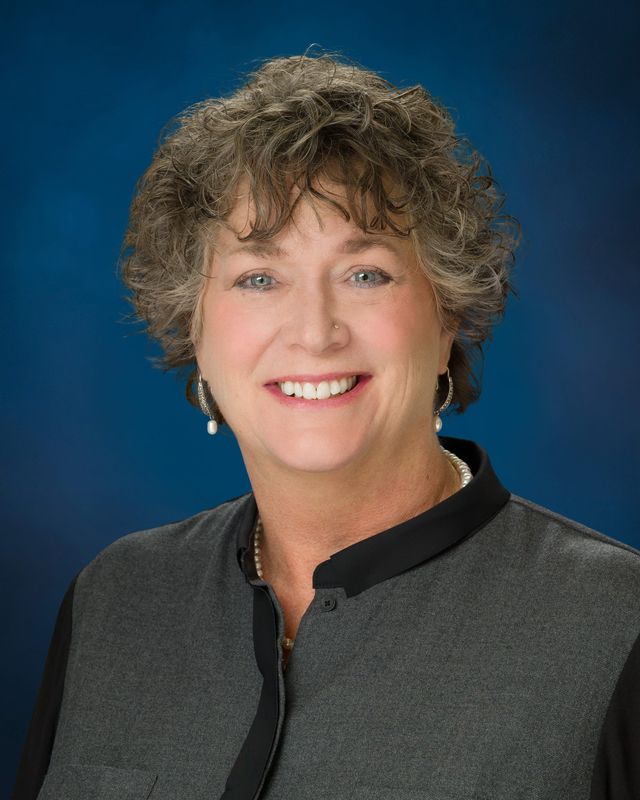
Baptist has been honoring such preferences for 25 years, beginning at Baptist Medical Center Jacksonville in 2001. The Bloodless Medicine and Surgery program now spans every hospital and specialty across the Baptist Health system, according to coordinator Juliann Gaus-Graeser. On average, Baptist Health provides bloodless medicine services to 1,000 adults and children annually.
“We’re one of the pioneering hospitals,” she said. “The numbers have more than doubled in the past two years … It is now a standard of care.”
The Baptist example is one of seven bloodless medicine programs in Florida registered with the Society for the Advancement of Patient Blood Management — the only one in Northeast Florida — and about 100 nationwide.
“Our Bloodless Medicine and Surgery Program reflects the best qualities of our organization: honoring patient choice, advancing clinical excellence and providing individualized, respectful care,” said Nicole Thomas, president of Baptist Medical Center Jacksonville. “The entire Bloodless Medicine team, both past and present, has strengthened our organization and touched countless lives through their dedication, expertise and compassion over the past 25 years.”
The Mayo Clinic in Jacksonville has patient blood management and alternative transfusion protocols, but the health system’s formal blood medicine program is based at its Rochester, Minnesota, campus. Jacksonville-based Ascension St. Vincent’s has bloodless surgery expertise and UF Health Jacksonville has patient blood management guidelines, according to their websites. HCA Florida Healthcare’s Orange Park hospital does not have a bloodless medicine program but its Memorial Hospital in Jacksonville does, using a variety of strategies before, during and after surgery, according to an HCA spokeswoman.
Bloodless medicine “is increasingly used for any patient who wants to reduce transfusion risks or conserve blood,” she said.
What is bloodless medicine?
Bloodless medicine and surgery supports patients who decline transfusions by using the patient’s own blood, among other alternatives.
The program was originally developed to honor the convictions of a Christian religious movement called Jehovah’s Witnesses, who base their beliefs strictly on the Bible.
“Both the Old and New Testaments clearly command us to abstain from blood,” according to the Jehovah’s Witnesses website. “Also, God views blood as representing life. So we avoid taking blood not only in obedience to God but also out of respect for him as the giver of life.”
In 1962, Dr. Denton Cooley, founder of the Texas Heart Institute, performed the first major open-heart surgery without a blood transfusion on a Jehovah’s Witness patient. In 1977, he co-authored a landmark study published in the Journal of the American Medical Association concluding that “major cardiovascular operations could be safely completed without using blood components.”
The Baptist program now serves patients from all backgrounds and faiths. “No matter the patient’s reason, our goal is the same: to provide safe, respectful, individualized care using the best strategies available to optimize a patient’s own blood and minimize blood loss,” Gaus-Graeser said.
Advanced techniques to manage and conserve a patient’s blood include pre-surgical iron supplementation and erythropoietin therapy, which stimulate the body’s natural red blood cell production. Also, minimally invasive surgical tools are used to reduce blood loss and “intraoperative blood salvage technology — known as ‘cell saver’ — collects, cleans and returns a patient’s own blood during a procedure,” according to Baptist.
Patients who want bloodless medicine can begin individualized care planning before hospital admission. “A standardized set of medical, surgical and nursing instructions ensures best practices are implemented consistently across all Baptist Health campuses from the moment a patient’s care begins,” according to Baptist.
Throughout those campuses, bloodless medicine “champions” — physicians and nurses — promote blood conservation and educate other Baptist staff. “They came into it to save lives,” Gaus-Graesers said.
Education is key, she said.
“Most surgery done in bloodless manner,” she said, but “if you take blood [transfusions] away, you’re taking a tool out of the [medical] tool box. You have to make an informed decision.”
In 2025, the World Health Organization released new guidance on patient blood management as a “standard of care to improve population health outcomes, patient safety and quality of care while optimizing resource use.” And in 2026, the American Nurses Association Board of Directors “recognized patient blood management nursing as a nursing specialty, approved the submitted patient blood management nursing scope of practice statement, and acknowledged the specialty standards and accompanying competencies.
Religion, other factors behind bloodless medicine
Born and raised in California, Ramirez works from home as an Apple trainer and has side gigs as an actor and musician. His show business resume includes a season 6 episode of Seinfeld and appearances in local commercials for VyStar and Snyder Snyder Air Conditioning, Plumbing & Electric, among others.
His wife of 27 years, Kathy, owns a Jacksonville dance studio.
Ramirez has long been a bloodless medicine advocate and even attended a seminar on the subject. He cited his religious beliefs as the primary reason behind his bloodless medicine advocacy — though he declined to identify his religion — but said he is also concerned about blood-born pathogens.
He chose Baptist as his health care provider because of its bloodless medicine program and agreed to go public with his story in honor of its 25th anniversary.
“If my journey … can impact another human being in a healthy positive way, that is the most important thing,” he said.
In March 2025, Ramirez said he was unable to relieve himself in the bathroom and “had so much pain” in his abdomen. His primary care physican sent him to the emergency room for a CAT scan, which showed a “bowel obstruction” and he was admitted for surgery.
“You learn to roll with the punches,” he said.
Ramirez had “peace of mind” about his stance because he had already discussed it with emergency room physicians. “It was truly a fascinating thing for me that they made such an impact simply because from the very beginning they accepted and agreed with my stance on not taking a blood transfusion,” he said. “Most doctors will lead with transfusion, but Baptist pivoted so quickly … They were prepared to meet my needs.”
He was diagnosed with stage 2 colon cancer, despite having had a “clean” colonoscopy in 2023. About 70% of his large intestine and a portion of his colon were removed. An ileostomy also created an opening from the small intestine to the outside of the belly, bypassing the colon and giving the lower digestive tract time to heal. That procedure was reversed nine months later.
“The surgeon felt he got the tumor ‘with good margins’ and the 49 lymph nodes they pulled were all negative. It’s been a year and four months, no chemo and no radiation, and I’m cancer-free as of today,” Ramirez said.
Still, he likely has more surgery to come. Ramirez had a heart attack on a 2021 cruise and has since had eight stents implanted. A transplant is “a possibility in the future,” he said.
But he’s not worried about blood transfusions entering his care.
“The comfort level that I had in knowing that Baptist had my back, looked at my personal choice, that shows a personal level of care that you don’t find,” he said. “Baptist is top notch.”
Beth Reese Cravey has been a reporter for The Florida Times-Union for 45 years, currently specializing in nonprofits and health. She can be reached at bcravey@jacksonville.com.
This article originally appeared on Florida Times-Union: A look inside Baptist Health’s ‘pioneering’ bloodless medicine program
Reporting by Beth Reese Cravey, Jacksonville Florida Times-Union / Florida Times-Union
USA TODAY Network via Reuters Connect
By Beth Reese Cravey, Jacksonville Florida Times-Union | USA TODAY Network