If you’re weary of fighting crowds and long lines when you travel to Europe, take the road less traveled. Discover Europe’s ancient walking routes where you can escape crowds and enjoy the tranquil experience of “slow travel.”
As our lives and lifestyles spin ever faster, these European ancient walking routes offer able-bodied adventurers an enriching and memorable opportunity to enjoy the growing trend of slow travel — a more mindful way to travel that emphasizes immersive cultural experiences; eschewing a frenetic pace to sightseeing. This sustainable way of travel relieves pressure of overcrowding during peak seasons in European capitals, extends tourism seasons, and, most importantly, only lightly impacts the land.

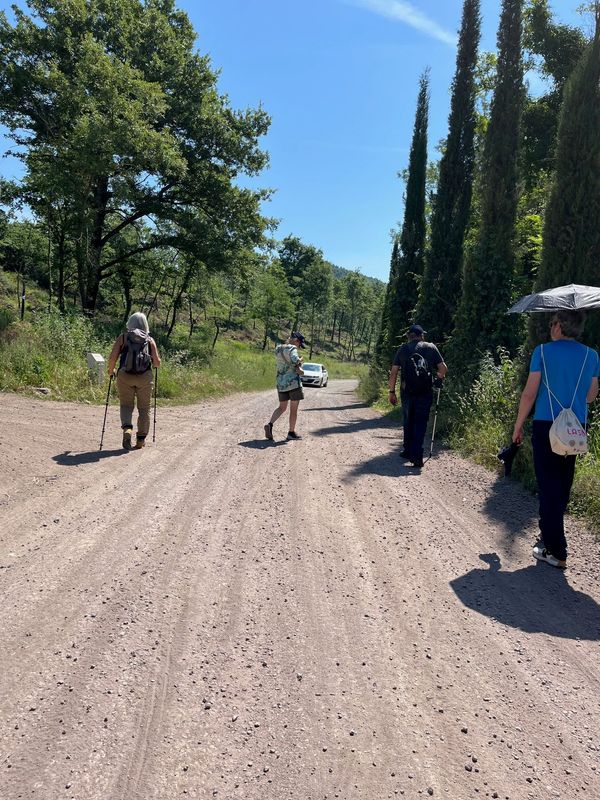
Tracing footsteps along the ancient walking routes of Italy offers a one-of-a-kind slow travel experience with numerous historic sites to visit along the way. For epic walking adventures, look beyond Spain’s famed Camino de Santiago. Italy has several picturesque ancient pilgrim routes that offer travelers a choice of route, distance, scenery, and little-known medieval sites and villages to discover. I had a fabulous introduction to Italy’s historic walking routes in late May, and still enjoyed myself despite the trip taking place during a heatwave.
History of ancient routes
Dating back to the Middle Ages, Italy’s ancient religious and commerce routes traversed across various territories, city states, countries, or towns which were traveled by foot, then later by horse or donkey. These well-traveled routes crossed several countries from Canterbury, England to the Eternal City of Rome. The earliest historical reference to these ancient routes was in 990 A.D. from the travel diary of Sigeric, the Archbishop of Canterbury, where he recorded 79 stages on his return to Rome. These ancient roads were also traveled by pilgrims to Rome from eastern and Baltic Europe over 4,700 kilometers across seven countries.
Today, there are 245 “stages” of the route with more than 50 UNESCO World Heritage Sites along the way. The Italian section of these historic walking routes traverse over 1,000 kilometers (621.371 miles) in 47 “stages.” A stage connects two specific waypoints along the routes and vary between 15 to 25 kilometers (9.32 to 15.53 miles), depending on the landscape.
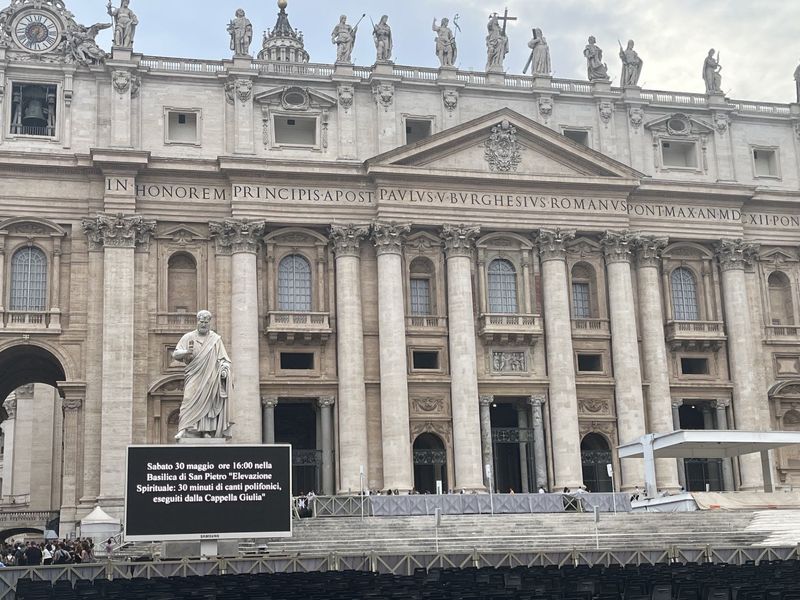
Although the routes are a wholly immersive travel experience, the routes still serve as religious pilgrimages with the goal of receiving a Testimonium from St. Peter’s Basilica. To receive this official documentation of completion from St. Peter’s, a minimum of 100 kilometers (62.13 miles) must be completed to receive this official designation.
All roads lead to Rome
Formally called the Antichi Cammini d’Italia, Italy’s ancient routes comprise five historic and religious pilgrimage routes that converge in the administrative region of Lazio, which includes 20 provinces in central Italy. Lazio is the cultural and political heart of the country.
The five Antichi Cammini d’Italia are: Via Francigena, the Way of Saint Francis, the Way of Saint Benedict, the Romea Strata, and the Via Romea Germanica. The Italian Ministry of Tourism, partnering with the European Union, has developed low-impact infrastructure with free WiFi and information along these routes to provide pilgrims, walkers, cultural travelers and outdoor and wellness enthusiasts a memorable slow-travel connection with the land. The Ministry has also developed an App with maps and points of interest (Italia.it.app). In addition, to this helpful App, the Italian Ministry of Tourism offers seven bus tours with on-board guides free of charge with registration (italia.it).
Via Francigena Route highlights
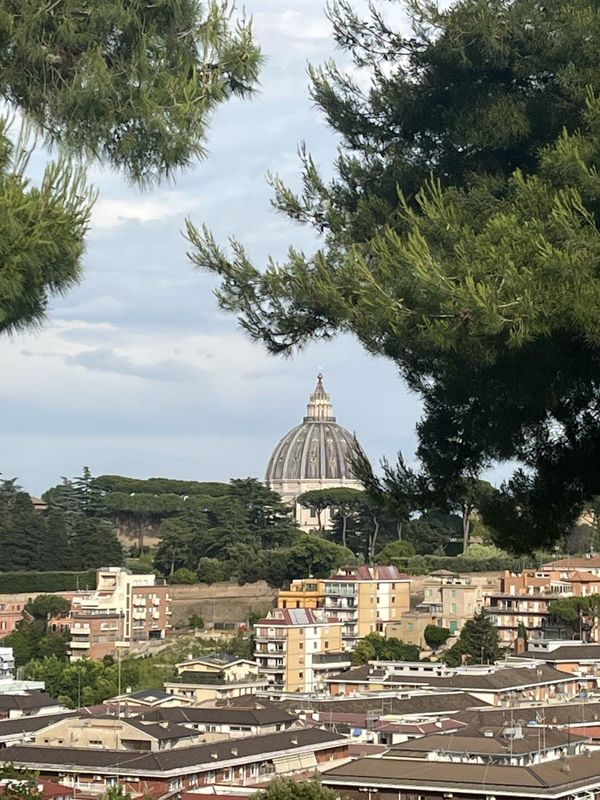
During my visit in late May, I did a portion of the Via Francigena, Italy’s most internationally recognized historic walk. This historic route was certified as a Cultural Route of the Council of Europe in 1994, the same year as Spain’s Camino de Santiago. Although the Via Francigena is lesser known than the Camino de Santiago, it is no less memorable and ends in a dramatic and solemn flourish at St. Peter’s Basilica. The splendor of arriving at Vatican City and St. Peter’s Square is a thoroughly moving experience no matter what religious leanings one might have.
Torre Alfina
Our first night was spent in the small village of Torre Alfina, on the outskirts of Rome, which is known for its castle — a medieval fortress with origins from the 8th century that was reconstructed in the 1700s. Today it is open for tours and events. After an international flight and an afternoon road trip, it was great to be welcomed at the inn and restaurant, Albergo Nuovo Castello, where we were feted to a fabulous meal and comfortable lodging.
Civita di Bagnoregio
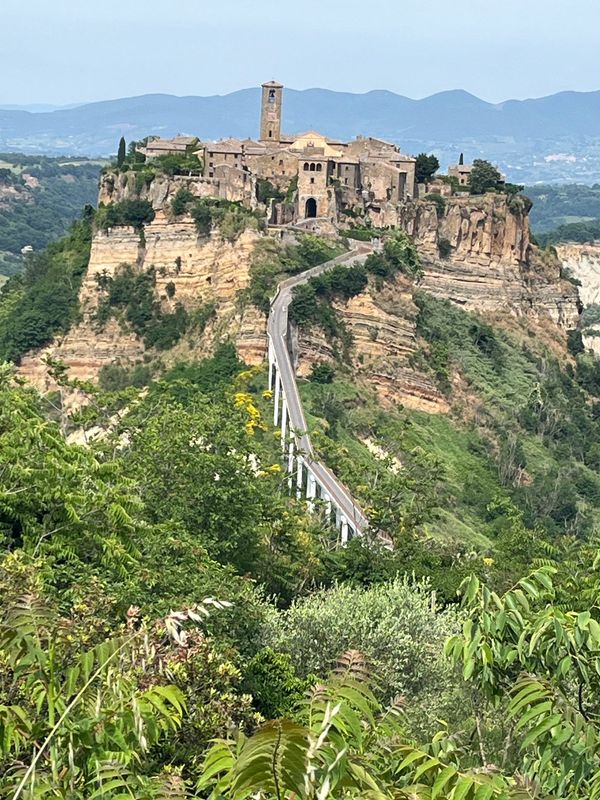
Perched precipitously on a promontory above the Tiber River Valley, Civita di Bagnoregio is a tiny village founded by the Etruscans 2,500 years ago. With a dwindling population of fewer than 20 residents (only 11, according to recent records), the volcanic plateau upon which Civita di Bagnoregio is sited, has been in a constant state of erosion. Hence, the village has an unenviable nickname La città che muore (“The Dying Town”). Due to years of erosion, the beautifully preserved medieval village can only be reached by a footbridge that was built in 1965. And due to the ongoing threats from erosion, Civita di Bagnoregio was placed on the World Monuments Fund’s Watch List of the 100 Most Endangered Sites in 2006.
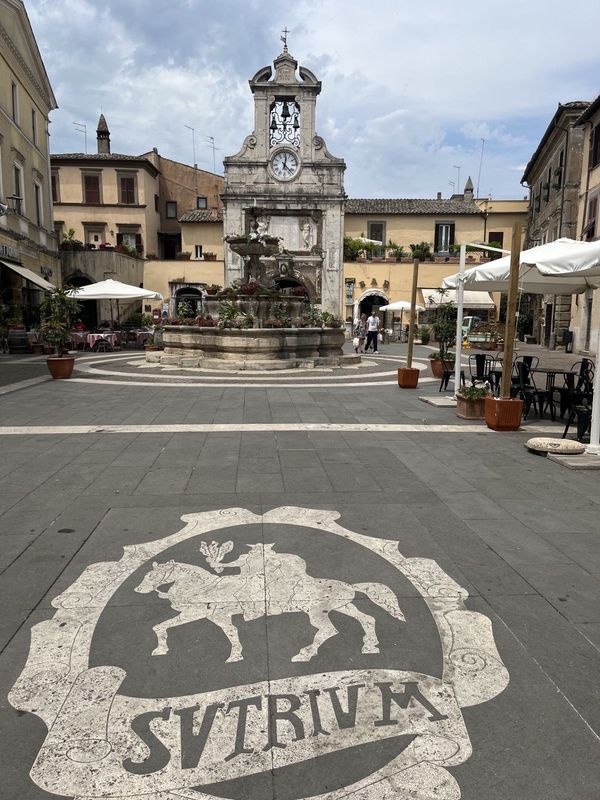
Sutri
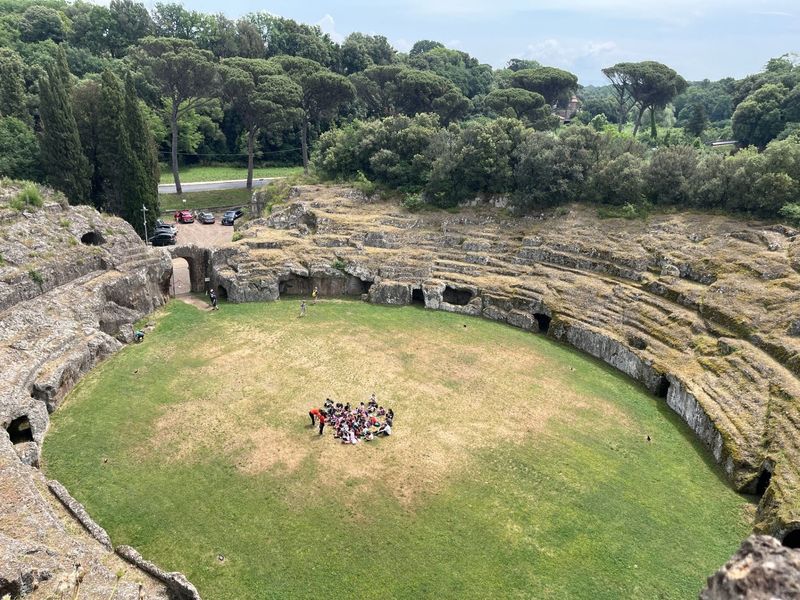
This beautifully-preserved medieval village is precisely the kind of charming Italian town we all envision and fantasize of escaping to. Sutri looks like a Hollywood set, but it’s the real deal. Dating back to the 2nd century B.C., Sutri located in the province of Viterbo, also claims a fascinating Roman amphitheater and Lake Bolsena, Italy’s volcanic lake.
Getting there
For desert dwellers, there’s a convenient flight schedule from PSP to Rome, which I was pleasantly surprised to discover. Alaska Airlines had just launched its international service to Rome from Seattle just three weeks before my travels to Rome. Not known for international service previously, Alaska Airlines has recently launched other flights to London, England and Reykjavík, Iceland. A welcome change from the trek to LAX.
Lydia Kremer has been promoting destinations around the globe for more than 30 years as a travel writer. She is also an author; with her book “100 Things to Do in Palm Springs Before You Die,” she showcases her own backyard, Greater Palm Springs. The 3rd edition of her book will be published in September 2026. She can be reached at 8LydiaLane@gmail.com.
This article originally appeared on Palm Springs Desert Sun: How to follow ancient footsteps and experience slow travel in Italy
Reporting by Lydia Kremer, Special to The Desert Sun / Palm Springs Desert Sun
USA TODAY Network via Reuters Connect
By Lydia Kremer, Special to The Desert Sun | USA TODAY Network