In the trial of Samuel Rocha – a man accused of killing a teen bicyclist and injuring two others in Port Hueneme – the testimony of one of the prosecution’s witnesses played a key role in the defense’s closing argument.
One of the seven bicyclists present during the April 19, 2021 collision told jurors that he saw Rocha’s car change lanes before crashing into the group, and Rocha’s attorney argued that the car her client was passing prevented him from seeing the teens.

“‘He doesn’t know how this happened because he didn’t see,” public defender Ashley Correa said March 25.
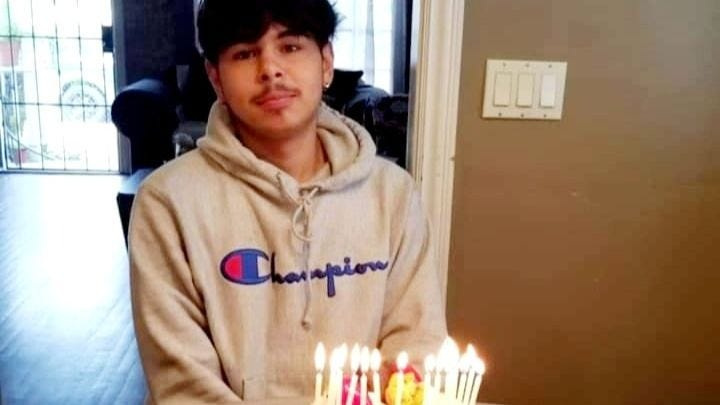
She argued that the death of 16-year-old Pedro Valdez was a tragic accident that should have been prosecuted as a felony DUI or manslaughter, not murder.
Samuel Rocha, 33, of Port Hueneme, pleaded not guilty to murder, four counts of attempted murder, five counts of assault with a deadly weapon and two counts of battery.
Deputy District Attorney Richard Simon, however, argued that he had proven throughout the trial that the defendant acted with intention as he sped through the intersection and targeted the innocent teenagers.
“He chose to hit those bicycle riders, and he did,” Simon said. “This wasn’t an accident.”
The trial began with opening statements on March 11.
Prosecutor argues mental illness is not an excuse
Rocha, Simon said, is a very dangerous, unpredictable man; he didn’t wake up that day intending to take a life, but a laundromat dispute with a man he mistakenly believed to be someone else triggered him to embark on a crime spree.
Simon acknowledged that Rocha has struggled with mental health issues.
“Nobody who runs over a bunch of teenagers on bicycles is normal,” Simon said.
But the prosecutor told the jury to focus on the facts of the case rather than mental health records from a decade earlier that didn’t change what happened. People with mental illness can still intend to kill, he said.
“Mental illness does not equate to not guilty,” Simon said.
Although there was roughly 200 feet between the first bicyclist Rocha hit and the last, he never slammed on his brakes, instead accelerating at roughly 70 mph, Simon said. The defendant, he said, had the presence of mind to avoid running over the bodies after he hit the bikes with the center of his car because he didn’t want them to slow him down.
Rocha never hit any parked cars, curbs or trees – only five of his seven human targets, and that’s not a coincidence, Simon said.
“That’s not someone who didn’t see,” the deputy district attorney said. “That’s someone who was aiming.”
SImon said Rocha never called 911 or stopped to render aid, instead driving to his mother’s house. Despite having an illegal blood alcohol content as well as a shattered windshield, a caved-in sunroof and a flat tire, Rocha still managed to drive there and park safely, Simon said.
Simon argued that the defendant’s state of mind immediately after the crash corroborates his intent.
In the back of the police car, Rocha is seen on video saying he was happy he ran over the teenagers. He expressed jealousy, saying that the boys appeared to be rich while he was homeless, and he was aware of the consequences of his actions, saying that he would serve life in prison, Simon said.
Rocha confessed to the killing on video, telling officers that he intentionally crashed his car into the bicyclists because he was angry about the fight at Queen Wash laundromat in Oxnard. Just 11 minutes before taking Pedro’s life, he is caught on camera driving his Lexus into a laundromat employee who attempted to photograph his license plate after the fight, Simon said.
It is not reasonable to believe that Rocha intentionally hit the employee but accidentally hit the cyclists, the prosecutor said.
He asked the jury to hold Rocha accountable.
“Justice can only be served by verdicts of guilty for all counts,” Simon said.
Defense focuses on detail from witness testimony
The crash was not only the worst night for Pedro and his loved ones but also for Rocha, and the grief caused him to say ugly and out-of-control things in the back of the police car, Correa said.
Critical to her closing argument was the testimony of Alan Moreno, a member of Pedro’s Oxnard Fixi Crew bike club and one of the seven bicyclists present during the crash.
Moreno testified March 11 that when nearing the intersection of Ventura and Pleasant Valley roads, he heard a car engine revving and looked behind him to see Rocha’s car swerve from the right lane to the left lane and back to the right lane before hitting the first bicyclist.
Correa said Morena was describing Rocha passing another vehicle, and that vehicle, a white SUV, prevented her client from seeing the group of teenagers.
This veered from the defense’s opening statement in which Rocha’s second defense attorney, Cate Hall, insisted he did not see the cyclists because was psychotic and intoxicated.
The blind spot, Correa said, is why Rocha repeatedly told the police that he didn’t see the bicycles and why he was incapable of explaining what happened.
Video surveillance shows the white SUV stopped at the traffic light before the crash, but unfortunately, the driver was never interviewed during law enforcement’s investigation, Correa said.
“In this case, it was subpar,” she said of the investigation.
In addition to failing to interview witnesses, the police department failed to collect adequate surveillance footage, record the entirety of Rocha’s time in the police car and preserve 911 calls from other drivers, the defense attorney said.
Correa said that based on surveillance footage, there was only 95 feet or less between the first and last cyclists that Rocha hit, and data from his Lexus indicated that all the collisions happened within a period of 1.04 seconds.
The average reaction time for a driver is 1.5 seconds, and that isn’t taking into account that Rocha was both intoxicated and mentally unstable at the time of the incident, Correa said.
“Mr. Rocha didn’t even have an opportunity to react,” she said.
However, Correa said, data showed that Rocha took his foot off the gas when he collided with the first bike and put his foot on the brake when he collided with the last bike.
Rocha is not guilty of all charges related to the accident with the cyclists, but he is guilty of all charges related to the laundromat incident, which include one count of assault with a deadly weapon and two counts of battery, she said.
Unlike the car accident, Correa said, Rocha knew the victim, had a motive, deviated from his original plan and acted intentionally at Queen Wash.
“His diagnosis is not an excuse,” Correa said.
Hall then detailed Rocha’s extensive history of mental illness, which included delusions and hallucinations. She argued the information would help the jurors understand what happened the night of the incident.
The jury was expected to enter deliberations March 26. Rocha remains in custody at Todd Road Jail without bail.
Makena Huey is an investigative and watchdog reporter for the Ventura County Star. Reach her at makena.huey@vcstar.com. This story was made possible by a grant from the Ventura County Community Foundation’s Fund to Support Local Journalism
This article originally appeared on Ventura County Star: Attorneys deliver closing arguments in trial for fatal Hueneme crash
Reporting by Makena Huey, Ventura County Star / Ventura County Star
USA TODAY Network via Reuters Connect