General Motors may yet again be dethroned as the top selling automaker in the United States, economists warn, as higher sales in segments for which the company no longer produces vehicles threaten to impact the Detroit company.
At the halfway point in the year, economists at Cox Automotive noted that Toyota Motor North America is gaining ground on its major competitor with the potential to carve out a larger share of the U.S. market.

Cox expects Toyota to report a 1% bump in U.S. auto sales through the first half of this year to 1.25 million vehicles, while it expects GM to slip 7.2% to 1.33 million.
If that trend continues, Toyota could win the year ― for the second time ever.
GM sold 2,853,299 vehicles last year, compared to 2,518,071 sold by Toyota, a difference of 335,228 vehicles.
GM’s 90-year streak as the No. 1 selling U.S. automaker was broken in 2021 by Toyota after the shortage of semiconductor chips severely hampered GM’s sellable new vehicle inventory.
That year, GM’s new vehicle sales in the U.S. declined 13% to 2.2 million new cars sold while Toyota rose more than 10% to sell 2.3 million vehicles.
“I’m not predicting that yet, but we’re seeing the sales pace so far this year those trends seem a bit concerning for General Motors,” Charlie Chesbrough, Cox Automotive senior economist, told reporters June 24 at a media event.
Part of the worrying trend is a lack of hybrid vehicles, Cox analysts and economists said, which are selling well amid uncertainty surrounding energy costs since the start of the Iran war in March.
Fluctuations in gasoline prices tend to benefit automakers with broad portfolios both in vehicle size and type as well as powertrain.
Are hybrids tipping the scale?
When it comes to offering products that appeal to buyers across their lives ― a strategy GM originated in the 1920s under then GM President Alfred P. Sloan with the slogan “A car for every purse and purpose” ― the Detroit Three may be lagging behind.
Still, GM has seven models that start at $30,000 or less, of which the company sold about 700,000 in 2025. GM is expected to report second quarter sales for 2026 on July 1.
While GM and Toyota both boast broad product portfolios, Toyota’s is a bit broader today with gas-powered cars, hybrids, plug-in hybrid and electric vehicles across 24 nameplates, analysts said.
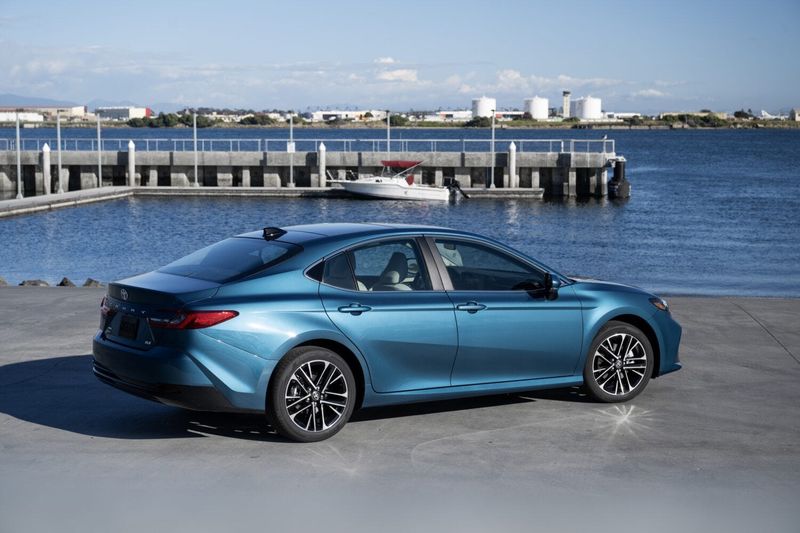
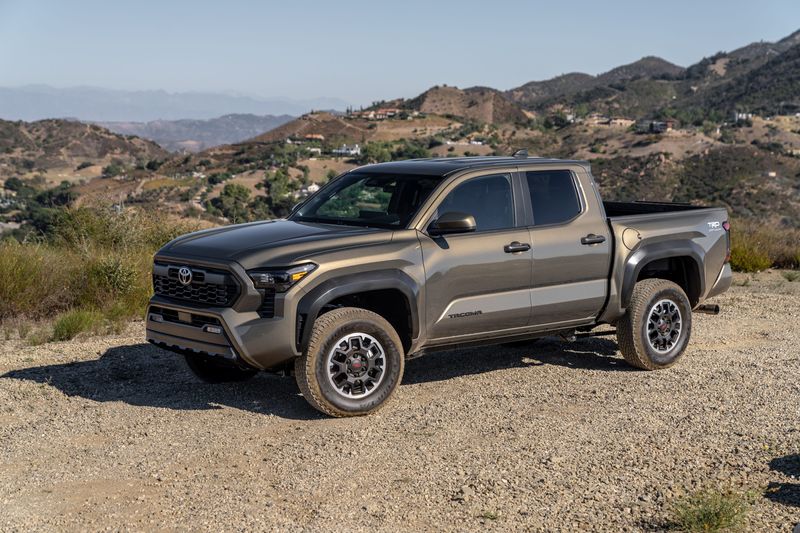
“Toyota’s kept that. They’ve got the whole portfolio ― midsize car, compact car,” Chesbrough said. “But the Detroit Three kind of bailed on that idea to focus on very specific segments.”
The Detroit Three may be toying with the notion of bringing back sedans, a segment they all but entirely exited over the past few years in favor of larger, more expensive vehicles, but any major product changes wouldn’t be available to customers in the short term.
Chesbrough said it’s’ unclear if the Detroit Three’s market share losses have been the gain of the Asian brands. High gasoline prices tend to favor portfolios like Toyota’s.
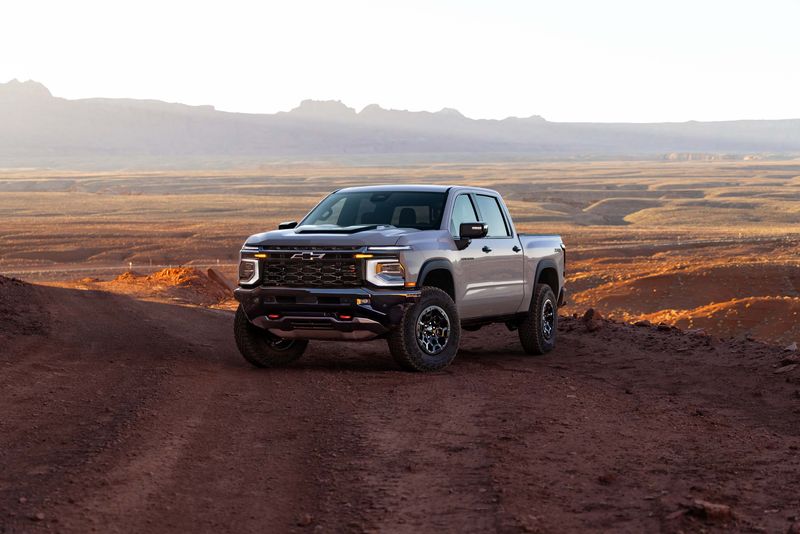
“They’ve got many more smaller vehicles to choose from and more hybrid options. General Motors is focused on much bigger SUVs, bigger trucks, and has no hybrid options. That’s going to make it a challenging year if we see gasoline prices stay elevated the rest of the year,” Chesbrough said.
All-gasoline and all-electric vehicles
Strict federal regulations forced U.S. automakers to make quick product decisions in order to meet emissions goals that may have set them back from their competitors.
While GM has promised plug-in hybrids since 2024, CEO Mary Barra noted that most consumers don’t bother to plug them in, relying instead on the gasoline component. Still, Barra confirmed Jan. 12 at an Automotive Press Association event that some may be on the way from the automaker.
“In the past, plug-ins were the only hybrids that actually counted toward the regulatory perspective,” she said. “We have plans to do those, and we’ll have hybrids where we think we need to.”
Strict California emissions standards also meant that hybrids didn’t fully count toward GM’s goal because they weren’t technically zero emissions. GM’s decisions, made during a very differential presidential administration, needed to result in a product mix that included their highly profitable gasoline powered vehicles as well as fully electric options by 2035.
But “President Trump threw that all out the window last fall,” Chesbrough said. “I think we’re going to start to see a more diversified product portfolio from many manufacturers, but I think the Detroit Three are going to suffer for a bit until they get those portfolios together.”
Meanwhile, GM is starting to see the impact of higher costs on consumer preference. GM North America President Duncan Aldred said Jun 16 at the Center for Automotive Research conference in Ypsilanti that the company has seen “somewhat of a shrinking of pickup trucks, full-size utilities and some of the heavier (vehicles) and an increase in the more affordable segments of the industry.”
Sam Abuelsamid, vice president of market research at Telemetry, said that lack of balance to the middle might hinder the company over the remainder of the sales year.
“Like the rest of the Detroit industry, they moved too fast to basically abandon cars and have lost a lot of opportunities. On the EV side, they went too big, too heavy, and didn’t put enough emphasis on the lower end of the market. And that has hurt them,” he said.
“The Trump administration pulled back standards but they’re not going to issue any fines for missing the standards. They’re taking advantage of that and ignoring the big middle of the market. And they’re making excuses for not doing hybrids.”
Jackie Charniga covers General Motors for the Free Press. Reach her at jcharniga@freepress.com.
This article originally appeared on Detroit Free Press: Toyota on track to overtake GM as top-selling 2026 carmaker in US
Reporting by Jackie Charniga, Detroit Free Press / Detroit Free Press
USA TODAY Network via Reuters Connect
By Jackie Charniga, Detroit Free Press | USA TODAY Network