Fifty years ago this month, the gales of November swallowed the SS Edmund Fitzgerald along with her crew of 29 men, one of the largest ships to go down on Lake Superior and the Great Lakes.
Remembered annually in Michigan and elsewhere, the shipwreck reminds people of the Great Lakes’ power and the thousands of other ships and souls that met a similar fate.

Nearly every Michigan resident seems to know the story of the SS Edmund Fitzgerald, in part because of Canadian songwriter Gordon Lightfoot’s song, “The Wreck of the Edmund Fitzgerald.”
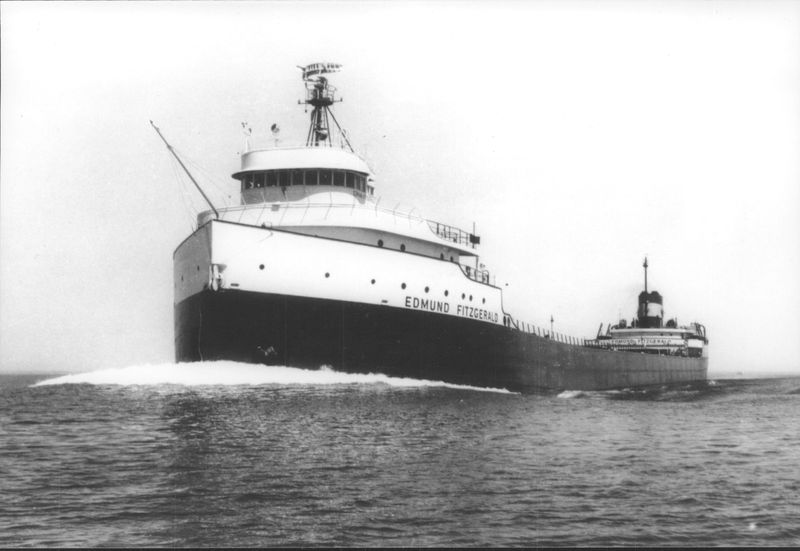
The 729-foot ship sank on Nov. 10, 1975, amid a strong November storm, just 17 miles away from Whitefish Point, located in the northeastern part of the Upper Peninsula, where the big lake’s powerful storm waves would have been partially blocked.
The Fitzgerald’s final moments shrouded in mystery, Lightfoot’s mournful song, the number of lives lost, and the size of the ship alone led her to quickly become the most famous shipwreck in Michigan.
“It has created that awareness that the Great Lakes are beautiful, deadly places,” Great Lakes Shipwreck Museum Executive Director Bruce Lynn said.
An estimated 6,000-10,000 shipwrecks rest at the bottom of the Great Lakes, which are gradually being accounted for by sonar-marine sonic technology, remotely operated vehicles, scuba divers and historians piecing together century-old testimonies.
From 2019 to 2025, researchers at the Great Lakes Shipwreck Museum, north of Paradise at Whitefish Point, say 15 shipwrecks on Lake Superior’s floor have been discovered. Most recently, in July, 2024, the team found the 300-foot Western Reserve 60 miles northwest of Whitefish Point. The ship split in half and sank in 1892 leaving behind a sole survivor.
While the hunt for such vessels typically develop into an adventure, the primary goal is to honor the victims by retelling their stories so they won’t be forgotten, Lynn said.
Oftentimes, researchers find everyday items within and around the wrecks, including dishes, bunkbeds, sinks, even a stove that make the seemingly frozen vessels under deep water alive once again.
“When they were working that ship this was also their home,” Lynn said.
In addition to the Edmund Fitzgerald, there are other shipwrecks that made in impact when they happened, including the 639-foot SS Carl D. Bradley that sank in Lake Michigan in 1958; the 603-foot SS Daniel J. Morell that sank in Lake Huron in 1966; the recently discovered 300-foot Western Reserve that sank in Lake Superior in 1892; and the 258-foot Lady Elgin that sank in Lake Michigan in 1915.
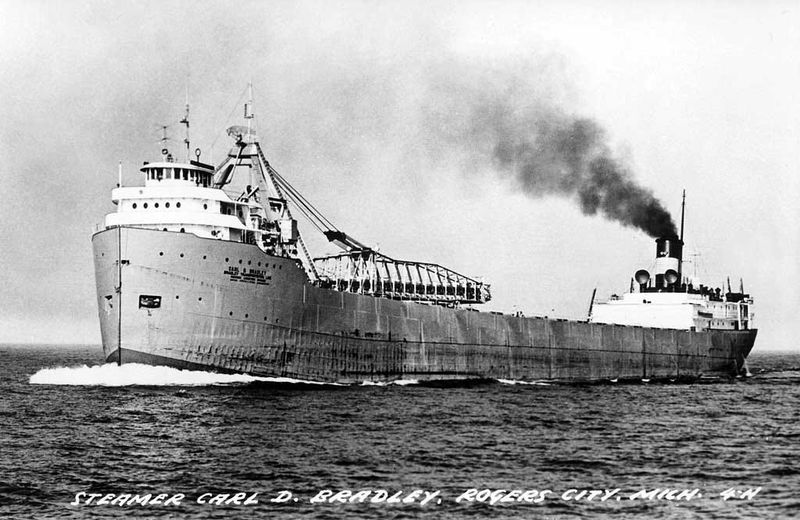
Like the Edmund Fitzgerald, SS Carl D. Bradley was a large ship that succumbed to extreme weather, claiming 33 victims among its 35 crew members. The Bradley was based in Rogers City, located along the Lake Huron shore in northeast Michigan. The tragedy of the Bradley is still a painful sting to communities across Presque Isle County, where many of the crew resided.
“It ripped the living guts out of (Rogers City),” President and Director of the Great Lakes Lore Maritime Museum Mike Horn said. The retired merchant ship sailor, remembers his relative, Paul R. Horn, 20, an oiler on the Bradley who perished in the 1958 wreck.
Preserving artifacts and retelling the stories of shipwrecks keeps the memories of the victims alive, Horn said, and in learning the stories people across Michigan may continue to memorialize their lives by never growing complacent on the waters of the Great Lakes.
Here’s a closer look at some of the Great Lakes’ major shipwrecks.
The fate of the Edmund Fitzgerald: Retelling her story in honor of the 50th anniversary
“That good ship and true was a bone to be chewed when the gales of November came early,” Lightfoot wrote after the ship sank.
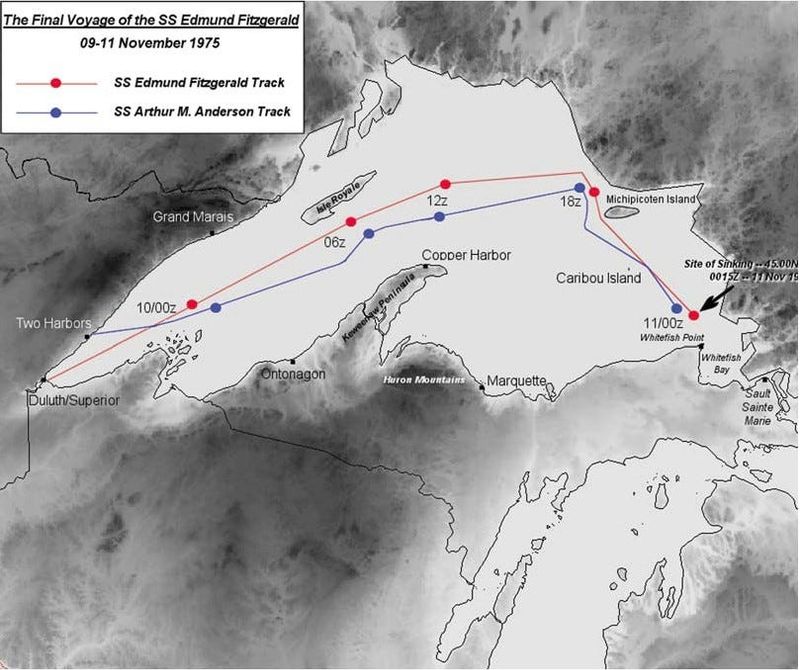
On Nov. 9, 1975, the 729-foot, 13,600-ton freighter set sail on Lake Superior with 26,100 tons of taconite pellets, bound for Zug Island in Detroit. The ship departed from Superior, Wisconsin, under Capt. Ernest M. McSorley. About 10-15 miles behind the Fitzgerald was the freighter SS Arthur M. Anderson captained by Bernie Cooper. The two captains were in radio contact with each other as a major storm developed.
Later on Nov. 9, wind gusts grew to 57 mph, creating waves 12 to 16 feet high and conditions only worsened, by Shipwreck Museum Development Officer Sean Ley wrote on the museum website.
By the late afternoon of Nov. 10, there were consistent winds blowing at 66 mph and gusts at 80 mph, creating monstrous waves up to 25 feet high.
The two captains last spoke at about 7:10 p.m. Nov. 10, and by 7:22 p.m. the Fitzgerald was no longer responding via radio. Cooper contacted the Coast Guard (and nearby ships) for any signs of the Fitzgerald.
“The idea that this ship could have disappeared that quickly, that they didn’t even have a chance to get a distress signal out doesn’t really compute,” Lynn said.
On April 15, 1977, the U.S. Coast Guard officially located and confirmed the shipwreck of the Edmund Fitzgerald.
The wreck of SS Carl D. Bradley on Lake Michigan
On Nov. 18, 1958, the SS Carl D. Bradley sank in Lake Michigan near Gull and Beaver Islands with no cargo, but a crew of 35 men sailing to their hometown of Rogers City in northeast Michigan. At 638-feet long, the ship delivered limestone and was considered the most updated and the largest steamer on the Great Lakes at the time, according to the Presque Isle County Historical Museum.
The Bradley split in half from 65 mph winds and 25-30 foot waves. The ship sank quickly, leaving 33 men to perish in the cold waters, and two to be rescued around 5 miles from Gull Island on a raft 15 hours later.
There were several possible reasons as to why the Bradley sank. The ship was said to have experienced weakening metal parts that eventually fully fractured from the waves; and intense pressure at the ship’s midsection that caused drooping of the bow and stern all combined with severe weather, according to the Presque Isle County Historical Museum.
The ship now rests in two pieces around 53 miles northwest of Boulder Reef in Lake Michigan.
The crew is honored each year at Roger City’s Great Lakes Lore Maritime Museum on Nov. 15.
“We miss those people. Every one of them was a human being with his own worth,” Horn said.
The museum includes a memorial hall for local shipwrecks in addition to the Bradley, including the SS Daniel J. Morell that sank in 1966 in Lake Huron leaving one survivor; and the SS Cedarville that sank in 1965 near Mackinaw City due to a collision with all but one crew member recovered.
What happened to the Western Reserve in 1892?
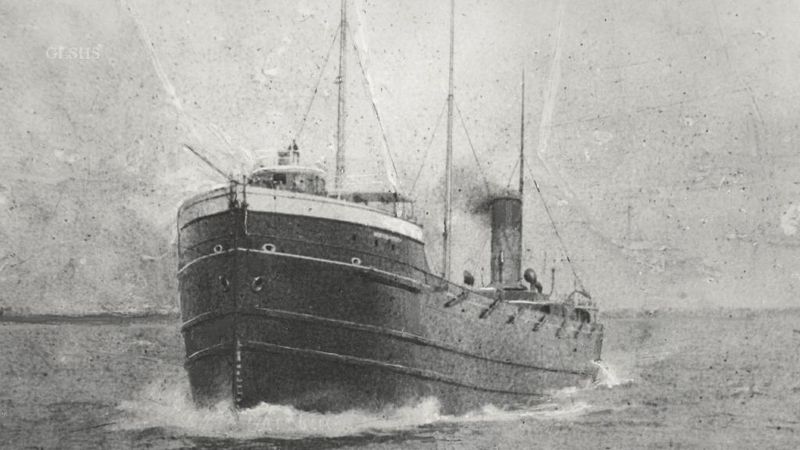
The first all-steel steamer on the Great Lakes, the Western Reserve at 300-feet long, was considered one of the safest ships, nicknamed “the inland greyhound,” for its speed.
The Reserve’s owner, Capt. Peter G. Minch, took the ship out for a leisurely trip to Two Harbor, Minnesota, and brought his young family, another skilled sailor, Albert Myers, making a crew of 28 people.
Though the weather started pleasant, at around 9 p.m. on Aug. 30, 1892, the ship was caught in a powerful squall near Whitefish Point and began to split and sink.
With a steel and wooden lifeboat available, both were filled and lowered, but the steel life boat immediately overturned, dispersing those who were in it across the choppy waters. Two people close enough to the wooden lifeboat were pulled in.
“So think about the shock that is going through the minds of these people, much less kids. They were just on the summer cruise, and they were just having the time of their lives, and now a good chunk of the crew is presumed dead,” Lynn said.
The remaining crew in the wooden lifeboat approximately 30 miles from shore continued to float in the storm for around 10 hours. It is reported that a ship passed them but the crew didn’t have any way to draw attention.
Despite being so close to safety, the wooden lifeboat overturned leaving the wheelsman of the ship, Harry W. Stewart, to be the only person that made it to land.
Stewart eventually swam to shore and walked to the Deer Park Life Saving Station. Once Stewart reached help, the search for the 27 victims commenced and lasted for weeks. Many of the bodies were recovered onshore.
The wreck of the Western Reserve stirred up a lot of media attention and speculation similar to the Edmund Fitzgerald. Eventually, investigations suggested that the wreck occurred due to brittle steel or soft steel, Lynn explained, that was not flexible enough and the ship was not stout enough on top of the severe waves.
For the first time in 132 years, the Reserve was looked at once again, this time 600 feet below the surface of Lake Superior by a team of researchers at The Great Lakes Shipwreck Historical Society.
Where did other shipwrecks occur on Michigan’s Great Lakes?
Some of the most significant wrecks on the Great Lakes include:
How safe are the Great Lakes now?
Real-time weather forecasting technology has become advanced, the infrastructure of ships has improved, and radio communication, traffic control, and cargo carrying regulations have all contributed to a safer career on the Great Lakes.
In addition, the culture has changed.
Based on his observations around Whitefish Point, Lynn said captains have a greater willingness to drop anchor and wait out a storm rather than risking it and powering through.
Contact Sarah Moore @ smoore@lsj.com
This article originally appeared on Lansing State Journal: These are the largest, deadliest shipwrecks in Great Lakes history
Reporting by Sarah Moore, Lansing State Journal / Lansing State Journal
USA TODAY Network via Reuters Connect