Stellantis is betting that Silicon Valley-style software development can help revive one of the world’s largest automakers as it races to compete against Chinese EV makers and local rivals in the era of AI-defined vehicles.
The company’s new “FaSTLAne 2030” strategy, unveiled on May 21 at its Auburn Hills headquarters, includes about $70 billion in investments from now until 2030, 60 new vehicle launches, 50 vehicle refreshes and a heavy emphasis on partnerships with AI startups aimed at accelerating software and autonomous driving development. The partnerships include deals with companies like Qualcomm, for advanced driving assistance systems, and a deal with the United Kingdom’s Wayve, which claims it will bring “door-to-door supervised automated driving at scale” to Stellantis vehicles.

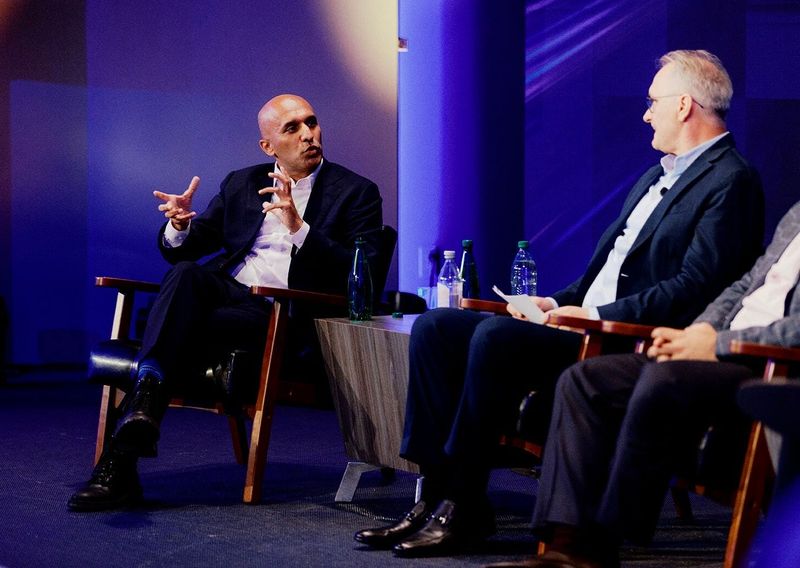
At the heart of the new strategy is an expanded partnership with California-based Applied Intuition, a fast-growing vehicle software company founded by Warren native Qasar Younis.
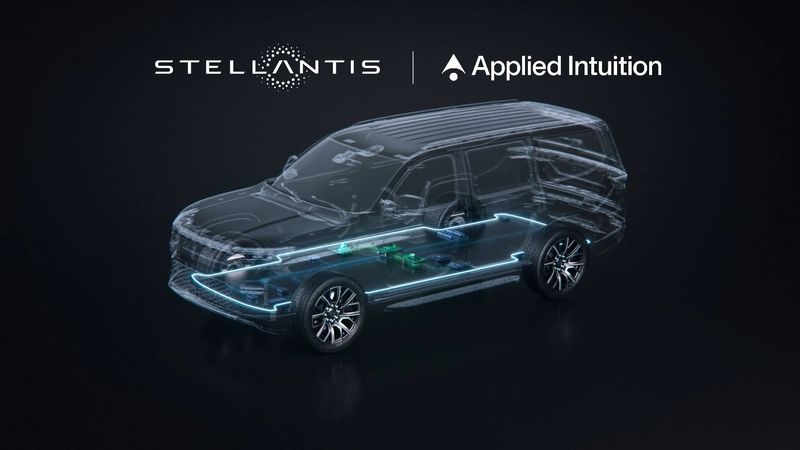
Under the new agreement (a furtherance of a previous deal inked in October), Applied Intuition will help Stellantis develop and scale its next-generation “STLA Brain” software architecture. Before the latest announcement, Applied Intuition had already been developing Stellantis’ AI-powered infotainment software, called Smart Cockpit.
Smart Cockpit is an in-car AI assistant that can be spoken to by the driver, offer route suggestions, and provide maintenance information. The technology is intended to develop over time of ownership to be more personalized as the AI learns more about the driver.
STLA Brain, billed as an “intelligent vehicle” technology system that can be used in all of Stellantis’ vehicles, has been in development since 2021. It handles things like over-the-air updates, software integration and vehicle electronics.
Now, Stellantis has handed its Brain to Applied Intuition.
In signing that deal — and others with Uber, Nvidia, Qualcomm and Wayve — Stellantis is leaning on AI startups in lieu of internal technology research to develop its software-forward slate of future products.
According to Younis, the CEO of Applied Intuition, Silicon Valley startups can do it better.
“Speed, scalability and quality are critical as we bring new technologies to our vehicles,” Stellantis Chief Engineering and Technology Officer Ned Curic said in a statement announcing the deal.
The scalability Curic referenced is especially critical to a company like Stellantis, which maintains a 14-brand portfolio. Younis hopes his technology can be implemented in all of the company’s brands — though it’s his hope that drivers won’t have any idea that it is Applied Intuition who made the product.
For Stellantis, the partnership reflects a broader shift underway across the global auto industry:
Traditional automakers increasingly rely on specialized software companies to build the digital backbone of their vehicles.
Younis, in an interview with the Detroit Free Press, described the relationship as far deeper than a conventional supplier contract.
“We already have an ongoing working relationship with a company from the, you know, from the most senior level, all the way to the working level,” he said. “And this work is like double, tripling, quadrupling down on that work.”
In fact, Applied Intuition employees frequent the Auburn Hills office and are regularly in close contact with Stellantis tech leaders.
Applied Intuition started working with Stellantis on in-vehicle infotainment and cockpit systems more than a year ago, Younis said. The expanded agreement now stretches into core vehicle software, parking autonomy and integration work involving other technology partners, including Qualcomm and British autonomous driving startup Wayve.
The stakes are high for Stellantis. The automaker has struggled with declining U.S. sales, uneven EV rollouts and questions about how quickly legacy manufacturers can modernize their software operations. Under CEO Antonio Filosa, the company is leaning heavily on partnerships as it tries to cut costs, shorten vehicle development timelines and improve technology offerings.
The company’s strategy specifically calls out collaborations with Applied Intuition, Qualcomm, Nvidia, Wayve and Mistral Al as key to accelerating development across software, artificial intelligence and advanced driver-assistance systems.
China versus Detroit (and Silicon Valley)
Younis said that automotive software development resembles the broader tech industry, where companies build shared platforms and tools rather than developing every component internally, like open source code for vehicles.
Applied Intuition now works with most major global automakers, according to Younis, along with companies in trucking, construction, mining, agriculture and defense. The company spreads software development costs across multiple industries and manufacturers, an approach Younis says allows Western automakers to compete more effectively with Chinese rivals, who are often subsidized and backed financially by their government.
“If we were just building an EV company today that was OK to lose money, you could build it just as good as anything in China,” Younis said. “As a matter of fact, we do have that example: It’s Rivian. But Rivian is not a company that’s celebrated because it loses money by the bucketload. So why don’t we ask, do the Chinese companies lose money by the bucketload? The answer is they do. They consistently lose money, and they are subsidized as well.”
Comparing the Chinese automotive market to the U.S. market is an uneven comparison, Younis said, but if you’re going to make it, he believes that Silicon Valley is still the leader of advanced automotive technology. The question of profit becomes the hangup.
“Japan, Korea, America, Europe and India,” Younis said, “they’re private enterprises. They have to make money. That’s a completely different ballgame.”
The partnership model Stellantis is employing — in working with a company that receives funding from across industries to develop intelligent vehicle platforms, and can use that research to develop the STLA Brain — is a counterweight to the state-funded research of China, Younis said.
With enough cash flowing into AI startups, Younis said, “I think you can make cars as good as China with the right partners, and at the same cost structures.”
The changes at Stellantis come as Detroit automakers face mounting pressure from Chinese EV manufacturers that have rapidly improved software, battery technology and digital interfaces.
Analysts and investors increasingly view software capability as critical to future profitability, though Younis pushed back on the idea that China has an insurmountable technological lead.
Instead, he said the real challenge for legacy automakers lies in balancing profitability, brand identity and the complexity of maintaining millions of vehicles that are already on the road — as opposed to Chinese EV startups with slimmer portfolios.
That issue is especially complicated at Stellantis, which operates brands ranging from Jeep and Ram to Maserati and Fiat, but Applied Intuition’s software architecture is designed to allow different brands to maintain distinct identities even while sharing the same underlying technology, produced by Younis’ company, and operated by the STLA Brain.
“We let the (automakers) create the interface in the way that fits their brand, and I think it was very important for Stellantis, because they have 14 brands,” Younis said. “If we’re giving them an intelligent cabin with all the visualization of self-driving and some of the self-driving tech, well, it’s going to be different in a Jeep versus a Fiat.”
The approach differs from that of tech giants such as Apple and Google to dominate vehicle software ecosystems through products like CarPlay and Android Auto, Younis said. Automakers have been turned off by the brand-heavy style with which those tech companies integrated their products.
“Google and Apple are consumer companies,” he said. “When it’s in a Dodge and it wants you to say, ‘Hey Google,’ that suddenly decreases your brand value.”
Applied Intuition instead positions itself as an “invisible” infrastructure provider, allowing automakers to preserve their own branding and customer experience while outsourcing much of the underlying software complexity.
For Stellantis, that could help with what has been a rocky transition from automaker to software company — where vehicles are not only complicated pieces of engineering but also complicated systems of code.
The partnership also signals how much the landscape of automotive innovation is changing.
Younis, who grew up in Warren and attended Sterling Heights schools before working in Silicon Valley, said the future of the industry increasingly depends on close collaboration between Detroit manufacturing expertise and software engineering talent from California.
“We have a lot of vested interest to make Detroit succeed and make the car business in the West broadly succeed,” he said.
Liam Rappleye covers Stellantis and the UAW for the Detroit Free Press. Contact him: LRappleye@freepress.com.
This article originally appeared on Detroit Free Press: Stellantis bets big on Silicon Valley startups to modernize vehicle software
Reporting by Liam Rappleye, Detroit Free Press / Detroit Free Press
USA TODAY Network via Reuters Connect