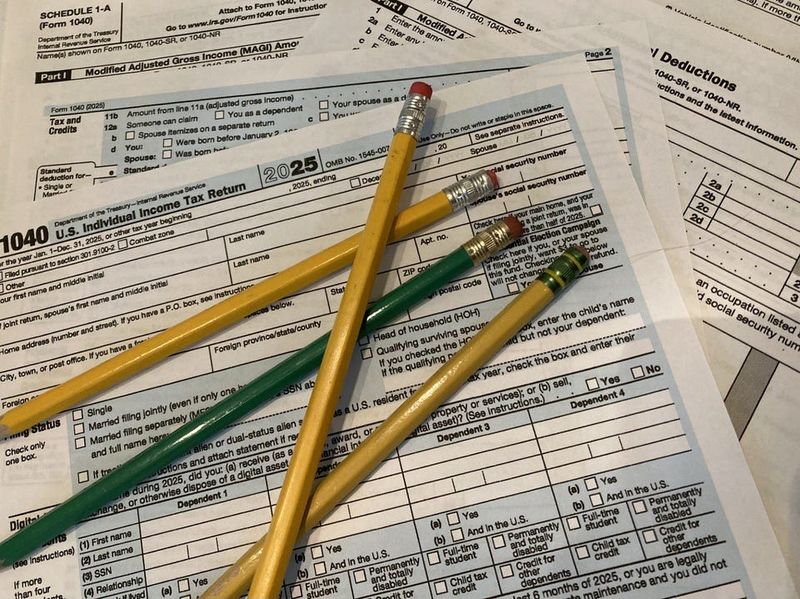
The COVID-19 pandemic disrupted tax seasons, and you could claim a refund from that time, if you apply in time.
Tens of millions of Americans, including Michiganders, may be eligible for an IRS refund from the COVID-19 era, pending an ongoing court case, according to the independent National Taxpayer Advocate.

“Many taxpayers affected by this issue have low and moderate incomes,” NTA said in a blog post. “These taxpayers are less likely to have professional representation and to learn about complex legal developments like this one. As a result, they face a greater risk of missing the opportunity to claim refunds to which they may be entitled.”
The pandemic ravaged the nation, including Michigan communities, claiming more than 1 million lives nationally, including more than 40,000 in Michigan, as of November 2022, the Detroit Free Press reported.
Eligible taxpayers would need to submit a claim for potential refunds or abatements of penalties by July 10, 2026.
Here’s what to know about the COVID-19-era tax refund.
Am I eligible for a covid-era tax refund?
You may be eligible for a tax refund or abatement of penalties from the COVID-19 era, pending ongoing litigation stemming from a court ruling in Kwong vs. United States, according to the independent National Taxpayer Advocate.
The ruling interpreted a tax rule that says once a federally declared disaster is in effect, tax code Section 7508A(d) mandates postponement of applicable tax deadlines for the disaster period, plus 60 days.
The court ruled the COVID-19 public health emergency from Jan. 20, 2020, through May 11, 2023, fell under the provision. Add in 60 days, and the new tax deadline for tax year 2019, 2020, 2021 and 2022 filings would have been July 10, 2023.
Without taxes due, the IRS likely also had no right to levy penalties and interests during that window, tax lawyers said. So, if you were charged penalties or fees, you may be owed a refund, they said.
The IRS disagrees with the ruling and the Department of Justice may appeal, but until then, taxpayers must make a claim to preserve their refund if it’s approved, lawyers said.
How to find out if you’re eligible
Taxpayers need to check their tax records to see if the IRS levied any penalties or interest during the tax filing pause, said Jon Wasser, partner at Fox Rothschild, who focuses on tax issues. They can do that by either asking their tax professionals or looking at their IRS tax transcript.
IRS tax account transcripts show each year’s tax information, including filing status, taxable income and adjustments made after the original return was processed. It also shows payments, penalties and interest with dates they were made or assessed.
Tax account transcripts are available online by registering to use the Individual Online Account to view, print, or download, or by mail, according to the IRS. Americans can order one by mail on the IRS website or by calling the automated phone transcript service at 800-908-9946. It should arrive in five to 10 calendar days.
When is the deadline to submit my claim?
To preserve the right to a potential refund, taxpayers must claim by July 10.
Who’s affected?
A broad group of taxpayers may be entitled to refunds, experts said.
“Impacted taxpayers represent a broad cross-section of the public, including individuals, small businesses, large corporations, estates, and trusts,” NTA said. “The issue reaches taxpayers with obligations related to income, employment, estate, gift, and excise taxes. It may also affect taxpayers who filed late international information returns, which can result in significant penalties even when no tax is due.”
What could taxpayers receive if the ruling is affirmed?
According to NTA, taxpayers may be owed:
What do taxpayers need to do to protect their right to a refund?
Tax professionals can file claims on behalf of a taxpayer, or a taxpayer may file one using a claim for refund and request for abatement form, also known as IRS Form 843, using information from the tax transcript, Wasser said.
A taxpayer should specify on the form that it’s a protective claim based on the Kwong v. United States decision regarding Section 7508A(d) and the COVID-19 disaster period, lawyers said.
“You’re basically telling the IRS, ‘Here’s a refund claim, put it on hold for now,'” until the case has a final determination, Wasser said. If, after all litigation is complete and the IRS must issue refunds, you would have preserved your right to claim yours.
NTA notes the claims currently can only be filed by paper, which “is slower, less accessible, and more difficult to track. The IRS does not provide immediate confirmation it has received the claim. As a result, taxpayers are well advised to send their refund claims by certified mail so they can prove they timely submitted them in the event they are lost or misplaced.”
How many COVID-19 deaths did Michigan have?
Michigan saw more than 40,000 COVID-19 deaths, among more than 1 million nationwide, between 2020 and November 2022, during the height of the COVID-19 pandemic.
How many Michiganders got COVID-19 vaccines this season?
During the 2025-26 season, 9.5% of Michiganders received a COVID-19 vaccine, the Michigan Department of Health and Human Services reported as of April 25.
Detroit Free Press contributed.
Contact Jenna Prestininzi: jprestininzi@freepress.com.
This article originally appeared on Detroit Free Press: The IRS may owe some Michiganders COVID-19 refunds. How to find out
Reporting by Jenna Prestininzi and Medora Lee, USA TODAY NETWORK / Detroit Free Press
USA TODAY Network via Reuters Connect