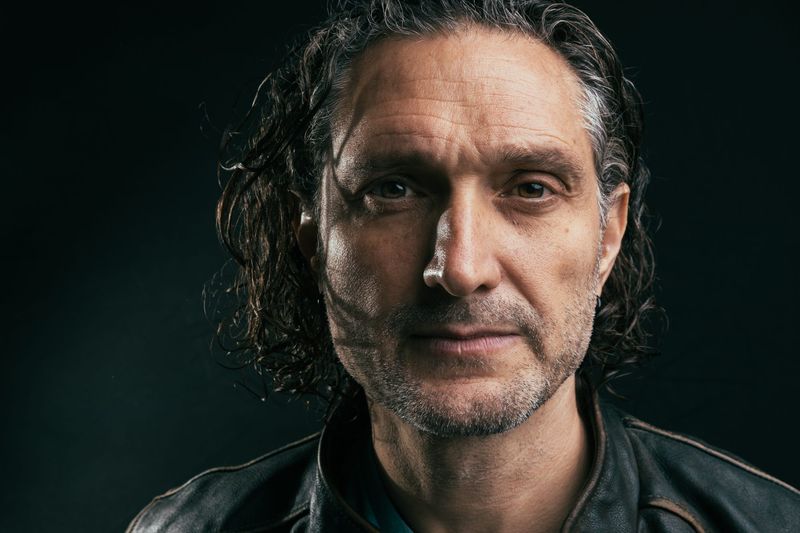
Jeremy Xido is returning to Detroit with his movie about returning to Detroit.

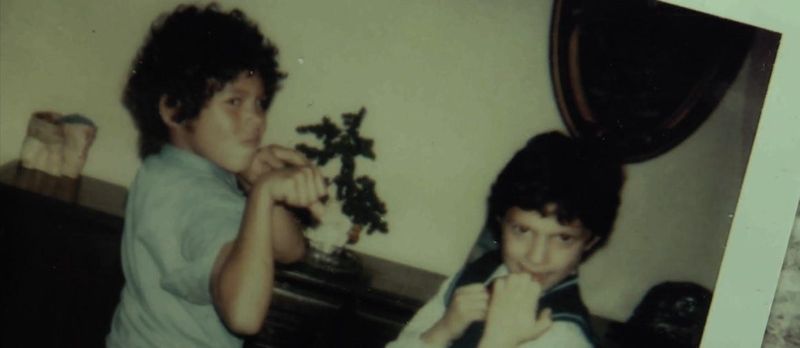
“Sons of Detroit” is Xido’s deeply personal documentary about his own journey growing up on Detroit’s East Side, the circumstances that led to his family fleeing the city, and the divergent paths taken by him and his childhood friend, Boo.
The movie, which has been making the film festival rounds since premiering at last fall’s DOC NYC festival, will screen on Thursday at the Michigan Theater in Ann Arbor as part of the Cinetopia Film Festival, and will then receive a proper homecoming screening on May 17 at the Detroit Film Theatre.
Xido says the movie was the result of “a bomb that went off in my own sense of self.”
The detonation occurred when he returned to Detroit in 2016 to perform his multimedia one-man show, “The Angola Project,” which partially explored Detroit’s racial history and his experience with and inside it.
While rehearsing the show, he received feedback from Detroiter Marsha Music, whom he knew as a child, who challenged him to dig past the conventional narratives he was repeating and look harder at the city’s racial history, and himself.
That caused Xido to undergo an unexpected reexamination of his own life, and everything from which he once ran.
“Marsha took me aside and was like, ‘listen, all this stuff is wonderful and amazing, but what you said out there is wrong, and you have to do better,'” says Xido, on a Zoom call from New York.
“She said, ‘You can’t do this. You are somebody who needs to tell the truth, and you don’t even know the truth. You have to figure this out.'”
Figuring it out
Xido, 54, grew up the only white kid in a predominantly Black neighborhood on Drexel Street, near Chandler Park Drive. He was so close with a neighboring family who babysat him that he referred to Boo, their son who was his age, as his cousin.
When his parents — dad was a doctor, mom was a nurse — eventually fled the city and moved to the suburbs, Xido went with them, and he never returned to the city. The departure scarred him in ways he wouldn’t understand until years later.
As an adult, he toured the world as a performance artist, leaving Detroit in his rearview mirror.
But he knew he’d eventually return, and he’d have to reckon with the ghosts of his past.
Coming back to Detroit with the show was a way to return without really returning, a one-foot-in, one-foot-out situation, Xido says.
“It was a shield,” he says. “And what I needed to do was to start to put down that shield, or to pierce the iron husk that I had built around myself, which meant I had to become very vulnerable.”
His fears that he would be rejected or turned away by his family and friends from his old neighborhood were quickly assuaged. But then came the hard part, the part where he says he had to “hug the cactus.”
As he was documenting his journey, he found himself making a surface-level — and self-serving — film that touched on familiar talking points about white flight, the ’67 riots and the division between the city and the suburbs. But he wasn’t digging deep enough into himself and his personal history, and was rendered a tourist in his own story.
“I think in the early iterations, I was still very much convinced that my telling of the story was still the most important thing,” Xido says. “Or that I would show myself coming back as kind of an oblivious (jerk). But then we started to realize, as we started to edit that, that people really hated that guy on screen. I entered into a landmine of cultural conversations in which it’s like, ‘Oh, I do not want to watch this white guy flagellate himself and be so self-absorbed.’
“So you start to realize, okay, the balance of the storytelling is completely wrong, and I wasn’t having the conversations that I really needed to have.”
Enter Boo.
Tracking down Boo
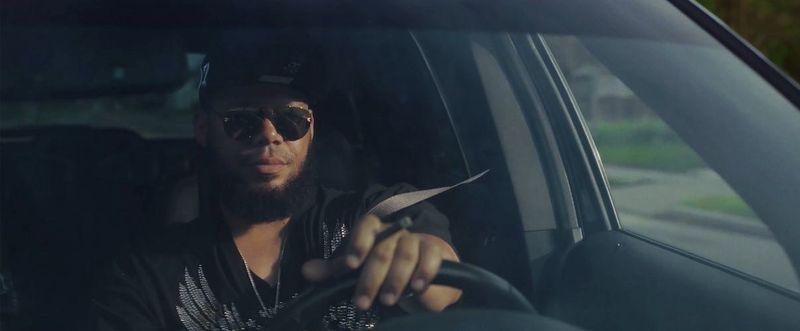
William “Boo” Phillips Jr., Xido’s childhood “cousin,” is the glue of “Son of Detroit’s” storytelling.
He enters the movie and completely shifts its balance, and allows Xido to examine the path his life took once he left Detroit and contrast that with that of Boo, who stayed in Detroit and ended up doing jail time. Their reunion is the centerpiece of the movie, and everything else reverberates from there.
They first reunited off-camera, connected by relatives, and chatted over a video call. “Boo completely flipped out when he saw that it was me, and both of us were screaming, and it was like this whole thing,” Xido says.
Eventually they came together and sat down, cameras rolling, and those are the conversations viewers see in the film.
“I was back at a place where Boo and I could finally talk. And all the other stuff is really important when we see each other initially, but it’s like, that’s where we finally start to have this conversation,” Xido says.
“And this was something I think I owed to Boo and to Marsha, who kept pushing me to go deeper. I could feel the defenses, I could feel Boo’s defenses, like we each would put on masks and then take the masks off for a moment and put them on again. The fact that I was making a movie also pushed me to go deeper, partly because the people that were surrounding me were like, ‘Well, you’re making the movie, and it’s fine, but you haven’t gone there yet.’ And that’s the hug the cactus part. It’s like, you’ve gotta go there. If you want this to be anything, then you’ve got to go there.”
Marsha Music says she’s proud of the film Xido ended up making, as well as the role she unwittingly played in how it turned out.
She says she was “unsettled” by what she calls Xido’s “Tarzan-like attitude” when he came back to the city and started making the movie.
“He had a sense of coming back to this destroyed Detroit. He was a little puffed up about himself in that. I could feel that,” says Music, reached by phone this week. “So I began to, as lovingly as I could, chastise him about that.”
In her mind, she says, she was making off-camera remarks to Xido. “I might have been a bit naïve, because the cameras were still on, but I was just making asides and notations to him that I figured would be edited out.”
Music says she was “shocked” that so many of her admonishments ended up in the film itself, but she’s impressed that Xido had the humility and grace to listen to and absorb her feedback.
Of the film itself, “I think it’s so unique,” Music says. “Yes, there are many films and narratives about whites coming back to Detroit, their shock and awe, but none of them are from the point of view of a white person such as him, who literally lived a good part of their life in a Black household, which gives him a completely singular viewpoint and a different kind of love for the city.”
Music says she plans to attend the upcoming screening of the movie at the Detroit Film Theatre.
Bringing it back home
All told, Xido worked on “Sons of Detroit” from roughly 2016 to 2025, and he locked in a final cut in July of last year.
He showed the movie to friends and family locally at a private screening at the Carr Center in 2025.
“I was shaking, because I didn’t know what was going to happen,” Xido says of that first local screening. But it went off well, and Xido knew he could go forward with taking the movie to the world.
“Then it turned into like, all right, this is something we’re all doing together,” he says.
As the movie plays to audiences well beyond Detroit’s borders, Xido says he’s not worried about the reaction.
“I don’t know what people in the world are going to say. I don’t know if people are going to come after me. There’s all kinds of stuff that may happen. But I’m okay because I know who I am, and 10 years ago, I didn’t,” he says.
“Through this process, I know where I come from. I come from Detroit, I come from Detroit’s East Side. This is my family, and this is what we’re putting into the world.”
So, simple question: Is Xido excited to be bringing the movie back to Detroit?
“I am,” he says. “Because I’m ready.”
agraham@detroitnews.com
‘Sons of Detroit’
7:30 p.m. Thursday
Michigan Theater, 603 E. Liberty St., Ann Arbor
Tickets $17.25, $31.25 for screening and afterparty
Marqueearts.org
7 p.m. May 17
Detroit Film Theatre, 5200 John R St., Detroit
Tickets $11.50, $9.50 for seniors, students and DIA members
DIA.org
This article originally appeared on The Detroit News: ‘Sons of Detroit,’ doc about race, identity and Detroit, comes home
Reporting by Adam Graham, The Detroit News / The Detroit News
USA TODAY Network via Reuters Connect