Nearly 17,000 children in Michigan had a parent die due to a drug overdose over the last two decades amid the state’s opioid crisis.
Two Michigan researchers are intent on finding every single one to ensure they get the bereavement help and services they need to prevent a problem that can change families for generations.

In a first-of-its-kind project, Luisa Kcomt, an assistant professor of social work at Wayne State University, and Sean McCabe, director of the University of Michigan Center for the Study of Drugs, Alcohol, Smoking, and Health, are mapping parental deaths in Michigan from drug overdoses and overlaying the data with programs that serve bereaved kids across the state.
To understand the state- and county-level trends in parental deaths, the researchers linked death certificates of individuals who died of any cause between 2000 and 2023 to birth certificates from 1989 to 2023 by matching the biological parent’s first name, last name and date of birth. That allowed them to create a cohort of biological children aged 17 or younger who had experienced a parental death.
“We shared (our research) with the state of Michigan, and once they were able to make that linkage, it opened up a lot of doors,” McCabe said. “Our hope is that we count every child in the United States, state by state, using the same approach, the same methodology, so that we can identify the real cases, real people.”
A report by the state of Michigan said the death of a parent can significantly affect a child’s health status and well-being throughout their life, particularly if the death happens while the child is younger than 18.
Children bereaved by parental drug overdose face a death rate that is 700% higher than the average Michigan child, according to state data, due to the trauma and grief of losing a parent, which is considered an “adverse childhood event” by experts.
Among the children whose parents died due to overdose, state data shows that between 2012 and 2022, more than a third of them were 13-17 years old at the time of the death. A little less than a third, or 31%, were 4-7 years old. Another 22% were 4-7 years old, while 14% were 0-3 years old.
The most affected counties were outside of Metro Detroit. Researchers found that Arenac, Benzie, Clinton, Crawford, Lake and Manistee counties had the highest rate of minors whose parent or parents died due to drug poisoning between 2018 and 2022 in Michigan. Charlevoix, Houghton, Montcalm, Newaygo, Ottawa, Tuscola and Van Buren had the lowest rates.
Researchers document ‘bereavement service deserts’
As they work to identify children in need, the team has also identified “bereavement service deserts,” a term they use to describe places where grieving children and their families have few or no local resources, and find ways to connect the two.
Deserts can be found across the Upper and Lower peninsulas in rural areas and in urban counties, according to research published in 2025 by Kcomt, McCabe and others, which examined 651 health and human service agencies across the state.
The urban counties of Wayne, Oakland, Macomb, Kent, Genesee, Washtenaw, Ingham, Ottawa and Kalamazoo are the nine most heavily populated counties in Michigan, but have less than 0.07 bereavement agencies per 1,000 people, the researchers found. Their analysis found a significant scarcity of bereavement agencies across Michigan, with 81.9% of counties providing fewer than 0.3 services per 1,000 residents.
To help caregivers find services for the children, the research team, along with state health officials, launched HopeHQ in 2024, a website that provides information on resources for grieving children and their caregivers who have experienced the death of a parent or family member from a drug overdose.
Bereaved families and health professionals can discover blogs, webinars, videos and other tools on bereavement, drug overdose prevention and positive coping strategies. A list of programs and services tailored for overdose bereaved families in Michigan is available by ZIP code.
Parental death during childhood increases the risk for mental health issues, suicide and substance use disorder, the researchers said. And people who are grieving an overdose death often experience a unique stigma.
“What we wanted to do as an interdisciplinary team is to try and destigmatize addiction and destigmatize overdose bereavement, because addiction has this stigma,” Kcomt said. “When people die from an overdose, their bereaved family members continue to have to live with that stigma, and so many don’t seek help. There are barriers to accessing services, and also there aren’t that many services available that focus on overdose bereavement.”
The website is intended as an informational resource for bereaved children, families, and professionals who might interact with these families.
McCabe recalled how a close friend died from a substance-related death. His wife died shortly thereafter.
“And so they left behind six kids,” McCabe said. “The youngest (child), my wife and I played a role in helping mentor him and work with him, and it just became really clear that, as kind of the overdose crisis increased, and as we were seeing more of this in our communities, that this was not a quick fix. This was something that was going to change generations.”
‘Kids watching what adults do’
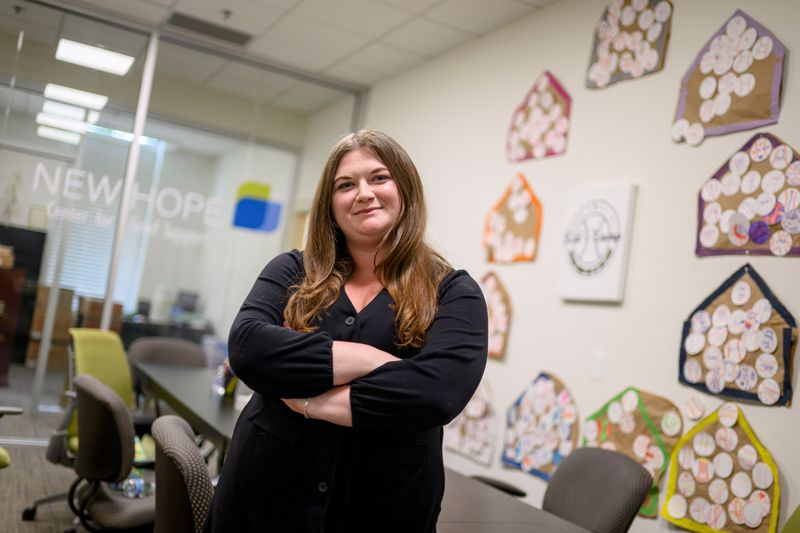
When families have to face a substance abuse- or suicide-related loss, there’s often more complicated emotions tied to it because it’s typically been a longer journey for the family, said Laurel Neitling, a development and communications manager for New Hope Center for Grief Support.
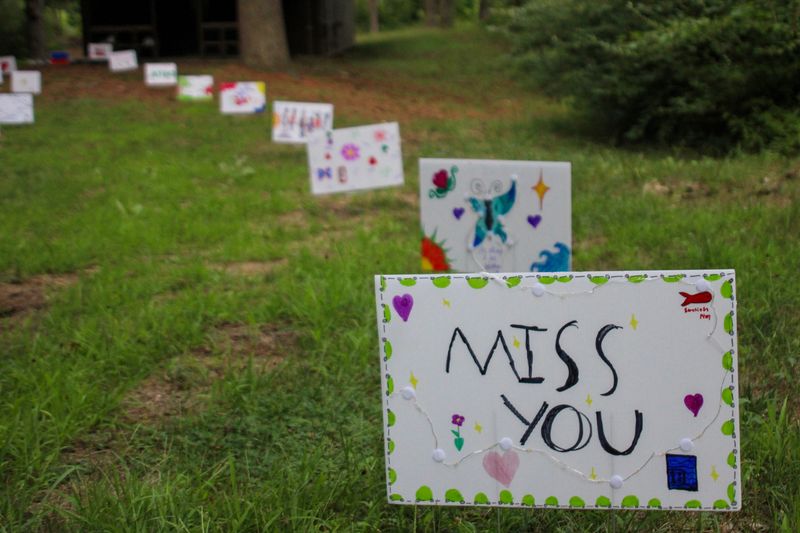
The Northville nonprofit provides free grief support services to children, teens, and adults. It served 285 children ages 4-17 in 2025 who experienced a parental loss due to substance use and suicide through special camps and peer support groups.
“A lot of times our families feel very judged and reluctant to talk about the death, and kids face that too, when they watch the adults in their lives kind of closing up and not openly sharing about that loss,” Neitling said. “A lot of times, that’s how the stigma continues to get perpetuated, because they repeat what they see. But also a lot of times, especially with our children, too, there’s just an increased sense of isolation.”
Neitling said substance abuse and suicide related deaths are less talked about openly. Because of that, children are grieving the death in private.
“And grief is really something that needs to be shared and witnessed, especially for children,” she said.
Neitling said the most important thing society can do is continue to foster more open conversations about grief.
“Because kids are just constantly watching what adults do. And if they don’t watch us grieve properly, they’re not going to do it well either,” she said.
Ele’s Place, a center for grieving children and teens with locations in Lansing, Ann Arbor, and Grand Rapids, offers free peer-to-peer support groups divided by age and type of loss. The need for services is great, said Kelly Koerner, Lansing’s program director. That location serves 160 families every week.
To help connect with children in outlying rural communities, the organization runs a school-based program in which staff visit schools and partner with school counselors.
“So we are able to reach kids that aren’t able to get to our center,” Koerner said. “We have families coming, some of our families in the Lansing area. We have families that drive over an hour to get to our center.”
Overdose deaths down statewide
Michigan’s overdose death rate has declined since 2021, the state Department of Health and Human Services said earlier this month.
Preliminary data for 2025 projects a lower rate of 16.4 deaths per 100,000 residents, down from 30.8 in 2021. This suggests overdose deaths have continued to decline for the fourth year in a row. In 2021, there were 3,096 overdose deaths compared with fewer than 1,800 deaths projected for 2025.
Yet state health officials said urban counties and rural regions continue to experience disproportionately higher overdose rates than the rest of the state — 24% higher than the Michigan rate in 2024 — and Black overdose death rates are more than twice that of all other residents.
State health officials said the progress reflects Michigan’s statewide strategy to address substance use disorder through prevention, harm reduction, treatment and recovery services.
Funding for substance use disorder services in Michigan is coordinated through Medicaid (the government health program for the poor), federal grants and opioid settlement funding. The state is slated to receive more than $1.8 billion from national opioid settlements by 2040, with half distributed to the State of Michigan Opioid Healing and Recovery Fund and the other half distributed directly to county, city and township governments.
Researcher affected by death realized ‘I wasn’t the only one’
Chris Giang, a research assistant who works at the University of Michigan with the team and for HopeHQ, was 11 years old when his younger brother, Ethan, died of meningitis. While the death was not drug-related, he said it had a significant impact on him and his family and eventually led him into the research field and into therapy for himself.
By the time he reached high school, Giang said he knew he needed someone to talk to and a way to process the grief. A counselor from Ele’s Place came to his high school and met with Giang during his lunch hour to talk about grief and its impact. Other kids did, too.
“I think what was important for me at the time is that I realized I wasn’t the only one,” Giang said.
Overdose deaths are very stigmatized, Giang said, and sometimes a child doesn’t know how a parent died either. Most support groups for children and teens lack a specific focus on overdose parental death.
“This group really provided a safe space to talk about our loss,” he said.
Henry Ford SandCastles offers grief support to children, teens and families who have experienced the death of a loved one and sees itself as a preventive program to help children and teens learn how to grieve and cope with their loss in a constructive and healthy way, said program manager Peggy Nielson.
The program offers bi-weekly support groups, an eight-week Navigators program and a summer camp for children aged 7-18. The program also provides grief consult calls and resources for families.
Last year, the program served more than 800 people, with participants coming from across Michigan. It is funded through donations and partnerships with schools and churches.
“I think that this is just a really underserved area, and helping kids to get through grief and getting them the support system and the coping skills is crucial, really, for their future development,” Nielson said. “When kids come into a program and get those services, we’re teaching them the skills that they need to navigate grief, not only now but also throughout their lives.”
jchambers@detroitnews.com
This article originally appeared on The Detroit News: Overdose deaths leave bereaved kids behind. Researchers want to help them
Reporting by Jennifer Chambers, The Detroit News / The Detroit News
USA TODAY Network via Reuters Connect
By Jennifer Chambers, The Detroit News | USA TODAY Network