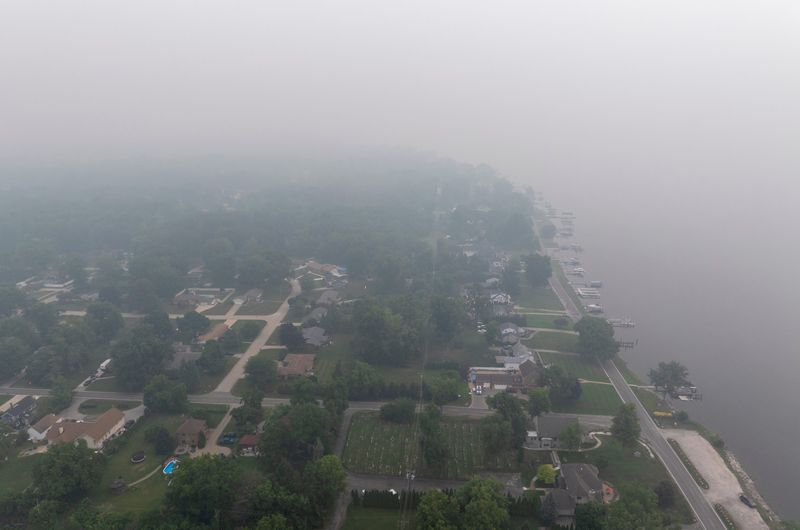
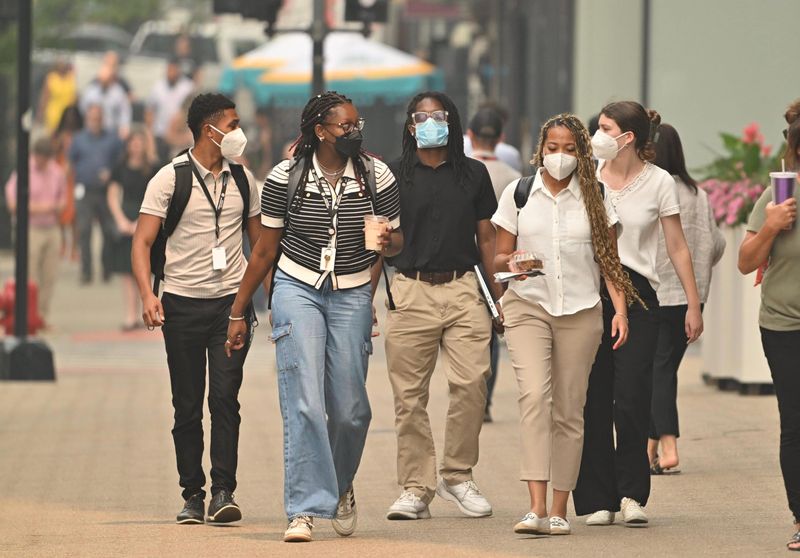
After smoke from Canadian wildfires caused the worst air quality that state meteorologists have clocked in the 30 years they have kept track, the big question on Michiganians’ minds is whether this will become our new normal.
Canadian wildland forest experts and firefighters said yes.

“These fires are not controllable,” said Lori Daniels, a University of British Columbia forestry professor and co-director of the Centre for Wildfire Coexistence. “That’s not an excuse; that’s the reality.”
Experts who have experience fighting wildfires in Canada, studying their causes and advocating for measures to tame them, said the warming climate combined with past fire suppression practices is creating the “perfect storm” for fires to spin out of control. When they do, they threaten the small rural communities embedded in Canada’s northern forests and sometimes send toxic smoke into Michigan and elsewhere.
Despite prodding from some Michigan politicians who argue Canadian officials haven’t done enough to stop the fires driving wildfire smoke here, Canadian wildfire experts interviewed by The Detroit News said preventing and extinguishing fires in the country’s north woods is all but impossible, as well as a bad idea.
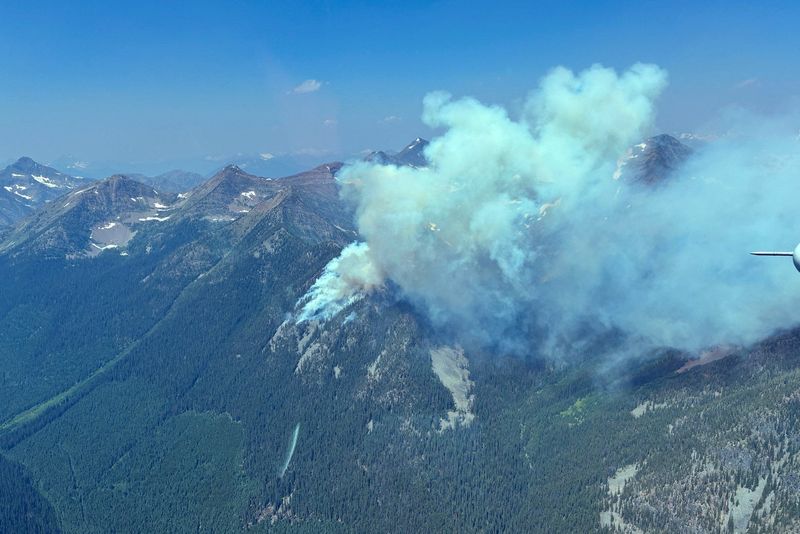
“When these fires are burning at full strength, there is nothing on earth you can do other than get people out of the way,” said Brian Wiens, managing director of Canada Wildfire, a partnership of forestry and wildfire experts and response organizations. “The amount of energy coming from those fires, it’s incomprehensible.”
Dumping a planeload of water on one of the wildfires raging in Ontario would be like “spitting into a campfire,” Wiens said.
Michigan lawmakers and President Donald Trump have lobbed complaints at Canadian officials, who they said are mismanaging forests and sending harmful smoke across the border.
Four Republican members of Michigan’s congressional delegation — U.S. Rep. and Republican gubernatorial contender John James of Shelby Township, as well as U.S. Reps. Jack Bergman of Watersmeet, Lisa McClain of Bruce Township and John Moolenaar of Caledonia — wrote a letter to Canadian Prime Minister Mark Carney accusing Canadian leaders of failing to manage the country’s wildfires and offering “excuses instead of results.”
“We remain ready to work with Canada in good faith, as two nations with a long history of standing together,” they wrote. “But that history does not entitle Canada to another year of excuses. Our constituents are breathing the consequences of this failure right now, and they deserve better than to be told, again, that it will be handled.”
In a Truth Social post, Trump accused Canadian officials of “willful negligence” for failing to properly maintain their forests.
Canadian wildland fire experts countered that it’s not so easy to stop the wildfires blazing in Canada’s vast forestland primarily because the warming climate has made fires in the country’s huge boreal region so frequent and intense they become impossible to control.
Smoke from American fires routinely drifts into Canada, they pointed out, and the countries have a long history of sharing firefighting resources. Addressing climate change, a mission that Trump’s administration has reversed, also would help, they said.
“It’s tremendously frustrating to have those kinds of messages conveyed broadly in the media and suggest there’s a simple solution when there’s not,” Daniels said of American politicians criticizing Canada for its wildfire response.
The Michigan House Oversight Committee on Wednesday discussed the possibility that Michigan could work with Canada on mitigating the fires. Committee Chair Jay DeBoyer, R-Clay Township, said he has invited Mark Wiseman, Canada’s ambassador to the U.S., to join that effort.
DeBoyer, who owns an engineered lumber business, said some of Canada’s logging practices could be contributing to the extreme wildfires, such as limits on companies’ ability to log federal land.
“I’m not picking on Canada,” he said after Wednesday’s hearing. “I actually like Canada. It’s just, what can we do? What can Michigan help with? Can we send firefighters? Do we have technology, do we have equipment?”
The fires in Canada are unlike those that break out in the United States, because Canada’s boreal forests have evolved to burn and fires there quickly become hot, tall and fast-moving. Experts said the warming climate has extended the season when wildfires are likely and hot weather has dried out the forests and soils, priming them to light.
“We are being put in peril because of it,” said Jen Beverly, an associate professor of wildland fire at the University of Alberta. “Fires are inevitable, but there would be less of them if we were responsible about global warming. There is no easy solution other than try to keep putting out the fires while we can and get people out of harm’s way. Communities, I think, are doing the best they can to reduce the potential for ignitions of their homes.”
In addition to climate warming, centuries of policies banning indigenous people from conducting controlled, cultural burning have exacerbated the wildfire problem in Canada, as in the U.S., said Amy Cardinal Christianson, director of fire stewardship for the Indigenous Leadership Initiative, an Indigenous-led conservation organization headquartered in Mashteuiatsh, Quebec.
Allowing indigenous people to conduct those burns, traditionally done outside the fire season to prevent out-of-control fires, on land outside of their First Nations reserves would help, Christianson said.
“What’s really been created is these very unhealthy forests that are poorly adapted to fire just generally,” Christianson said. “When we throw climate change on top of it, these hotter, drier summers, more lightning, it’s just created the perfect storm, unfortunately, in our forests.”
Indigenous people are most at risk, Christianson said. Although Indigenous people are about 5% of Canada’s population, 40% of fire evacuations are of Indigenous communities, many of which are in hard-to-access areas in the northern forests.
“That’s been one frustrating thing,” she said. “We’re always the ones dealing with it, but we’re still not really allowed to participate in forest management, in fire management in Canada.”
One thing about boreal forests: They burn
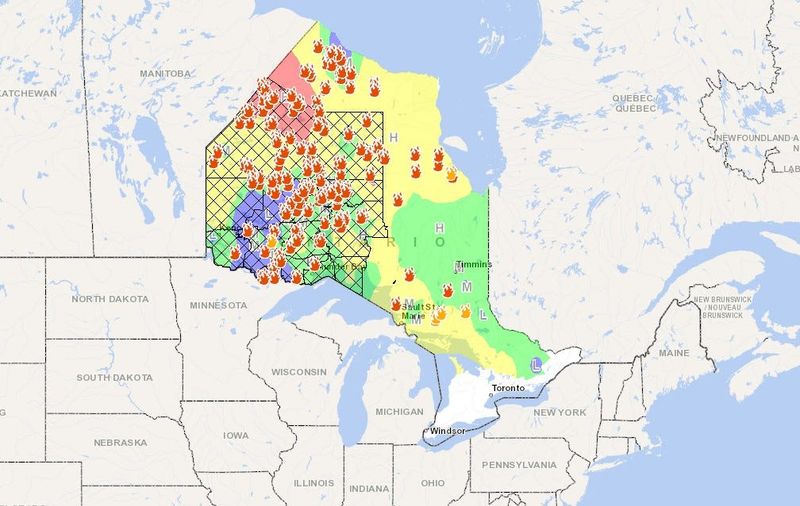
Western Ontario, the area above Minnesota, Wisconsin and the western Upper Peninsula, still was pockmarked with fires on July 30, according to the province’s online forest fire map.
Ontario and most of Canada are covered with boreal forest, dominated by conifer trees like black spruce, jack pine and lodgepole pine. Those trees evolved with fire, the University of Alberta’s Beverly said, and need to burn in order to reproduce. If the trees don’t burn while they are alive, they will die and burn then, she said, so fire is “inevitable.”
Putting fires out in the northern boreal forest is not realistic because the forests are so big and the population centers are so sparse, the University of British Columbia’s Daniels said. Canada has almost 20% more forestland than the U.S., but just about 12% of the population. There aren’t roads into much of the northern boreal forest; some of the communities there are accessible only by plane.
“So many, many of the forests and the fires are completely inaccessible,” Daniels said. “They’re not managed for timber. It’s not physically possible (to stop these intense fires). If we took all the foresters in the world, we would have to build so much road to try to access that area and, frankly, I don’t know what kind of forest management or what kind of management we think could stop these fires.”
Fires in boreal forests burn hot and all the way up to the crown of trees, Beverly said. Prescribed fires are difficult because they could easily get out of control, she said. They don’t advance neatly in brush on the forest floor like they would in the western U.S.
High winds could cause them to change direction and advance toward a community, Beverly said. It’s risky.
“We have an enormous challenge here,” Beverly said. “We have people embedded in an extremely flammable landscape, and everyone involved is doing the best they can to minimize impacts, to minimize exposure and destruction.”
Droughts like the one Canada is experiencing now heighten the risk that fires will light and spread, Daniels said. Even the soil is dry, crunchy and flammable.
“It is the actual ground and soil that is burning,” she said. “That is another whole suite of questions and concerns because when those burn, once the fire is underground, you can go with all the firefighters and all the planes and all the water and retardant on the surface, but if the fire’s under the surface it won’t stop.”
Warmer world, worse wildfires
Here is the recipe for extreme wildfire: Extended periods with little or no rain, hot weather, blowing winds and a spark.
“Hot, dry and windy is one of the outcomes of the changing climate,” said Wiens, who previously served as the Canadian Forest Service’s director of wildland fire research. “We’re seeing more times where we actually have those conditions that are conducive to really intense fires. If there’s something to get them going, they are tending to be stronger and fast.”
While the annual number of fires has decreased in Canada since 1959, the area burned by fires has increased. That’s because fires are getting larger, according to the Canadian Wildland Fire Information System. More than 4,000 fires have lit this year, burning more than 9 million acres. Lightning causes about 46% of all fires but accounts for 83% of the area burned.
The country’s fire season also has become longer, from mid-April to late October, and could extend by another month by 2100, according to Natural Resources Canada.
“Climate change is making the fire season longer, and it’s creating more dry conditions when these fires can happen,” Beverly said. “We’re getting more of them in a given year, and they are burning at high intensities because that’s the kind of ecosystem it is.”
The heat domes that caused temperatures to skyrocket close to 100 degrees in Michigan in early and mid-July also caused extreme high temperatures in Ontario. The hot spell dried out the forest and primed it to burn. Then, a lightning outbreak started many fires simultaneously, Daniels said.
Forest fires also are worsening in the U.S. and world, she said.
“I don’t think in human history we’ve never been able to stop all fires,” Daniels said. “We won’t stop all fires in the future, and in the fact there’s more high-intensity, high-impact fires burning around the world. That’s the reality that we face. So trying to think about how we respond to that is so critically important.”
There will be even more fires in the foreseeable future, Wiens said, and they will be even more intense. Humans continue to pour greenhouse gases into the atmosphere, and even major action to curb climate change, such as significantly reducing the amount of greenhouse gases humans release to the atmosphere, would only slow further effects, not reverse them, according to climate experts.
Solving wildfire problem will take partners, time
Indigenous communities in Canada historically burned some areas to increase the presence of some plants, such as blueberries, and animals, as well as clear some spaces and decrease fire risk. Animals did their part as well, such as beavers who built wetlands, the Indigenous Leadership Initiative’s Christianson said. Together, that led to a healthier forest that wasn’t just mature trees.
Those cultural burning practices were outlawed, she said. Now, Canada’s forests are “hungry” and sometimes burn so hot that plants and animals don’t return.
Christianson said increasing jobs for indigenous people to work as fire guardians could help. That job would involve being certified to respond to wildfires but also having the cultural knowledge to do preventative burning, fire recovery and other mitigation work. There are some small fire guardian programs in Canada, and they should be expanded throughout the country, she said.
“Those communities that we’re talking about with these programs, they are located right in these forests that are fire dependent where we are going to see fires,” Christianson said.
Daniels agreed that fire suppression stopped some natural fires and led the forests to become more uniform.
“It’s all just one big blanket of green that burns very intensely,” Daniels said. “We’ve become so good at fire suppression we’ve contributed to the problem.”
Solutions are complicated, she said, because thinning out the forest may cause problems, too. Removing trees would allow more sun to hit the forest floor, which would dry out soil and allow more wind to race through.
“In those ecosystems where the fires are largely wind-driven and depend on how dry the ground is to depend on how fast you can stop them, the great advice to thin out the forest might not actually help. It may make the situation worse,” Daniels said. “I think we would discover that we could make the problem even worse, believe it or not, than it already is.”
Daniels said communities are taking steps to protect themselves by removing flammable needle-leafed trees from around their city and planting fire-hardy trees such as aspen instead. She said indigenous cultural burning practices could help create fire blocks and reduce fire fuel near communities and argued inviting more Indigenous voices into fire management could be helpful.
“If we thought carefully about, what did that forest look like in the past? Can we recreate those conditions? … maybe we would have a win-win situation,” Daniels said.
Wiens said Canadian fire agencies are working with communities to build “defensable spaces” or fire breaks that can allow firefighters to defend a community from damage. That work has to be done before fires start, he said.
“When you get a full-blown boreal forest fire going, there is nothing you can do. You basically cannot fight the fire,” Wiens said. “You’re trying to reduce the risk. You can’t eliminate it.
“The idea of ‘just go and put the fire out’ sounds really good, but it is in fact not really based in a deep understanding of how fire works.”
Both U.S., Canada should be ‘more proactive’
The Canadian Council of Forest Ministers developed the Canadian Wildland Fire Prevention and Mitigation Strategy in 2024 that called for increasing prescribed fires and Indigenous-led cultural burning, improving awareness of wildfire prevention strategies, increasing wildland fire response training and more.
The Professional Institute of the Public Service of Canada, a labor group representing federal and some provincial and local scientists and professionals, criticized the government for making cuts to science programs such as weather forecasting and climate research.
“The federal government has said it will invest in firefighting capacity and emergency response, and those investments are important. But aircraft and firefighters cannot replace prevention, forecasting, and planning,” the group said in a statement sent to The News. “Emergency response depends on the scientific expertise that helps communities see danger coming.”
U.S. groups including the Center for Western Priorities, a nonpartisan conservation group, criticized the U.S. Forest Service for scaling back its wildfire prevention efforts in 2025 compared with 2024.
Both the U.S. and Canada need to be more proactive about using prescribed and cultural burning to reduce the chances of large catastrophic fires, said Kurt F. Kipfmueller, Michigan State University’s 1855 Professor of Indigenous and Tribal Natural Resources. Unlike the U.S., where the Trump administration has canceled renewable energy projects and reversed climate regulations, Canada’s leaders recognize the role climate change is playing in the problem and aim to reduce their contribution, he said.
“It’s not as simple as saying Canada is sending all their smoke to us and needs to do better forest management, or that Canada isn’t managing their forests correctly,” Kipfmueller said. “Canada does the same thing we do, pretty much. … I think they’re a little bit more proactive.”
American politicians’ public criticisms of Canadians do not reflect the “incredibly strong collaboration that exists already” among North American firefighting agencies, Wiens said. Firefighters from all over the world see themselves as siblings, he said, and politics disappears on the fire line.
“If we could send that a little further up the chain, that would be really good,” Wiens said.
Researchers and firefighting crews from Canada, the U.S., Mexico and countries outside North America routinely collaborate on projects and share resources like equipment and manpower, Daniels said. A Canadian firefighter was killed this month while deployed as a pilot to fight the Gold Mountain fire in Colorado, Colorado Public Radio reported.
“There are people literally putting their lives on the line to try to stop these fires,” Daniels said. “Unfortunately, the fires and the smoke that come from them are unstoppable at this point in time, in the heat of the summer.
“What we need to do is think about how we can be proactive and create more resilient ecosystems. That requires literally billions of dollars of investment.”
ckthompson@detroitnews.com
This article originally appeared on The Detroit News: Ontario wildfires ‘not controllable.’ Neither is the smoke, experts say
Reporting by Carol Thompson, The Detroit News / The Detroit News
USA TODAY Network via Reuters Connect
By Carol Thompson, The Detroit News | USA TODAY Network