Behavioral health crisis services are a public promise, not just a business line. When an Oakland County resident or their loved one faces acute psychological distress, we respond quickly, expertly and humanely.
Every day, individuals and families reach out when in distress, unsure and vulnerable. These moments demand more than a phone tree or referral. They require compassion, sound judgment and a people-first system.

This transition to direct delivery of crisis services marks a pivotal chapter for OaklandCommunity Health Network (OCHN). This decision is about accountability: when someone asks for help, they get the right care at the right time and in the right setting, without provider constraints.
When crisis services are delivered through various providers with competing priorities, care may become fragmented. People in behavioral health emergencies can be redirected, delayed or lost between systems. Direct delivery closes those gaps. It allows OCHN to set clinical standards, recruit the workforce, design protocols and be accountable and responsible for engagement in the full continuum of care and outcomes.
Crisis care is unpredictable and resource-intensive, unsuited to thin margins or volume metrics. Direct service lets OCHN fully invest in evidence-based practice, 24/7 care, continuity and clinician wages.
OCHN is not a vendor. We have no shareholders. Our board includes those with lived experience, and meetings are public under Michigan law.
Direct delivery makes accountability personal. If there is a barrier or delay, OCHN must answer. We own every experience and are responsible for improvement. Our crisis operations are also subject to external review. OCHN is pursuing state certification of its Crisis Stabilization Unit, licensure of its Crisis Residential Unit, and is also seeking accreditation from the Commission on Accreditation of RehabilitationFacilities (CARF).
Building a direct crisis service is not an isolated move. It is the result of years of focused preparation —OCHN has built one of the nation’s strongest justice diversion and deflection systems. It holds a Platinum-level designation from CIT International, the organization’s highestrecognition for Crisis Intervention Team training.
More than 1,300 officers have been trained by OCHN to recognize behavioral health emergencies and de-escalate them safely. The Community Co-Responder Program places clinicians with law enforcement, transforming arrests into assessments and care. Ten clinicians serve 20 communities. Our Community Behavioral Threat Assessment and Management Program, led by community mental health experts, partners with the FBI to intervene before violence happens.
Together, these programs reflect a core conviction: people in crisis belong in care, not jail cells or emergency rooms. As OCHN embraces this direct model, the transition demands strong clinical leadership. That leadership includes Vasilis K. Pozios, M.D., OCHN’s Chief Medical Officer.
Pozios is board-certified in psychiatry and forensic psychiatry, a specialty focused on theintersection of mental health, safety and the legal system. His expertise in risk assessment, diversion and human rights is essential to modern crisis care.
Pozios has also served on the American Psychiatric Association Board of Trustees and the APA Foundation Board of Directors and previously served as Speaker of the APA Assembly and President of the Michigan Psychiatric Society.
Hanna Y. Saad, M.D., is OCHN’s Medical Director of Crisis Continuum Services and Lead Psychiatrist for the Oakland County Jail. Saad specializes in carceral psychiatry, treating high-acuity patients with skill and respect.
At OCHN’s Resource and Crisis Center in Pontiac, our trained team manages the most acute situations with safety and dignity.
Together, Pozios and Saad keep OCHN’s crisis system focused on individuals’ needs, solid evidence and best practices.
Just over three months into providing crisis services directly, OCHN has already been recognized by the Michigan Department of Health and Human Services as an authority on crisis-care best practices. OCHN policies and procedures are being incorporated into statewide best practice manuals.
Since the transition began, more than 3,100 people have received crisis services from OCHN. Our Resource and Crisis Center remains open 24/7, and our crisis line — 888-238- 0611 — is fully operational, with licensed clinicians available around the clock.
In Oakland County, there is no wrong door. A person in crisis should not be treated as a transaction or redirected for financial reasons. They should receive care with dignity and expertise, and within a system that is fully responsible for their next steps. That is the standard our community deserves.
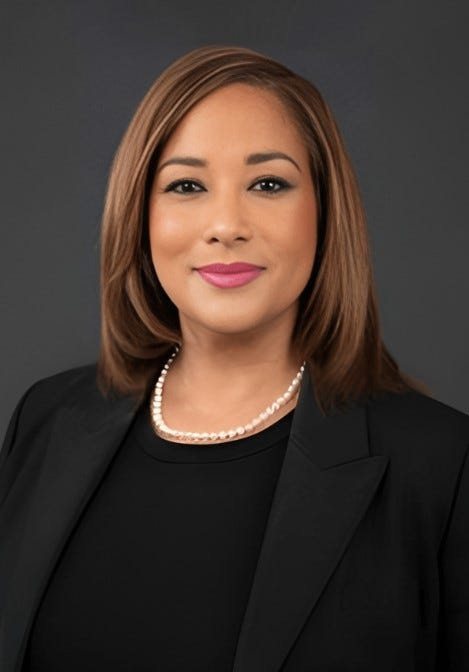
Dana Lasenby is Executive Director and CEO of Oakland Community Health Network.
This article originally appeared on The Detroit News: OCHN takes on direct crisis care in Oakland County | Opinion
Reporting by Dana Lasenby / The Detroit News
USA TODAY Network via Reuters Connect