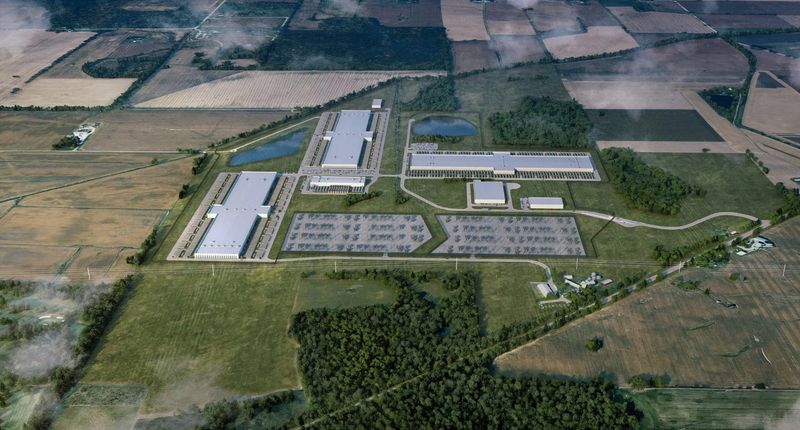
As state regulators ponder approving a DTE Energy request to expedite its plan to provide energy for a new, massive data center project in Saline Township, lawmakers and other elected officials are on both sides of the debate.
After OpenAI and Oracle announced in October they would bring a data center campus to Michigan, capable of 1.4 gigawatts of computing power, DTE asked the Michigan Public Service Commission to approve its special contract to provide the energy needed for the facility without the usual public hearings. DTE’s request for an “ex parte” motion has drawn scrutiny, including from elected officials like U.S. Rep. Debbie Dingell, D-Ann Arbor and Attorney General Dana Nessel.

But some lawmakers are urging the MPSC to sign off on DTE’s request.
State lawmakers, including former House Speaker Rep. Joe Tate, D-Detroit, Rep. Bill Schuette, R-Midland and Rep. Pauline Wendzel, R-Watervliet, have submitted comments to the MPSC urging commissioners to approve the ex parte motion.
They echo many of DTE’s arguments: the utility company has said in regulatory filings the project won’t increase residential electric rates, and state law passed in 2024 mandates that data center developments can’t pass energy costs onto residents in order to qualify for tax breaks.
“This project represents a significant opportunity for our state,” wrote Tate. “The data center will bring substantial economic investment, create high-quality jobs, and reinforce Michigan’s position as a leader in innovation and technology infrastructure.”
MPSC Commissioner Shaquila Myers was Tate’s chief of staff when he led the House as Speaker in 2023 and 2024. Legislation passed by the House in 2023 and later signed into law requires DTE and other Michigan utilities to generate 100% of their energy from clean energy sources by 2040.
Wendzel, who chairs the House Energy Committee, said in a letter to the commission the project would bring economic benefits and could even lower residential energy costs by adding to the overall base of customers who pay for energy in Michigan.
“What’s before the Commission is more than a single approval; it is a blueprint for how Michigan competes in the 21st Century,” she wrote. “It shows that we can welcome transformative investment while holding firm to affordability, reliability, and fairness.”
Those pushing against DTE’s request to speed through the approval process argue the company should have to prove its claims that the data center project won’t affect residential energy rates.
“I’m deeply concerned about it,” Nessel told reporters after an event in Grand Rapids Nov. 13. “This is a massive project and I think we have to be very careful and very cautious how it proceeds. Anyone who tells you right now we know how that’s going to affect the rates of consumers around the state or our ability to ensure we have adequate amounts of energy for people … this is an enormous case. It’s a very significant situation, it deserves to have a public hearing.”
Nessel also noted some of the lawmakers who support the ex parte motion don’t represent Saline Township. Initially, the township board voted against rezoning a parcel of farmland for the data center campus, before developer Related Digital sued Saline Township. The two parties eventually reached a settlement in court that allowed the project to go forward.
Dingell, during an appearance on WKAR’s “Off The Record” Nov. 14, said while DTE and the companies behind the data center project have made promises about energy costs and water usage at the planned campus, there needs to be public input for the project.
“How do you hold them accountable? How do we know what’s going to be there? Michigan needs to stay at the forefront of innovation and technology, but they’ve got to be done right,” Dingell, whose congressional district covers Saline Township, said on the program.
There are also broader concerns that the data center campus could hinder Michigan’s clean energy goals. 1.4 gigawatts is more energy than the 1.2 gigawatts produced by DTE’s Fermi 2 nuclear power plant in Newport, which the company says can power a city of a million people. Some critics of large data centers in Michigan say they could hinder the state’s transition to clean energy. That state law that mandates energy providers generate power from 100% clean sources by 2040 also allows utilities to seek exemptions if they don’t believe they’ll be able to meet energy demands.
It’s not immediately clear when the MPSC could decide on DTE’s request. The commission is next scheduled to meet Dec. 5 in Lansing. MPSC agendas are typically made public the day before meetings.
Staff writer Clara Hendrickson contributed to this article.
Contact Arpan Lobo: alobo@freepress.com
This article originally appeared on Detroit Free Press: No public hearing? Some Michigan lawmakers back DTE’s request to fast-track data center
Reporting by Arpan Lobo, Detroit Free Press / Detroit Free Press
USA TODAY Network via Reuters Connect