In a Motown world filled with colorful characters, songwriter Sylvia Moy was an enigma.
Moy, a lifelong Detroiter who died in 2017, helped write a host of standout hits for the hometown label. Along with her compositions made famous by Stevie Wonder (“My Cherie Amour,” “Uptight [Everything’s Alright],” “I Was Made to Love Her”), there were songs for the Isley Brothers (“This Old Heart of Mine”), Marvin Gaye-Kim Weston (“It Takes Two”), Martha and the Vandellas (“Honey Chile”) and more.

That body of work propelled her into the Songwriters Hall of Fame in 2006 — a rare public moment for a trailblazing woman who preferred a quiet life back in Detroit.
For Chicago author Margena Christian, who became intrigued by Moy while stuck at home during the COVID-19 lull, there was far more to the Motown songwriter than met the eye.
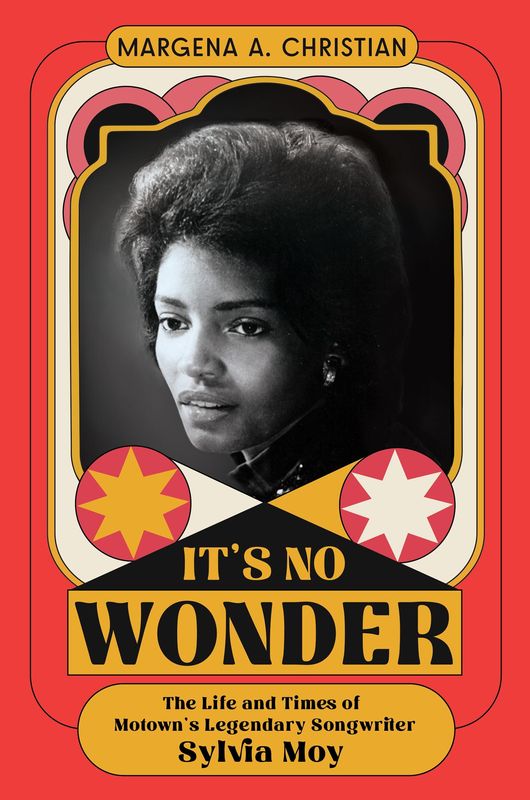
In her new book, “It’s No Wonder: The Life and Times of Motown’s Legendary Songwriter Sylvia Moy” (Da Capo Press), Christian contends that for all of Moy’s documented musical achievements, there were other key works for which she was denied credit.
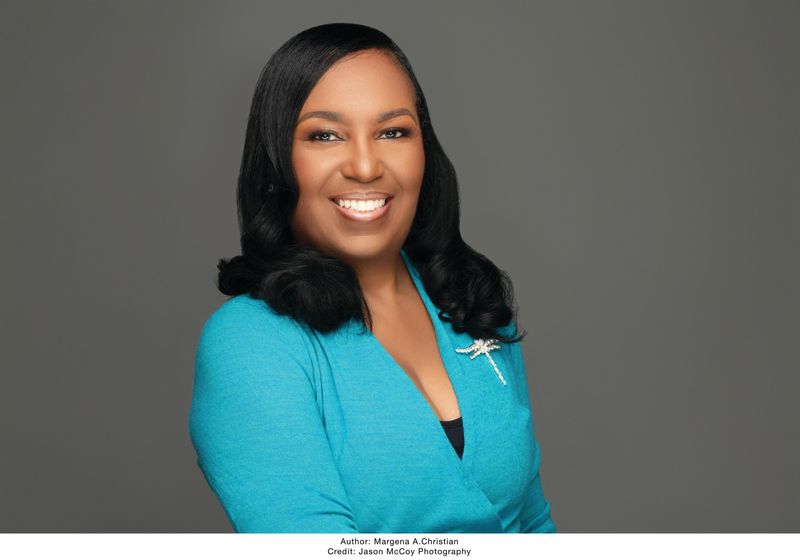
A veteran writer and editor whose background includes top roles at Ebony and Jet magazines, Christian embarked on a project she calls part biography writing, part investigative journalism.
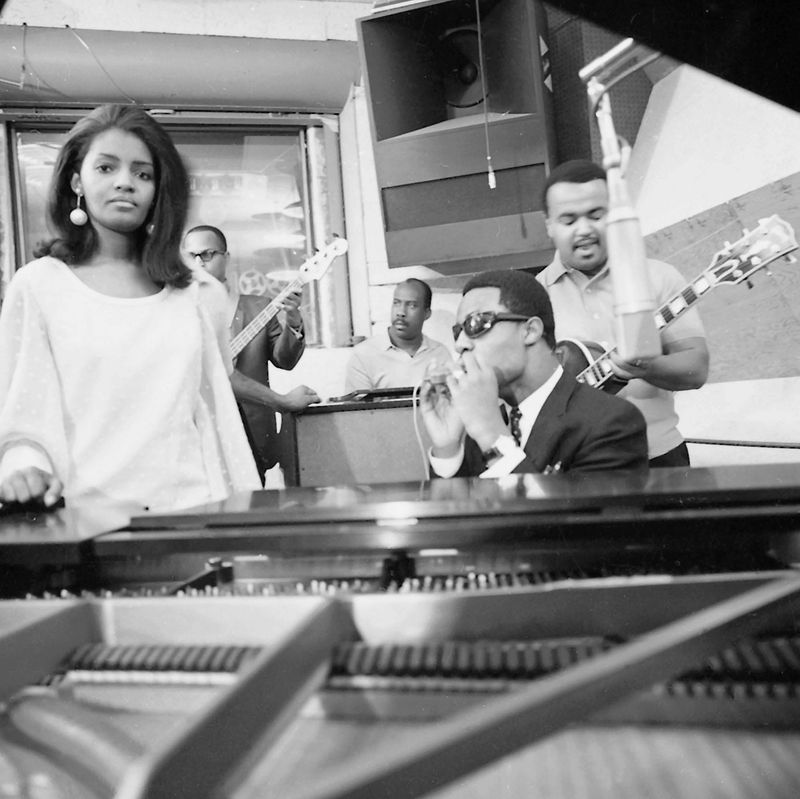
Christian argues that Moy not only penned some hits that omitted her name but also played other unheralded roles at Motown — like singlehandedly lobbying to save Stevie Wonder when the teen artist was set to be sacked by the company in 1965.
While plumbing those questions, the author set out to solve another mystery: Why is Moy touted by some at Motown as the company’s first female record producer when she never got a production royalty?
Christian spoke with the Detroit Free Press about her new book, which will be available Tuesday (Feb. 10).
(Interview edited for length and clarity.)
QUESTION: What initially drew you to Sylvia as a subject?
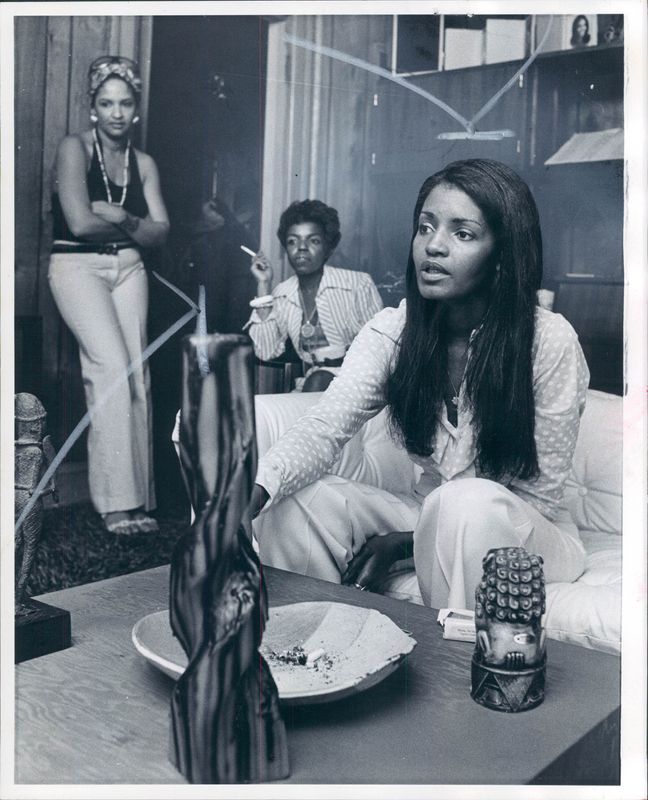
ANSWER: It happened during COVID in 2021. I was on social media, glued to online reading like everyone else. I saw a picture of her and it really stood out. It was striking. Everyone was talking about how beautiful she was while looking like something was on her mind.
And so I started to read the comments and the information about her having saved Stevie from being dropped by the label. I had never heard that story before, and I was really perplexed by it. Everyone kept saying, “Why don’t we know about her?” There were debates about if it was true or not.
Having worked at Ebony and Jet magazine, I started researching. I (figured) if anyone had her story, it would have been Ebony and Jet. But her name never came up. And so I was really perplexed: Why don’t we know who this woman is?
Q: She was basically brand new to you at this stage.
A: Correct. Like so many people during the heyday of 45s and albums, I remember seeing the last name “Moy” as a kid, but I didn’t know that women could do what she did. So when I would see “Wonder, Cosby and Moy,” I thought Moy was a man.
Q: So then you dive in, discover more about her, and realize there’s enough material here for a book.
A: There were two things that really were contingent upon me moving forward.
I had to find out if there was truth to Stevie almost being released (from Motown). If you’ve ever tried to get in touch with Stevie, he’s not the easiest person to contact. So I knew that if I wasn’t able to speak to him, this had better be airtight and solid.
I had some folks from Motown saying, “No, that’s not true,” and then others saying it was. But I did enough research where I heard (Wonder) talk about that moment. …
Another part that was a little sketchy was her being called the first female producer. That was difficult because her name wasn’t on any song as a producer. She wasn’t documented. So how is she getting credit as the first female producer? That took some digging. It took some real work. But I found it.
I not only established it, I established how it happened. And I also found a recording from a scholar who interviewed (Moy). In her own words, out of her mouth, I heard her talk about the songs she produced, what she did in the first song, and how it all happened. It was “Uptight.”
She put in the work, and then when it was time for the producer credit, only Hank Cosby and Mickey Stevenson got it. (Motown) did not put her name on it. In the recording, I heard her say — and she didn’t let them know this — when she closed the door and left the room, she cried because they did that to her and it was hurtful.
This woman made history as the first female producer but did not get the credit.
Q: It’s long been conventional wisdom that Motown was an open space for women — that because Berry Gordy had all these powerful women in his own family, he was motivated to simply enlist the best talent, male or female. But your book pushes back on that a bit, saying that Sylvia’s path wasn’t so easy.
A: You’re correct. Here’s the difference. All the other women had positions that were not necessarily defined as a role for men. Sylvia stepped out and did something that only the men were doing. And this wasn’t just a Motown problem. This was a music industry problem that continues to this day. Lady Gaga just talked about it (at the 2026 Grammys) when she accepted her award: “Female producers, do what you need to do to hang in there.”
Q: How did Sylvia ultimately reconcile all this over time?
A: That’s a really good question. One thing I found was that while she was not happy about it, there were a lot of things she just didn’t talk about because it disturbed her so much. She didn’t accept it, but she knew that after a while, there are some things you just can’t do anything about. … While people would say, “Oh, she was the first to do this-and-that,” nobody ever knew (exactly) what it was because her name wasn’t on it.
Q: Your book also raises the possibility she had a hand in two other massive hits but was uncredited.
A: Yes, “Ain’t Too Proud to Beg” (the Temptations) and “Signed, Sealed, Delivered” (Stevie Wonder). … With musicians and songwriters, there’s a fingerprint. There’s something about their music or their style or their way of saying something that is uniquely theirs.
Q: Setting aside any credit she didn’t get — even if we stick with the stuff where her name is on the records — it’s a pretty impressive legacy. Do you look at Sylvia Moy as a trailblazer, someone who did help nudge the industry along?
A: Oh yeah. Pioneers always pay the price. She was a trailblazer. She opened doors and then had the doors shut in her face, where her history was hidden. That’s pretty insulting. The world is hard and difficult for people of color as it is. But when you have your own do that to you, that’s even more difficult.
So she was not only dealing with racism in the world, but intra-racial issues with her own people denying her credit. That’s a real bitter pill to swallow.
Q: Sylvia was one of the Motown folks who ultimately decided to stay in Detroit after the company moved to the West Coast. What does that tell you about her?
A: Family was important to her. And because she was such a low-key person, a place like L.A. wouldn’t have worked because it’s all about seeing and being seen. And she was not that kind of person.
She gave it a try — six months — then came back.
Q: And then she continued to have this quietly impressive career. For instance, she opened (Masterpiece Sound Studios) in Detroit, which continues to this day.
A: What’s interesting is for those few people who say she was not a producer: What woman do you know opens her own production studio and doesn’t know how to produce?
If that doesn’t show you this woman knew what she was doing, then what does? This was in the ’70s. That’s not something you play with if you don’t know what you’re doing.
She didn’t pull a seat up at the table. She built the table. “You don’t want to give me production credit? I’ll do better than that. I’ll build my own studio and produce my own music and allow others to produce.”
But she wasn’t braggadocious. She flew under the radar. She was very quiet. And she let her work, her music, her actions speak for her. And to me that’s the greatest power. …
Sylvia Moy did not die broke. From what she did get credit for, she lived quite well. … And for that, I was very happy and proud with all that she accomplished. So she’s speaking now. She’s having her say.
Contact Detroit Free Press music writer Brian McCollum: 313-223-4450 or bmccollum@freepress.com.
This article originally appeared on Detroit Free Press: New book ponders the Motown mystery surrounding songwriter Sylvia Moy
Reporting by Brian McCollum, Detroit Free Press / Detroit Free Press
USA TODAY Network via Reuters Connect