If you love spending time in Michigan’s great outdoors during summer, you may fall prey to insect bites.
The itchy welts can be a real nuisance, especially if you don’t know what insect bit you. While common bugs like mosquitoes, chiggers and no-see-ums may display similar bite symptoms, there are ways to tell them apart.

Here’s what to know.
What are mosquitoes?
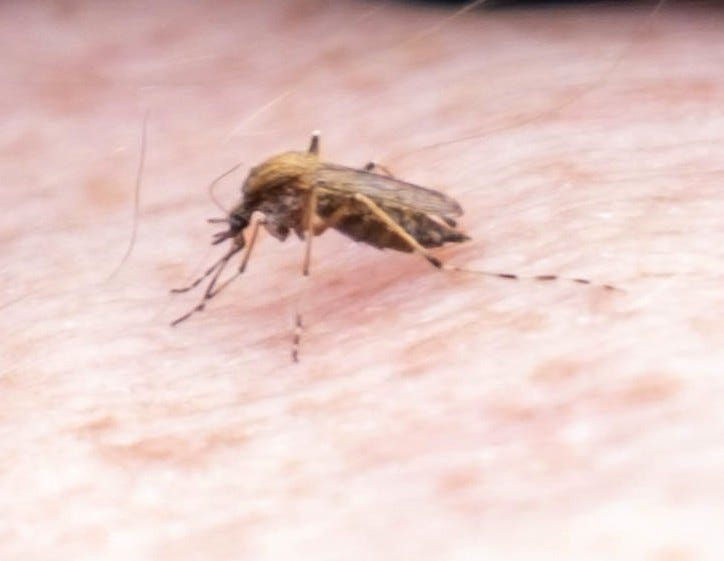
Mosquitoes are flying, six-legged insects that include over 3,700 types globally, per the U.S. Centers for Disease Control and Prevention. Female mosquitoes bite humans and animals for blood to feed their eggs.
What are chiggers?
Chiggers are the tiny, parasitic larval stage of prostigmatid mites, also known as harvest mites, according to ScienceDirect, Baptist Health and the Cleveland Clinic.
Like bed bugs, chiggers feed on human flesh and their bites leave behind an itchy and uncomfortable rash. But they don’t burrow into the skin like ticks, so they’re easy to remove.
Can you spot chiggers?
When they’re in their larval stage, you can’t usually see them. When they’re most visible to the human eye as adults, they are typically red.
According to the Cleveland Clinic, identifying factors of a chigger include:
You aren’t likely to see the nearly invisible pest when it’s biting you or hitching a ride on your clothes.
Where are you at risk for chigger bites?
Chiggers will attach to your clothing and move onto your skin. You can get a chigger bite if you walk through an area where chiggers live, including:
What do chigger bites look like?
Rashes from chigger bites are most common around the ankles, behind the knees, at waist level near the beltline and in the armpits, according to Baptist Health. The physical look of chigger bites can vary from person to person, but almost always appear as small, red spots. They can appear raised or flat and look like small acne bumps or blisters.
“Chigger bites aren’t serious, but they can become infected, especially if you scratch them,” Baptist Health says. “Crusting or pus around a bite may indicate the presence of the contagious bacterial skin infection impetigo. Bites can also be the site where another bacterial infection called cellulitis develops.”
What are chigger bite symptoms?
According to the Cleveland Clinic, symptoms of chigger bites include:
What are no-see-ums?
No-see-ums, also known as biting midges or sand flies, are small flies that bite humans and animals, sucking blood, per Purdue University Extension. Similar to mosquitoes in life cycles and habits, females suck blood to feed their eggs, pest control company Terminix says.
The insects typically lay eggs in moist places, such as muddy salt marsh areas.
Why are they called ‘no-see-ums’?
As the name indicates, these insects are nearly impossible to see with your naked eye. But if you could see them, you’d see they resemble small, gray, hairy mosquitoes.
What are no-see-um bite symptoms?
According to Mosquitonix, here are some of the defining characteristics of no-see-um bites:
What do no-see-um bites look like?
A bite from a no-see-um is often slightly more painful than a mosquito bite, but the two bites look incredibly similar. A telltale sign that your bites are no-see-ums and not mosquitoes is if they’re clustered together in groups.
“No-see-um bites often resemble itchy bumps on skin like mosquito bites but aren’t,” pest control company Mosquitonix says. “These tiny pests cut into the skin rather than piercing it, leading to more intense irritation and longer-lasting welts.”
How can you tell if a chigger or no-see-um bit you?
With nearly invisible insects like chiggers and no-see-ums, the best way to tell what you’ve been bitten by is by looking at the actual bites themselves.
“If you have a swath of itchy skin lumps that looks like many mosquito bites or welts, it’s a good bet you’re dealing with chiggers,” Everyday Health says.
Chigger and no-see-um bites are smaller, usually more itchy or painful and are often grouped together in specific places on the body, as mentioned above.
How can you tell if it’s a mosquito bite?
Mosquito bites are less likely to be grouped like chigger and no-see-um bites. They are characterized by very itchy, raised, red welts, usually ranging in size from a pinhead to a quarter (around one to six millimeters in diameter).
If you have an allergic reaction to mosquito bites, they can appear even larger than that, up to several centimeters in diameter, and even have bruising around the bite site.
How can you prevent these bug bites?
Prevention for these bites is the same: Use bug repellent containing DEET or picaridin, to effectively keep these biting bugs off of you.
What should you do if you’ve been bitten?
The treatment for these three bug bites is the same. The goal is to soothe the itching and bring down the swelling. This is because scratching, although it may provide temporary relief, can cause more problems and open the door to infection in the long run.
There are several ways to alleviate itchiness from bug bites and find relief.
You can put an ice pack or cold compress on the bug bites for 10 to 15 minutes to reduce swelling and slightly numb the area. It is also recommended to use either topical or oral antihistamines to reduce itching, such as hydrocortisone cream, calamine lotion, or an antihistamine gel (which reduces itching), as well as Benadryl or Claritin.
Florida Today contributed.
Contact Jenna Prestininzi: jprestininzi@freepress.com.
This article originally appeared on Detroit Free Press: Mosquitoes, chiggers and no-see-ums may bite you this summer. How to tell the difference
Reporting by Jenna Prestininzi and Lianna Norman, Detroit Free Press / Detroit Free Press
USA TODAY Network via Reuters Connect