How much would you pay to see a certain event live? If you are a New York Knicks fan hoping to watch them in the NBA Finals at Madison Square Garden, you apparently have two price levels:
Even the nosebleed seats at the Garden are selling for thousands of dollars. The lower-level good seats are reportedly asking in the $40,000-$100,000 range. Some premium seats have been listed at above $200,000.

Now, the sportswriter in me feels compelled to point out the scores of some recent NBA playoff games: 140-89, 133-95, 144-114, 118-91. These are what we politely call “blowouts,” games so lopsided, by the fourth quarter, the ballboys might be out there. If you’d paid $200,000 to watch any of these disasters, you’d probably want to rip your own head off.
And remember, that $200,000 ticket is for a single game. Back in September, you could have purchased a fine Garden seat for the Knicks’ entire regular season for half of that.
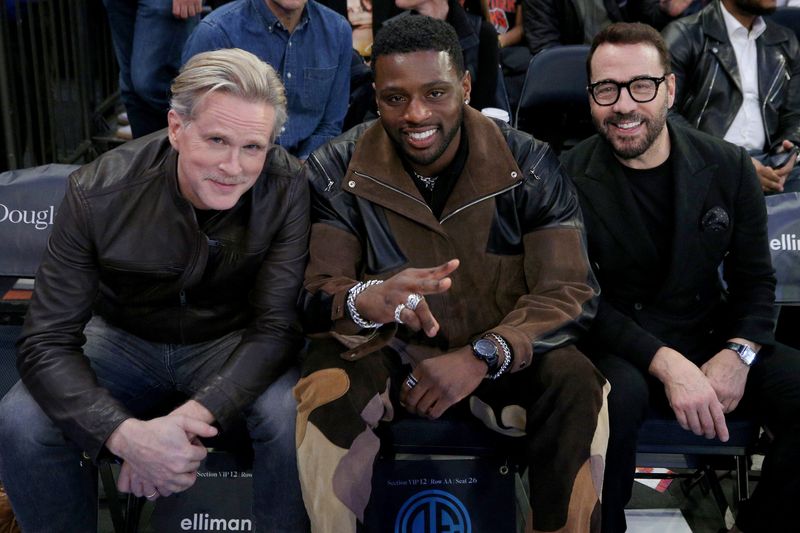
But nobody was watching then. Now the world is. And when the world is watching, certain people — often movie stars and business tycoons — want to make sure they are seen. And I guess if you choose to blow your money that way, someone will always be happy to take it.
But it got me thinking about tickets and how they’re priced these days. Which is about as fair as a ring toss at a carnival.
A pricey evolution
Once upon a time, tickets sold for a single price, and when they were gone, they were gone. This, however, likely ended during the Roman Empire, when a big draw was watching people being fed to lions.
Shortly after that, “tiered” ticketing began. Even Shakespeare’s plays had lousy seats, good seats, great seats and the King of England. (Although, usually, Shakespeare had to bring his troupe to the monarchy, thus inventing the phrase “playing the palace.”)
Then scalping became a thing. Research shows that one of the earliest examples of ticket gouging came during Charles Dickens’ U.S. “reading tour” of 1867, when scalpers scooped up $5 tickets and resold them for 10 times that amount. I’m not making this up. For an author! It makes me want to cry!
Then, during the early days of rock and roll, promoters wanted to draw crowds and sell records, so they kept ticket prices low. Which is why your grandfather keeps insisting, “I once saw the Rolling Stones for six bucks!” And why he’s not going to see them for $400 now.
But soon Ticketmaster and other similar outfits arose. And today, thanks to certain laws and mergers and the evil empire known as Live Nation, we live in a world where an artist announces a concert tour, and tickets go on sale at 10 a.m., and by 10 a.m.-and-one-second, all the tickets are gone, and you can only buy “resale” tickets for many multiples over the face value.
Which is how tickets to Taylor Swift end up emptying families’ bank accounts, and tickets to upcoming World Cup soccer matches are more than some countries spend on their actual teams. And we haven’t even mentioned the “ticket insurance” fees, the charge to pick them up at a box office, or the parking.
Never before have “live” events killed more wallets.
No ticket is spared
Couple this with the frenzy that surrounds certain events, which only whips the ticket prices higher. Remember when everyone just HAD to go see “The Producers” on Broadway (even though it was based on a then-33-year-old movie)?
Or when certain folks bragged about spending thousands to see “Hamilton” with Lin-Manuel Miranda (even though you can now watch the same show anytime on Disney+)?
Or when folks paid small fortunes to see Bruce Springsteen do a one-man performance on Broadway (even though he tells the same stories in concert, in books, in documentaries, etc.).
Many of these crazy ticket phenomena take place in Manhattan, which is French for “Just take my money now!” But not all of them.
I recently tried to buy last-minute tickets for the World Cup game between Haiti and Brazil later this month in Philadelphia. After a series of mind-numbing online exercises, I was finally granted a five-minute window to purchase. Except when I clicked on seats that were marked $700 per, they disappeared, and when I came back to the same page, the only tickets left were for $2,600. (No thanks. My luck, it would end in a 0-0 draw.)
I also tried to buy tickets for our 4-year-old to see Laurie Berkner, who sings wonderful children’s songs with her guitar. Three different ticket brokers had completely different prices for similar seats, all at the modest Royal Oak Music Theatre. Some of these seats were over $125. Per ticket! This is to hear songs like “I Feel Crazy So I jump In the Soup.”
And you thought gas prices were high.
The price we’d pay
All of which makes ticket buying today not a transaction, but a values test. What would you pay that kind of money for?
I can safely say I have never paid anywhere near $1,000 a ticket for any event, of any kind, and I can only think of one thing that would tempt me to go that high, and that would be if all four Beatles reunited (mostly because, at this point, I’d want to ask George and John how they did it).
But that’s just me. To folks like Timothée Chalamet, Ben Stiller, Spike Lee and the other proud courtsiders at Madison Square Garden, something is worth them shelling out the price of a comfortable home to yell at Victor Wembanyama.
I just don’t know what.
“Ah, well,” these multimillionaires will say, “that’s just how it is.” Maybe. Then again, remember six years ago, when, because of COVID-19, no one was allowed to watch the NBA Finals in person?
Instead, the league used giant screens that wrapped around the arena and broadcast images of fans, sitting at home, cheering on their teams.
They didn’t charge a dime.
And, boy, was the ride home easy.
Contact Mitch Albom: malbom@freepress.com. Check out the latest updates on his charities, books and events at MitchAlbom.com. Follow @mitchalbom on x.com.
This article originally appeared on Detroit Free Press: Mitch Albom: The insanity of ticket prices is matched only by our own
Reporting by Mitch Albom, Detroit Free Press / Detroit Free Press
USA TODAY Network via Reuters Connect
By Mitch Albom, Detroit Free Press | USA TODAY Network