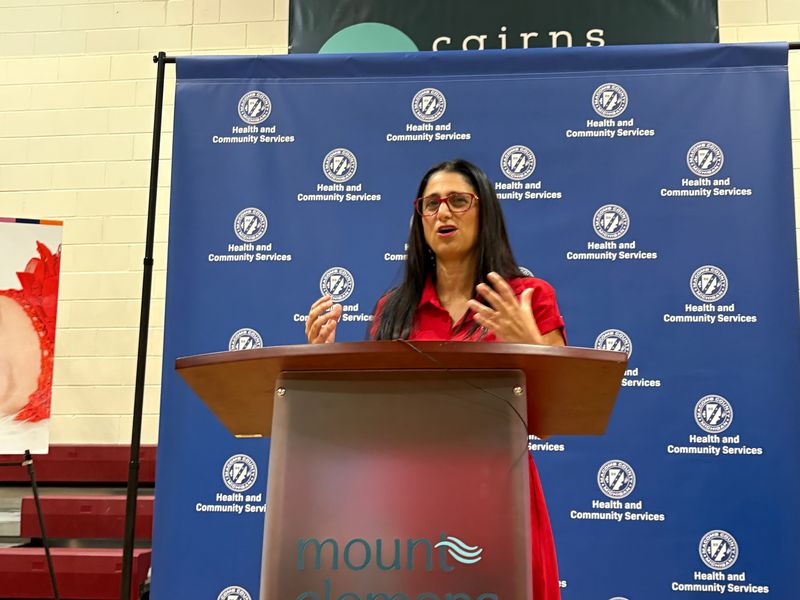
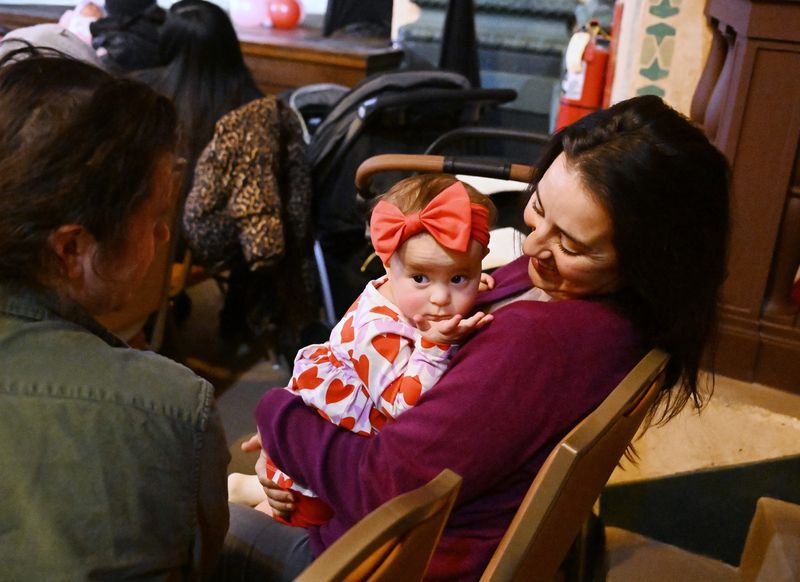
At the Mackinac Policy Conference, Michigan leaders are gathering to discuss economic growth, workforce development and the future of our state. This year, that conversation also includes recognition that investing in healthy babies is investing in Michigan’s future.
The state has already begun to make that investment. Last year, Gov. Gretchen Whitmer signed a bipartisan budget that included a $250 million investment in Rx Kids, a first-in-the-nation maternal and infant health program that provides direct support to pregnant moms and babies.

This is one of the smartest investments Michigan has made in decades.
As a pediatrician, I’ve spent my career caring for families and witnessing firsthand how financial stress during pregnancy and infancy harms health. I’ve also seen how even modest amounts of economic support can stabilize families at the moments they need it most. There is no more critical time than childbirth, when families are stretched trying to pay rent, buy food and diapers, keep the lights on or afford time at home with a newborn.
Rx Kids was built around a simple idea: if we want healthier babies and stronger communities, we must invest early. The program provides pregnant moms with $1,500 during pregnancy and $500 monthly during infancy. Launched in Flint in 2024, Rx Kids has now expanded to more than 40 communities across Michigan, from Detroit to the entire Upper Peninsula, because the results are hard to ignore ― families are more stable and moms and babies are healthier.
This week, new peer-reviewed findings published in The Lancet Public Health provide some of the strongest evidence yet that reducing financial stress during pregnancy improves birth outcomes at a population level — including lower rates of preterm birth and costly neonatal intensive care admissions. This adds to recently published research in JAMA Pediatrics showing a 32% reduction in child welfare investigations among infants.
These findings are a big deal. They show that when we address the social drivers of health early and at scale, we can improve outcomes not only for individual families, but for entire communities.
The returns extend far beyond health. Healthy babies help build healthy economies.
Rx Kids is not only reducing downstream medical and social costs, it is also strengthening local economies. The costs of infancy add up fast, and families spend this support quickly and locally at grocery stores, childcare centers and neighborhood businesses. An independent analysis by the W.E. Upjohn Institute for Employment Research found that this spending circulates and multiplies through communities, creating hundreds of jobs and generating broader economic activity.
That matters deeply in Michigan, particularly in communities working to recover from decades of industrial decline and disinvestment. Too often, economic development conversations focus only on large corporations or megaprojects. But families welcoming newborns are economic drivers too.
Rx Kids is also an example of something increasingly rare: bipartisanship. The program appeals to values shared across the political spectrum — supporting families, reducing bureaucracy, empowering parents, strengthening communities and improving efficiency. Its community-wide design cuts red tape and stigma while achieving near-universal participation among eligible families.
Importantly, Rx Kids is not government acting alone. Michigan State University leads the program alongside GiveDirectly, a nonprofit with secure payment infrastructure and strong anti-fraud systems that help ensure support reaches families efficiently and safely. Philanthropy, local governments, businesses and community organizations also play critical roles to help sustain and expand the program. It is a model of government working smarter through strong public-private partnerships.
At a time when the country feels deeply polarized, healthy babies remain a powerful point of common ground. Every state says it values families. Michigan is proving what it looks like to truly invest in them. We are becoming the most baby-friendly state in the nation — and other states are looking to our model as a blueprint for healthier families and stronger economies.
Mona Hanna MD MPH, the founder and director of Rx Kids, is a pediatrician and associate dean of public health at Michigan State University College of Human Medicine in Flint.
This article originally appeared on The Detroit News: Michigan’s smartest economic investment? Babies. | Mona Hanna
Reporting by Mona Hanna / The Detroit News
USA TODAY Network via Reuters Connect