When you paid your taxes last month, perhaps you grumbled about the amount. Did you know your tax dollars are used to call for higher taxes?
Local governments use public funds to argue for tax hikes. School districts blanket communities with information about the benefits of millages and other tax measures. Taxpayer-funded bureaucracies hold public town halls and plaster social media with demands for more of your money. Superintendents warn about the dire consequences if the measure fails.

Strictly speaking, Michigan law prohibits using public funds or property for electioneering. Public bodies are free, however, to share factual information. School districts can explain how much money a bond proposal would raise and what projects it would fund. If they stop short of telling people to vote “yes,” they avoid violating the law.
The problem is that districts can (and do) drive a school bus through the factual information loophole. School districts are especially well positioned to promote the supposed benefits of tax measures.
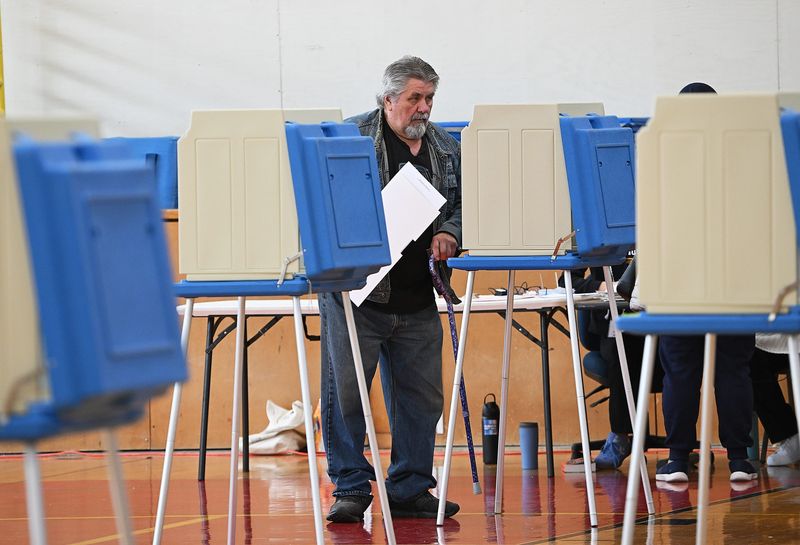
On May 5, voters across Michigan considered dozens of local tax proposals and approved 100 measures totaling $1.37 billion, according to MIRS. And that’s just one off-cycle election. Taxpayers voted on $3.7 billion in local spending last November. More proposals will come in August.
Not only do districts engage in soft advocacy, but they also punish public officials who push back. When a Rochester school board member warned constituents about a stealth millage, the board censured her.
Interestingly, the facade of neutrality disappears the day after Election Day — especially when voters reject a tax increase.
On May 5, Comstock Public Schools voters vetoed a $23 million bond for the second time. The next day, Superintendent Jeff Thoenes posted a video lamenting roof leakage and antiquated construction in the district.
“Even though it wasn’t what we were hoping for, we do respect the will of the voters in this bond election,” Thoenes said. He later hinted that voters don’t understand how public schools work and announced plans for a third request.
Voters in Saginaw Township Community Schools declined back-to-back-to-back proposals.
“Tonight’s outcome was not what we had hoped for,” said Superintendent Jamie Kraatz.
The most dramatic response came from Vandercook Lake Public Schools, where voters rejected a $9 million bond.
“That failure is difficult to accept,” wrote Superintendent Melissa Bradfield. “I know many in our school community are feeling disappointed, frustrated, and discouraged.”
Bradfield described walking the school halls after Election Day. “I could feel the heaviness, worry, and uncertainty,” she said.
Taxpayers might grumble on April 15 when they pay taxes. But when voters say “No,” it’s government officials who do the grumbling.
Local school officials are free to express their personal opinions. These recent superintendent lamentations, however, were distributed through official school channels, betraying an official preference for the election outcome. School officials who opine in this manner invite scrutiny of their compliance with electioneering rules.
The Legislature should act on two fronts. First, it should require that tax increase votes only be held in November, when community turnout is high. Scheduling tax hikes in low-turnout elections means a small, motivated group of voters can approve taxes for everyone in the community.
Second, the Legislature should tighten rules on taxpayer-funded advocacy for tax hikes. Lawmakers tried in 2015 until a federal judge ruled against the law on free speech grounds. Other states have tackled this problem and can provide guidance to Michigan.
People are free to speak out for or against a tax hike. But that advocacy shouldn’t be bankrolled by taxpayers.
Michael J. Reitz is executive vice president of the Mackinac Center for Public Policy.
This article originally appeared on The Detroit News: Michigan taxpayers are funding the push for higher taxes | Reitz
Reporting by Michael Reitz / The Detroit News
USA TODAY Network via Reuters Connect