A Michigan man is the first patient in the state, outside of clinical trials, to receive a new gene therapy for hemophilia A at Henry Ford Health, a one-time intravenous infusion that could eliminate the need for regular, lifelong at-home infusions or injections to prevent bleeding.
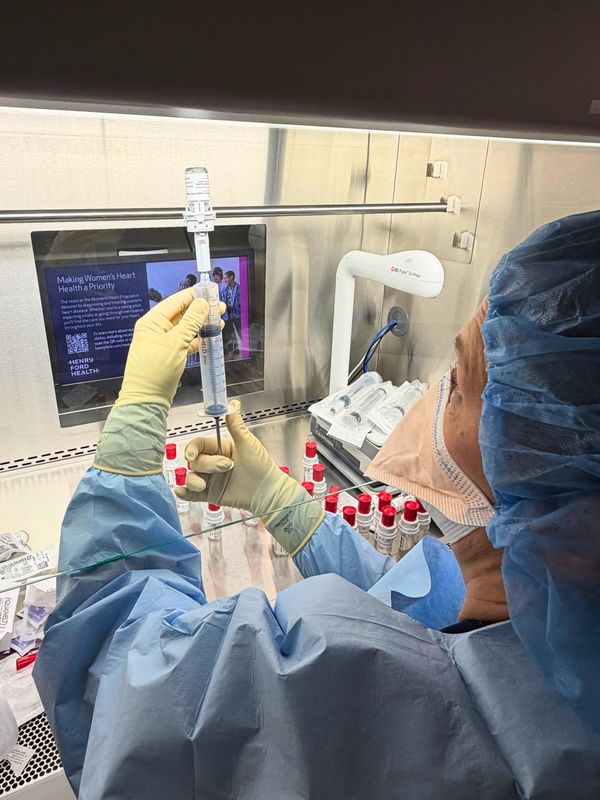
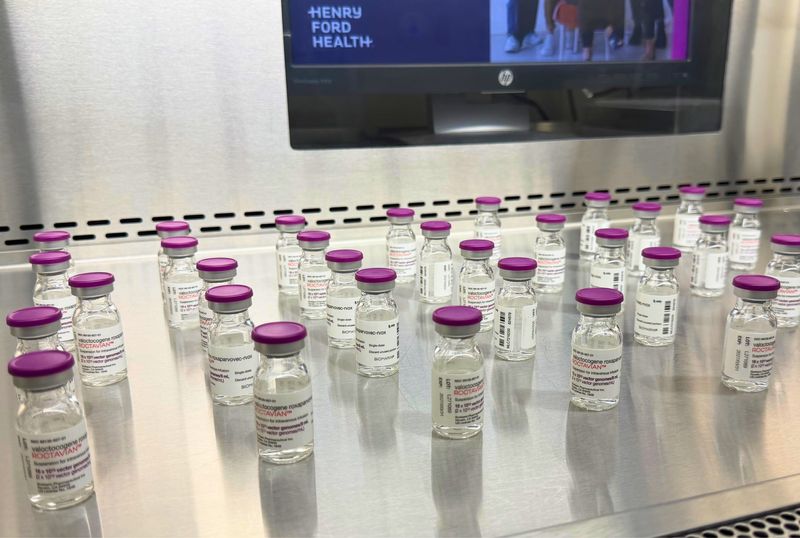
The patient, whom the health system says is in his early 30s and has a severe form of hemophilia A, received an infusion of valoctocogene roxaparvovec-rvox or Roctavian on Jan. 15 at the Infusion and Chemotherapy Treatment Center at Henry Ford Cancer–Detroit.

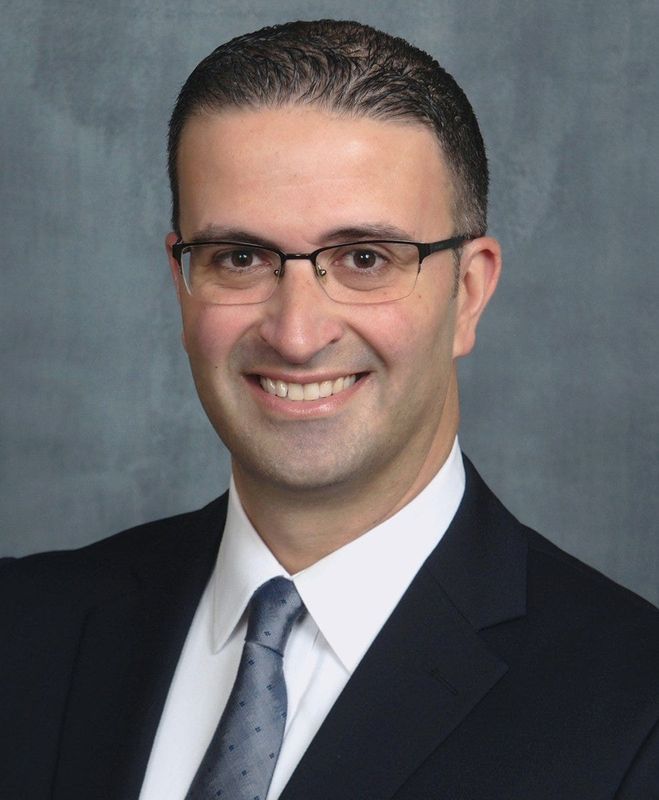
Dr. Philip Kuriakose, chief of hematology at Henry Ford Hospital and medical director of the Hemophilia and Thrombosis Treatment Center, told the Detroit Free Press on Monday, Feb. 16, that “right now, things are going exactly as we expect. Things are going well.
“What we hear, he is very happy. In his mind, he’s crossed a hurdle. It’s quite a big step in many ways,” Kuriakose said of his patient. “We anticipate, because things are going as planned, that he will be a success story.”
The health system says this first commercial use of Roctavian in Michigan also marks a milestone for its growing gene therapy program, bringing hope to people not only with hemophilia but other blood disorders, such as sickle cell, and more.
What is hemophilia?
Hemophilia usually is an inherited bleeding disorder in which the blood does not clot properly, leading to spontaneous bleeding and bleeding after injuries or surgery, according to the U.S. Centers for Disease Control and Prevention.
It affects people from all racial and ethnic groups, with inherited hemophilia occurring in about 1 of every 5,000 male births, according to the CDC. It said about 33,000 males in the United States were living with hemophilia, based on a study that used data collected on patients receiving care in federally funded hemophilia treatment centers from 2012 to 2018.
Blood contains proteins called clotting factors that can help stop bleeding. Hemophilia is caused by a genetic mutation that prevents clotting proteins from working properly. In some cases, these proteins may be missing altogether, according to Henry Ford Health.
Those with hemophilia A have low levels of factor VIII, while those with hemophilia B have low levels of factor IX, the CDC said. It said hemophilia A is about three to four times as common as hemophilia B, and about half of those affected have a severe form of the blood disorder.
The severity is determined by the amount of factor in the blood — the lower the amount, the more likely bleeding will occur, leading to serious health problems, the CDC said. It said hemophilia can result in bleeding within joints, leading to chronic joint disease and pain; in the head and sometimes the brain, causing long-term problems such as seizures and paralysis, and death if bleeding cannot be stopped.
Hemophilia treatment
Many people with hemophilia manage their condition with at-home injections or infusions of replacement clotting factor, possibly several times a week, called prophylaxis. For someone with severe hemophilia, clotting factor therapies can cost about $300,000 a year, with medical expenses twice that, according to the National Bleeding Disorders Foundation.
While this new gene therapy can cost millions of dollars per dose, it can provide hope, particularly for those with severe hemophilia.
What is Roctavian and how does it work?
Roctavian is the first gene therapy for adults with severe hemophilia A approved by the U.S. Food and Drug Administration. It is for those who do not have antibodies to the virus, AAV5, which is determined by a blood test, according to its website. It said it uses a modified virus, called a vector, to deliver a working copy of the factor VIII gene to liver cells to enable the body to produce clotting factor on its own.
Kuriakose said the “gene goes into the patient’s liver and it … becomes a part of the patient’s liver … and starts living there and making more protein. This protein that is made, the factor VIII in this instance, is made at a steady level. So there are none of these ups and downs. No peaks and valleys.”
He said the hope is that the patient will get “to a constant, steady state,” turning a patient with severe hemophilia needing frequent infusions into one with mild hemophilia, only needing infusions at the time of surgery or after an injury.
Kuriakose said the hope is that after six months or so after gene therapy — as levels stabilize and side effects are minimal — the person “can get back into much of life, like most of us do, without thinking twice. If they’re going to skate somewhere; if they’re going to go and take a swim or dive into the water, if they’re going to play roughhouse with their kids, to some extent. You have that increased flexibility. And that’s what we hope to do for our patients, get them back to life in all its fullness as much as possible.”
The recent infusion for the Michigan patient took over two hours to complete, but the time can vary among patients. Kuriakose said the patient follows up with blood draws to make sure everything is going well and that there are no side effects, particularly in the liver.
Gene therapy for hemophilia
Kuriakose said the medical community is still waiting to see how long this gene therapy will work, with recent data indicating that five to seven years out patients still have adequate levels of factor and minimal or no ongoing side effects.
Data released in June by BioMarin Pharmaceutical Inc., which manufactures Roctavian, indicated that 81% of participants in a hemophilia gene therapy study remained off prophylaxis five years after treatment.
Kuriakose said there is promise for gene therapy for hemophilia A and B, where just one gene is affected, adding it’s almost like “a switching out what is not working with what will.” He said that over a lifetime, it might be more cost-effective to use gene therapy, as people have hemophilia for life.
“You’re not curing it with gene therapy, you’re controlling it in that patient,” he said, adding, “and allow(ing) for a lifetime of, hopefully, healthy living without toxicity.”
Kuriakose said the health system is approved for gene therapy for hemophilia B and is looking to see whether there are newer technologies for its growing gene therapy program.
Rox Gatia, vice president of pharmacy shared services at Henry Ford Health and one of the architects of the program, said there are patients in the next 12 to 18 months slated for sickle cell treatment, with its own gene therapy.
The health system said it’s difficult to put a firm number on how many patients it anticipates treating in the gene therapy program. Several patients currently are being evaluated for these therapies, and the health system said it is seeing growing interest from patients in its care and from others across the region.
Gatia said the health system developed an infrastructure to support delivery of these treatments, including the addition of a dedicated cell and gene therapy pharmacy specialist. He said the pharmacist keeps their pulse on the pharmaceutical pipeline for all cell and gene therapies; supports the direct patient care areas where gene therapies are used, and follows the patient from their initial candidacy to receiving therapy and beyond.
Gatia said the program not only provides gene therapy for hematology, but also oncology, rare genetic diseases that are not hematology- or oncology-related, and other emerging therapies.
He said the health system advanced its infrastructure for gene therapy around four years ago, building in work with laboratory, pathology, oncology, hematology, immunology and other groups, including administration and clinical resources, to ensure patients can access the therapies.
Does insurance cover gene therapy for hemophilia?
Gatia said most insurance companies have very strict guidelines on gene therapies, especially for cellular and gene editing, and who can access them, so not everyone can get them.
For example, he said, “not everyone with hemophilia is going to be able to get this drug. It really is dependent on their insurance company.” He said the hemophilia A patient recently treated was covered.
Gatia said each gene therapy dose could range from a couple hundred thousand dollars to a $3 million to $4 million drug for sickle cell or muscular dystrophy.
How much does Roctavian cost?
Each vial of Roctavian costs $94,745, according to the company’s pricing sheet. The total dose depends on a patient’s weight. An average patient who weighs about 175 pounds would need 30 vials, which would bring the total cost to more than $2.8 million, according to information provided by the health system’s media relations team.
Gatia said the health system’s investigational drug service supports clinical trials from Phase 1 to Phase 4, with more than 300 clinical trials that involve medications in general — more than 50% of them involved in oncology, which includes cellular and gene therapies.
Overall, he said, this goes beyond a single drug infusion. It’s about building a responsible and safe system for the future of modern medicine.
“We’re talking about hemophilia today, but there’s potential to cure chronic disease, I mean, let alone a rare disease or a genetic disease or a cancer,” Gatia said. “There are opportunities for us to potentially cure chronic diseases that otherwise would have been just managed with multi, sort of regime drug therapies. … It’s humbling. It’s very life-changing to think about what we can do.”
Contact Christina Hall: chall@freepress.com. Follow her on X, formerly Twitter: @challreporter.
Support local journalism. Subscribe to the Free Press.
Submit a letter to the editor at freep.com/letters.
This article originally appeared on Detroit Free Press: Michigan man gets new Roctavian gene therapy for hemophilia A
Reporting by Christina Hall, Detroit Free Press / Detroit Free Press
USA TODAY Network via Reuters Connect