

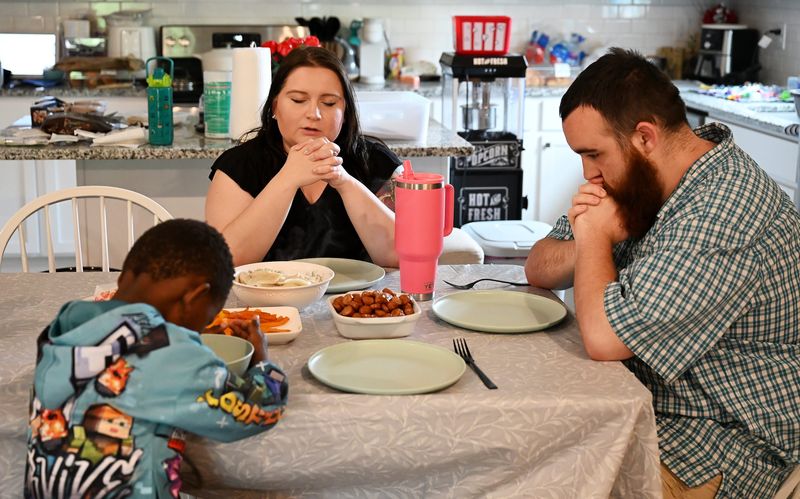
Potterville — A 15-year-old Ingham County boy with severe mental health issues that left him unable to safely live at home could have received residential treatment in Lansing, where his adoptive parents would have been able to visit him multiple times a week.
Instead, he started treatment in Ohio, five hours away from his family. When his parents’ commercial insurance no longer covered the treatment, rather than paying $616 a day out of pocket, they opted to move him to a facility in the Upper Peninsula, which was more affordable but is an eight-hour drive from their Potterville home.

Multiple medical professionals suggested inpatient treatment for the teen, but the Community Mental Health Authority of Clinton, Eaton and Ingham Counties — which provides publicly funded mental health, behavioral health and developmental disability services — refused to approve residential treatment for him. It also declined to allow him to use his Medicaid coverage, which he has as a former foster child. The agency argued that it didn’t believe it was necessary.
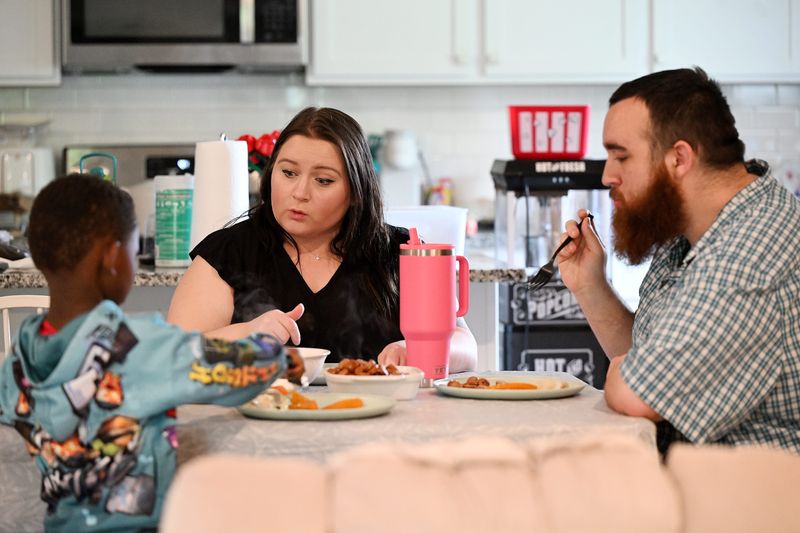
“Their voice was louder in the room than four other qualified professionals” who said the 15-year-old needed residential care, said Aly Markwell, his adoptive mom. “This is a reality a lot of us live in. … CMH’s voice is so loud we can’t get the care we need. When children are not getting the care they need, Michigan has failed.”
Markwell is not alone. Seven foster and adoptive families she knows all have been denied care or received services that didn’t match what their children needed from CMH, she said. Community mental health agencies failing to get children the help they need is a common problem, said Marianne Huff, the president and CEO of the Mental Health Association in Michigan.
“People not being able to get what they want or what they need, especially if they have higher-level needs, is a huge problem,” Huff said. “This is a huge policy problem the state has been working on.”
For the Markwell family, that means they have to pay out of pocket for his treatment near Iron Mountain, a western U.P. city on the Wisconsin border. A church Aly Markwell previously worked at is paying for his treatment, which Markwell said is a blessing, as her family is “drowning” in expenses related to her son’s care.
Dave Lowe, the associate director of Community Mental Health Association of Michigan, said in a statement that he understands that it can be frustrating when multiple providers recommend a treatment and CMH reaches a different conclusion.
But CMH “has a specific responsibility under Medicaid to determine whether a service meets strict criteria for medical necessity, compliance with federal and state rules, and appropriate level of care,” Lowe wrote.
“That said, when there is strong consensus among treating professionals, CMH does not simply ignore that input. Those recommendations are taken seriously and are often part of a deeper review process,” he wrote.
Lowe said while Medicaid can be used for residential care, it is only available for “structured clinically necessary services, such as psychiatric residential treatment facilities (PRTFs), some specialized licensed group homes, and short-term crisis residential programs designed to stabilize individuals.” It will not pay for long-term room and board, which is a significant part of many residential programs, he said.
“If a setting is not clearly justified as essential clinical treatment, rather than supportive or custodial care, it is unlikely to be approved,” Lowe wrote.
Rep. Luke Meerman, R-Coopersville, has heard many stories of parents or caregivers unable to get mental health care for their children. He said the child welfare committee he heads has a report coming out soon calling for an audit of both care providers and CMH, as both sides are pointing fingers at each other about where the problem lies.
Meerman said knowing where the state’s money is going would be a good start, as state law does not allow legislators to audit CMH directly, and CMH has fought attempts by the Michigan Department of Health and Human Services to obtain more information.
“To me, this is a blind audit because fingers are pointing all ways,” Meerman said. “I think we’ll find problems up and down the chain. I don’t think it’s going to point at one particular stop as the only issue. … The system really needs to have some light shone on it so we can understand how (to fix it).”
What are Community Mental Health agencies?
The public behavioral health system in Michigan is overseen by the Michigan Department of Health and Human Services and operated at the local level by 46 Community Mental Health agencies, which serve about 300,000 to 350,000 people each year. Each localized agency functions as a single point of entry to assess and provide treatment, regardless of a person’s ability to pay or insurance status, for people with disabilities, mental health issues and addiction problems.
CMH agencies already operate under multiple layers of oversight and undergo regular audits, which must be submitted to the Michigan Department of Health and Human Services, Lowe said.
Meerman said he is haunted by the care challenges he has heard from many families, the Markwells in particular.
“I think for our families that are in crisis, I don’t know how we turn our back on them and say we don’t know how to get you more help,” Meerman said. “What concerns me the most is I feel like things are getting worse. And that to me says we absolutely need to force some change for the sake of these families. … We certainly cannot stay on the path we’re on where I see things spiraling out of control.”
Michigan struggling to fix mental health system
The complaints are happening even after Disability Rights Michigan sued the state in 2018 because of its “systemic, statewide failure” to provide intensive home and community-based services to children with mental health needs. The state ultimately settled in 2021 and has put about $91 million per year into adopting reforms to provide appropriate community-based services and supports for kids with mental health needs in foster care.
“The system is characterized by service delivery failures, the rejection of person-centered planning principles, due process violations, toxic relationships between CMHSPs and recipients and providers, and lack of oversight and accountability,” Disability Rights Michigan wrote in an amicus brief in December.
The state holds funding contracts with the CMH agencies but does not contract directly with them to provide Medicaid services. Instead, it contracts with Prepaid Inpatient Health Plans, or PIHPs, which then contract with CMH agencies (which control the PIHPs). This structure has been “disastrous” for people receiving services, Disability Rights Michigan said.
The state tried to fix the situation last year by seeking bids from both private and public entities to take over the handling of the state’s Prepaid Inpatient Health Plans and mental health services. A Michigan Court of Claims judge, however, found in January that the language in the bid proposal violated Michigan’s mental health code and needed to be changed.
So far, the state has not reissued a request for proposals. When asked for an update on the state’s plans, Michigan Department of Health and Human Services spokesperson Lynn Sutfin said: “the Michigan Department of Health and Human Services continues to engage community partners as it evaluates paths forward that strengthen Michigan’s behavioral health system and better serve individuals and families.”
The Mental Health Association’s Huff, who said she has worked in or experienced every aspect of the mental health system aside from being a recipient of services herself, said part of the problem is that Community Mental Health agencies often aren’t willing or able to provide appropriate rates of reimbursement for the service providers. This makes it difficult to find people to do the work, she said.
“I feel like if families could get services for these kids sooner rather than later, they wouldn’t have to have (such extreme services) and wouldn’t have to be lifers in the public mental health system,” Huff said.
Her son, who is now 40, is a testament to that, she said. He had extreme behavioral issues when he was young, but after receiving treatment, he has not needed any public mental health services since 1994, she said.
“The system is designed to serve people with the most significant conditions … and yet (CMH) acts like it’s coming out of their own personal checkbook,” Huff said. “The issue is we have a tremendous amount of conflict of interest in the state. From where I’m sitting, it’s really about the lack of accountability and oversight.”
As of now, there is no remedy for families, she said.
“Having had a child with serious emotional disturbance, I’m convinced that until folks experience what it’s like to live with a child that’s really out of control, they really have no idea what that’s like,” Huff said. “I’ve seen families be told CPS (Children’s Protective Services) is going to be told because they’re not advocating hard enough for their kid to get mental health treatment. Like, are you serious?”
Family says they feel neglected by CMH
Markwell spoke to the House Oversight Committee May 12 about her troubles in getting help for her oldest child, who she said has been hospitalized in a psychiatric facility three times, has been to the emergency room at least five times and has had multiple long hospital stays because of his mental health.
While in inpatient treatment, the psychiatric hospital told Markwell she would have to pick him up or face a CPS investigation, even though she said it was still not safe for him to return home. At the hospital, he assaulted staff members and other kids, harmed himself and broke furniture, she said.
“If they couldn’t keep him safe in this facility, how is a family supposed to replicate a secure clinical setting?” Markwell said.
But she picked him up anyway. Within a week, his behavior escalated again, she said, and he assaulted both her and her husband. Following their safety plan, they called the police, who took him to Sparrow Hospital, then back to the psychiatric hospital from which he had just been released.
Their oldest son’s therapist, the psychiatric hospital, his psychiatrist and the adoption agency the Markwells worked with to adopt him all recommended the then-14-year-old be placed in a residential treatment facility. Markwell had tried pretty much every other service offered to him, she said, and nothing else helped.
But CMH refused to pay for the residential center because it didn’t agree it was necessary, leaving Markwell and her husband to pay for their son’s treatment through their own insurance and out of pocket.
Markwell started a GoFundMe to try to raise money for her son’s treatment and the cost of the bimonthly trips to see him. Every week, she had to fight with her insurance to keep him in the facility. Eventually, on June 9, their insurance refused to pay any more, resulting in a $616-per-day cost and ultimately their son’s move to a new facility, where they can see him only twice a month due to the cost of the trip.
“While we might have our own stress about it, he’s a child who deserves healing and deserves people who are willing to come alongside him and support him and love him, and he’s getting that through us,” Markwell said. “However, when we don’t have partnership from CMH, it makes it really hard to do that. … The issue ultimately comes down to neglect by CMH, because it wouldn’t give the care he needed.”
Elise Magen, the director of quality, customer service and recipient rights at Community Mental Health Authority of Clinton, Eaton, Ingham Counties, the agency that the Markwells work with, said services are guided by state and federal requirements, including by providing care in the least restrictive setting appropriate to the individual.
“We recognize that families may experience frustration when needs feel unmet, and we take those concerns seriously. CMH agencies continue to actively improve access, coordination, and communication, including expanding service availability and strengthening care coordination for children with complex needs,” Magen wrote in a statement to The Detroit News.
“CMH works to align services with these standards while supporting families through care coordination and ongoing review of needs. At the same time, satisfaction data at the local, regional, and state levels consistently show that many individuals and families report positive experiences with services.”
Appeals are useless and rarely effective, families say
Diana Krill, of Genesee County, adopted her nephews and niece from Tennessee in 2020. Her niece, who is now 9 and who Krill considers her daughter, has been diagnosed with severe pica, a mental health condition where a person compulsively swallows non-food items.
This spring, her daughter ate three packs of gum, went two weeks without a bowel movement and had to be admitted to the hospital with a small bowel blockage.
Krill’s daughter, who also has Attention Deficit Hyperactivity Disorder, PTSD and Reactive Attachment Disorder, had an episode at school where she got upset and refused to listen to her teacher. She drew all over the table and knocked over bins of materials. Krill said the teacher removed the other students from the classroom and told Krill she did not feel safe walking with her daughter to a field trip at a nearby park because she did not know if the 9-year-old would be safe if she would not listen and walk with her.
Krill’s daughter’s neurologist — whom she started seeing during COVID because it was one of the only places open — recommended to the Genesee Health System, the CMH in Genesee County, that she be placed in a life skills treatment facility to get her mind in a safe place so she does not keep ingesting non-food items. The Corewell Health neurologist wrote in a letter that this is a medical necessity, as “failure to provide coverage for the admission will result in further pain, discomfort, illness and possibly death.”
Despite this, Genesee Health System refused to allow her to go, Krill said, and instead suggested she try an in-home community living support person, something they already tried and did not work.
“They’re not trained to deal with these life-threatening behaviors, which aren’t really behaviors because they’re deficits,” Krill said. “She has a twin brother whose therapist says if we have in-home workers in the home, it will dysregulate him and put him back mentally.”
Krill appealed the CMH decision, but it was denied.
“They were just rubber-stamping it and moving on,” Krill said. “They think I’m going to give up.”
The Community Mental Health Association’s Lowe said CMH, or its overseeing PIHP, handles the first level of appeals, meaning the same organization that initially denied the service reviews the appeal. But if people still disagree with the result, they can move the appeal to a state administrative hearing or sometimes a Medicaid fair hearing, which provides oversight outside of CMH.
The CMH decisions are guided by clinical standards and expected outcomes as well as state Department of Health and Human Services-approved decision-support tools and evidence-based models of care, Lowe said.
“Ultimately, a treatment is approved when CMH can clearly demonstrate that it is necessary for the individual, that other options are insufficient, and that there is a strong clinical basis for expecting meaningful improvement,” Lowe wrote.
Krill’s last step is a state fair hearing, where she will address an administrative law judge and plead for an override of the CMH’s decisions.
Families usually lose their CMH appeals, Huff said, because the same people who denied the services in the first place process the appeals. The last step is a Medicaid fair hearing — which Huff said Disability Rights Michigan has stopped doing because they never win because CMH has great lawyers — where it is hard to prevail, Huff said.
Right now, Krill’s daughter is in equine-assisted therapy, which allows the patient to work with horses and donkeys to address their trauma, develop life skills and regulate their emotions. It is a therapy her neurologist recommended, but CMH will not approve. Krill is paying for it through sponsorships and a GoFundMe page. But she’s running out of money. The therapy is working, so Krill said she needs to continue it somehow.
“We’re sinking here. We’ve wasted half her childhood trying to get her the help she needs,” Krill said. “Now the help is available, and we can’t get it.”
Markwell, whose 15-year-old son is in a U.P. residential facility, said her son has made a lot of progress at the new facility.
For now, Markwell said she often worries that her family won’t have the money to continue mental health services for her children, multiple of whom rely on CMH for care.
“There’s obviously been a large impact financially in our family, but more importantly, it’s had a large impact on our oldest child,” Markwell said. “He has not had the access to the healing that he deserves, which is really sad, and he’s missing out on crucial time with family, friends, peers, and engaging in a normal kid life, which he hasn’t had.”
kberg@detroitnews.com
This article originally appeared on The Detroit News: Michigan families fight for mental health care from CMH agencies
Reporting by Kara Berg, The Detroit News / The Detroit News
USA TODAY Network via Reuters Connect
By Kara Berg, The Detroit News | USA TODAY Network
