Plenty of goodies packed in the recently passed state education budget should help the everyday Michigander’s life feel better relatively quickly:
What may not be as apparent is how and where the Legislature chose to allocate most of its education budget: teaching children to read well.

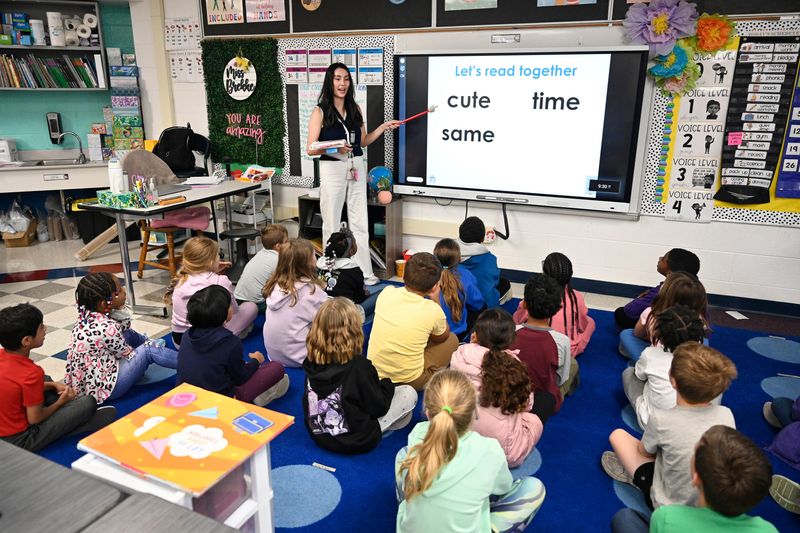
Lawmakers allocated $500 million dedicated to literacy, including high-quality reading curriculum, teacher training in the science of reading and literacy coaches. This ambitious and forward-thinking effort signals that Michigan is finally seeing literacy as the cornerstone of educational attainment.
The timing could not be more important.
For years, the state has lagged near the bottom nationally in fourth grade reading proficiency despite spending billions on education. The lesson from other states is increasingly clear: how children are taught to read matters as much as how much money is spent.
The science of reading is a body of more than 50 years of interdisciplinary research, including cognitive psychology, linguistics, neuroscience and education, much of it federally funded, that explains how children learn to read. Our neighboring states already have a head start on embracing science of reading reforms, including Indiana in 2023, Ohio in 2024 and Pennsylvania in 2022.
Reading scores have improved in Indiana, particularly among young students, even as many states struggled during the pandemic. Ohio overhauled teacher training, approved evidence-aligned reading curricula and expanded literacy coaching. It’s early yet, and the state is reporting measurable gains in elementary literacy. Pennsylvania adopted its first science of reading laws in 2022, and strategic implementation statewide began in 2025 with ongoing policy and funding efforts.
No state can solve the challenges of low literacy overnight, but our neighboring states demonstrated something Michigan desperately needed to see in practice: sustained, evidence-aligned instruction can move reading scores in the right direction.
Ironically, Mississippi, a perpetual laggard in almost any progressive social indicator, represents the most dramatic example of change in reading outcomes. Known as the Mississippi Miracle, since 2013, the state has risen from 49th in fourth-grade literacy to being among the top 10 in 2024 after shifting toward evidence-aligned literacy instruction. If it plays its cards right, Mississippi can become an early 21st-century cultural and economic case study on the transformative power of literacy.
In March, I wrote about Michigan’s low literacy rates, citing National Assessment of Educational Progress data that shows our state ranks 44th in fourth-grade reading. That was after Gov. Gretchen Whitmer’s urgent embrace of literacy in her final State of the State. And here we are, because of applied legislative action, at the beginning of what success can look like.
As I wrote then, literacy is not just an academic benchmark. It is the most important currency we have in the modern world. Low literacy is correlated to all negative societal challenges: poverty, incarceration, reduced lifetime earning ability, and long-term health outcomes. These connections are supported by extensive research and real-world data.
So, salute yourself, lawmakers. Voters may not see it today, but your actions may set Michigan on a course to long-term prosperity and success, like – dare I say it – Mississippi is being talked about today.
Good on you.
Byron McCauley is a regional columnist for USA Today in Michigan. Email to bmccauley@usatodayco.com; call (513) 504-8915.
This article originally appeared on The Holland Sentinel: Michigan education budget will teach Johnny to read again | Opinion
Reporting by Byron McCauley, Holland Sentinel / The Holland Sentinel
USA TODAY Network via Reuters Connect

By Byron McCauley, Holland Sentinel | USA TODAY Network