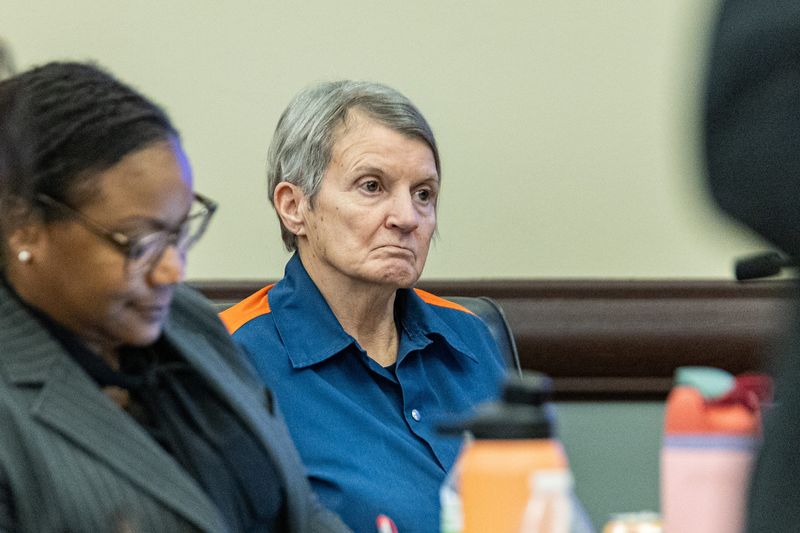
GRAND HAVEN — During the final day of evidentiary hearings for Karen Boes on Feb. 13, two expert witnesses spoke on false confessions and interrogation techniques.
A previous hearing Feb. 4-5 focused on changes in fire science.

Boes was found guilty in 2003 of purposely setting the house fire that killed her daughter, Robin. Boes has ferociously maintained her innocence since her confession, which followed a ten-hour interrogation in 2002. She’s serving a life sentence without the possibility of parole.
The Michigan Court of Appeals ordered two new hearings in 2025, based on Boes’ argument that clashing opinions in fire science and her susceptibility to suggestion during interrogation are significant enough to warrant another chance before a jury.
Boes was initially denied a new trial in 2023, after Judge Karen Miedema (who is overseeing the hearings) determined new research cited by Boes and the University of Michigan Innocence Clinic failed to show a significant change in fire science. During the two hearings, defense attorneys hoped to change her mind.
Boes didn’t give false confession, says prosecution
Assistant Prosecuting Attorney John Donaldson called criminology and sociology expert Matthew Delisi, a professor at Iowa State University, to the stand Feb. 13.
Delisi touched on studies used by defense expert Jim Trainum and the techniques used to elicit a confession from Boes during her interrogation in 2002. He doesn’t believe interrogation contamination — the unintentional transfer of information from investigator to suspect, which causes the suspect to incorporate that information into their confession — exists in Boes’ case.
He also argued against the idea that Boes developed an internalized false confession.
“If a defendant strenuously denies their responsibility of a crime, it’s unlikely that you’re going to have the internalization that’s needed for … an internalized false confession,” Delisi said, referencing Boes’ prior testimony that she denied committing the crime 303 times.
Delisi said one of the most important factors of an internalized false confession is the suspect being vulnerable. He believes Boes doesn’t fit that criteria, in part because she didn’t confess during the interview that took place closest to her daughter’s death.
“She didn’t have memory distrust … she was middle aged, she doesn’t have an intellectual disability and she wasn’t intoxicated,” Delisi said.
Can grief lead to a false confession?
Defense Attorney Lauren Gottesman called psychology expert Lucy Guarnera on Feb. 13. Guarnera is a psychologist and assistant professor at the Institute of Law Psychiatry and Public Policy, and was approved by Miedema to testify on psychology with a emphasis on interrogation and false confessions.
Guarnera testified that, since 2006, studies have shown trauma and grief make someone more susceptible and likely to falsely confess.
“(They’re) starting from a … kind of psychological breakdown,” Guarnera said. “So, by the time they get into the interrogation room, they’re closer to breaking.”
She said considering the possibility of an internalized false confession is appropriate in Boes’ case when paired with grief, the presentation of false evidence and minimization during the interrogation.
Guarnera also noted the length of the interrogation during which Boes confessed, which lasted over 10 hours.
“We have field studies that show interrogations that lead to proven false confessions are significantly longer than average interrogations,” she said.
What happens now?
Miedema is next expected to issue a decision on whether Boes should be granted a retrial.
— Cassidey Kavathas is the politics and court reporter at The Holland Sentinel. Contact her at ckavathas@hollandsentinel.com. Follow her on X @cassideykava.
This article originally appeared on The Holland Sentinel: Karen Boes evidentiary hearing wraps up in Ottawa County. What now?
Reporting by Cassidey Kavathas, Holland Sentinel / The Holland Sentinel
USA TODAY Network via Reuters Connect