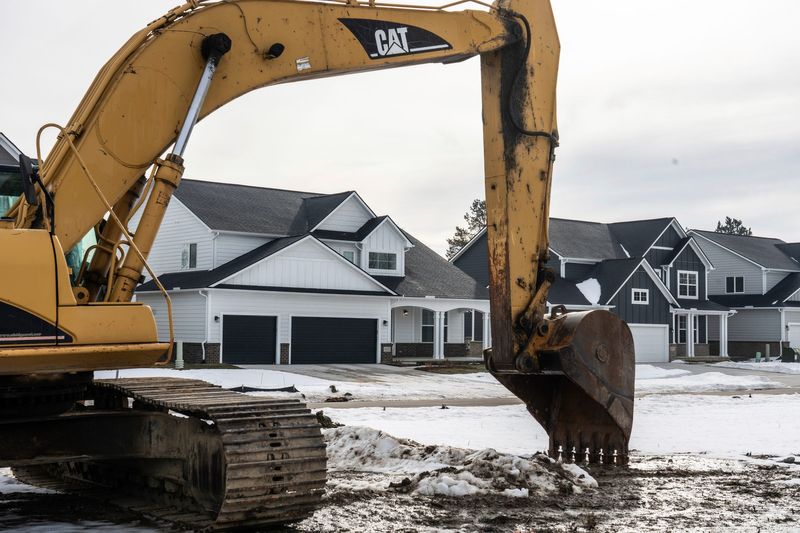
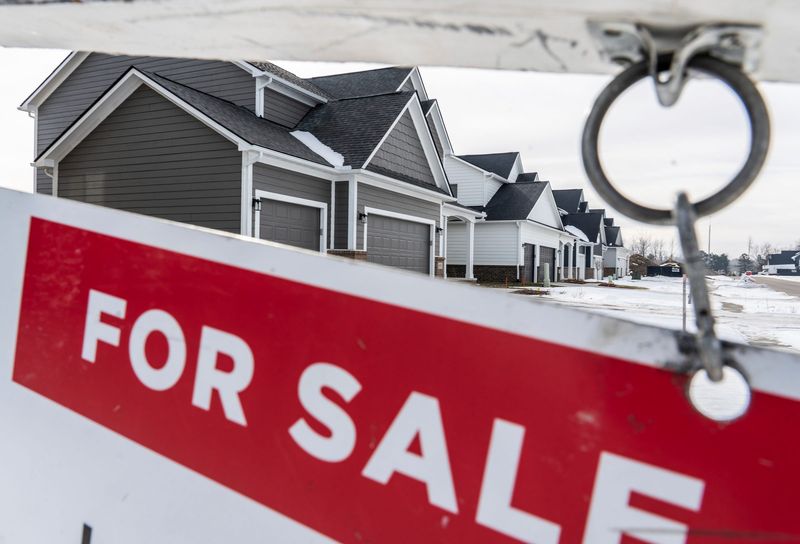
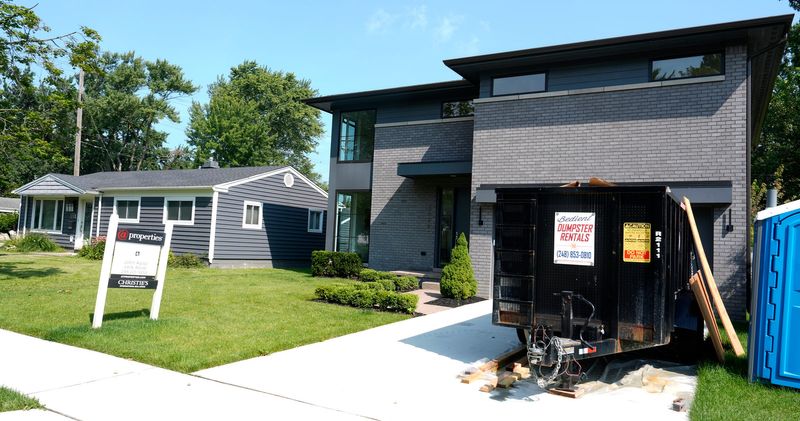
Two years ago, Gov. Gretchen Whitmer summed up the problems in Michigan’s housing market and gave a solution with a memorable slogan.
“The rent is too damn high and we don’t have enough damn housing,” she declared in her 2024 State of the State address. “Our response is simple: build, baby, build.”

How has the home building been going?
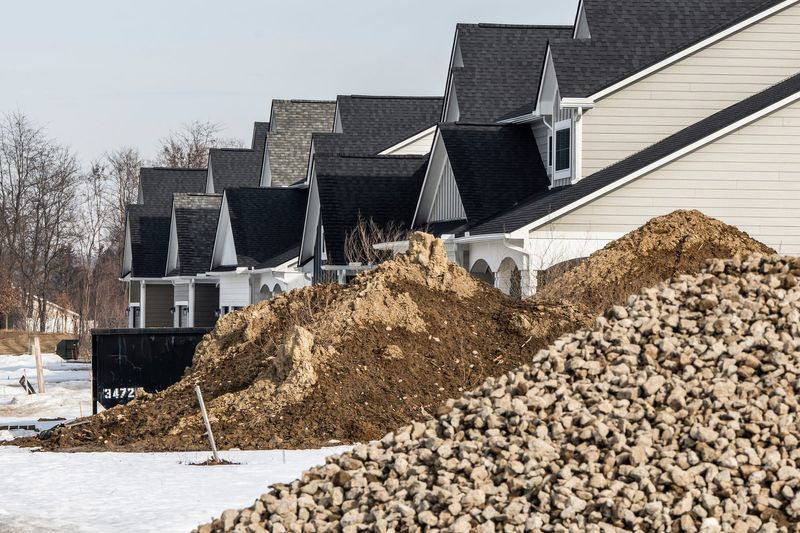
When it comes to new single-family houses, construction has indeed picked up since the governor’s call to action in January 2024. Home starts across the state, as measured by new permit activity, grew 4.7% last year, with 15,821 permits issued.
But homes still aren’t being built at the pace that state officials and the building industry say is necessary to keep up with Michigan’s aging housing stock and new household formation, or to put downward pressure on the cost of housing, which remains unaffordable for many Michiganders.
And last year’s building boomlet appears to be leveling off. The Home Builders Association of Michigan forecasts a 2.8% drop this year in new single-family permits.
Those in the home building industry say it remains a big challenge to construct homes that can be sold at prices for middle-income buyers. They cite the high cost of materials and land, plus what they consider to be the overly restrictive building and zoning requirements in some municipalities that further raise the cost of housing while slowing the pace of construction.
(Some good news: Several builders said that materials costs have stabilized in the past nine months or so after a period of very high inflation.)
There also has been consolidation among home builders and contractors in Michigan since the 2007-09 real estate market collapse. Some builders have focused on meeting demand for higher-end houses, rather than entry-level-type houses that can present a greater financial risk because of tighter profit margins.
The estimated average price of a new single-family house in Michigan, including town houses and duplexes, was $475,000 last year, up 6% from 2024, according to the Home Builders Association of Michigan.
In southeast Michigan, that price was even higher — $549,142. Back in 2019, the average priced new home in the region was $363,181.
“The number of Michiganders who can afford that kind of (averaged price) home is very limited,” said Bob Filka, the association’s CEO. “So we’ve got to produce more in that $250,000 to $350,000 range, and look at more density solutions.”
Home-building activity actually fell last year in southeast Michigan. The number of new single-family home permits went down 11% to 3,563 permits across Wayne, Oakland, Macomb, St. Clair and Monroe counties, according to the Home Builders Association of Southeastern Michigan.
A possible reason for that decline was the auto industry’s turbulent 2025, when automakers and suppliers dealt with a lot of business uncertainty due to tariffs and the shift away from a once-anticipated EV future. So some metro Detroit families may have been reluctant to commit to building a new house.
“I think southeast Michigan has some unique auto industry challenges,” said Darian Neubecker, president of Bloomfield Hills-based Robertson Brothers Homes. “I think housing is certainly not overbuilt in southeast Michigan. Long-term, we’re bullish and positive. But short-term, it’s been somewhat challenging.”
Yet another factor holding back construction has been mortgage rates.
At an economic forecast event in Novi earlier this month for the home construction industry, Fan-Yu Kuo, a senior economist at the National Association of Home Builders, said that homeowners with 2%-3% mortgages are still “locked in” and reluctant to give up those loans to move to a new house until rates go down.
Current interest rates also are making new homes more expensive for builders to build and buyers to purchase, which further holds back the market, she said.
Kuo believes that once rates drop closer to 5% to 5½%, the market should “unlock” and demand for new homes will rise. The average rate last week on a 30-year, fixed-rate mortgage was 6.09%, according to Freddie Mac.
“Right now, over 80% of homeowners, they have a mortgage rate lower than 6%, so they don’t want to move and lose their low-rate mortgages,” Kuo said. “Homeowners with low-rate mortgages, they stay put.”
Gov. Whitmer’s office had no comment for this article.
The shortfall
The Home Builders Association of Michigan took the governor’s State of the State seriously. The association celebrated its 75th anniversary in 2024, and printed up batches of “Build, Baby, Build” T-shirts for distribution at the anniversary party.
Based on common economic markers, the association estimates that Michigan needs to build 25,000 new single-family houses a year just to keep up with the aging housing stock and population growth. (Last year’s permit count was for just under 16,000 houses.)
The Michigan State Housing Development Authority, known as MSHDA, estimates that the housing shortage would need the immediate construction of 119,000 new homes to be resolved.
But Michigan’s situation is far from unique.
There is a widely believed nationwide housing shortage, with estimates varying from roughly 3 million homes needed, according to Goldman Sachs, to as many as 20 million homes, according to Congressional Republicans.
In southeast Michigan, building activity remains far below what it was before the 2007-09 market collapse. In 2004 — the high point of the local market — there were 17,553 single-family home permits issued in Wayne, Oakland, Macomb and Livingston counties. Last year’s number was 3,563.
Often-cited reasons for why home production has stayed low in metro Detroit is Michigan’s modest population growth, a shortage of skilled construction workers after many left the business or left the state for hotter home building markets, and a reluctance from lenders to finance more large-scale spec housing developments.
“We used to be in an environment where even the small guys would build spec homes,” said Filka of the state Home Builders Association. “The carrying costs didn’t use to be as high and the market was better. So you would have everybody and their sister doing spec homes.”
“Big guys, too, used to do a ton of spec building,” he added. “They don’t do that anymore.”
What’s more, there has been consolidation over the years among Michigan home builders and contractors.
Filka said the Home Builders Association of Michigan’s membership rolls have gone from over 10,000 members in 2008 to just under 5,000 members now. A member can be anyone in the building industry, from plumbers to mechanical contractors to even banking officials.
“The top 12 or 13 companies in the state of Michigan build close to half of all the homes in the state,” Filka said. “Michigan, historically, hasn’t had as big of a presence for the production builders. Our history has been lots of small mom-and-pop builders who might build half a dozen to a dozen homes a year. That’s changing.”
The effect of industry consolidation on actual home-building production in Michigan is unclear.
However, some builders have been keeping busy meeting demand at the upper-middle and higher ends of the market, rather than with lower-priced homes with tighter margins.
“Over the last decade, there’s been plenty of demand at the high end to keep builders building actively, earning reasonable return on investment,” Filka said. “If there’s plenty of business at the high end of the market, and that’s where you get the highest margin on your investment, that’s where you’re going to work.”
He added: “You might be presented with an opportunity to do some infill work in an urban area that targets homes or town homes or duplexes in that $250,000 to $350,000 price range. But you do that math on that versus development with three-quarter to an acre-size lots that you’re building $750,000 homes on — the math just hasn’t worked to drive that investment towards the more modestly priced, lower-margin home.”
Michele Chirco, general counsel for Macomb Township-based home builder MJC Companies, said there are financial risks to building lower-margin homes.
“On a lower-priced home there is a lower margin, a lower room for error, essentially,” Chirco said. “So if anything goes wrong on that job site, you might lose all of your margin on that build, versus on a more expensive home you have a little more cushion to work with.”
Chirco said zoning constraints and building restrictions in some communities also make it difficult for builders to construct homes with lower prices.
“So even in markets where you would want to deliver a product at a certain price point, you might be by regulatory factors prohibited from even doing that,” Chirco said.
Getting housing ready
The state of Michigan has undertaken several initiatives to help advance the governor’s call to build homes.
MSHDA created a voluntary “Get Housing Ready” guide for local governments with suggestions on how they can become more attractive to housing developments, such as easing minimum lot size rules and removing restrictions against smaller dwellings (400 to 800 square feet).
This week, a bipartisan group of state legislators announced a nine-bill legislative package aimed at lowering housing costs and which incorporates some of those suggestions.
MSHDA also has been pushing its new Housing Tax Increment Financing Program, which offers an incentive for home builders to build for-purchase town homes and duplexes at “workforce housing” prices for families with qualifying incomes.
An example of such a development is Robertson Brothers Homes’ new 71-unit Fraser Square development in Harper Woods, where prices start at $235,990 for those with qualifying incomes. Construction is finishing up on the first batch of 15 town homes and duplex units.
Neubecker of Robertson Brothers Homes said it isn’t easy to build new at such affordable prices. Among the builder’s more traditional developments, some of the most affordable price points can be found at Hudson Townes in Lyon Township, where new town houses start at about $300,000.
“It’s becoming rarer and rarer to find sites where you can have an owner-occupied house with a 3 in front of it — that is one of them,” Neubecker said.
2 to 3 years to build
Home builders say they are still encountering building restrictions and lengthy approval processes at the local level that add to the cost of construction.
“In some cases, in some municipalities, I think the architectural standards that the municipality would like to see are not in alignment with what the consumers can afford,” said Scott Schwanke, an area president for M/I Homes, a national home builder with a significant Michigan presence.
“In my opinion, there needs to be some political courage regarding the (allowable) density on a particular piece of land, so your development costs on an individual lot become lower. And with that, you may be building smaller homes,” he said. “Quite honestly, a lot of people flat-out can’t afford the, call it 3,000-plus square-footage, home these days.”
Schwanke said it generally takes two to three years from the start of the local planning and approval process before construction on a new development can get underway. So new housing planned in direct response to the governor’s call to action may not yet be in the ground.
“There are several examples where you go in front of a planning commission and a town board two, three, four times sometimes,” he said. “And that protracts the process and the cost involved in bringing a new community to life.”
New houses in Commerce Township
One builder with a positive outlook for 2026 is Joe Tuomikoski, the owner of Lifestyle Home Building in Novi.
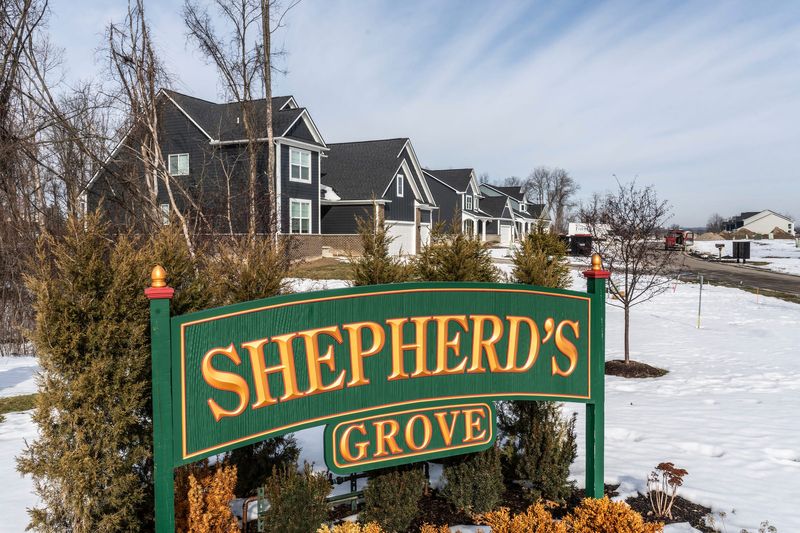
The number of interested buyers for his latest single-family home development, the 32-lot Shepherd’s Grove in Commerce Township near Commerce and Union Lake roads, has been picking up substantially since the start of the year, he said.
The land was previously vacant and owned by a church. The development is a mix of custom and spec builds, with prices ranging from about $650,000 to $700,000. So far, nine houses in Shepherd’s Grove are finished and two more are currently under construction.
“I’ve seen more activity, more showings, more inquirers inquiring in the last three weeks than I have in the last four months,” he said.
Tuomikoski attributes the upswing to the recent modest dip in interest rates as well as people deciding they were finally ready this year to go forward with the big decision of building a new house.
The buyers so far have tended to be families who are already in Oakland County and were ready to move up, he said.
Tuomikoski said Commerce Township has long been popular with young families. The township was among the top 10 communities in southeast Michigan last year for the most new single-family home permits, according to the Southeast Michigan Council of Governments.
“I grew up in Commerce Township. I went to St. Pat’s grade school right down the road, and every (development) that’s always gone around in Commerce Township has been pretty successful, except for the great real estate reset,” he said. “So it’s just a good community, good people, good schools, and it’s a hop, skip and a jump from M5 — everyone gets on M5 in the morning.”
Key housing stats
Sources: Home Builders Associations of Michigan, Home Builders Association of Southeastern Michigan
Top 10 communities in southeast Michigan for new home permits in 2025
Contact JC Reindl: 313-378-5460 or jcreindl@freepress.com. Follow him on X @jcreindl.
This article originally appeared on Detroit Free Press: How home builders responded to Whitmer’s call to ‘build, baby, build’
Reporting by JC Reindl, Detroit Free Press / Detroit Free Press
USA TODAY Network via Reuters Connect