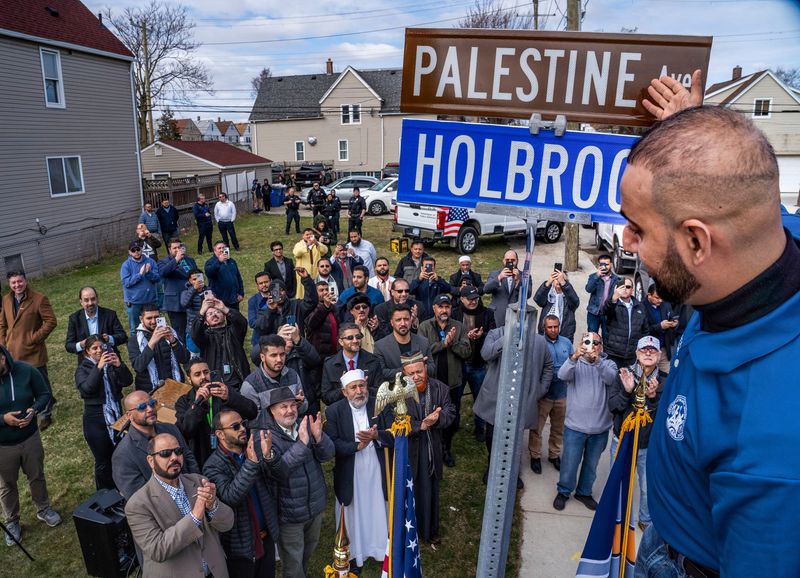
In the Name of Allah, the Most Gracious, the Most Merciful, the man reached up and pulled away a scarlet cloth, revealing unto the people a sign.

It was a cold day, late in winter. Maybe a hundred people — almost all of them men — had gathered on a grassy street corner lot in Hamtramck, a city of 2 square miles that sits like an island in the middle of Detroit. Among them were local businessmen, elected officials, religious leaders and a couple of stray hipsters watching tentatively from the back of the crowd as one dignitary after another took their turn at the microphone.
They were here to make history by changing it.
The nation’s first and only all-Muslim city council had just voted to rename Holbrook Avenue, one of Hamtramck’s main arteries, as Palestine Avenue, in reaction to the Israel-Hamas war, then in its fourth month. The road was originally named after Dewitt Holbrook, a 19th-Century lawyer who owned a farm not far from this very spot. The name had stuck for about 125 years. Until this day.
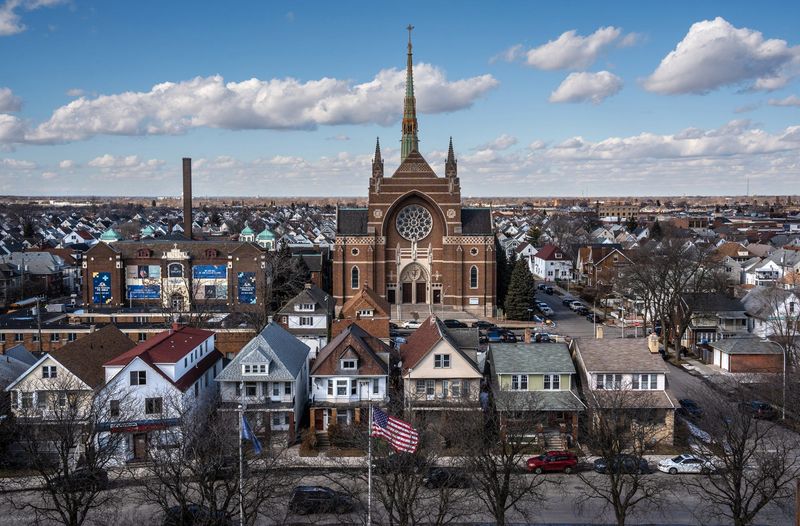
This rechristening was an apt symbol of the dramatic changes that have recently taken place here. For a century, Hamtramck was known as “Little Poland” for being so uniformly Polish and Catholic that Pope John Paul II himself once made a stop here back in 1987. Even as late as 1970, Poles still were almost 90% of the population, enough to sustain hundreds of Polish grocers, bakeries, churches and social clubs.
But by 1990, according to city officials and historical experts, the number of Polish residents had dropped to 45% as many of them moved to the sprawling suburbs. By 2000, it was maybe 25%. Now, it’s pegged at barely 10% of the roughly 28,000 people who live here.
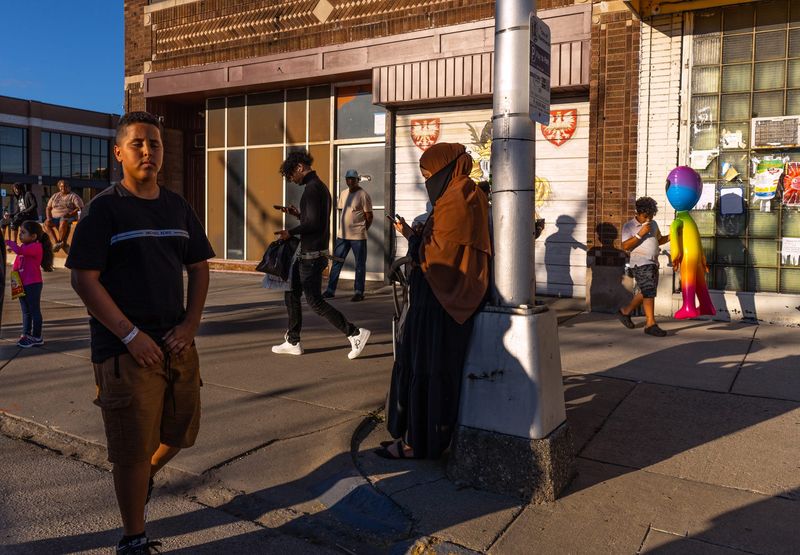
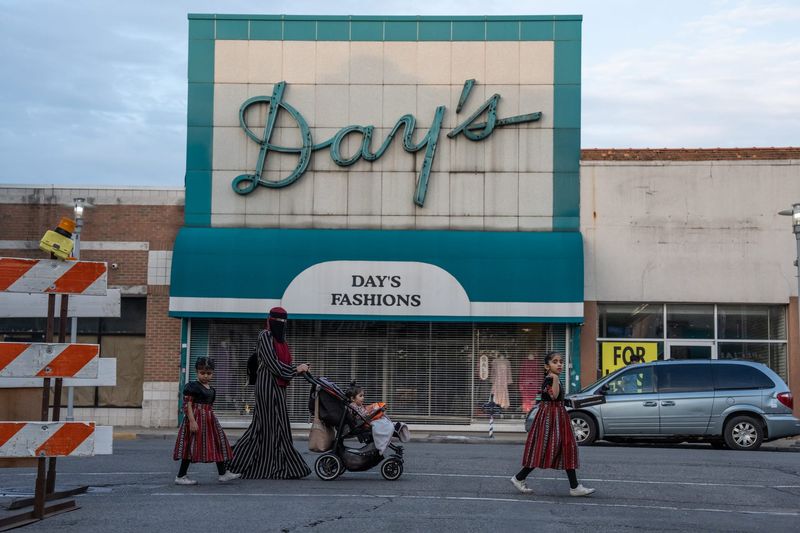
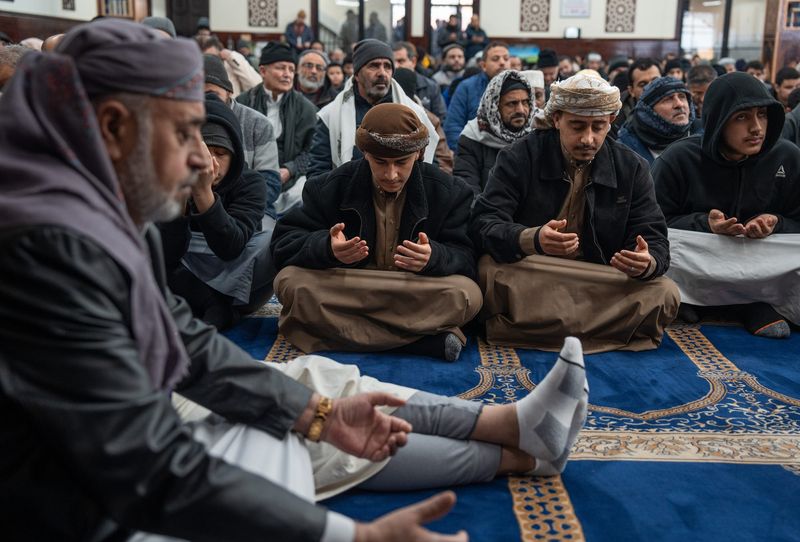
In their place came waves of Bangladeshi and Yemeni immigrants who swiftly made this America’s first majority Muslim city. The Poles were reduced to an asterisk, strangers in a suddenly strange land where women now walked the streets robed from head to toe in black niqabs, where the signs on the storefronts were now written in foreign scripts, where schools replaced Easter vacation with time off at the end of Ramadan, and where the sound of the Islamic call to prayer now competed with the tones of church bells.
A city that once had more bars per capita than any other place in the country was now dominated by a culture that forbids alcohol. What was a hot spot of artists and musicians known for a liberal acceptance of eccentricities and differences now drew international attention when the Muslim city council voted to ban the gay pride flag from city properties. And what had been a quiet, working-class town suddenly became internationally famous as an example of what sudden demographic change looks like.
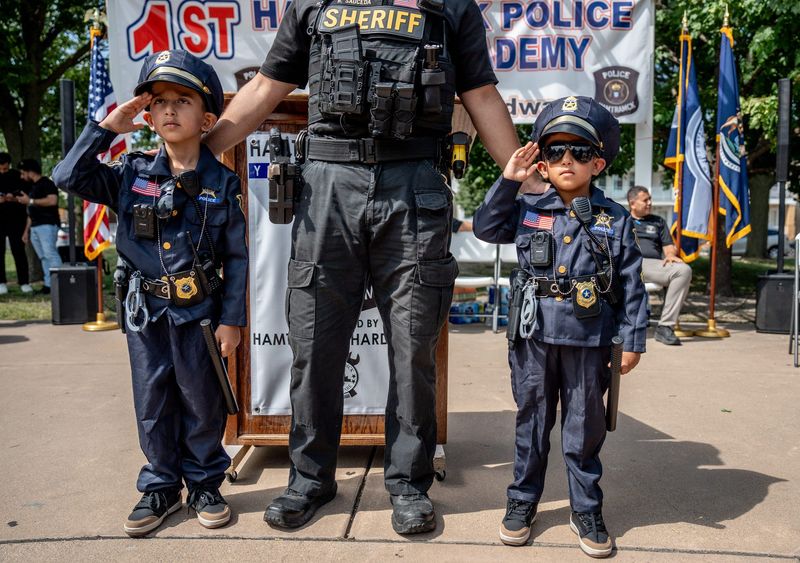
Hamtramck has the highest percentage of immigrants anywhere in Michigan, the largest concentration of Bangladeshi immigrants in the state and the second-highest percentage of Arab residents after Dearborn. According to Census data, more than 40% of the city is foreign-born and almost 70% of its residents are Muslim, including the mayor, the police chief and the entire city council, whose members all are men. Signs at City Hall are presented in English, Arabic and Bengali. “The World in Two Square Miles” the city’s slogan declares.
There’s a constant churn of immigrants arriving and leaving, so a precise ethnic breakdown of Hamtramck is difficult to peg. Best estimates put the city’s Yemeni population at more than 30% and growing, the Bangladeshis at about 25% and holding steady, Blacks at scarcely 10% and shrinking, and Poles at even less. A scattering of others makes up the rest, including Bosnians, Albanians and a surge of Ukrainians now flooding into the same city their ancestors flocked to more than a century ago, when they likewise were fleeing the Russians.
All over town there are signs of a new culture erasing the old.
The long-standing Family Donut Shop has become the Taj Al-Yemen restaurant, which keeps a token selection of doughnuts at the front counter under glass, like a culinary enclave within the Middle Eastern eatery.
Krakus Polish Restaurant is now Sylhet Café, a Bengali eatery that grows its ingredients in a garden on the former Buick auto dealership lot next door.
Stan’s Grocery, which sold Polish staples such as kishka, paczki and pierogi, went out of business and was soon reborn as Royal Mart, a Bangladeshi grocer offering paratha, samosas and sliced satkora fruit.
And now, the very name of a main street was being changed to reflect not just the culture of the newcomers, but also the politics they brought with them.
Councilman Khalil Refai, who immigrated from Yemen as a child, whose election two years before solidified the Muslim majority on the council and who sponsored the measure to change the name of this road, climbed a ladder and ceremoniously removed the cloth that covered the new sign, which was installed atop the old one.
The crowd below him applauded at the sight of the new name. It wasn’t an official change on maps, only an honorary designation. But the message was clear.
Things are now different here.
“There is power to renaming things,” declared Imam Imran Salha of the Islamic Center of Detroit as he stood at the podium, pointing up to the sign. “What significance is there to ‘Holbrook’? There’s nothing special about ‘Holbrook.’ ”
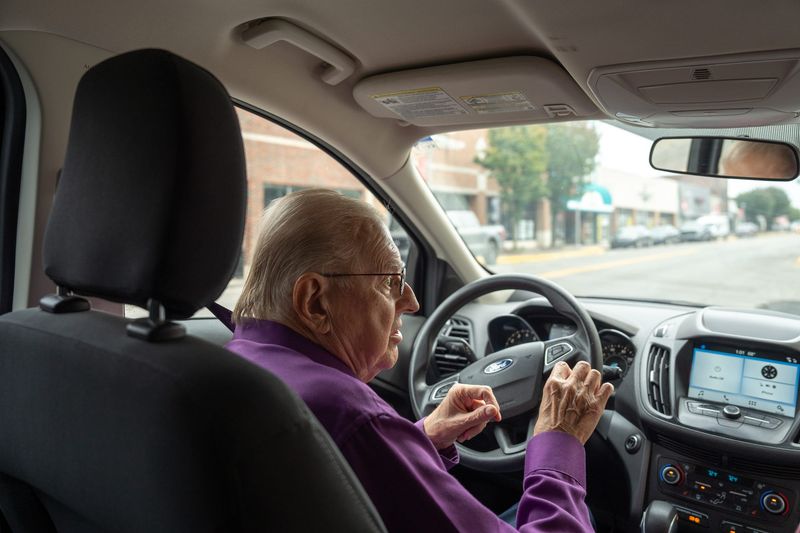
Greg Kowalski turned the steering wheel and rounded the corner at the stoplight.
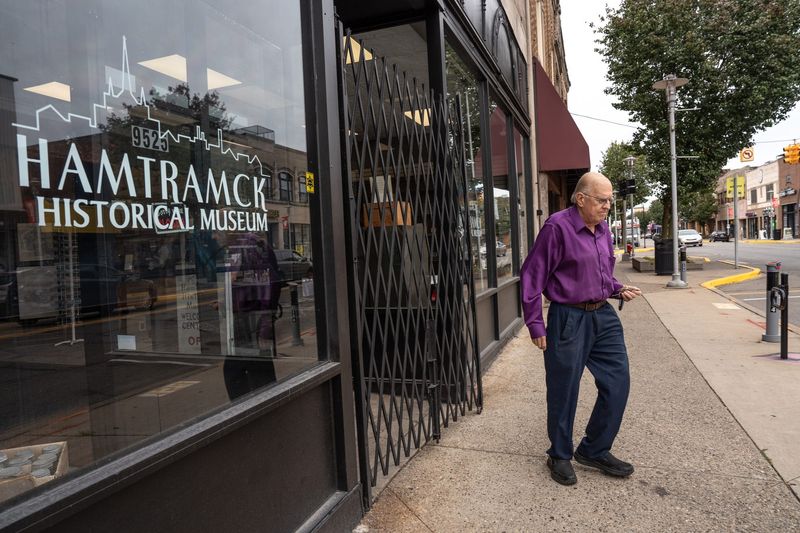
“This is Holbrook Avenue,” said the 74-year-old executive director of the Hamtramck Historical Museum. He was giving a driving tour of his hometown, one of his many functions as its unofficial historian. “It was at the center of the village. It’s only a few blocks away from St. Florian church, and that was a real centerpiece of Hamtramck. And Holbrook is where the pope spoke when he came here, in the parking lot right there. So it’s always been the center of a lot of activities. It’s very significant.”
Kowalski was born in Hamtramck, spent his life here, wrote 11 books about his hometown and when he dies, he wants his ashes scattered on the railroad tracks at the edge of town for their role in bringing so many immigrants here a century ago. Hamtramck, he often says, was built by immigration more than almost any other place in America. And this city became his passion.
“I learned everything I could, like what kind of trees there are. I learned the sewers: behind us there’s a 1910 sewer, down the street there’s a 1909 sewer. I learned the alleys: when were they put in, when were they repaved. I made it my point to learn every single thing about Hamtramck.”
And one thing he learned is that this isn’t the first time newcomers to town have put new names on streets like Holbrook. “When the Poles came here, they started renaming things, too,” he said. “You can imagine the very same criticism you are hearing today was being leveled back then.”
It was founded as a township in 1798 and named after Jean Francoise Hamtramck, a French-Canadian immigrant who served in the American army, became a Revolutionary War hero and who’s now buried in a public park after the city disinterred him in 1962 from Detroit and brought his remains here, granting him the lone gravesite in town.
Hamtramck once sprawled from the northern suburbs to the Detroit River, but fast-growing Detroit began annexing huge chunks of it until only a small core village, surrounded by Detroit on all sides, was all that remained. Local leaders, determined to resist, held an election during the 1920s in which residents voted to become a city, making it nearly impossible by state law for Detroit to finish the job.
The area was rural farmland populated by German immigrants until the Dodge brothers opened a massive auto factory on the south side of town in 1910 and offered thousands of jobs to anyone who would move there. Somehow the word reached Poland first, and, within a decade, Hamtramck’s population exploded from 3,500 people to 48,000, most of them Poles. They were the first wave of immigrants to displace a previous group in town. They wouldn’t be the last.
From the start, the city was an outlier.
It refused to be swallowed by its larger, more powerful neighbor, even as several other townships and villages in the region were unable to resist.
It didn’t just ignore Prohibition, it openly defied it. “There were more places to drink here during Prohibition than after,” Kowalski said. At one point there were 200 bars here. In a mere 2 square miles.
And its schools, government and neighborhoods were integrated decades before those of the surrounding communities. The Polish immigrants in the region were initially treated so terribly, Kowalski said, that once they took power, they welcomed everyone else to town — Ukrainians, Albanians, Bosnians and especially the Black families moving to the area.
“We were treated the second worst,” Kowalski said. “The only people considered below us were the Black people. So when they came to Hamtramck, they weren’t treated like they were in other places. That’s why Hamtramck was so welcoming.” The city elected the first Black leaders of the region, hired the first Black police officers and detectives, employed the first Black city workers and teachers.
“When I grew up, our street — I think every street — was mixed,” said Vera Burk, 97, who still lives in the house her father built when he moved from the South seeking work along with other Black families in the early 1920s. “It was Polish, Blacks, and my good friend across the street was Ukrainian, and all of us on this street was like family. Everybody got along ‘cause that’s the way we were raised here. If they don’t bother you, don’t bother them.”
Oh, you should have seen it back then, the old-timers say. A thriving shopping district. A downtown that glowed at night. Clean-swept alleys. Cathedral churches. Friendly neighbors. And the massive auto plant whose jobs made it all possible.
Then the neighbors grew old and died, their kids moved to newer suburbs, and, by the ‘70s and ‘80s, the city was in decline. The Dodge Main plant closed in 1980, the American Axle plant followed in 2009, and there went thousands of local jobs.
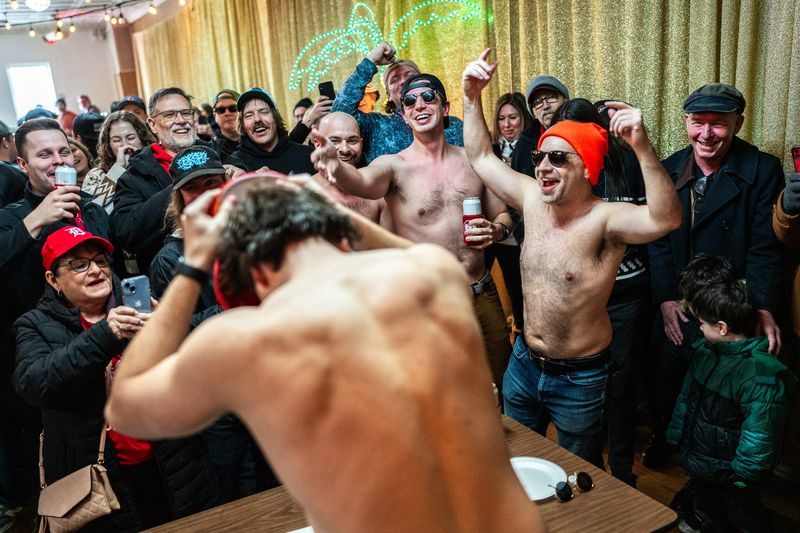
It became a gritty destination for artists and musicians seeking cheap housing and a safe alternative to a then crime-plagued Detroit. For years, it’s been the site of the Blowout, a weekend festival featuring hundreds of local garage bands playing in dozens of the city’s bars. It became the home of the Detroit City FC soccer team, which draws huge crowds to town on game days. It remains the site of Paczki Day, the local, Polish version of Fat Tuesday on the day before Lent, featuring a doughnut-fueled bar crawl that’s become a local tradition. And it still hosts the annual Hamtramck Labor Day Festival, a massive, three-day concert, carnival and food extravaganza that draws tens of thousands of visitors.
But the city also declined into economic disaster, with ballooning pension obligations and a large annual budget deficit, which twice prompted the state to appoint an emergency financial manager to run things. For years, its elections came under the watchful eye of the U.S. Department of Justice after accusations of voter intimidation against recent immigrants. The school district was the target of a number of lawsuits by former employees. And more than 40% of the city currently lives in poverty, according to Census data.
Still, Hamtramck was better than Bangladesh for the Bengalis who began arriving here in the 1980s and resurrected the city’s worst neighborhoods on the eastern border with Detroit. It was far better than their impoverished homeland for the Yemenis who joined them in droves and boosted the city’s population by more than a quarter in just a decade. And it’s been a lifesaver for the recent wave of Ukrainians and Afghans fleeing their battle-ravaged homelands. Add a smattering of immigrants from dozens of other nationalities who now live here in crowded contrast, and Hamtramck now essentially is — for better or worse — The World in Two Square Miles.
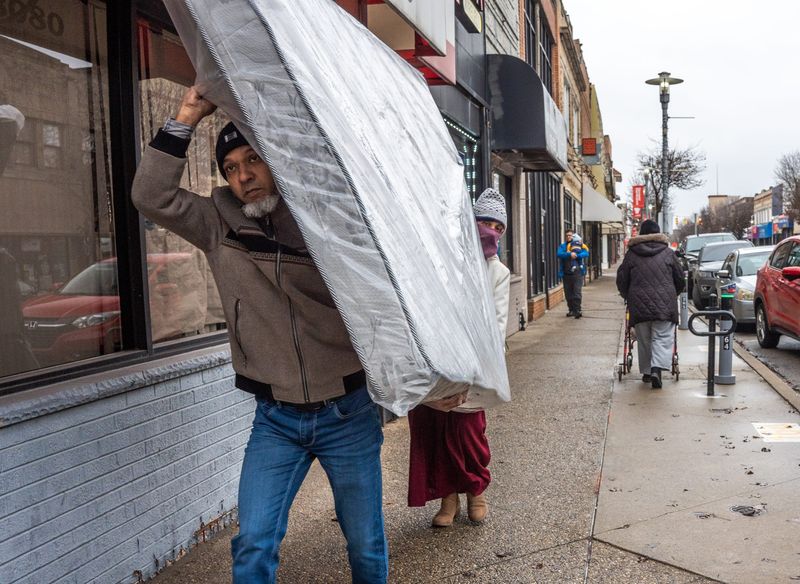
“The dynamics here are really amazing,” Kowalski said. He turned his car down Conant, unofficially renamed Bangladesh Avenue long ago for its profusion of Bengali storefronts. “Look at the people walking. You’ll see turbans, you’ll see babushkas, you’ll see hijabs, everything. This town is exploding, the population is rising, we’re getting everybody here. And let me tell you, it’s wonderful to see. And 99% of the people I encounter are really nice, good, solid people.”
Yet not everyone thinks the changes are so great.
From the outset, some residents worried that the new Muslim majority would try to impose their strict religious and cultural beliefs on city government as they gained power. And elected officials sometimes gave fuel to those fears.
First came the approval in 2004 of the Islamic call to prayer five times a day, which blares out from loudspeakers atop a number of mosques in town, sometimes without regard to volume restrictions. That brought contentious debates, but residents ultimately sanctioned the council’s approval in a close vote.
Then came a successful voter drive in 2008, led by a Muslim mayoral candidate, to overturn the city’s human rights ordinance, which he said would lead to trans pedophilia and bestiality.
That was later followed by a city council vote in 2023 to permit halal animal slaughter on residential property, and suddenly people said they were seeing stray sheep and ducks running through neighborhoods as if on the lam. That vote drew an uproar from animal rights organizations and their supporters.
That was followed by a gay pride flag ban passed by the city council that same year, which brought condemnation from local political leaders, national LGBTQ organizations and unflattering coverage by international news crews.
Throw in the sight of women shrouded in public, of separate Islamic spaces for men and women, of insular communities where English isn’t spoken, and some long-time residents grumbled that the newcomers weren’t making efforts to assimilate, to adapt to their surroundings. To become “American.”
Refai admits that his countrymen sometimes cling hard to their traditions. “Yemenis are more into their culture and their religion than people who come from other countries,” said the 39-year-old first-term councilman. “People that visit Hamtramck from other states like Texas come here and they see how they dress here, how is the vibe here, they say, ‘How is this America? It’s like back home, but upgraded.’ ”
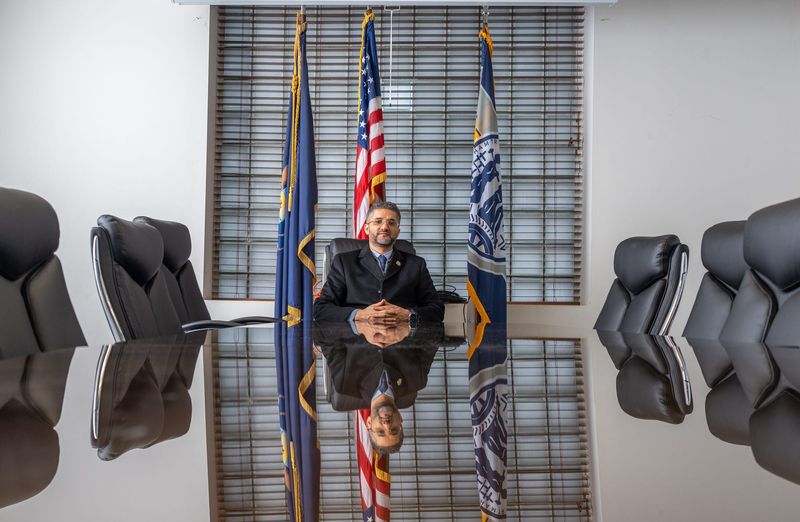
Mayor Amer Ghalib, a Yemeni immigrant who became the city’s first Muslim mayor three years ago, argues that the newcomers have a right to their cultural choices like any other American citizens.
“It’s how they like to dress, especially in a community that has a lot of Yemenis,” said the 45-year-old, sitting in his city office. A Yemeni ceremonial dagger sat to the side; behind him stood an American flag. “A lot of people that I know, they don’t want their women to be exposed to us or to see them. That’s how it is back home. So wherever they go, they let them cover. It’s a cultural thing. And just like you want us to respect whatever lifestyle you have, you have to respect others and the way they dress.”
But some longtime residents bristle when those cultural traditions clash with modern Western social norms, especially when it comes to the role of women. Catrina Stackpoole, a progressive former city council member who’s suing the city over the council’s pride flag ban, hopes those restrictive customs will fade as the children of immigrants become more assimilated.
“I have total faith in the next generation of young people, and I know the young Muslim kids are going to break out of this conservative bullshit,” the 71-year-old said. “It’ll only be a matter of time. I already see Yemeni kids playing air guitar in the middle of the Hamtramck festival. The Bengali girls are taking American clothes to the high school and changing at school. It was the same thing I did. I was a hippie and my mom and dad would not let me wear bell-bottoms, so I took the bell-bottoms to school and I put them on there. And the Bengali girls are taking their traditional dress clothes off and putting on jeans and a T-shirt.”
Kowalski has heard people criticize the newcomers for being slow to adapt. They used to do that about the Poles a century ago, he said. The first generation usually sticks to its ways. But then, as now, he believes, their kids are the ones who will inevitably bring about that change.
“The children are the real bridge to breaking through cultural lines,” he said. “They go to school together, you’ll see them on the streets playing together, you’ll see mixed groups of kids playing together, and that’s really the most important thing because they carry that home. They’re the future. They have one foot in each world — the old country and the new country — and they understand they’re walking a very careful line, because they’re glued to the old country and the old traditions whether they want to be or not. And yet, they’re changing.”
Hamtramck might be the most conflicted small town in the country. By all accounts, it’s also one of the most civil.
“People are friendly here, even those who we disagree with,” Ghalib said. “I’ve never seen any violent actions from anyone. We can disagree on stuff, but let’s be peaceful.”
As immigrants first began flooding the town a century ago to work in the auto plant, tens of thousands of two-story duplexes were hastily built, barely 8 feet apart, on 30-foot lots to cram all the newcomers into the city’s 2 square miles. It makes Hamtramck the most densely populated city in Michigan to this day. And it forces people to develop an intimate tolerance of others.
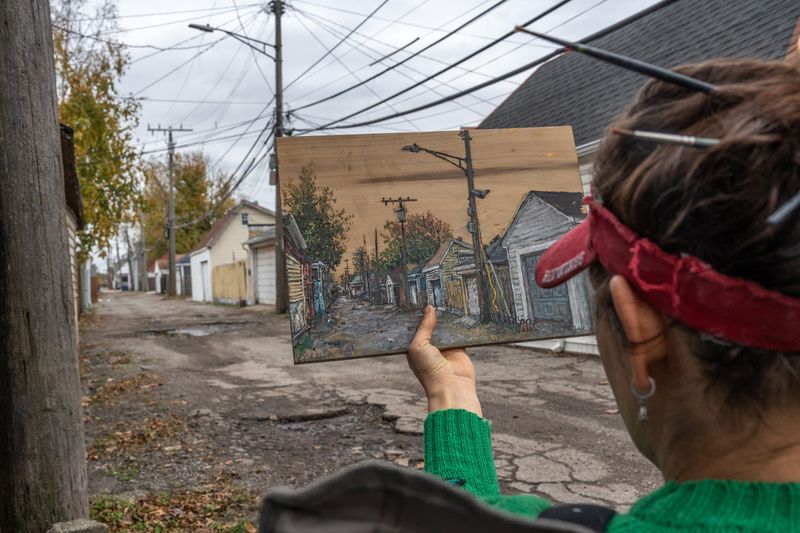
“Hamtramck has always been a very special, very welcoming place,” said Emily Jane Wood, 43, a local artist known for her distinct paintings of city street life. “I feel like living so closely on top of each other, that with that intense physical space there’s kind of an inverse mental space. You try to give people a wide berth.”
“In general daily communication, people are very pleasant, very warm,” said Zlatan Sadikovic, 65, the owner of Oloman Café, who came here from Bosnia three decades ago. “I don’t speak their language, they don’t speak my language. But I wave, they wave and smile. It’s just like a small village type of living. Everybody lives really in harmony. There’s no, like, tension of any kind.”
Unlike many other cities that are dense with immigrants, Hamtramck isn’t split into strict enclaves. Although the Bengalis loosely dominate the northeast side of the city and many of the Yemenis are clustered in the south, most of the neighborhoods are an improbable jumble of streets where no two neighbors are alike.
“The street where we live, we got white, Black, Yemeni, Bengali; everybody living very peacefully,” said resident Anwar Hassan, 46, the owner of Remas Restaurant, which serves dishes from Yemen, his homeland. “We go to the neighbors, the non-Muslims, and we give them Ramadan dishes. Even sometimes during holidays, we will give gifts to the kids, like at Christmas. Everybody respects each other at Christmas, at New Year’s. We celebrate, not religiously, but they still celebrate the vibe, the fireworks, the joy. People are being off for a few days and everybody has a good time.”
He sat in a booth in his restaurant, looking out of the window. An American flag flew high on a pole along the street. Walking beneath it were Yemeni women dressed in black niqabs, covering everything but their eyes. Then came a pair of white guys in hipster wear. Here came Bengali women swathed in pastel fabrics. Here were kids walking home from school in blended groups. It was the city in distillation, presented on parade. The groups to which they belonged often sniped on social media and at public meetings. But here, on the street as individuals, all of them politely gave each other space when they passed. And a few even smiled to one another as they went by.
“In the public arena, people will tear each other apart,” said Charles Sercombe, the last remaining reporter at the town’s last newspaper, the Hamtramck Review. “But in the neighborhoods, everyone usually gets along. It’s a matter of survival. You hear everything — the arguments, the lovemaking — because they’re living on top of each other. You get along with your Bangladeshi neighbor, with your Yemeni neighbors; there’s no clash there. Usually your neighbors are really fascinating to get to know. It’s like an oasis, and that’s what makes the city so charming. Why can’t it be like this everywhere, you know?”
John Carlisle writes about Michigan. His stories can be found at freep.com/carlisle. Contact him: jcarlisle@freepress.com. Follow him on X (formerly Twitter) @_johncarlisle, Facebook at johncarlisle.freep or on Instagram at johncarlislefreep.
This story was updated to add a video.
This article originally appeared on Detroit Free Press: How Hamtramck, a small town within Detroit, became America’s first Muslim-majority city
Reporting by By John Carlisle. Visuals by Ryan Garza, Detroit Free Press / Detroit Free Press
USA TODAY Network via Reuters Connect