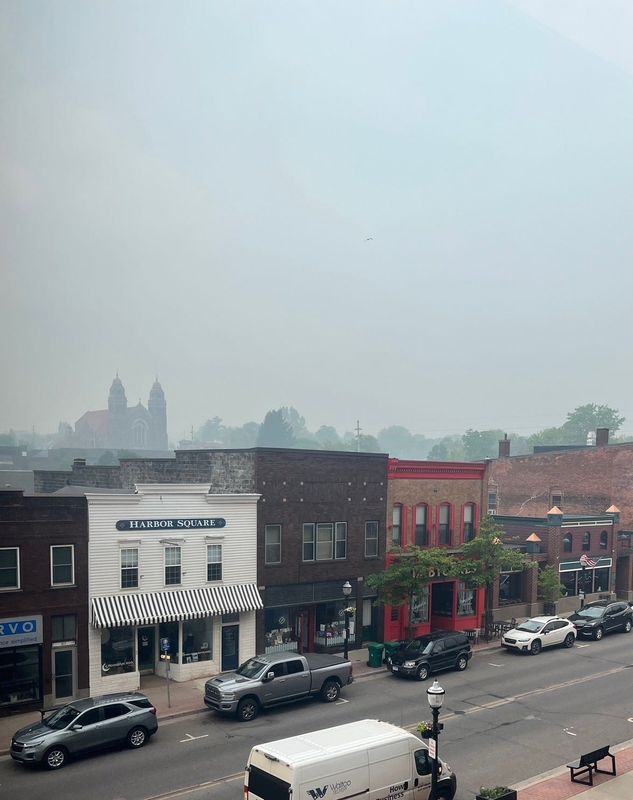
Smoke from the Canadian wildfires continues to make Michigan’s air unhealthy.
Counties in northern areas of the Lower Peninsula and the Upper Peninsula are under air quality alerts for Wednesday, June 4 — residents are urged to stay indoors, the alert says.

“The Michigan Department of Environment, Great Lakes, and Energy (EGLE) has issued an Air Quality Alert for elevated levels of fine particulate (matter) (PM2.5) in the Upper Peninsula of Michigan, for today. Pollutants could reach the Unhealthy (Red AQI) range or higher,” the NWS in Marquette said on X.
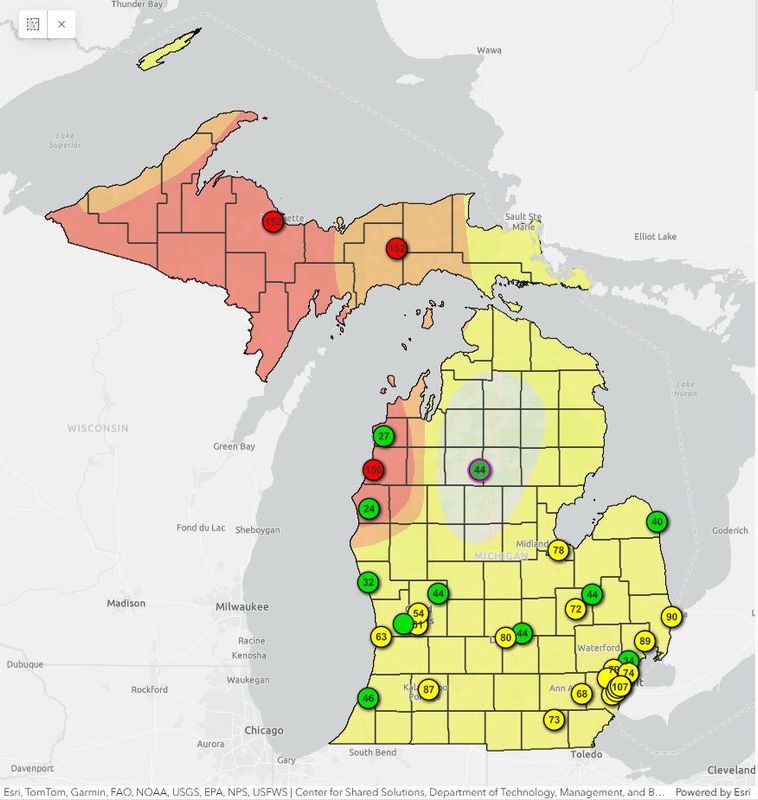
Most of the Upper Peninsula is considered under the unhealthy category, based on MiAir’s Air Quality Index.
The following counties in the Upper Peninsula were under an air quality alert Wednesday morning, June 4: Alger, Baraga, Chippewa, Delta, Dickinson, Gogebic, Houghton, Iron, Keweenaw, Luce, Mackinac, Marquette, Menominee, Ontonagon and Schoolcraft.
In northern Michigan, the counties under an alert included: Antrim, Benzie, Charlevoix, Cheboygan, Emmet, Grand Traverse, Kalkaska, Leelanau and Manistee.
Under an alert, residents are advised to stay indoors, especially if they are in a sensitive group, including people with respiratory problems (like asthma), heart or lung disease, diabetes, if you are a senior or child, or of a lower socioeconomic status, according to the U.S. Environmental Protection Agency.
As of 9 a.m. Wednesday, June 4, the air quality rating in Marquette was considered unhealthy with a PM2.5 of 155 (particulate matter of 2.5 micrometers or less). Meaning, everyone should stay indoors or reduce outdoor time if possible.
Houghton, Michigan, saw an index reading over 900 and Marquette had a reading above 800 on June 3.
For those who aren’t considered to be within a sensitive group, stay indoors as much as possible, and limit outdoor time to essential activities, the National Weather Service advised.
While Michigan is expected to see heavy rain Wednesday, June 4, and into Thursday, June 5, officials will monitor how the plumes of smoke behave to the weather.
“Air Quality is expected to vary during the week dependent smoke conditions,” the MiAir division said.
Here’s more on the air quality alert in Michigan:
How can I check the air quality in my area?
Michigan residents can check current conditions through EGLE’s MiAir Quality Index Dashboard. The interactive map provides AQI scores for cities across the state.
Residents can also use AirNow, a part of the U.S. Air Quality Index, and check local conditions by searching their ZIP Code or city. AccuWeather also has an AQI feature that lists the current pollutants in the air.
In addition, Michigan’s HHS Department has a Facebook and X account. The department allows for residents to subscribe for alerts through the EnviroFlash system.
What does an air quality alert mean?
An alert is called when two or more (or widespread) monitors are expected to reach or exceed the Unhealthy threshold.
An advisory is called when two or more (or widespread) monitors are expected to reach or exceed the Unhealthy for Sensitive Groups (USG, Orange air quality index (AQI) threshold.
What does PM2.5 mean on the air quality index?
This unit is used to measure the fine particulate matter in the air, such as, smoke, dust, soot or dirt.
The “2.5” figure means particles are 2.5 micrometers in diameter or smaller, according to the EPA — that is 30 times smaller than the average human hair, which is about 70 micrometers in diameter.
What should I do when an air quality alert in issued in my area?
According to Michigan’s Department of Health and Human Services, here are some indoor-methods to protect yourself from the pollutants outside:
In addition, it is safe to use a window air condition, as long as it tightly seals and has a recirculation mode that prevents pulling in outside air.
For those who have to be outside amid poor air quality, consider wearing an N95 mask, do less strenuous tasks, limit outdoor activities or reschedule outdoor time if possible.
What does the air quality index mean?
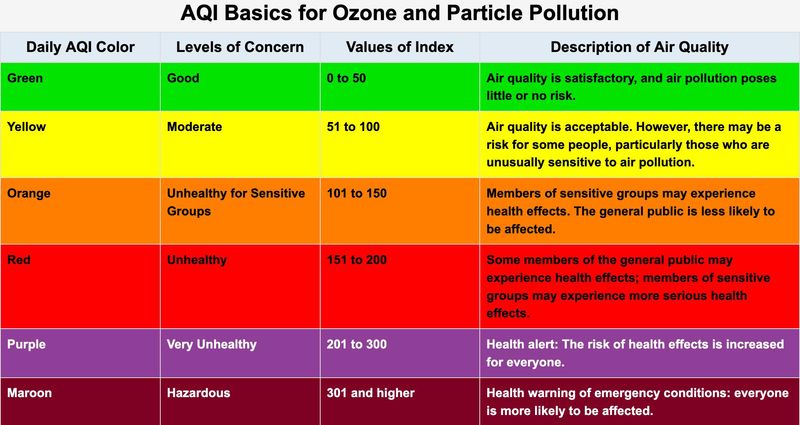
The AQI shows the outdoor air quality for public health. It features six color-coded categories, from good (0-50) to hazardous (301 plus).
The AQI takes into account five air pollutants:
Here are the ratings in the AQI:
Where are the wildfires in Canada?
As of May 30, Canada’s National Wildland Fire Situation Report says there are 79 uncontrolled active fires; 21 being held; 57 controlled; and 22 modified responses.
The priority fires are located in Ontario, Manitoba and Alberta – with Saskatchewan and Manitoba in a provincial state of emergency.
Will the smoke hurt my pets?
“Similar to humans, animals are also affected when there are issues with air quality, especially birds, animals with underlying respiratory and heart conditions, and other sensitive populations — such as young or senior animals,” State Veterinarian Nora Wineland said. “If animals are being negatively affected by breathing poor quality air, they could exhibit various signs of illness, including coughing, wheezing, having difficulties breathing, eye drainage, lethargy, changing the sound of their vocalization, decreased appetite, and thirst. For any concerns related to the health of your animals, please contact your veterinarian.”
To best protect animals from poor air quality, follow these tips:
Contact Sarah Moore @ smoore@lsj.com
This article originally appeared on Lansing State Journal: How bad is Canadian wildfire smoke in Michigan? Air quality alert for June 4
Reporting by Sarah Moore, Lansing State Journal / Lansing State Journal
USA TODAY Network via Reuters Connect