

Mike Esseily was sure he would be a head football coach in the National Football League one day.
It would start with a middle school coaching gig. He would work his way up.

He worked his way up, all right. He’s even still a coach, of sorts — just not on the football field.
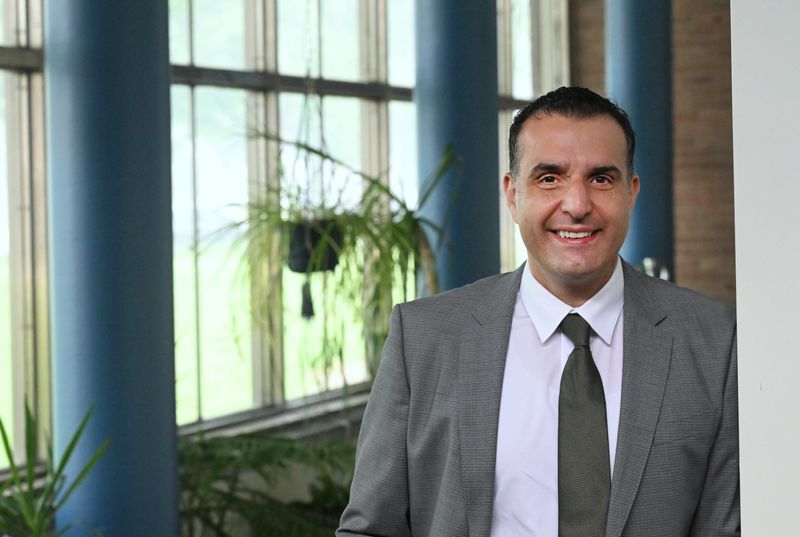
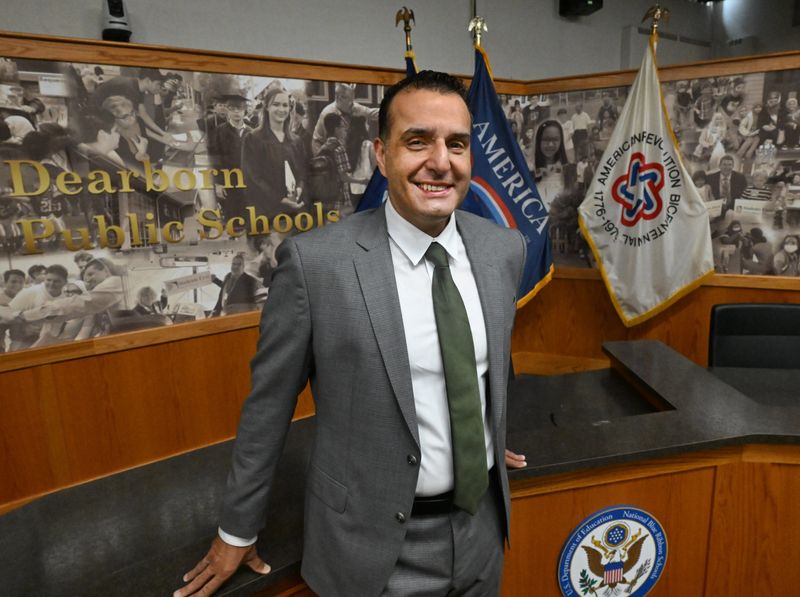
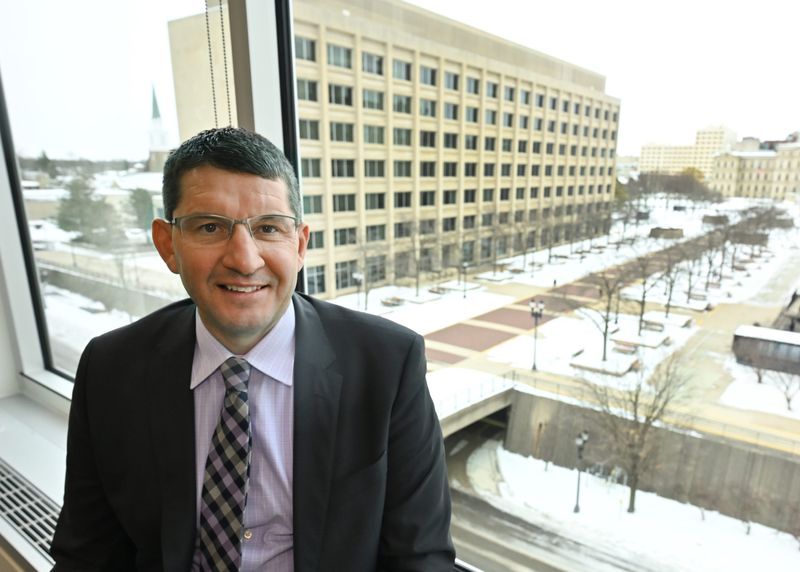
Esseily went from teacher to assistant principal to coordinator to an executive director — and is now the new superintendent of Dearborn Public Schools, the third-largest school district in the state.
Esseily said he doesn’t dream exact roles for himself anymore. (He also once in his youth thought he might be an FBI agent.)
“The only goal I ever really had was being better today than I was yesterday,” the 44-year-old superintendent said. “It was always about looking myself in the mirror and reflecting and growing day by day.”
Esseily (the English pronunciation is “Eh-sail-lee”) takes over Dearborn schools at a pivotal time for the district, which is promoting a $1.5 billion bond request in November in a bid to overhaul its aging buildings, a push to train more teachers in the science of reading and the retirements of several longtime directors.
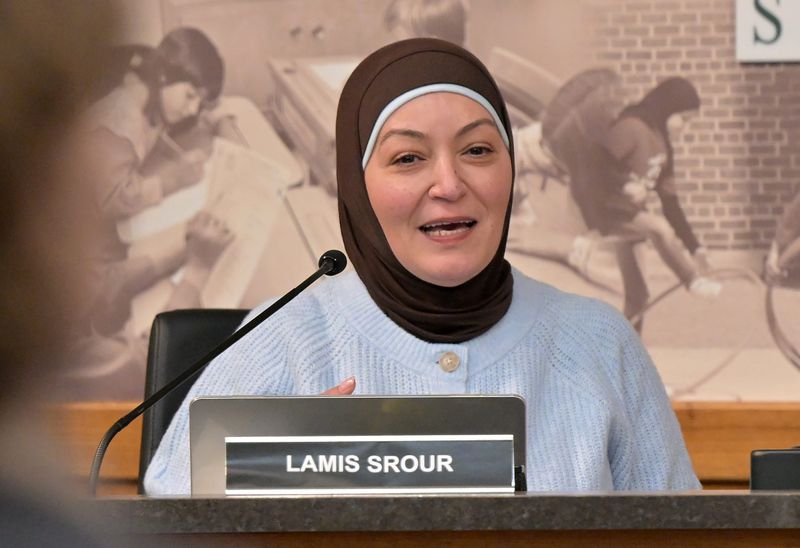
He is the district’s first new permanent leader in over a decade. Former Superintendent Glenn Maleyko, one of Esseily’s mentors and close friends, left in October after 10 years to become the top education leader in Michigan. The board appointed an interim, Lamis Srour, during its search process, and Esseily started in the role July 1.
Esseily is also Dearborn’s first permanent superintendent to be an Arab American Muslim in a district and a city that are now majority Arab American. Srour was the first Arab American Muslim and the first woman to lead the district, but she did not want the permanent job.
Despite his age and having never been a superintendent before, Esseily said he is ready for the job because of his deep roots both in Dearborn and its school district, his time in leadership positions under Maleyko and working in special education.
“I do consider myself being a very humble individual, as somebody who can learn from everybody,” Esseily said. “No matter who it is, no matter who comes in my life journey, I feel like I can learn something with any and every single person I interact with, and I still feel that way to this day.”
‘Dearborn is literally all I know’
Esseily likes to note that since 1986, when he started preschool at McDonald Elementary, there was only one year he wasn’t affiliated with Dearborn Public Schools.
Esseily attended Oakman Elementary and Lowrey Middle before graduating from Fordson High School in 2000. He spent two years at Henry Ford College, which was founded by what was then the Dearborn Fordson Public Schools Board of Education in 1938.
In 2003, he transferred to Wayne State University, his one year away from Dearborn. The following year, he started his student teaching — back in Dearborn schools.
“Dearborn is literally all I know,” he said.
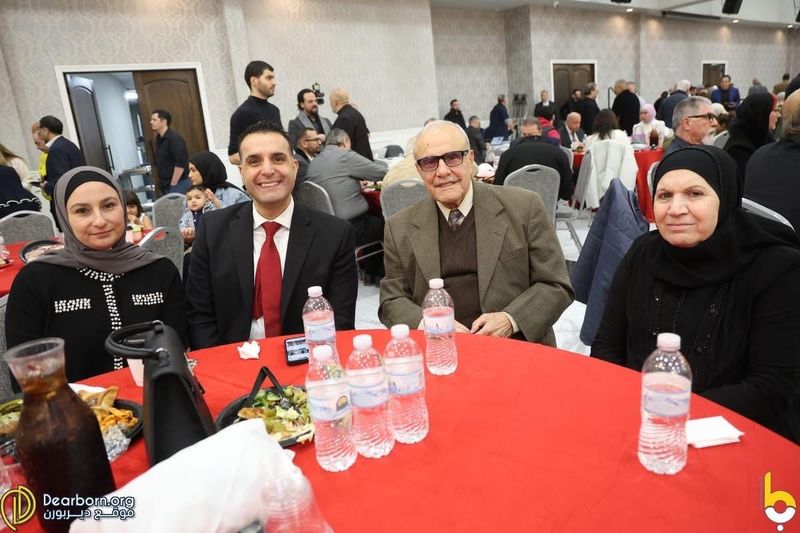
Esseily is a first-generation American, born in 1982 to parents who had immigrated from Lebanon. His father, Suleiman Esseily, came first in the 1960s, eventually working for Chrysler. His mother and four older siblings came in the 1970s. Esseily’s brother, his parents’ fifth child, was the first to be born in the U.S. Esseily was the second.
But his mother, Zeinab, died when Esseily was 4 years old.
It’s a part of his life he keeps close to the vest, but also knows it is part of what shaped him into who he is today — a guy who always looks for the kid who is struggling.
At the same time, Esseily counts himself blessed, as his father stepped up to be both parents.
“You don’t know what you don’t know,” Esseily said. “You don’t necessarily comprehend things. That’s why my father’s always been extremely meaningful to me personally, because he was always able to really fill that void and make me feel like I was no more or less than anybody else.”
His father also remarried when Esseily was still young to a woman named Fatme, and Esseily formed a deep bond with her and the two younger siblings who would come along later. He tells everyone he is one of eight siblings.
“We don’t consider things like ‘blended’, ‘you’re only my half (sibling),'” he said.
He grew up speaking Arabic at home, but the PBS TV show “Sesame Street” and then school turned him into a fluent English speaker. Parent-teacher conferences were always the same, he said, with teachers telling his parents, “He doesn’t speak much.”
“I always knew what was going on,” Esseily said.
A child of the 1980s, he was deep into Hulk Hogan and World Wrestling Entertainment. In high school, his personality came out, he said, “or at least a personality that the world understood.”
Having spent so much time babysitting his nieces and nephews, Esseily realized he had a passion for working with kids.
He went to school for education to teach social studies — the same time the planes hit the Twin Towers.
Esseily remarks on the ‘weight of the responsibility’ as a Muslim leader
The Sept. 11, 2001 terror attacks by Islamic extremists put a spotlight on places like Dearborn, and people who look and pray like Esseily. He felt the weight of it on his city. He said he experienced hatred and ignorance at times elsewhere, including slurs hurled at him on the street with his friends. He remembered having to prove, at an airport or in everyday life, that he really was American.
“There was kind of that cloud over our heads here in Dearborn,” Esseily said. “I remember it being a challenge, the first time I ever started traveling alone with friends. I remember challenges going on an airplane.”
That’s why, he said, he knows being the first Arab American Muslim to lead Dearborn, and to be one of a small handful to lead any district in Michigan, is a big deal.
“When you talk about things like this and the importance of this position, I want people to understand that the greatness of America, that America belongs to everybody, that you are no less than your neighbor,” he said. “And that’s what makes America great, right? It’s having unique beliefs, no matter what they are, and being able to express them and be safe by expressing them.”
Esseily said it’s both “emotional” and “humbling” to be in the role.
“I understand the weight of the responsibility,” he said. “But even further than that, I understand the people before me who made this possible. Whether it was educational leaders that looked and believed like me, whether it was community leaders that advocated, looked and believed like me. Whether it was families that believed (like) me.”
Still, he said, to be Dearborn’s superintendent is to be every student and staff member and community member’s leader.
“I’m going to be your superintendent, and I’m going to make sure to treat you the way I treat everybody,” Esseily said.
Esseily’s ‘heart is in the right place’
The weight of “representing something even bigger than myself,” as Esseily said, was not lost on Srour, the interim superintendent before him. Srour said she underestimated the impact being an Arab American Muslim woman in the top job in the district would have on students, in particular.
“I saw the girls look at me, and they had a smile on their face,” Srour said. “Not just smiles, I got emails, and kids approached me. And they told me how it made them feel. And so I think Mike is just carrying that on.”
It will be an asset in community and parent engagement, Srour said, where trust and relationship-building are paramount, and could be the difference in whether an immigrant parent, or any parent, feels comfortable sending their child to school.
Both finalists for the job, Esseily and Moussa Hamka, the assistant superintendent of human resources at the Grosse Pointe Public School System, were products of Dearborn Public Schools, and both are Arab American.
“It was a proud moment for Dearborn,” Srour said.
Esseily, she said, is the “perfect” person for the job.
“His heart’s in the right place, which means his priorities are in the right place,” she said. “Number one, it’s the kids. It’s them reaching their fullest potential and then keeping them safe and happy.”
Srour said Esseily is both a smart “comprehensive thinker” and is decisive, a “winning combination” in leadership.
A few years ago, Srour remembers Esseily attending the district’s annual prom for special education students. But he didn’t just stand on the sidelines watching the students have all the fun. He donned the neon glasses, grabbed a glow stick and danced the night away with the kids.
“I fell in love with him because I’m like, this guy is, this is his happy place with these kids, where they’re happy,” she said. “(It’s) why he does what he does, and it just, it was beaming out of him that night.”
Srour said much more made sense about Esseily when she learned he had lost his mother at a young age.
“He’s so staunch in some decisions and advocates for kids,” she said. “And I’ve heard him say over and over and over again, ‘If it has to be only me who’s standing up for this kid, let it be.”
A civics lesson shows promise for future leader
As a student teacher at Stout Middle School, Esseily remembers his teacher mentor, Frank Serazio, turning the reins of the class over to him with two words: “Go teach.”
Esseily remembers being run over, pretty quickly, by a comment from a student.
“I can tell you I kind of froze. I was like, ‘oh wow, how do I handle this situation?'” Esseily said.
He went home, thought about it and realized he let his personal feelings get in the way of his “why.”
“Why did I go into teaching? The answer was easy: I wanted to inspire and help people,” Esseily said. “I remember that moment, that first teaching moment. I didn’t follow my why and I took things personal. That changed my perspective and most likely my career.”
Esseily said he always put students’ social and emotional needs at the forefront of the classroom.
“No matter how good our strategies are, our kids need to know that we care about them,” he said. “Everybody has a story.”
Serazio remembers Esseily bonding quickly with the students, but also putting together a civics lesson about how laws are made that blew him away. The class had to write laws for itself, then vote on them like they were a Senate and House of Representatives.
“There’s not often that, you know, I feel like somebody does a better job teaching than myself, but on that day, he absolutely did,” Serazio said.
The 33-year teaching veteran said Esseily’s strength is avoiding snap judgments.
“He realizes he doesn’t know everything, and he is going to hear a lot of different opinions and then go ahead and make his decision,” Serazio said.
Maleyko calls Esseily ‘a great leader’ who connects with parents
Full-time teaching jobs were at a premium in 2005, Esseily said, and an opening emerged for a long-term substitute in special education in Dearborn, working with students with learning disabilities.
Esseily said he loved it, knowing he was catching students who often had not yet had much academic success and helping them find their paths forward.
“The challenge was, how do you differentiate the instruction to meet their needs? How do you get them motivated?” Esseily said. He turned simple writing assignments into ones where students could express their own interests, and from there, they could shape the writing into whatever the lesson was for that day. It was all about connecting with students, he said.
He went back to school and earned his master’s degree in special education, specializing in learning disabilities. He started a full-time position at Stout Middle, even coaching football there for about six years, including two years as the head coach.
But instead of the NFL, he headed for school administration, becoming the assistant principal at Lowrey, his former middle school.
After two years, Maleyko hired Esseily to the central office to be a special education coordinator. A year or so after that, the director of special education job opened, and Maleyko appointed Esseily.
“He’s a great leader,” Maleyko said by phone. “He’s a great people person. He knows how to work with parents, too. Special ed is one of the most challenging areas in education.”
Maleyko then elevated Esseily to the position of executive director of special populations, covering special education but also populations like English language learners, which make up nearly half of the district’s students.
“Mike honestly came in, he built relationships with parents,” Maleyko said. “Board members got along with him. He started to grow his experience, and he could put out fires, and he knew how to, even when there’s disagreements, … (to be) very tactful as a listener.”
Maleyko said Esseily “turned around” the special education department. He created a model of co-teaching special education students with a special ed teacher in a general education classroom, so students could receive the help they need but learn among their peers, which caught the eye of the Michigan Department of Education before Maleyko became state superintendent. Esseily presented the model to the State Board of Education in January 2025.
During the interview process for his Dearborn successor, Maleyko said he watched as parents of special education students came to the board room podium to say how Esseily had impacted their students’ lives and educational journeys.
“I was extremely pleased when he got the position,” Maleyko said. “I just feel like he’s going to take Dearborn, and he’s going to set his own mark. He’s going to separate from what I did. He’s going to build upon it and do better things.”
‘What we do really, really matters’
Esseily has a family of his own now. He married his wife, Jacquelene, in 2010. The two met in high school and reconnected later when their best friends got married.
They have four children: Abraham, 15; Zeinab, 13, who is named after Esseily’s mother; Norah, 11; and Adam, who is 9. The family lives in Dearborn Heights, and their kids attend Crestwood Schools.
Esseily said any free time he has, he spends with his family. He is a diehard Miami Dolphins fan, but promises he cheers for the Detroit Lions as well. His son Adam is a particularly strong Lions fan, so the family and a few others — including Maleyko’s — split a season ticket package.
He also takes to Crossfit, squeezing in at least a 20-minute workout every day. He’ll take part in any school’s relay race day or basketball game, Maleyko said, although Esseily once narrowly lost a Halloween inflatable costume race and was none too pleased.
“I think he was protesting the results,” Maleyko joked.
Esseily said he knows the job will be bigger this time, but said he’s “fired up” for it.
He has already advocated at the state and national level for increases to the Individuals with Disabilities Education Act (IDEA) funding, which has never been funded at the levels promised when it was created. That’s left states like Michigan and districts like Dearborn to fill the gaps.
He wants to see more weighted funding at the state level for students who have disabilities, but also those who have endured trauma, or are English language learners.
He sees the potential in schools to break generational poverty, to inspire kids who have no one else who believes in them.
“To a lot of people, they may sound a little bit dramatic for a school institution,” Esseily said. “But to me it’s reality, but also it’s inspiration that what we do really, really matters.”
A first big challenge for Esseily
Passing the proposed bond issue will be his first major task, a big ask for a community to envision its school district’s future for the next 50 or so years.
A 2019 $240 million bond issue failed in a 48%-52% vote after school leaders argued it too wouldn’t increase property taxes. But Esseily said he is convinced the district’s broader plan will be more appealing.
“Hopefully, we can get the trust of the voters to pass this bond in November,” he said.
District leaders face a tension because voters, especially younger voters, are feeling a financial squeeze, said Mark Fisk, a partner at the Byrum & Fisk communications firm, which conducted in-depth community focus groups and surveys as the school board considered different bond ideas.
The 30-year bond would support a four-phase construction plan that would take 20 years. School officials have argued that the bond’s approval wouldn’t result in a tax increase because part of a school district operating levy and a city millage wouldn’t be collected anymore.
If the latest proposal passes, he will become a part-time construction manager, overseeing the money the bond would bring in and the dozens of projects that would be staggered over the next 20 years.
“Throughout the history of my career, no matter the position that I stepped into, I was always faced with challenges,” Esseily said. “And sometimes challenges that people felt were too big for me. But through hard work, through being willing to learn, through developing a positive team, I believe anything could be done.”
jpignolet@detroitnews.com
This article originally appeared on The Detroit News: Historic Dearborn school chief leans on roots, knack to meet challenges
Reporting by Jennifer Pignolet, The Detroit News / The Detroit News
USA TODAY Network via Reuters Connect


By Jennifer Pignolet, The Detroit News | USA TODAY Network
