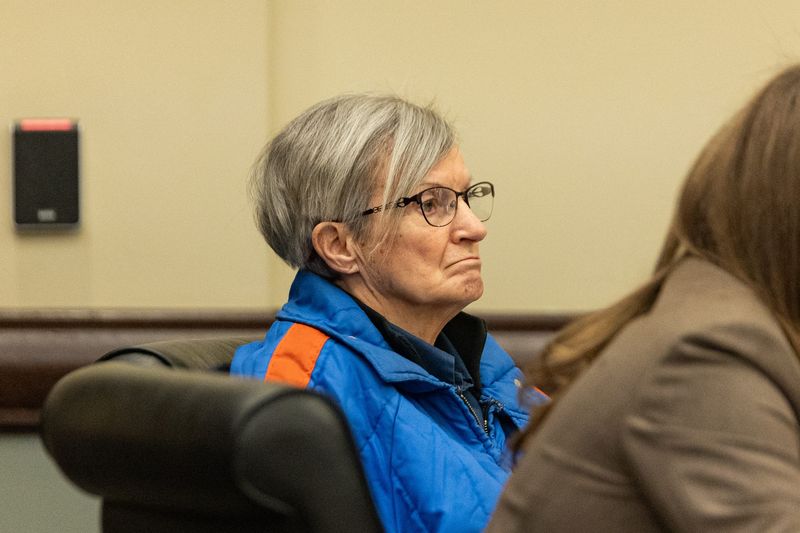
GRAND HAVEN — Karen Boes returned to Ottawa County’s 20th Circuit Court on Feb. 5, over two decades after she was found guilty of purposely setting the house fire that killed her daughter, Robin.
In 2025, the Michigan Court of Appeals ordered new evidentiary hearings — scheduled for Feb. 5-6 and Feb. 12-13 — based on Boes’ argument that clashing opinions in fire science and her susceptibility to suggestion during interrogation are significant enough to warrant another chance before a jury.

Boes has ferociously maintained her innocence since her confession, which followed a ten-hour interrogation in 2002. She is serving a life sentence without the possibility of parole.
Boes was initially denied a new trial in 2023, after Judge Karen Miedema (who oversaw the hearing Feb. 5) determined new research cited by Boes and the University of Michigan Innocence Clinic failed to show a significant change in fire investigations since 2006.
In the coming weeks, the Innocence Clinic hopes to convince Miedema to change her mind.
What is the defense arguing?
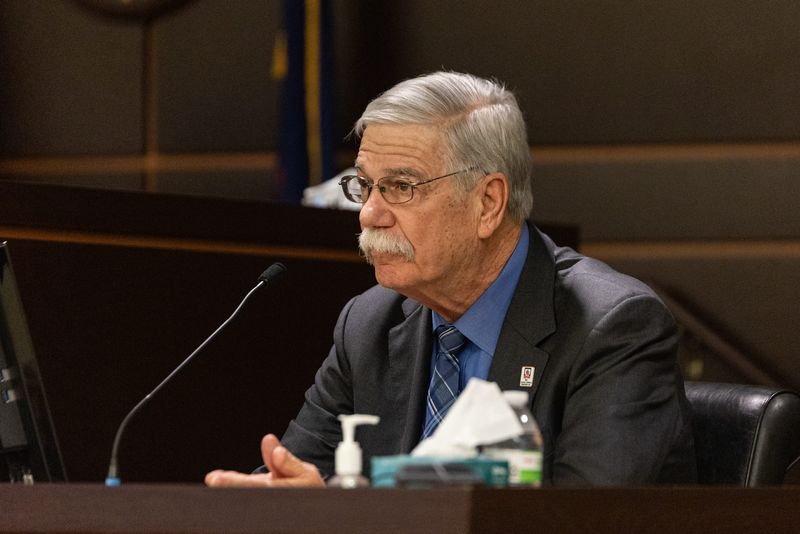
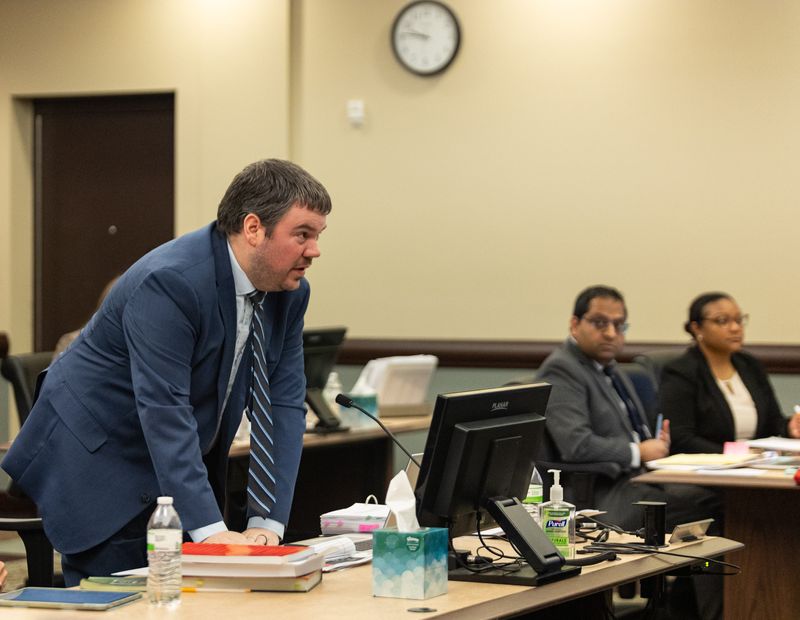
The hearing Feb. 5 included testimony from one witness called by the defense. Student Attorney Lachlan Charles, supported by other clinic attorneys, questioned Fire Expert John Lentini.
Lentini, a member of the National Fire Protection Association Technical Committee on Fire Investigations, explained his review of the fire and how former investigators could’ve been misled by now disproven practices.
The defense, in summary, is trying to argue that Robin could’ve started the fire — whether to intentionally harm herself or as a cover up for running away. The prosecution, in 2003, argued the fire started in the hallway outside Robin’s bedroom, and that she couldn’t possibly have started the blaze before retreating back into the room where she died.
The prosecution also presented evidence the fire was fueled by an accelerant, such as gasoline.
According to the opinion from the Michigan Court of Appeals, multiple experts testified the fire wasn’t accidental — and that, although no evidence of an accelerant was discovered in the hallway, the fire might have consumed all traces of one.
Lentini, however, argued the fire must’ve started in the bedroom. He believes it was a “flashover fire” — a sudden, simultaneous ignition of everything in a room — started by gasoline poured in the bedroom (where a gasoline can was found). Such a fire, he said, is caused by hot gases rising to the ceiling in a closed room, causing heat to radiate downward and ignite combustible items in the room.
Lentini believes the fire burned through the top of the bedroom door, spreading to the ceiling of the hallway. He testified that investigators often misread flashover fires, since severe damage comes from the intensity of the fire, rather than duration.
Because the damage was more intense in the hallway, investigators determined that was where the fire started — though no traces of accelerant were found there. During cross-examination by the prosecution, Lentini allowed it’s possible that gasoline in the hallway could’ve burned up.
‘If you don’t understand ventilation, you won’t understand the fire’
Lentini also noted changes in how investigators interpret post-fire artifacts and ventilation. He argued the hallway suffered more damage because it contained more oxygen, feeding the fire. Studies regarding ventilation patterns weren’t added to NFPA 921, a guide for fire and explosion investigations, until 2017, according to Lentini.
“If you don’t understand ventilation, you won’t understand the fire,” Lentini said. “That’s new stuff.”
Lentini also testified in regards to the depth of char on the fire scene and the use of negative corpus, a method rejected in 2011. The method determines the ignition source of a fire by eliminating all ignitions sources found, known, or believed to have been present in the area of origin — and concluding the ignition source is the one thing remaining that cannot be eliminated, even though there might be no evidence of its existence.
Lentini compared negative corpus to conducting a murder trial without a body.
Was the bedroom door open or closed?
Lentini presented images of the fire scene and highlighted charring that previous investigators relied on. He concluded the fire must’ve started in the bedroom, where gasoline vapors exploded and lifted the roof. He said the subsequent explosion couldn’t have happened if the fire started in the hallway.
“This damage (in the hallway) that we’re seeing, although the state said it happened first, it didn’t. It happened late in the fire after the bedroom doorway was breached,” Lentini said.
The prosecution has argued the bedroom door was open when the fire began, and only closed after the explosion.
According to images of the fire scene, matches were also found in the bedroom.
What comes next?
The hearing was expected to continue Feb. 6 with the prosecution’s expert fire witness. The hearings Feb. 12-13 will cover false confessions.
— Cassidey Kavathas is the politics and court reporter at The Holland Sentinel. Contact her at ckavathas@hollandsentinel.com. Follow her on X @cassideykava.
This article originally appeared on The Holland Sentinel: Fire expert speaks in defense of Karen Boes during evidentiary hearing
Reporting by Cassidey Kavathas, Holland Sentinel / The Holland Sentinel
USA TODAY Network via Reuters Connect